74
Charles Gretton
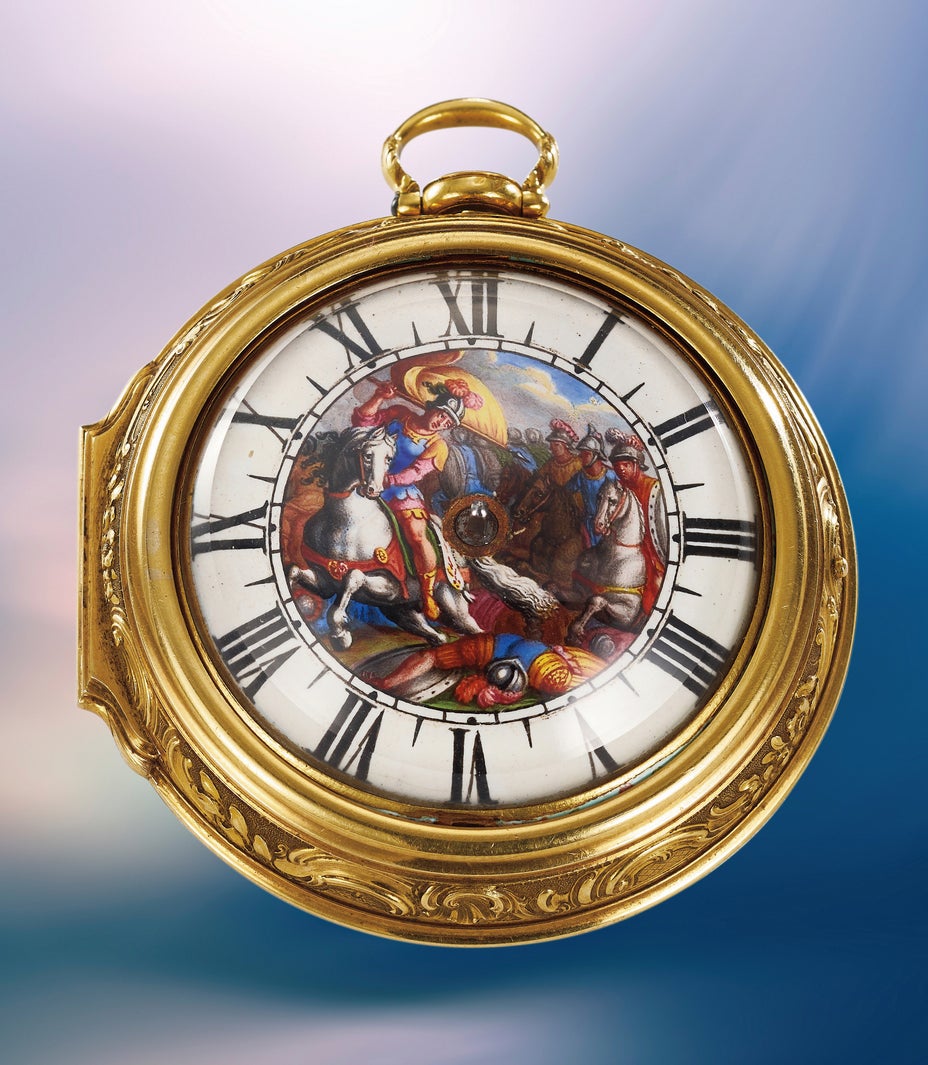
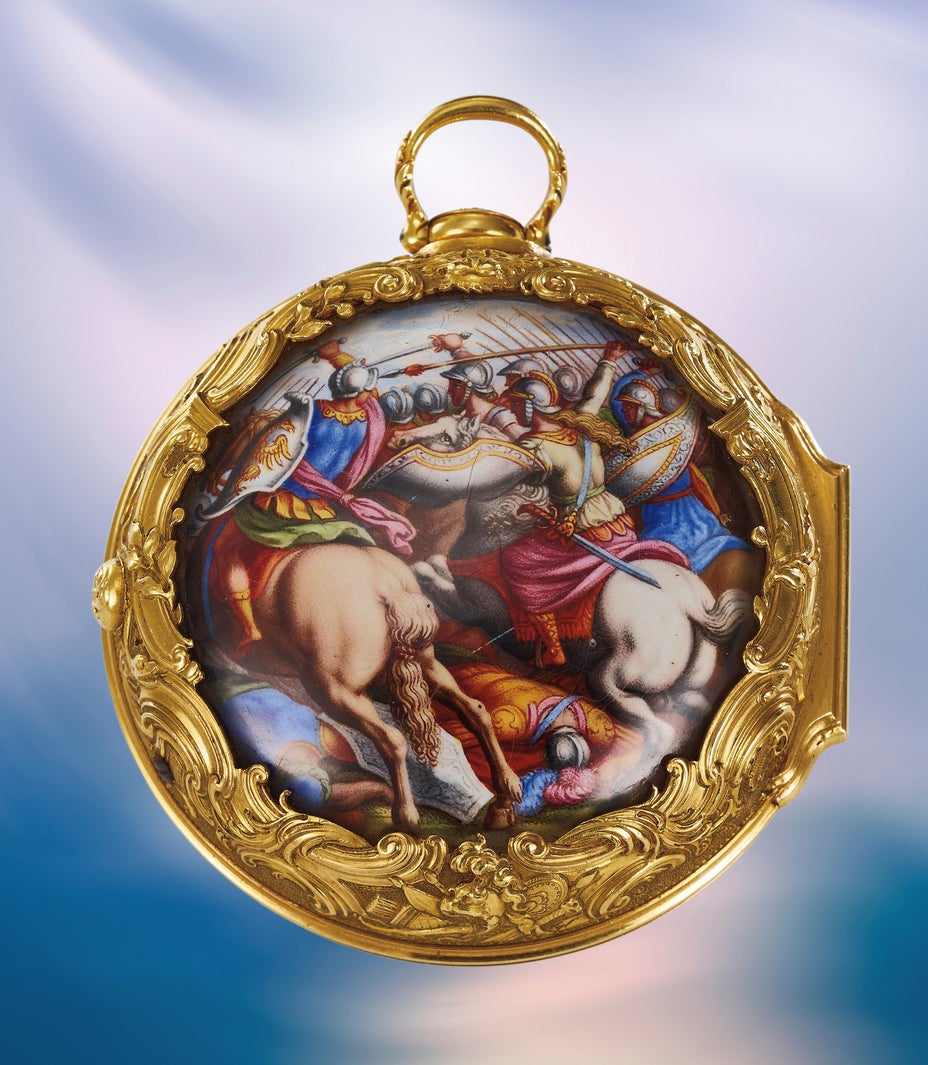
A lavish yellow gold, enamel and rock crystal pair cased verge pocket watch
Estimate
CHF30,000–60,000
€32,700–65,300
$38,200–76,400
Sold For
CHF71,120
Manufacturer
Charles Gretton
Year
Circa 1740
Movement No
1922
Dimensions
47mm diameter
Signed
Movement signed
Full-Cataloguing
Good To Know:
- Lavish enamel case made in Geneva
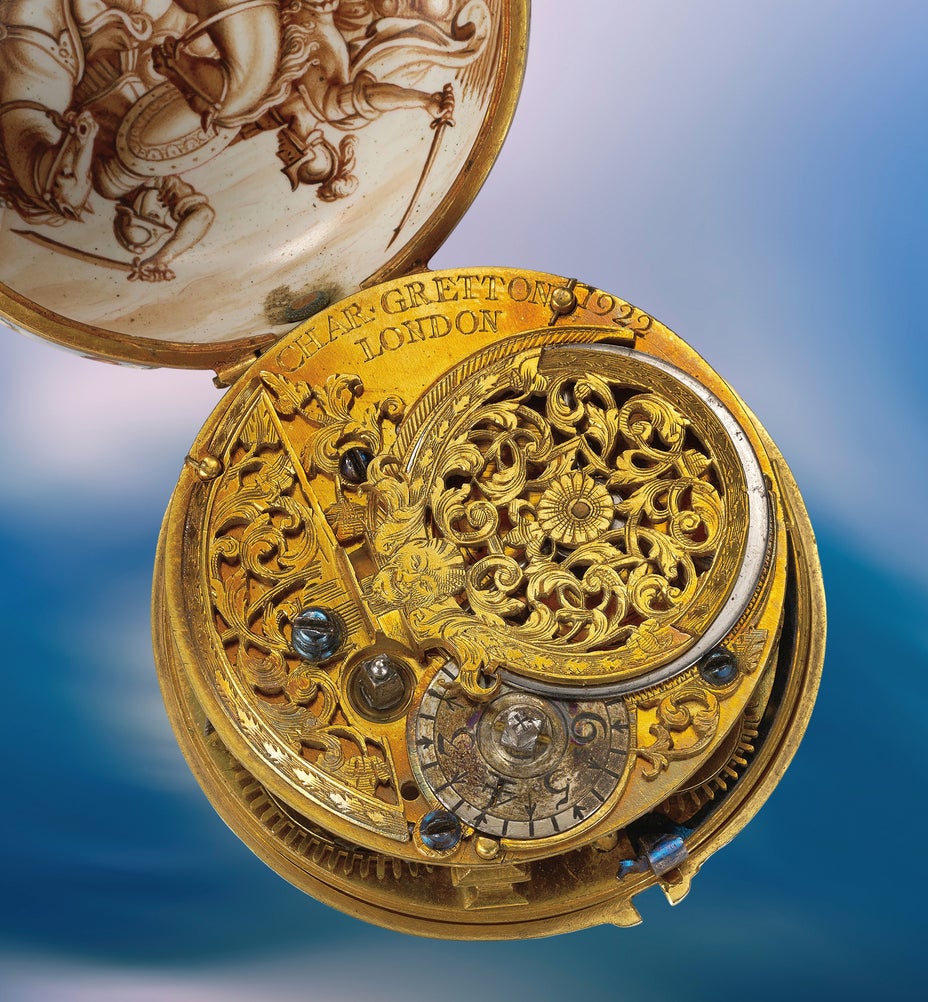
- Movement made by Gretton
- Special commission piece
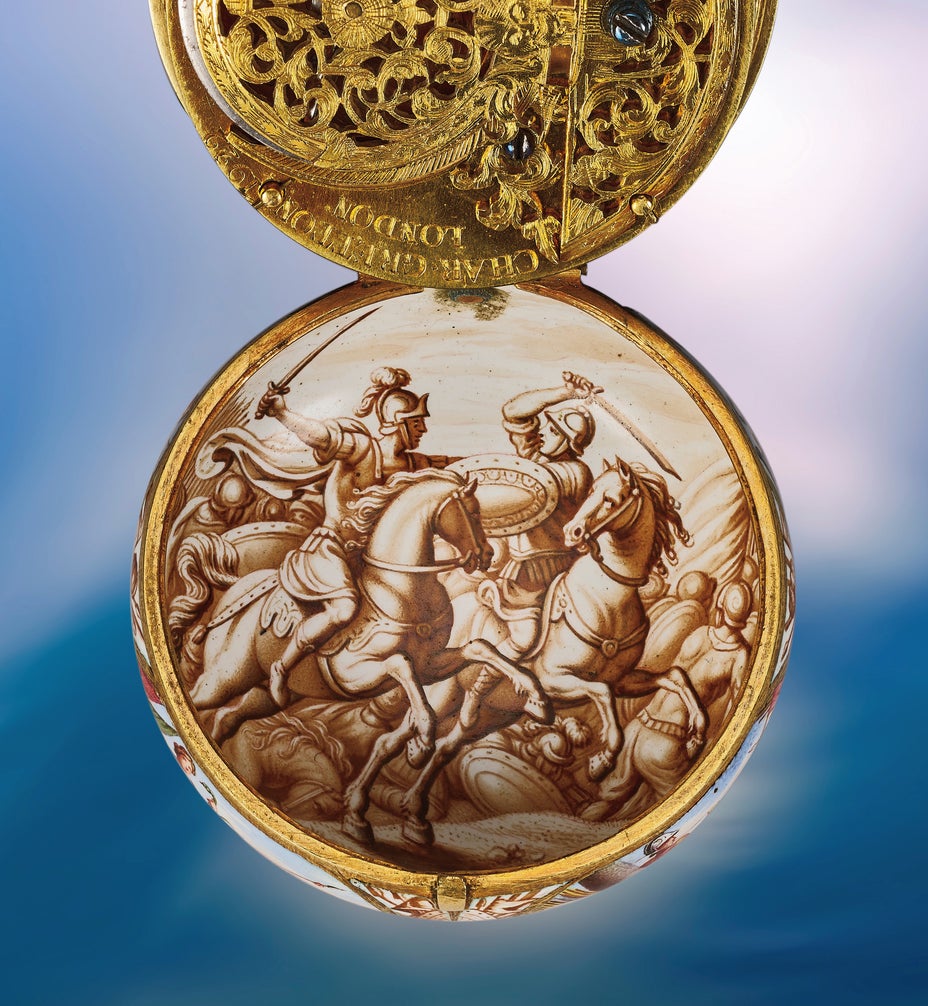
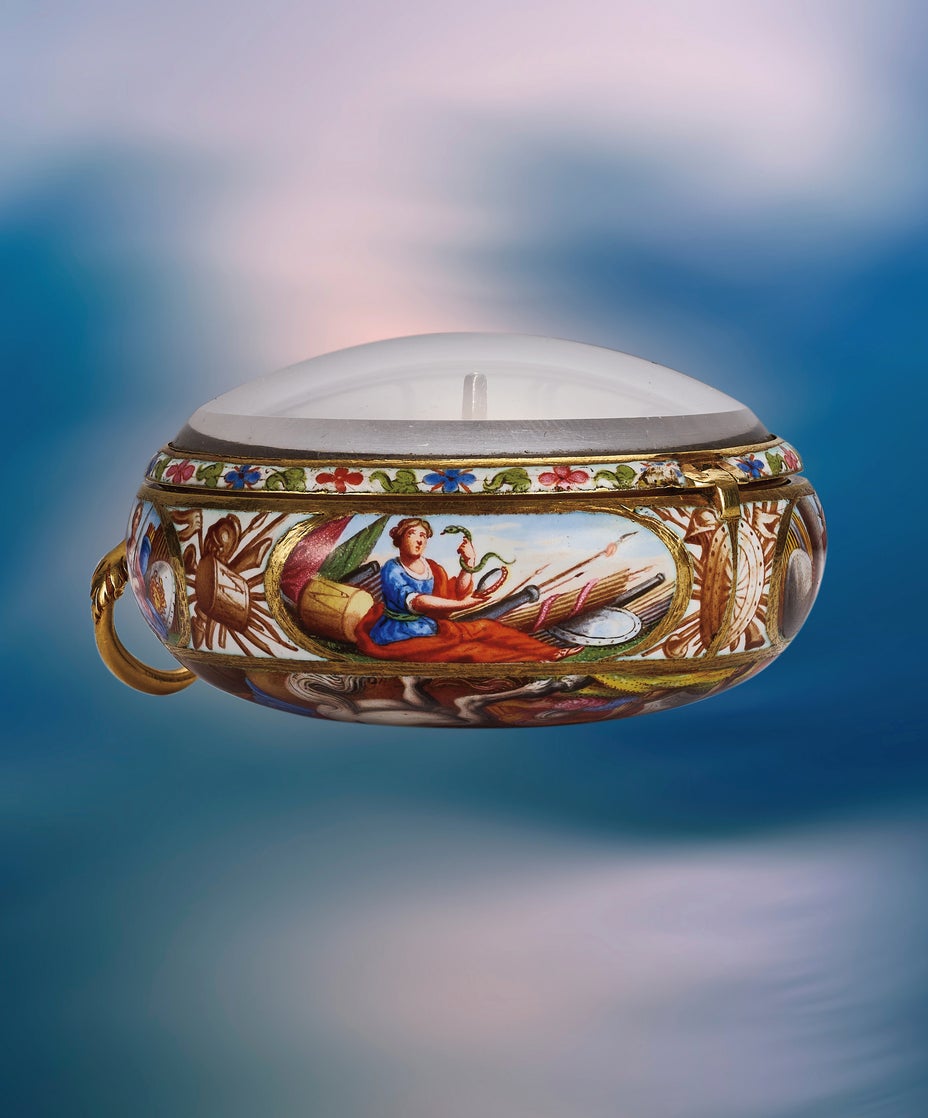
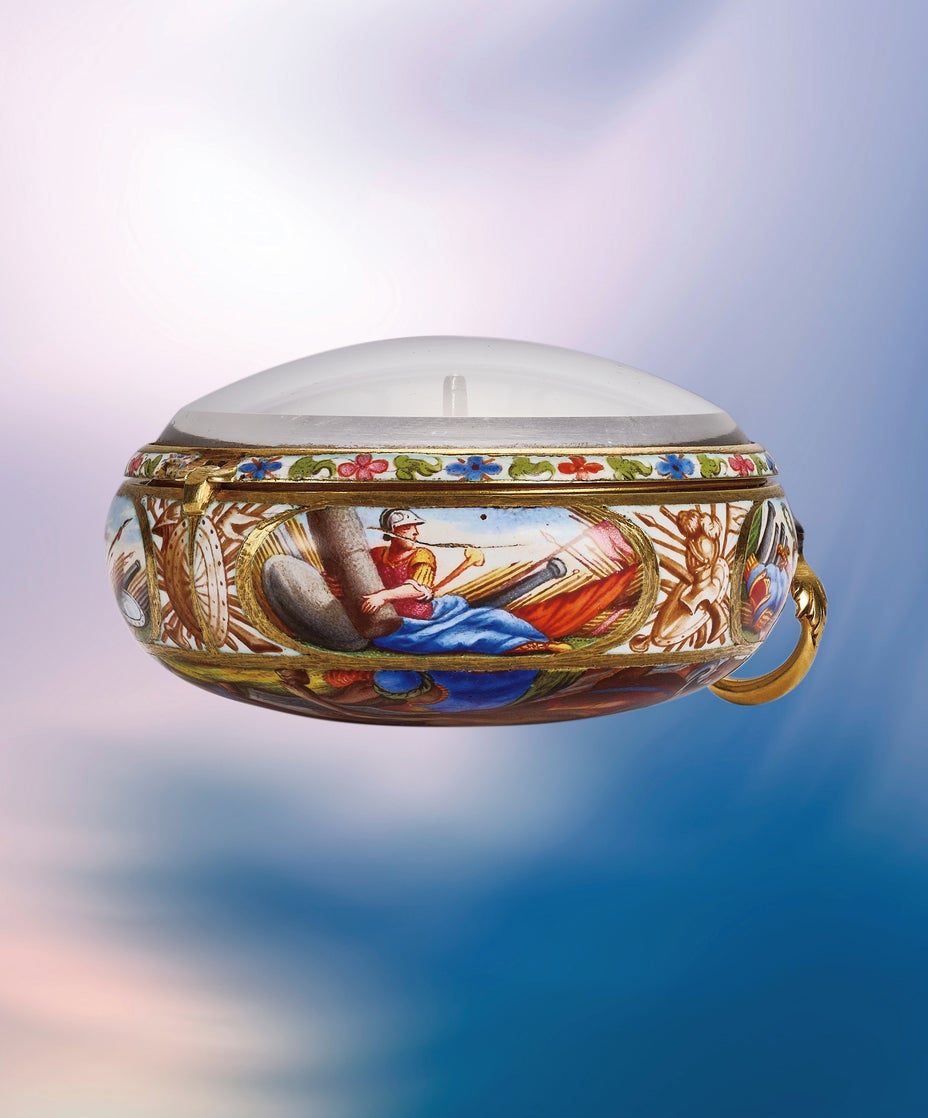
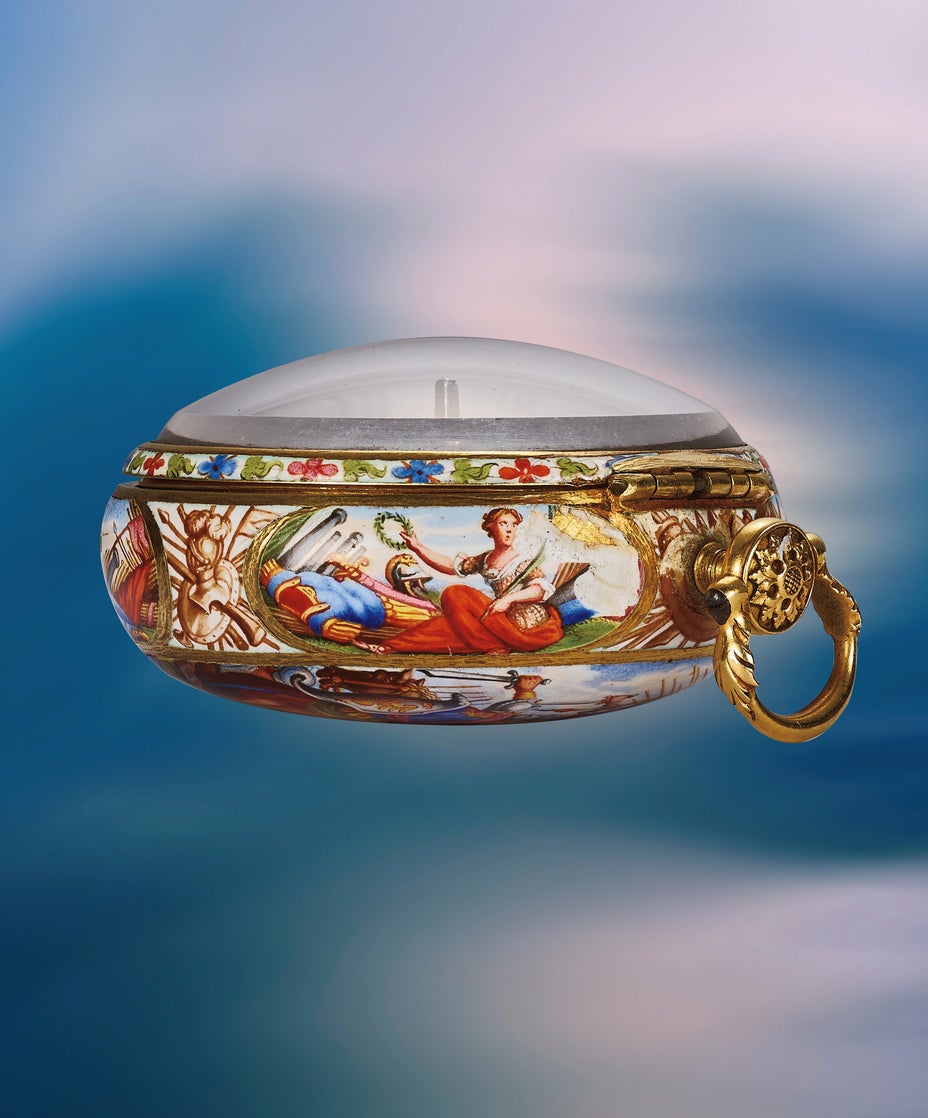
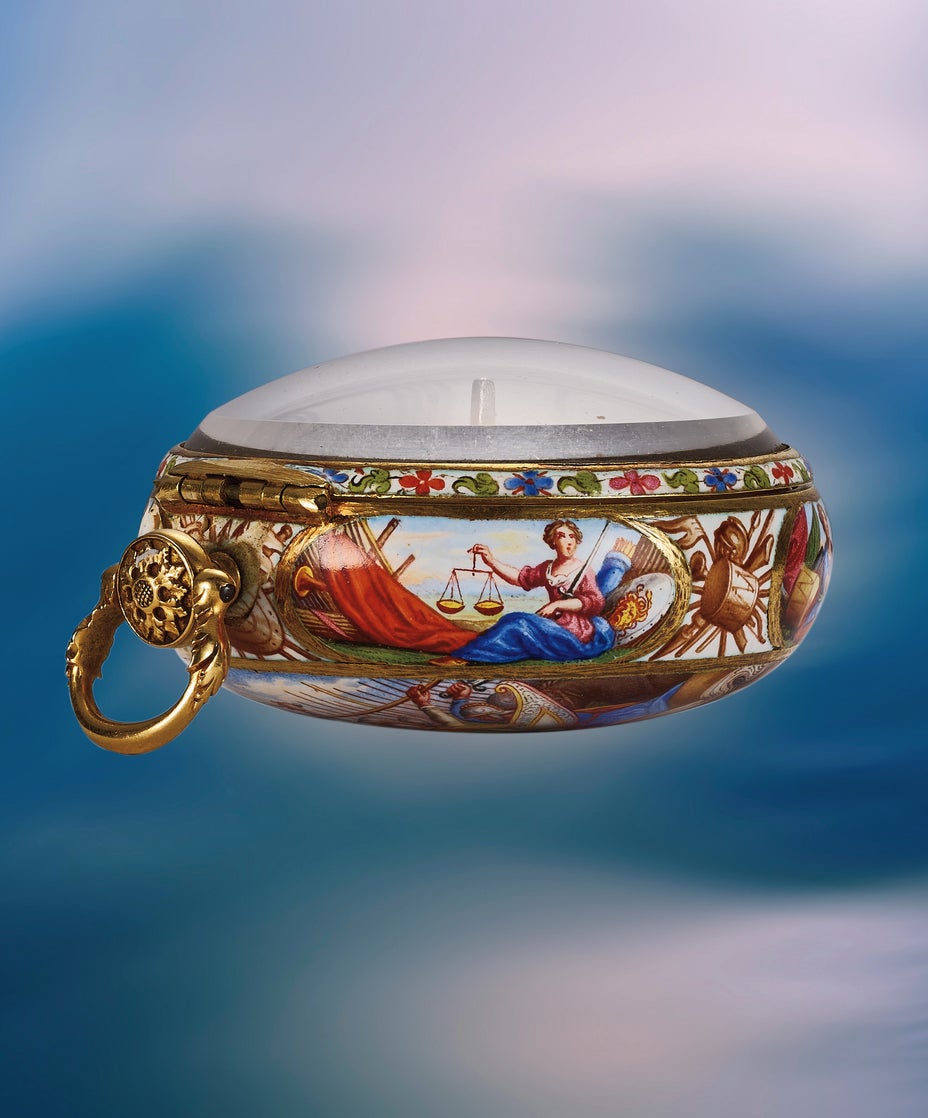
The present watch is distinguished by an enamel case of exceptional quality and interest, made all the more remarkable by the presence of an English movement. The case was most likely produced in Geneva circa 1700 and subsequently brought to England shortly thereafter. The movement, signed by Charles Gretton, appears to have been constructed specifically for the dial and case, suggesting a commission of considerable importance.
The watch is further accompanied by a superb gold repoussé outer case of the highest craftsmanship, fitted with a rock crystal glazing. This outer case was clearly made expressly for the watch, both to protect the enamelled inner case and to display it to best advantage. The decoration of the outer case continues the military theme established by the enamel scene, creating a harmonious visual narrative between the two elements.
Charles Gretton (1648–1731) was a highly influential and prolific English clock and watchmaker who operated during the "Golden Age" of British horology. Based at his workshop, "The Ship," on Fleet Street in London, he was renowned for producing high-quality timepieces that competed with the work of his famous contemporaries, such as Thomas Tompion and Daniel Quare. He was an early adopter of several horological advancements, including the balance spring in watches and the pendulum in clocks. He is also credited as a pioneer, if not the originator, of the strike/silent mechanism.
- Lavish enamel case made in Geneva
- Movement made by Gretton
- Special commission piece
The present watch is distinguished by an enamel case of exceptional quality and interest, made all the more remarkable by the presence of an English movement. The case was most likely produced in Geneva circa 1700 and subsequently brought to England shortly thereafter. The movement, signed by Charles Gretton, appears to have been constructed specifically for the dial and case, suggesting a commission of considerable importance.
The watch is further accompanied by a superb gold repoussé outer case of the highest craftsmanship, fitted with a rock crystal glazing. This outer case was clearly made expressly for the watch, both to protect the enamelled inner case and to display it to best advantage. The decoration of the outer case continues the military theme established by the enamel scene, creating a harmonious visual narrative between the two elements.
Charles Gretton (1648–1731) was a highly influential and prolific English clock and watchmaker who operated during the "Golden Age" of British horology. Based at his workshop, "The Ship," on Fleet Street in London, he was renowned for producing high-quality timepieces that competed with the work of his famous contemporaries, such as Thomas Tompion and Daniel Quare. He was an early adopter of several horological advancements, including the balance spring in watches and the pendulum in clocks. He is also credited as a pioneer, if not the originator, of the strike/silent mechanism.