73
Ilbery
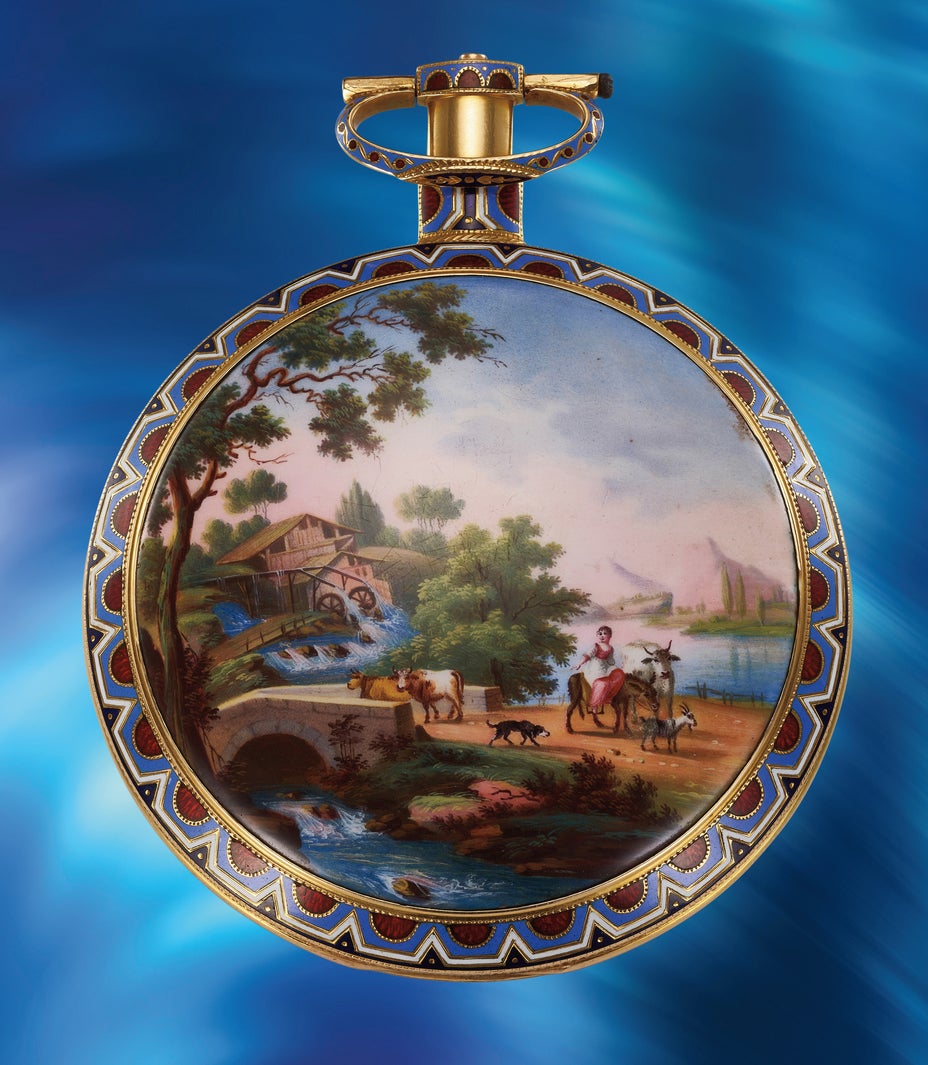
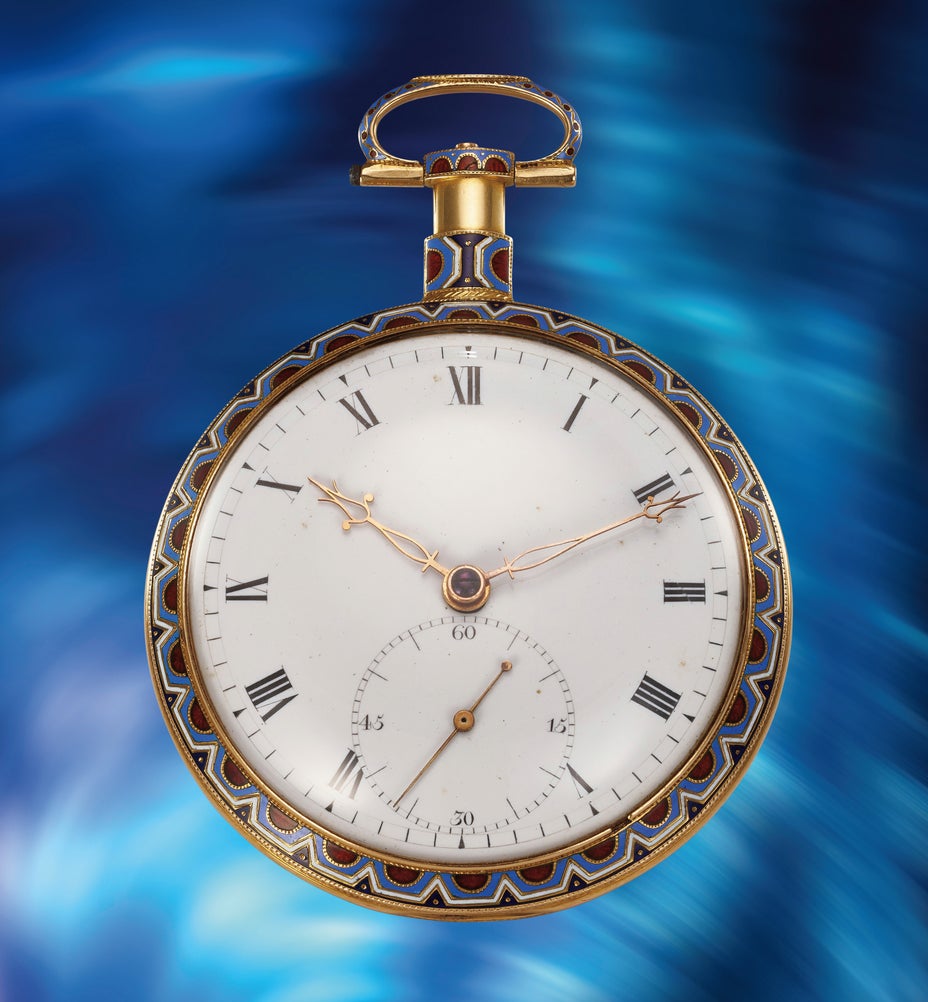
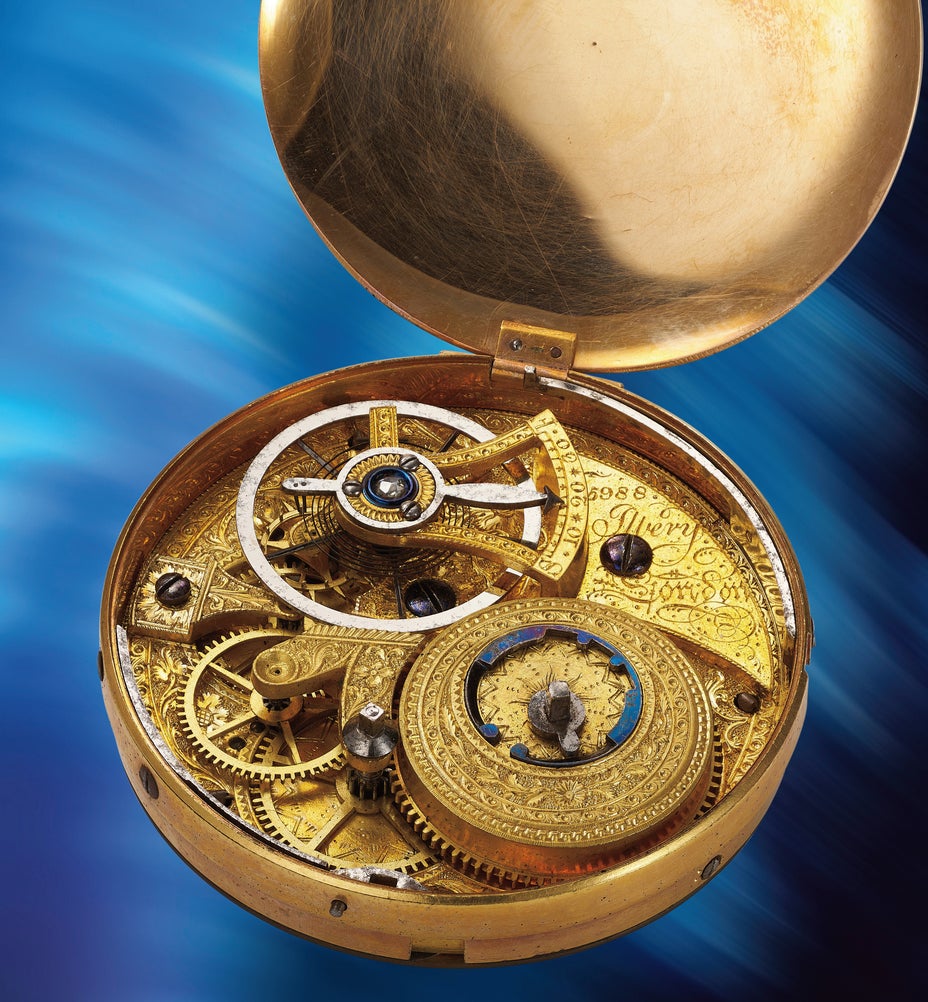
A lavish yellow gold gold and enamel openface duplex pocket watch made for the Chinese market, enamel by J.L. Richter
Estimate
CHF25,000–50,000
€27,200–54,500
$31,800–63,700
Sold For
CHF35,560
Manufacturer
Ilbery
Year
Circa 1810
Case No
5988
Material
18k yellow gold
Calibre
Manual, jeweled
Dimensions
60mm diameter
Signed
Movement signed
Full-Cataloguing
Good To Know:
- Lavish enamel case
- Scene by famed enameller Jean-Louis Richter
William Ilbery (1780–1839) stands among the most celebrated figures in horology and is widely regarded as the father of the montre chinoise calibre. The British watchmaker played a pivotal role in the production of timepieces destined for the Chinese market at a moment when England dominated the export of watches to the Far East. Ilbery masterfully coordinated the talents of Swiss craftsmen—entrusting them with the execution of refined movements and exceptional enamel decoration—thereby harnessing the flourishing commercial exchange between Britain and China.
At the height of his activity between 1790 and 1830, Ilbery collaborated with eminent Geneva enamel painters including Dupont, Richter and Lissignol. The cases produced under his direction were miniature works of art, frequently drawing inspiration from classical mythology, idyllic Swiss landscapes and allegorical subjects such as Faith, Hope and Love; portrait scenes, however, remain notably rare within this production.
The present example, dating to circa 1810, is distinguished by a richly painted enamel scene attributed to Jean-Louis Richter (1766-1841) depicting a lady tending to her animals while crossing a bridge, a water mill set within the pastoral landscape beyond. The composition derives from the hand-coloured etching Les Moulins de Gravin by Louis-Albert Guillain, Baron Bacler d’Albe (1761–1848), preserved in the Cabinet des Estampes, Geneva, and illustrated in Hans Boeckh, “Jean-Louis Richter, peintre genevois sur émail (1766–1841): son mode de travail et le choix de ses motifs,” Geneva, XXXI, 1983, p. 116.
- Lavish enamel case
- Scene by famed enameller Jean-Louis Richter
William Ilbery (1780–1839) stands among the most celebrated figures in horology and is widely regarded as the father of the montre chinoise calibre. The British watchmaker played a pivotal role in the production of timepieces destined for the Chinese market at a moment when England dominated the export of watches to the Far East. Ilbery masterfully coordinated the talents of Swiss craftsmen—entrusting them with the execution of refined movements and exceptional enamel decoration—thereby harnessing the flourishing commercial exchange between Britain and China.
At the height of his activity between 1790 and 1830, Ilbery collaborated with eminent Geneva enamel painters including Dupont, Richter and Lissignol. The cases produced under his direction were miniature works of art, frequently drawing inspiration from classical mythology, idyllic Swiss landscapes and allegorical subjects such as Faith, Hope and Love; portrait scenes, however, remain notably rare within this production.
The present example, dating to circa 1810, is distinguished by a richly painted enamel scene attributed to Jean-Louis Richter (1766-1841) depicting a lady tending to her animals while crossing a bridge, a water mill set within the pastoral landscape beyond. The composition derives from the hand-coloured etching Les Moulins de Gravin by Louis-Albert Guillain, Baron Bacler d’Albe (1761–1848), preserved in the Cabinet des Estampes, Geneva, and illustrated in Hans Boeckh, “Jean-Louis Richter, peintre genevois sur émail (1766–1841): son mode de travail et le choix de ses motifs,” Geneva, XXXI, 1983, p. 116.