PROPERTY FROM THE COLLECTION OF CEIL AND MICHAEL PULITZER
30
Cícero Dias
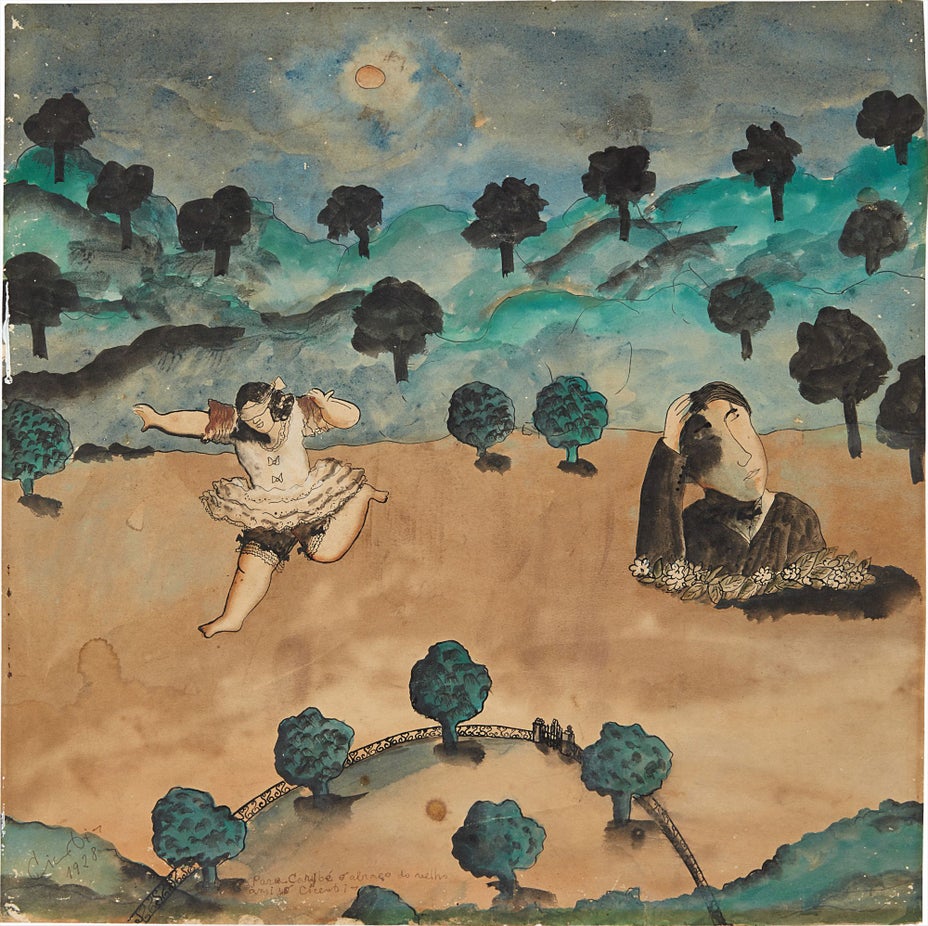
Cabra cega
Estimate
$50,000–70,000
Sold For
$81,250
1928
watercolor on paper
16 1/4 x 16 1/4 in. (41.3 x 41.3 cm.)
Signed, dedicated and dated "Cícero Dias 1928 Para Caribé o abraço do velho amigo Cícero" lower edge; further signed and dated "Cícero Dias 1928" on the reverse.
Full-Cataloguing
"I saw the world ... it started in Recife." Cícero Dias
A pioneer of Brazilian modernism and surrealism, Cícero Dias’ oeuvre is celebrated for its compositional dynamism and narrative lyricism. Exemplary of his dexterity with the medium of watercolor, the present lot, Cabra cega, 1928, is a symbolic scene that could very well reference Francisco Goya’s La Gallina ciega, 1789, which illustrates the game “blind man’s bluff”. Depicting a variant of the game of tag, Dias created a playful scene between a man and woman. The man—half buried in the ground— scratches his head as a blindfolded woman dances in the role of the “Cabra cega”. The sensuality of the delicate yet lively figures adds an exciting quality of energy and movement to the soft palette of the tranquil landscape.
Often described as the “Chagall of the tropics”, Cícero Dias’ poetic approach elucidates profound surrealist compositions, both dreamlike and nostalgic. With a creative vision anchored in the realities of his everyday surroundings, with its rolling hills and natural vibrancy, his animated compositions eloquently render the fantastical elements hidden among the complexities of our world.
A pioneer of Brazilian modernism and surrealism, Cícero Dias’ oeuvre is celebrated for its compositional dynamism and narrative lyricism. Exemplary of his dexterity with the medium of watercolor, the present lot, Cabra cega, 1928, is a symbolic scene that could very well reference Francisco Goya’s La Gallina ciega, 1789, which illustrates the game “blind man’s bluff”. Depicting a variant of the game of tag, Dias created a playful scene between a man and woman. The man—half buried in the ground— scratches his head as a blindfolded woman dances in the role of the “Cabra cega”. The sensuality of the delicate yet lively figures adds an exciting quality of energy and movement to the soft palette of the tranquil landscape.
Often described as the “Chagall of the tropics”, Cícero Dias’ poetic approach elucidates profound surrealist compositions, both dreamlike and nostalgic. With a creative vision anchored in the realities of his everyday surroundings, with its rolling hills and natural vibrancy, his animated compositions eloquently render the fantastical elements hidden among the complexities of our world.