6
Hélio Oiticica
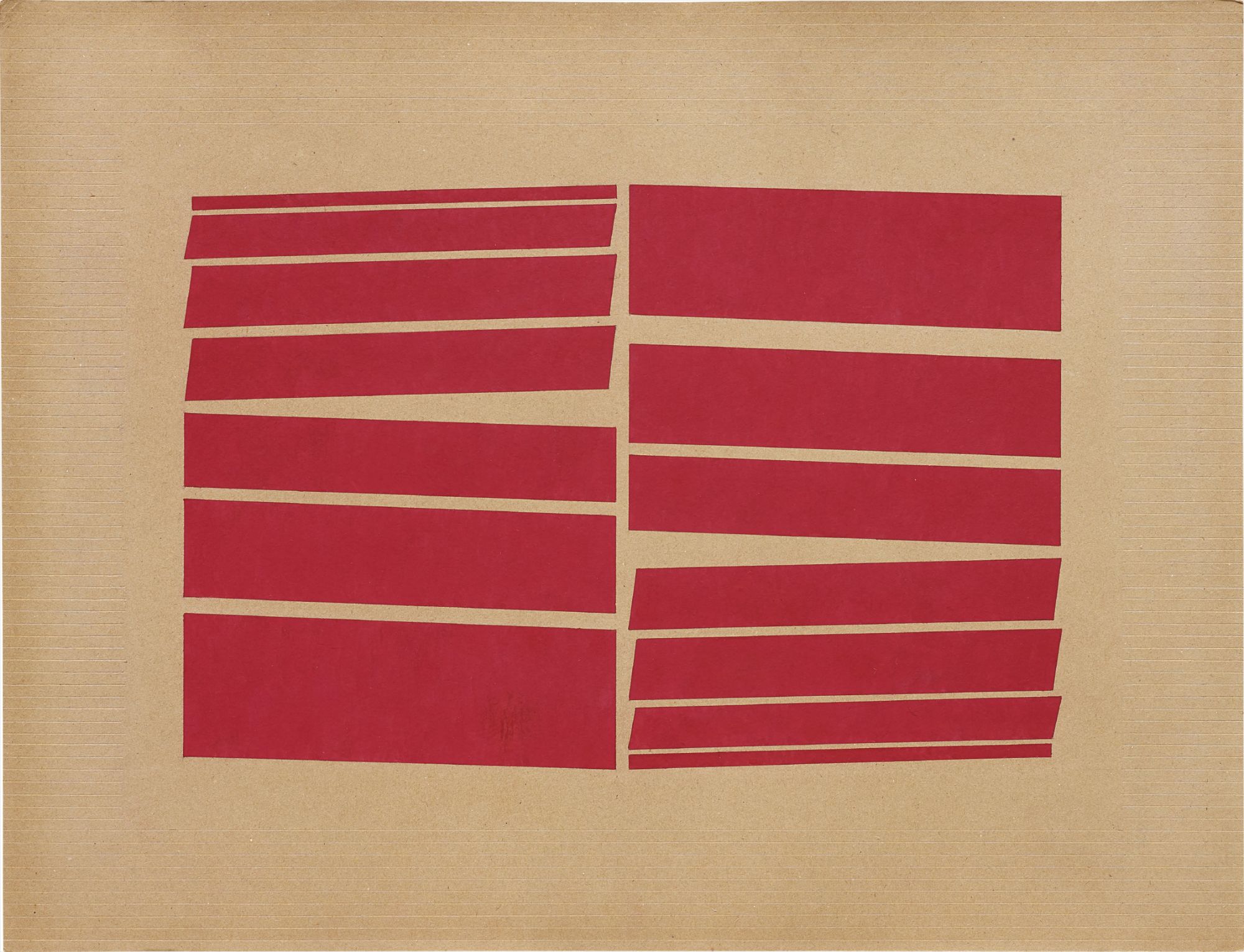
Metaesquema
Full-Cataloguing
Much of what remains are Oiticica’s early works, which are stunning jewels that give insight into the young mind of an artistic genius, informing much of his later experiments. The present work, Metaesquema (1958), shows Oiticica’s grasp of European abstraction and the influence of artists like Piet Mondrian and Kazimir Malevich, who pushed for an art that would transform society. The series of Metaesquemas produced from 1957 to 1958, demonstrate Oiticica’s preoccupation with color as an entity with its own time, structure and space. Yet, even as one of the youngest artists associated with the Grupo Frente, Oiticica quickly cannibalized the older members’ achievements, becoming a leader of the Neo-Concrete movement that would transform Brazilian art forever.
Hélio Oiticica
Brazilian | B. 1937 D. 1980Hélio Oiticica is one of Brazil's most influential artists. His work ranges from abstract compositions to early environmental installations exploring color, form, and material. He studied under Ivan Serpa in the mid-1950s and joined Grupo Frente, an association of artists in Rio de Janeiro interested in developing the legacy of European Constructivism within the context of the modernization of Brazil. Disagreements with the São Paulo Ruptura group led Oiticica and Lygia Clark to create the Neo-Concrete group (1959-'61).
His Metaesquemas (1957-'58) are an important series of gouaches where color is reduced to a few tones and broken into irregular shapes that are isolated within a grid. However he soon rejected this conventional art form for more radical ones that demanded viewer participation, including his Parangoles (1964–'68), three-dimensional sculptures based on traditional Brazilian Carnival costumes. Yet an exploration of the physical nature of color remained a constant in his work up until his untimely death in 1980.