
179
Donald Judd
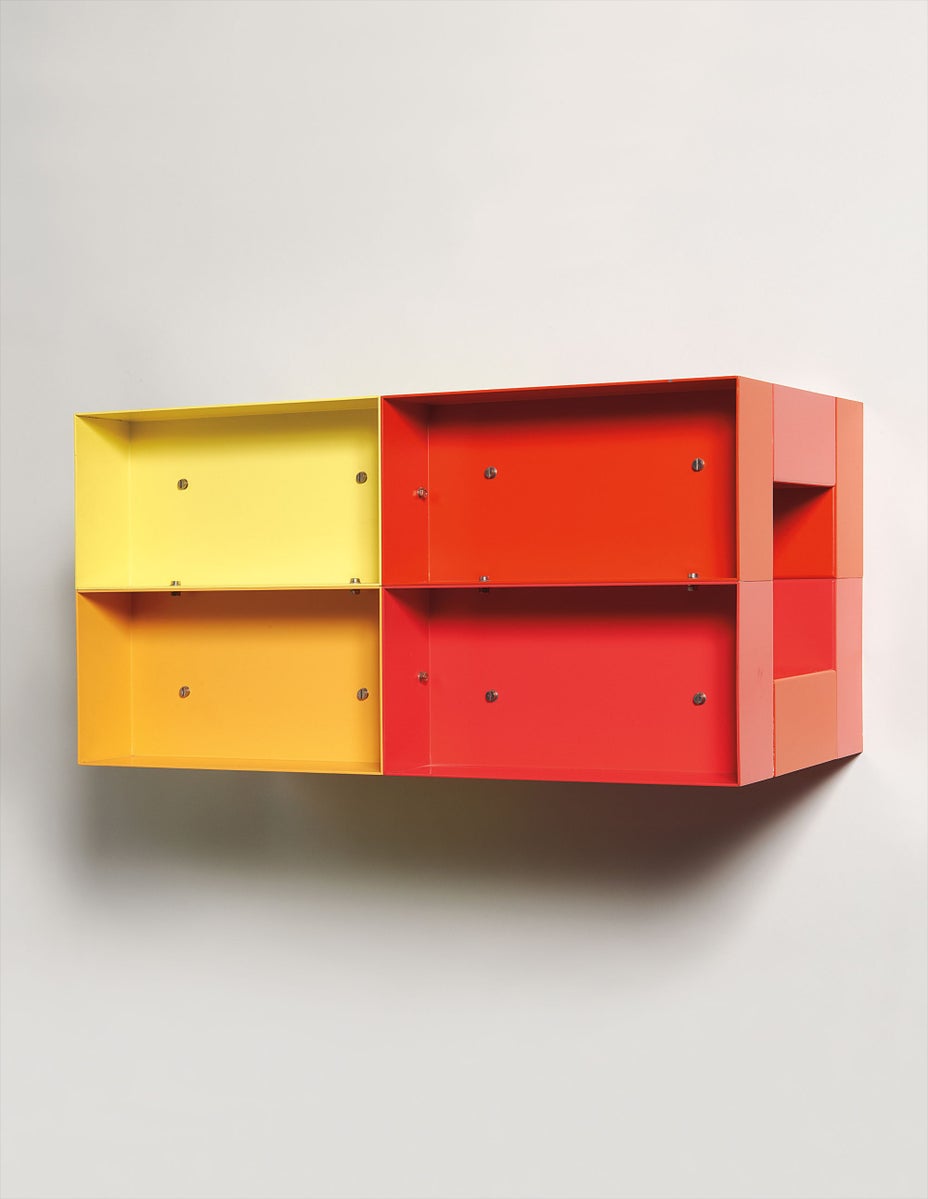
Untitled (89-26)
- Estimate
- $200,000 - 300,000
$341,000
Lot Details
painted aluminum
11 3/4 x 23 5/8 x 11 3/4 in. (30 x 60 x 30 cm)
Stamped and numbered "DONALD JUDD 89-26 LASCAUX MATERIALS LTD. BROOKLYN, NY" on the reverse.
Specialist
Full-Cataloguing
Catalogue Essay
The bold, ordered, and strikingly simple sculptures of Donald Judd were believed by the artist to be "products of creative imagination just as much as classical sculptures and figurative bronzes" causing him to reject the term minimalist. (A. Hamilton, "Space odyssey: Donald Judd –space, light and sculptures that take on a life of their own", The Independent, August 13, 2013). In the early 1960s, Judd turned towards creating free standing, three-dimensional objects after having abandoned painting. With an interest in repetition and simplicity, which would become hallmarks of his work, Judd separated himself from conventional categories of art. In his text, Specific Objects (published in 1965), Judd discussed how his works existed outside the realms of traditional sculpture and painting, refuting archaic definitions and paving the way for a new manner of discussing and examining objects.
Throughout his practice, Judd was increasingly aware of, and focused on, the inherent power and quality of color. Beginning in 1983, Judd created horizontal, aluminum wall sculptures where color reasserted its centrality within his oeuvre and his ideas on art more generally. Untitled (89-26), 1989, hails from Judd’s critically acclaimed Swiss Box series. Begun in 1983, the series witnessed Judd’s new-found exuberance as a colorist. With such works as the present lot, Judd started incorporating the brilliant hues of industrial paints in his sculptures treating color formally as an object. Untitled (89-26) is a classic intimate Judd volumetric wall piece. As the viewer moves across the work, subtle elements of the work begin to emerge. Judd creates a void where space, light and object play and intertwine to create an internal pool of colors. Throughout the 1970s and 1980s, Judd produced radical works that eschewed the classical European ideals of representational sculpture and has continued to inspire succeeding generations of artists and designers. The present work is an excellent example of Judd’s deep respect for his materials and ideas but also the manner in which those elements are assembled into a discrete object of interminable beauty and attraction.
Provenance
Exhibited
Donald Judd
American | B. 1928 D. 1994Donald Judd came to critical acclaim in the 1960s with his simple, yet revolutionary, three-dimensional floor and wall objects made from new industrial materials, such as anodized aluminum, plywood and Plexiglas, which had no precedent in the visual arts. His oeuvre is characterized by the central constitutive elements of color, material and space. Rejecting the illusionism of painting and seeking an aesthetic freed from metaphorical associations, Judd sought to explore the relationship between art object, viewer and surrounding space with his so-called "specific objects." From the outset of his three-decade-long career, Judd delegated the fabrication to specialized technicians. Though associated with the minimalist movement, Judd did not wish to confine his practice to this categorization. Inspired by architecture, the artist also designed and produced his own furniture, predominantly in wood, and eventually hired a diverse team of carpenters late in his career.
Browse Artist