US import tariffs: Non-US origin lots in this sale (including watches and timepieces with Swiss-made or non-US made movements) will be subject to special tariffs upon import to the USA, currently ranging from 10% to 39% on the total invoice price (hammer price plus buyer’s premium). Buyers are responsible for paying any applicable tariffs, duties, taxes and charges when importing their purchased lots. Due to the evolving nature of international trade regulations, we recommend clients consult with their local customs office or advisor for up-to-date information on the applicable tariffs.
211
Dürstein and Cie
Grand Complication
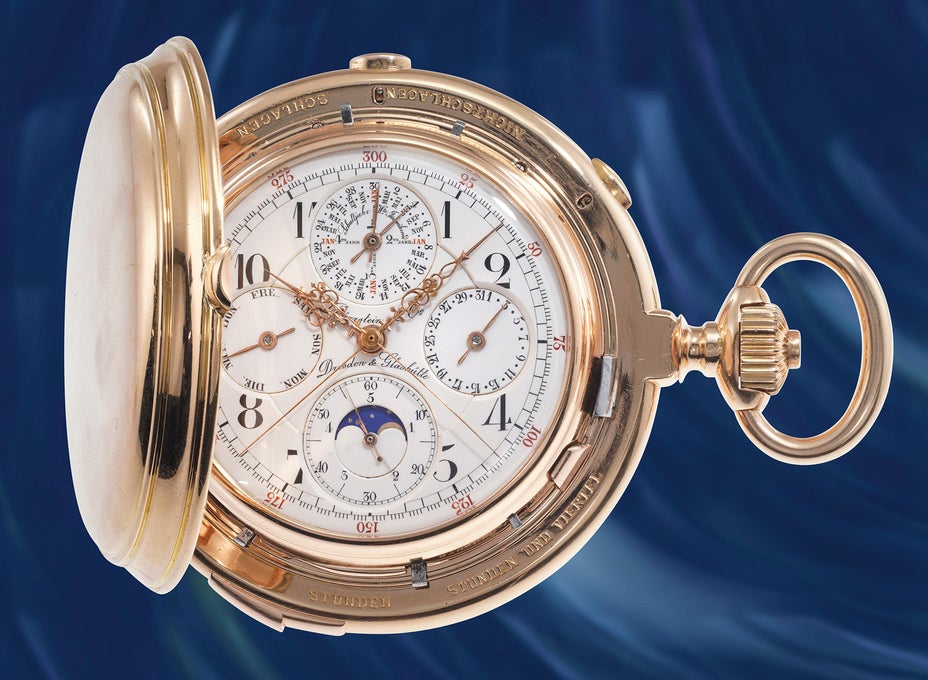
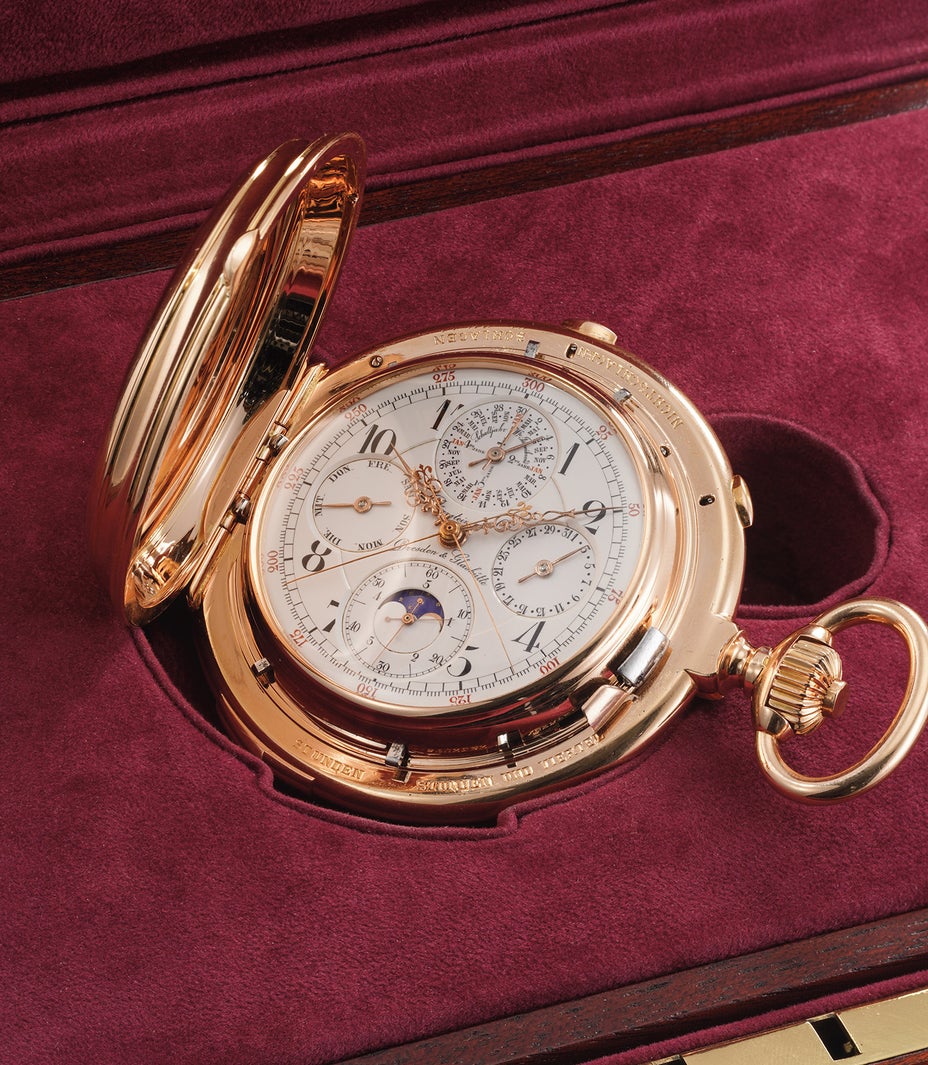
A spectacular and historically important pink gold minute repeating, hunter cased split seconds chronograph, perpetual calendar, grande and petite sonnerie clock watch with foudroyante hand and moonphase display
Estimate
CHF150,000–300,000
€162,000–324,000
$188,000–377,000
Sold For
CHF355,600
Manufacturer
Dürstein and Cie
Year
1895
Model Name
Grand Complication
Material
18k pink gold
Calibre
Manual, Audemars Piguet ébauche, 40 jewels
Dimensions
69mm diameter
Accessories
Accompanied by fitted wood box.
Full-Cataloguing
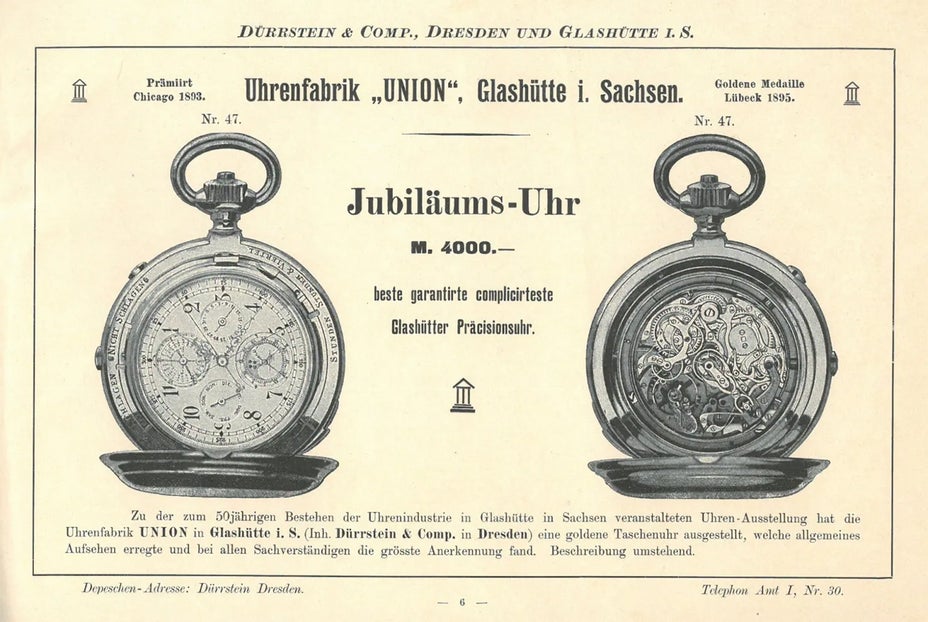
The present Union-Dürrstein grande complication is not only historically important as it was not only made to commemorate the 50th aniversary of the creation of the Glashütte watch industry but it was and still remains one of the most complicated pocket watches ever made in Germany.
Dürrstein & Co was not a retailer based in Dresden and founded by Johannes and Friedrich Dürrstein in 1874, On January 1, 1893, Johannes Dürrstein founded the Union watch factory in Glashütte, parallel to his Dresden retail business.
In 1895 the brand exhibited the present Grande Complication pocket watch at the World Fair in Chicago, to mark the 50th anniversary of the foundation of the Glashütte watch industry and it was also the first Grande Complication of its kind to come out of Glashütte. A total of six watches were subsequently produced.
The absolute ultimate expression of watchmaking at its very finest, the present lot features the three elements that collectors and scholars define as a "Grande Complication": a chiming function, a perpetual calendar and a split-seconds complication. However, the present example does not feature "just" any chiming function as along with a minute repeater it features what is considered a horological grail for both watchmakers and collectors alike: the Grande & Petite Sonnerie.
Very similar in design and layout to the A. Lange & Söhne Grande Complication pocket watches from the early 20th century (see Phillips Watches Geneva Watch Auction XXI – May 2025 lot 24 – sold for CHF 1,168,400) the present lot has an extra feature in the form of a foudroyante or flying seconds hand placed at 6 o’clock along with the regular seconds hand. This foudroyante hand indicates 1/5th of a second.
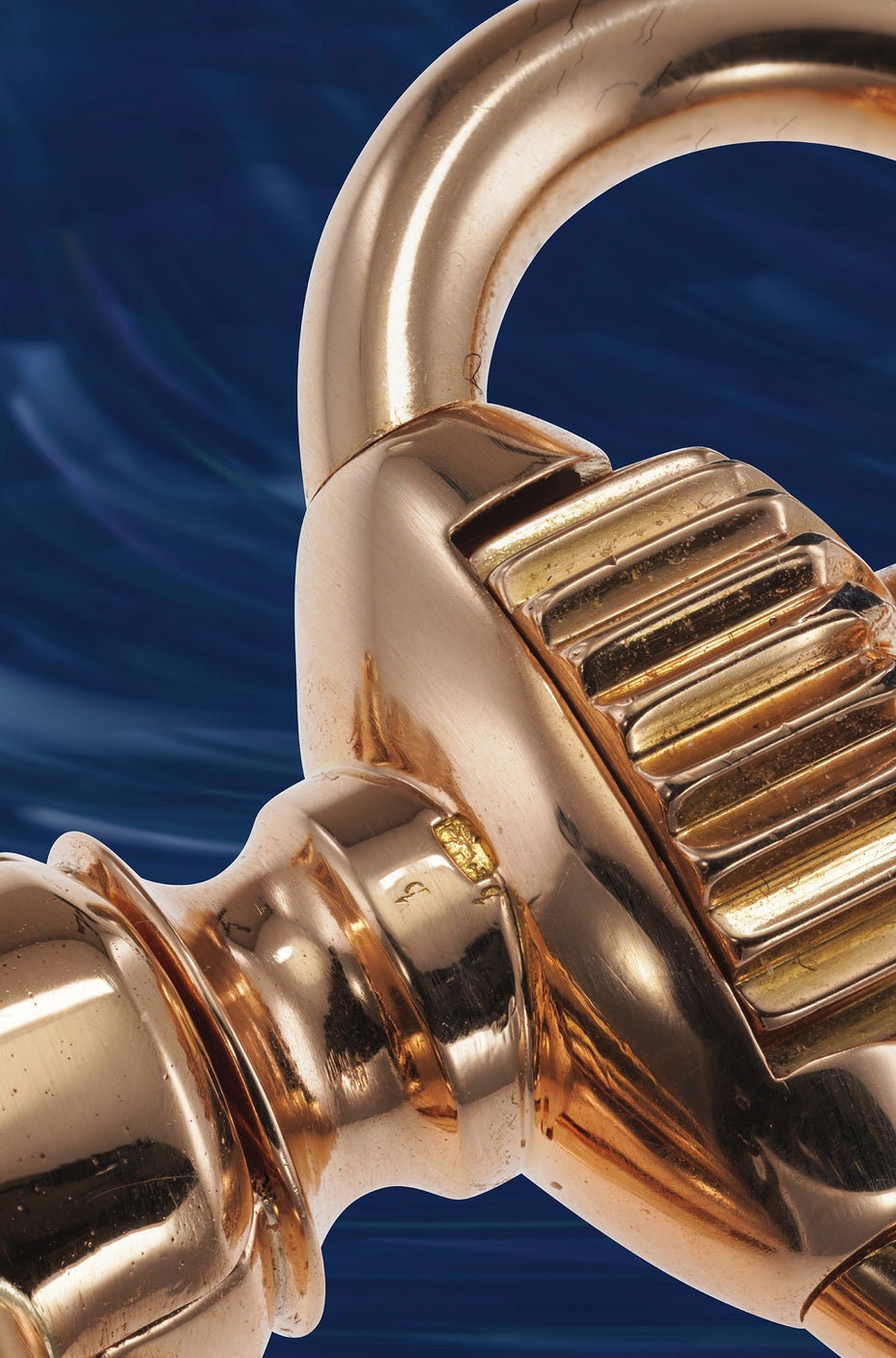
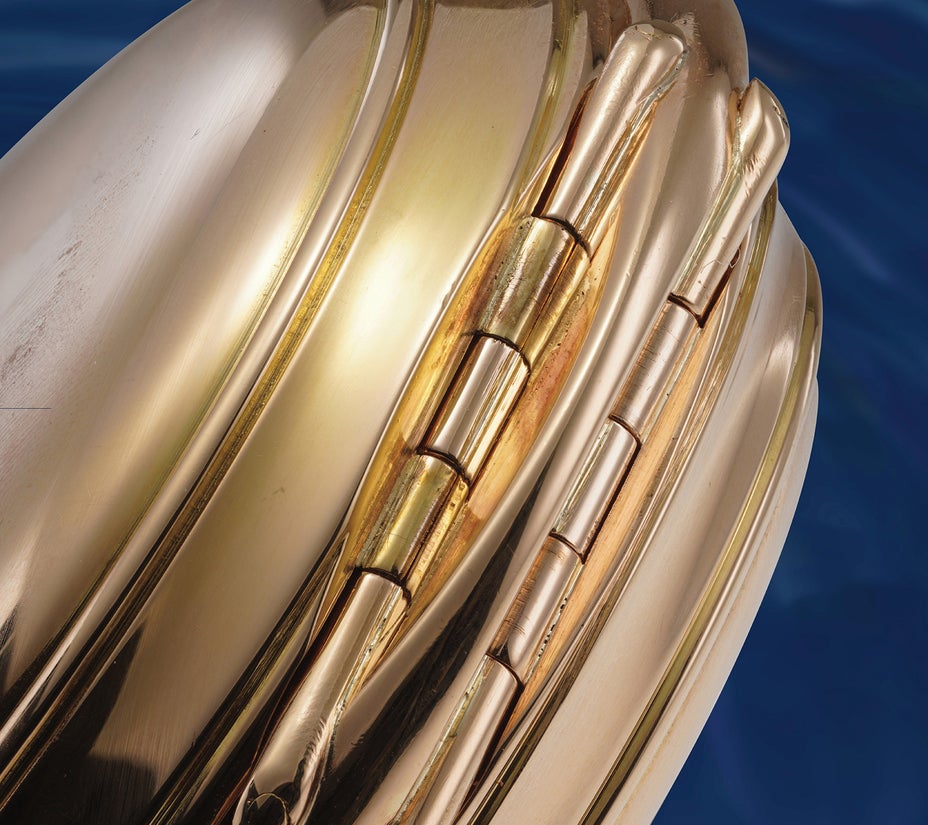
The watch is cased in a heavy pink gold hunter case, once opened the watch displays its full glory, the sonnerie activation pushers, the calendar indications, a moonphase display, the split-seconds chronograph hands, minutes counter and continuous seconds and 1/5th seconds. The main hour and minutes hands in Louis XV style complement the ensemble beautifully.
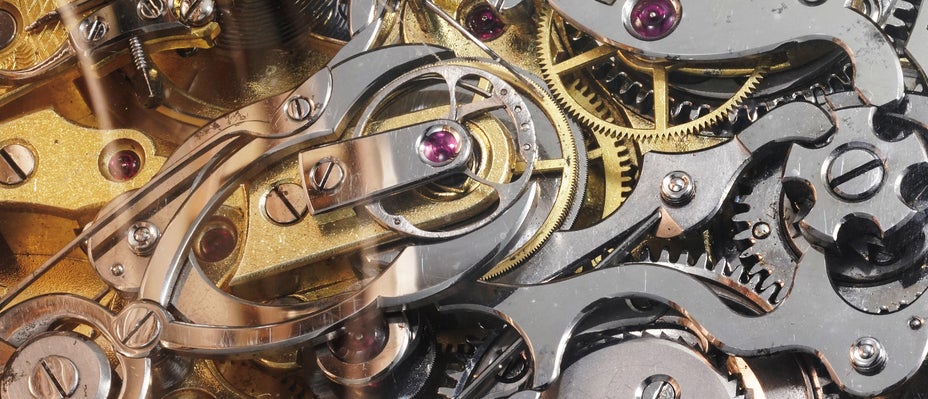
Opening the caseback reveals a superb architectural movement (based on an Audemars Piguet ébauche), with each component meticulously hand-finished for a spectacular result.
The Union-Dürrstein catalog description of this horological marvel stated: “the clock contains no fewer than 2,840 grooves, 121 levers and springs, 240 screws, 56 wheels and pinions, 850 drilled holes, 40 jewels, and 738 individual parts”!
Johannes Dürrstein (1845–1901) played a pivotal role in shaping German watchmaking at the turn of the twentieth century. Trained as a merchant in Frankfurt, he quickly recognized the demand for reliable and affordable timepieces in Central Europe. His Dresden-based wholesale firm, founded in 1874, distributed Swiss and German watches across the German Empire and beyond, at one point handling as many as 50,000 pocket watches annually. Dürrstein also cultivated close ties with Ferdinand Adolph Lange, negotiating the exclusive distribution of Lange watches and later convincing the company to create more accessible versions under the name Deutsche Uhren Fabrikation (DUF). This balance of commercial pragmatism and horological ambition set the stage for his most enduring contribution: the creation of his own brand.
In 1893, Dürrstein established the Uhrenfabrik Union in Glashütte (known today as Union Glashütte), relocating much of his production from Switzerland to Saxony. With Julius Bergter as technical director, the factory embraced modern industrial methods while remaining rooted in Glashütte’s tradition of precision. Union quickly distinguished itself by producing everything from simple chronographs to highly complicated pocket watches, including a Grande Complication in its very first year. Dürrstein was instrumental in elevating German watchmaking into the sphere of haute horlogerie, sourcing the finest ébauches for Union’s most ambitious projects. The pinnacle came in 1899 with the Universal-Uhr, built on an Audemars Piguet ébauche. At the time, it ranked as the most complicated pocket watch in the world, with 19 complications and 1,168 components. A Union-Dürrstein Grand Complication pocket watch from this lineage is offered in the present catalogue.
By the time the firm opened a new purpose-built manufactory in 1899, Union employed around 40 craftsmen and was already producing chronometers and tourbillons alongside its core pocket watches. Though Dürrstein’s death in 1901 cut short his personal involvement, the company carried on under his family, earning awards for its observation and marine chronometers before succumbing to the economic pressures of the interwar years. Today, Dürrstein’s vision remains a cornerstone of Glashütte’s horological and cultural history.
Dürrstein & Co was not a retailer based in Dresden and founded by Johannes and Friedrich Dürrstein in 1874, On January 1, 1893, Johannes Dürrstein founded the Union watch factory in Glashütte, parallel to his Dresden retail business.
In 1895 the brand exhibited the present Grande Complication pocket watch at the World Fair in Chicago, to mark the 50th anniversary of the foundation of the Glashütte watch industry and it was also the first Grande Complication of its kind to come out of Glashütte. A total of six watches were subsequently produced.
The absolute ultimate expression of watchmaking at its very finest, the present lot features the three elements that collectors and scholars define as a "Grande Complication": a chiming function, a perpetual calendar and a split-seconds complication. However, the present example does not feature "just" any chiming function as along with a minute repeater it features what is considered a horological grail for both watchmakers and collectors alike: the Grande & Petite Sonnerie.
Very similar in design and layout to the A. Lange & Söhne Grande Complication pocket watches from the early 20th century (see Phillips Watches Geneva Watch Auction XXI – May 2025 lot 24 – sold for CHF 1,168,400) the present lot has an extra feature in the form of a foudroyante or flying seconds hand placed at 6 o’clock along with the regular seconds hand. This foudroyante hand indicates 1/5th of a second.
The watch is cased in a heavy pink gold hunter case, once opened the watch displays its full glory, the sonnerie activation pushers, the calendar indications, a moonphase display, the split-seconds chronograph hands, minutes counter and continuous seconds and 1/5th seconds. The main hour and minutes hands in Louis XV style complement the ensemble beautifully.
Opening the caseback reveals a superb architectural movement (based on an Audemars Piguet ébauche), with each component meticulously hand-finished for a spectacular result.
The Union-Dürrstein catalog description of this horological marvel stated: “the clock contains no fewer than 2,840 grooves, 121 levers and springs, 240 screws, 56 wheels and pinions, 850 drilled holes, 40 jewels, and 738 individual parts”!
Johannes Dürrstein (1845–1901) played a pivotal role in shaping German watchmaking at the turn of the twentieth century. Trained as a merchant in Frankfurt, he quickly recognized the demand for reliable and affordable timepieces in Central Europe. His Dresden-based wholesale firm, founded in 1874, distributed Swiss and German watches across the German Empire and beyond, at one point handling as many as 50,000 pocket watches annually. Dürrstein also cultivated close ties with Ferdinand Adolph Lange, negotiating the exclusive distribution of Lange watches and later convincing the company to create more accessible versions under the name Deutsche Uhren Fabrikation (DUF). This balance of commercial pragmatism and horological ambition set the stage for his most enduring contribution: the creation of his own brand.
In 1893, Dürrstein established the Uhrenfabrik Union in Glashütte (known today as Union Glashütte), relocating much of his production from Switzerland to Saxony. With Julius Bergter as technical director, the factory embraced modern industrial methods while remaining rooted in Glashütte’s tradition of precision. Union quickly distinguished itself by producing everything from simple chronographs to highly complicated pocket watches, including a Grande Complication in its very first year. Dürrstein was instrumental in elevating German watchmaking into the sphere of haute horlogerie, sourcing the finest ébauches for Union’s most ambitious projects. The pinnacle came in 1899 with the Universal-Uhr, built on an Audemars Piguet ébauche. At the time, it ranked as the most complicated pocket watch in the world, with 19 complications and 1,168 components. A Union-Dürrstein Grand Complication pocket watch from this lineage is offered in the present catalogue.
By the time the firm opened a new purpose-built manufactory in 1899, Union employed around 40 craftsmen and was already producing chronometers and tourbillons alongside its core pocket watches. Though Dürrstein’s death in 1901 cut short his personal involvement, the company carried on under his family, earning awards for its observation and marine chronometers before succumbing to the economic pressures of the interwar years. Today, Dürrstein’s vision remains a cornerstone of Glashütte’s horological and cultural history.