55
Eberhard & Co.
A highly rare, attractive and extremely well-preserved yellow gold split seconds chronograph wristwatch with tag and presentation box
Estimate
CHF40,000–70,000
€37,100–64,900
$43,700–76,500
Sold For
CHF60,000
Manufacturer
Eberhard & Co.
Year
Circa 1945
Movement No
15'975
Case No
1'001'455
Material
18K yellow gold
Calibre
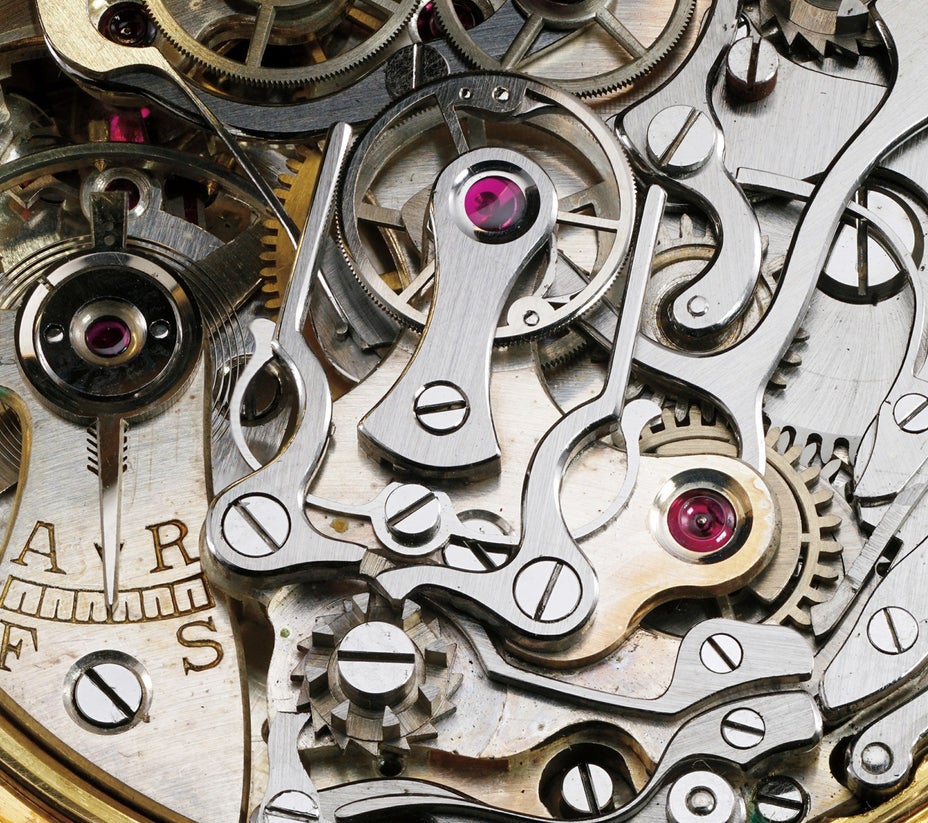
Manual, cal. 16"', 17 jewels
Bracelet/Strap
Leather
Clasp/Buckle
Gold plated buckle
Dimensions
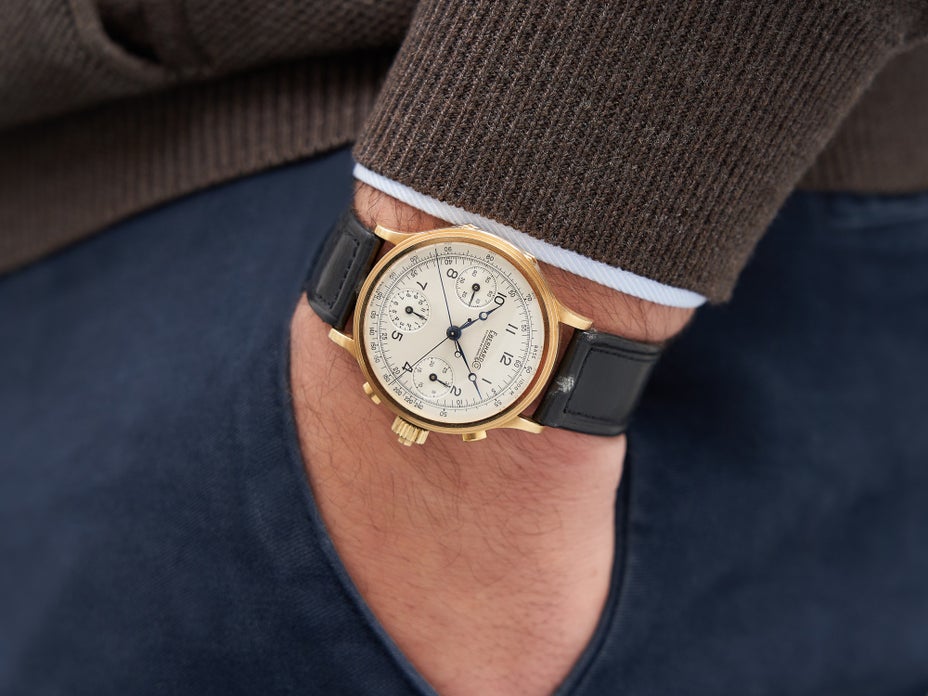
39mm Diameter
Signed
Case, dial and movement signed
Accessories
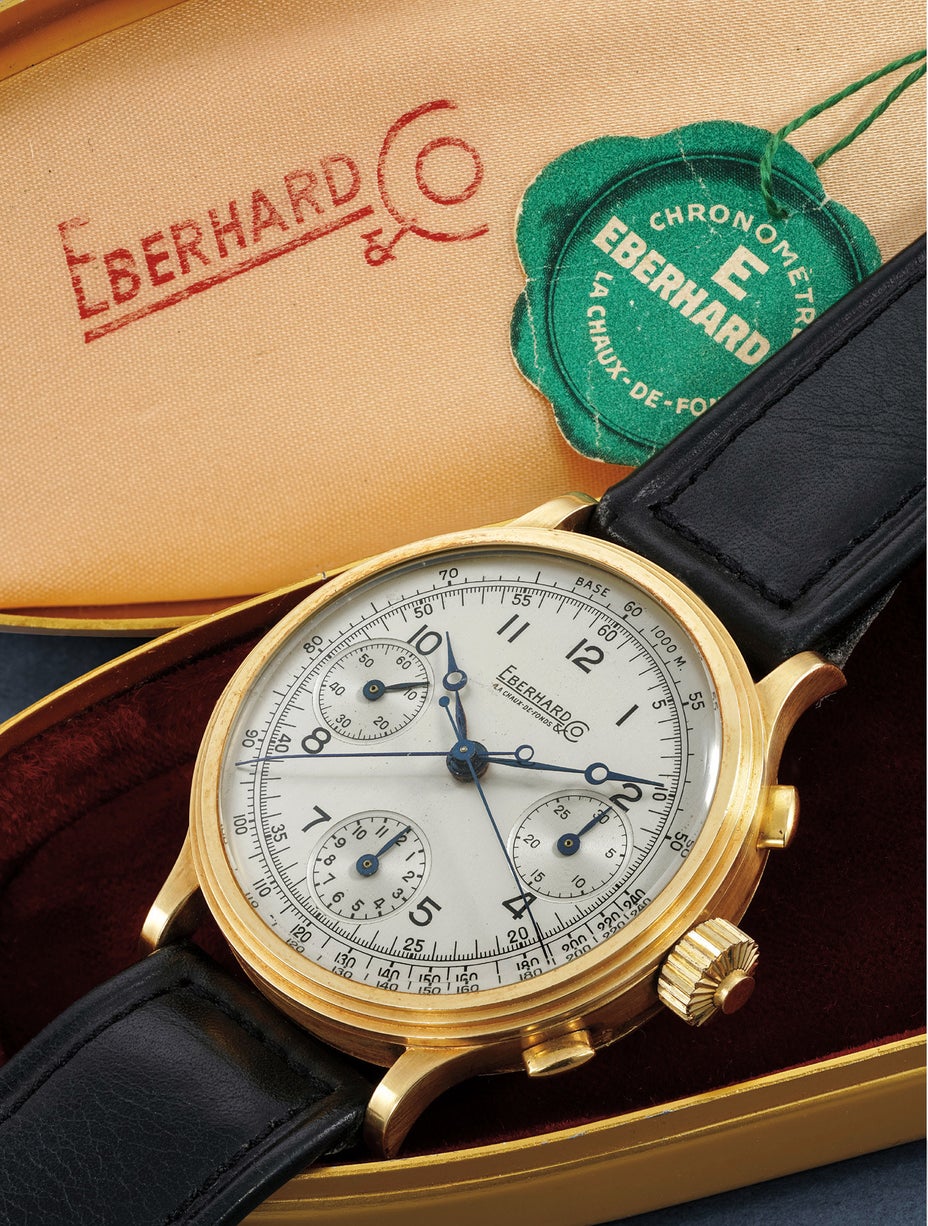
Accompanied by Eberhard & Co. numbered tag and presentation box.
Full-Cataloguing
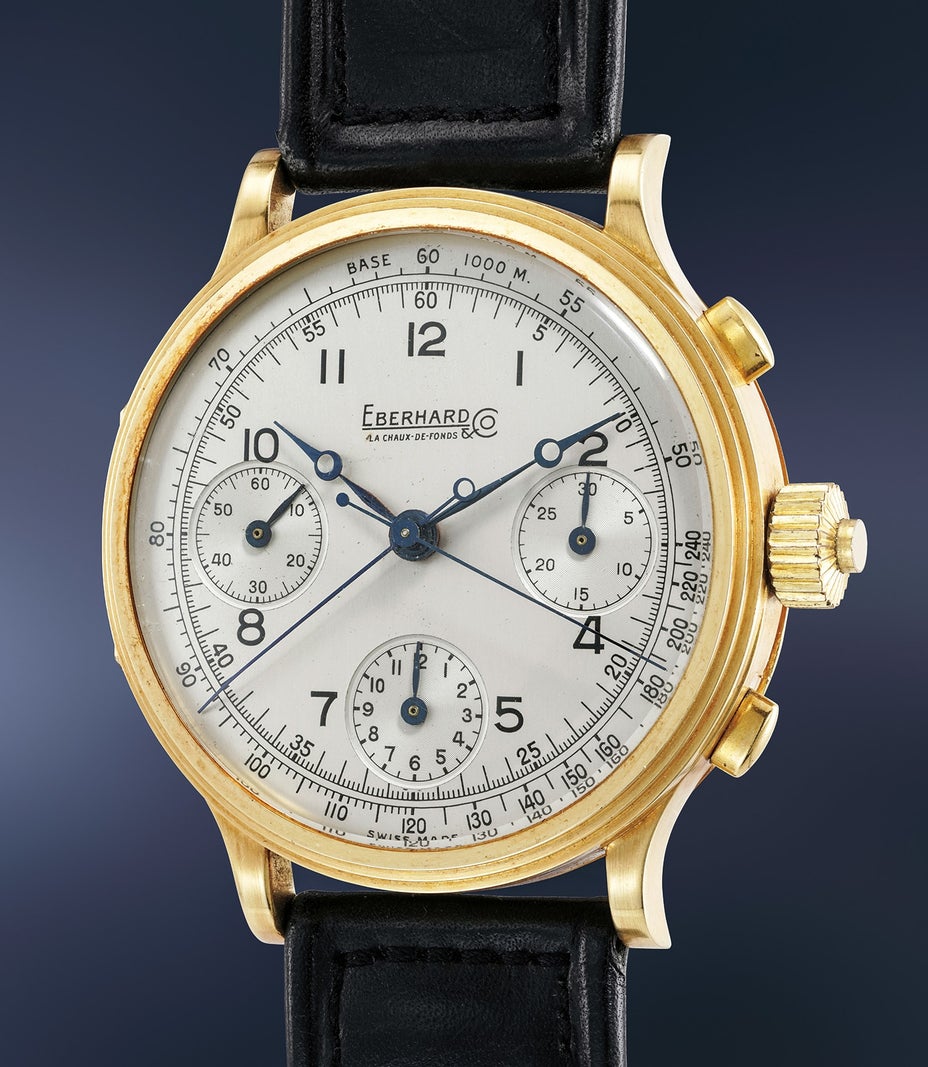
Preserved in absolutely astounding and virtually new-old-stock condition, the present timepiece is a true time capsule. Displaying powerful and defined lugs, it is unspoiled and barely worn despite being over 70 years of age. It most notably features a split seconds mechanism - among the most prestigious and complicated of all chronograph movements.
The start, stop and reset functions are all controlled by a single push piece that is integrated into the winding crown. The top pusher is responsible for the split-seconds function, meant to measure intermediate times without interrupting the timekeeping of an event. Appearing to look like a third chronograph pusher, the lower pusher at 4 o’clock instead works as a “stop and lock” mechanism controlled by simply sliding the bottom button up towards the crown. When the slide is moved upwards, the precise time is protected, and can be recorded by the user. The lock prevents the accidental actuation of the chronograph’s pushers that would result in losing the measurement.
The dial of the present timepiece is particularly noteworthy. Hardly displaying any signs of aging, it is free of visible tarnishing or spotting. The graphics are crisp, clear and free of losses. Considering the age of the timepiece, the dial is truly remarkable. Moreover, it is accompanied by its original presentation box and tag, adding another element of desirability.
The start, stop and reset functions are all controlled by a single push piece that is integrated into the winding crown. The top pusher is responsible for the split-seconds function, meant to measure intermediate times without interrupting the timekeeping of an event. Appearing to look like a third chronograph pusher, the lower pusher at 4 o’clock instead works as a “stop and lock” mechanism controlled by simply sliding the bottom button up towards the crown. When the slide is moved upwards, the precise time is protected, and can be recorded by the user. The lock prevents the accidental actuation of the chronograph’s pushers that would result in losing the measurement.
The dial of the present timepiece is particularly noteworthy. Hardly displaying any signs of aging, it is free of visible tarnishing or spotting. The graphics are crisp, clear and free of losses. Considering the age of the timepiece, the dial is truly remarkable. Moreover, it is accompanied by its original presentation box and tag, adding another element of desirability.