

126
Ed Ruscha
Stains (E. B9)
- Estimate
- $20,000 - 30,000
$35,560
Lot Details
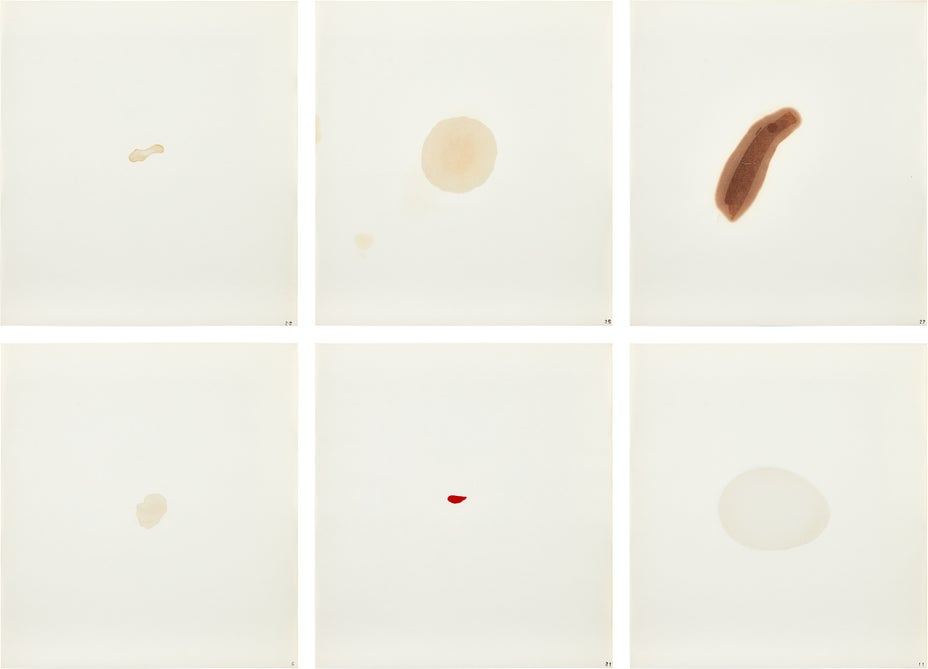
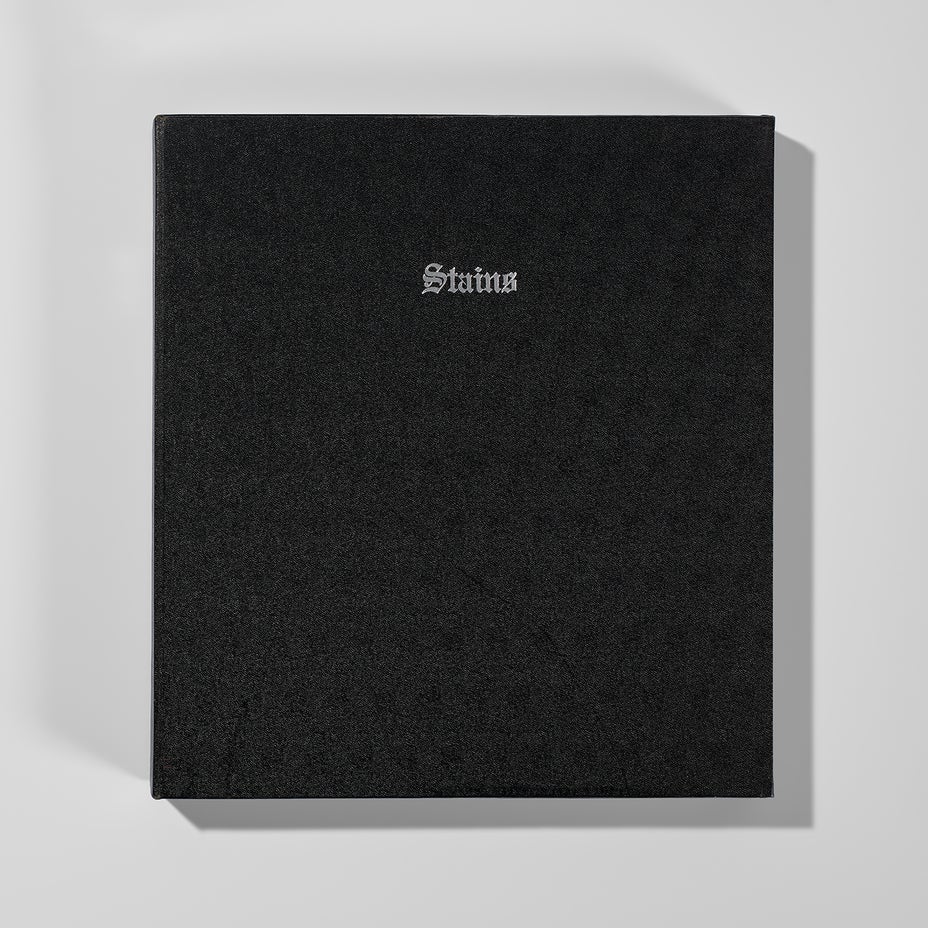
The complete artist's book of 75 stains, on Eagle Coupon Bond paper, with one additional stain of the artist's blood on white silk moiré fabric boxed in the portfolio, with title, colophon and index pages, all loose (as issued), contained in the original clamshell portfolio covered with black textured paper with embossed title in silver ink on the cover and spine.
1969
all S. 11 3/4 x 10 3/4 in. (29.8 x 27.3 cm)
Portfolio 12 1/2 x 11 1/4 x 1 1/2 in. (31.8 x 28.6 x 3.8 cm)
Signed and numbered 36/70 in blue ink on the colophon, all sequentially stamp-numbered '1-75' in black ink (there were also 2 artist's proofs), published by Heavy Industry Publications, Hollywood.
Specialist
Further Details
Full-Cataloguing
Catalogue Essay
Provenance
Literature
Ed Ruscha
American | 1937Quintessentially American, Ed Ruscha is an L.A.-based artist whose art, like California itself, is both geographically rooted and a metaphor for an American state of mind. Ruscha is a deft creator of photography, film, painting, drawing, prints and artist books, whose works are simultaneously unexpected and familiar, both ironic and sincere.
His most iconic works are at turns poetic and deadpan, epigrammatic text with nods to advertising copy, juxtaposed with imagery that is either cinematic and sublime or seemingly wry documentary. Whether the subject is his iconic Standard Gas Station or the Hollywood Sign, a parking lot or highway, his works are a distillation of American idealism, echoing the expansive Western landscape and optimism unique to postwar America.
Browse ArtistHis most iconic works are at turns poetic and deadpan, epigrammatic text with nods to advertising copy, juxtaposed with imagery that is either cinematic and sublime or seemingly wry documentary. Whether the subject is his iconic Standard Gas Station or the Hollywood Sign, a parking lot or highway, his works are a distillation of American idealism, echoing the expansive Western landscape and optimism unique to postwar America.