
70
Ed Ruscha
Insects
- Estimate
- $15,000 - 25,000
$35,000
Lot Details
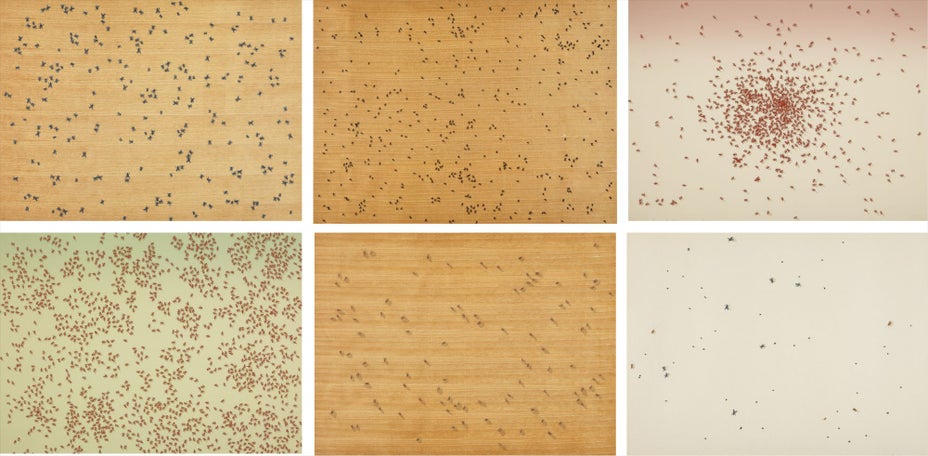
The complete set of six screenprints, three on paper-backed wood veneer and three on Fabriano Classico glazed-finish watercolor paper, the full sheets, with title page and colophon,
1972
20 1/2 x 27 1/4 in. (52.1 x 69.2 cm)
all signed, dated `1972' and numbered 65/100 in pencil (there were also 15 artist's proofs), published by Multiples, Inc., New York (with their inkstamp on the reverse), all enclosed in the original raw linen-covered portfolio box with plastic cover encapsulating brownish-red soil.
Specialist
Full-Cataloguing
Catalogue Essay
Including: Flies; Black Ants; Swarm of Red Ants; Red Ants; Cockroaches and Pearl Dust CombinationThe soil for the cover of the portfolio was gathered from the playground at Hawthorne Elementary School, which Ruscha attended, in Oklahoma City.
Provenance
Literature
Ed Ruscha
American | 1937Quintessentially American, Ed Ruscha is an L.A.-based artist whose art, like California itself, is both geographically rooted and a metaphor for an American state of mind. Ruscha is a deft creator of photography, film, painting, drawing, prints and artist books, whose works are simultaneously unexpected and familiar, both ironic and sincere.
His most iconic works are at turns poetic and deadpan, epigrammatic text with nods to advertising copy, juxtaposed with imagery that is either cinematic and sublime or seemingly wry documentary. Whether the subject is his iconic Standard Gas Station or the Hollywood Sign, a parking lot or highway, his works are a distillation of American idealism, echoing the expansive Western landscape and optimism unique to postwar America.
Browse ArtistHis most iconic works are at turns poetic and deadpan, epigrammatic text with nods to advertising copy, juxtaposed with imagery that is either cinematic and sublime or seemingly wry documentary. Whether the subject is his iconic Standard Gas Station or the Hollywood Sign, a parking lot or highway, his works are a distillation of American idealism, echoing the expansive Western landscape and optimism unique to postwar America.