

36
Ed Ruscha
Gasoline Stations
- Estimate
- £40,000 - 60,000
£106,900
Lot Details
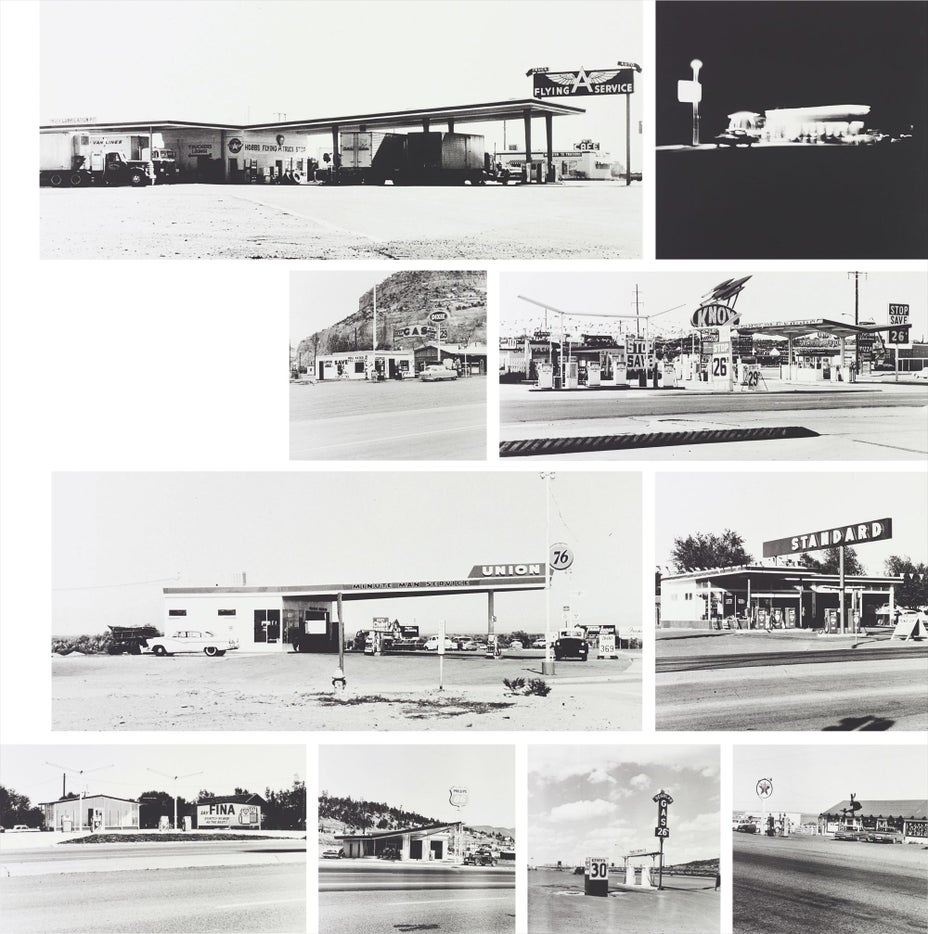
Ten gelatin silver prints, printed 1989.
1962
Varying sizes from 26.1 x 27.2 cm (10 1/4 x 10 3/4 in.) to 20.1 x 45.9 cm (7 7/8 x 18 1/8 in.)
each sheet: 49.4 x 58.1 cm (19 1/2 x 22 7/8 in.)
One signed, dated and annotated 'A.P.' in pencil on the reverse of the flush-mount; each with individual location and 'A.P.' stamps on the reverse of the flush-mount. One from an edition of 25 plus 8 artist's proofs.
Specialist
Full-Cataloguing
Catalogue Essay
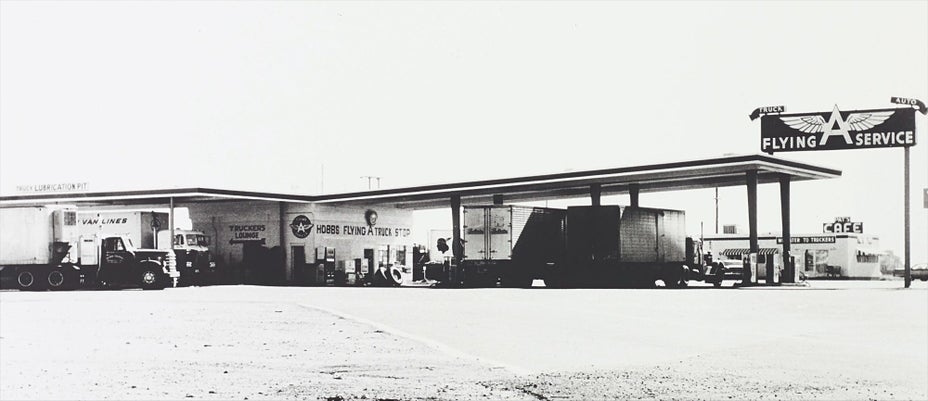
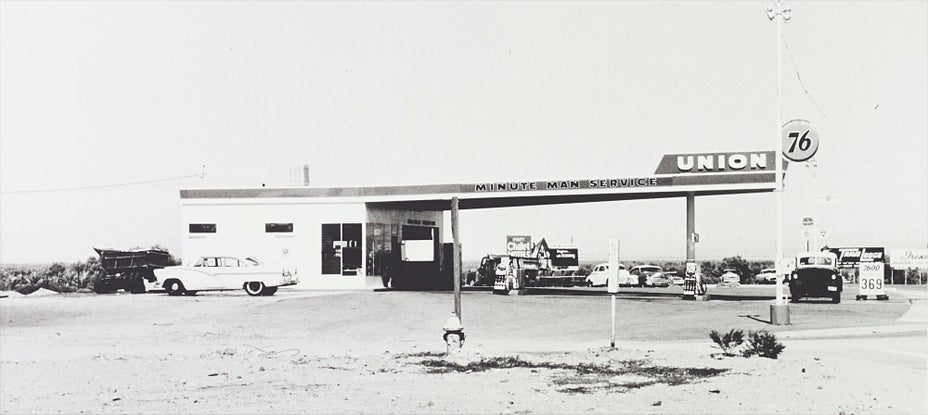
Twentysix Gasoline Stations was the first in a series of seminal artist books by Ed Ruscha. The present lot is a portfolio comprised of 10 of the 26 images included in the original book.
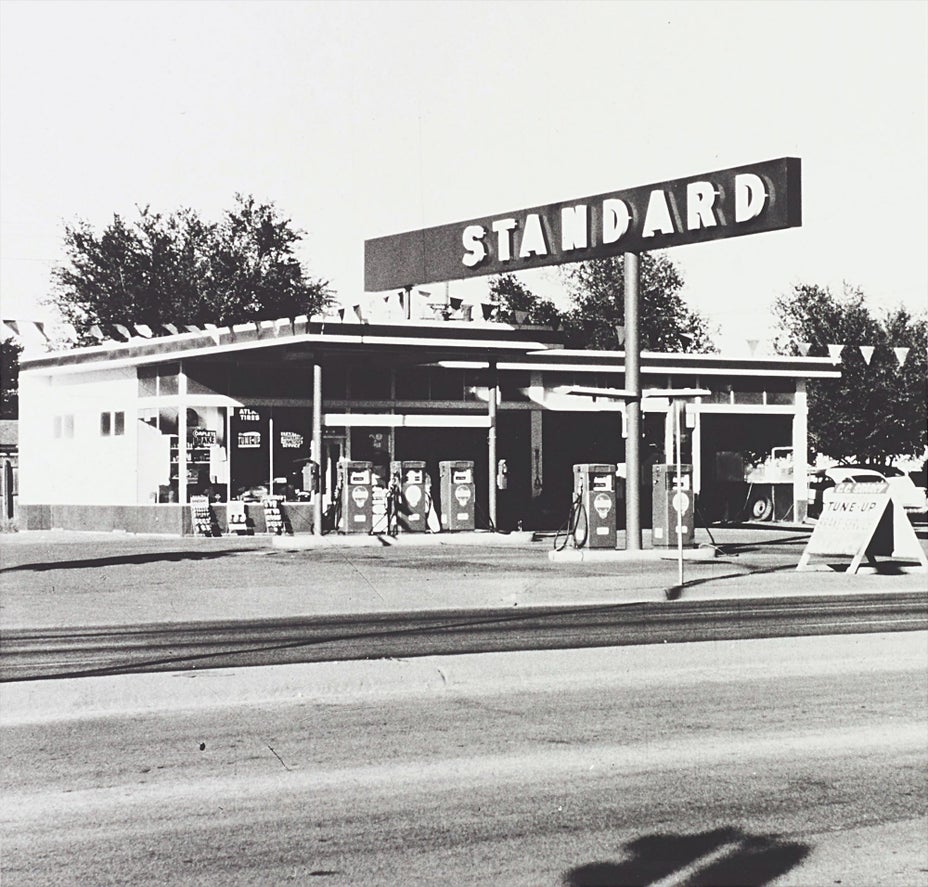
Ruschaʼs Gasoline Stations draws upon a history of American photography from Walker Evans to Robert Frank, both of whom documented everyday American life in the mid-20th century. Unlike Evans and Frank, who found their subject matter in distant parts of the United States, Ruscha stuck to the familiar. He started this project when he decided on the title, and only then did he begin to photograph the gas stations. At a time when the automobile signaled affluence and freedom, Ruscha by chance through a journey from his hometown of Oklahoma City to college in California created the American dream of going west via recording the pit-stops that lined the now iconic Route 66. Gasoline Stations exploits the banality of the content to celebrate the rich associations of car and highway culture during the second half of the 20th century. Unintentionally, he created a series of ready-mades that hinted at his later trade-mark linguistic cleptamania and provide a sense of quiet patriotism.
Provenance
Literature
Ed Ruscha
American | 1937Quintessentially American, Ed Ruscha is an L.A.-based artist whose art, like California itself, is both geographically rooted and a metaphor for an American state of mind. Ruscha is a deft creator of photography, film, painting, drawing, prints and artist books, whose works are simultaneously unexpected and familiar, both ironic and sincere.
His most iconic works are at turns poetic and deadpan, epigrammatic text with nods to advertising copy, juxtaposed with imagery that is either cinematic and sublime or seemingly wry documentary. Whether the subject is his iconic Standard Gas Station or the Hollywood Sign, a parking lot or highway, his works are a distillation of American idealism, echoing the expansive Western landscape and optimism unique to postwar America.
Browse ArtistHis most iconic works are at turns poetic and deadpan, epigrammatic text with nods to advertising copy, juxtaposed with imagery that is either cinematic and sublime or seemingly wry documentary. Whether the subject is his iconic Standard Gas Station or the Hollywood Sign, a parking lot or highway, his works are a distillation of American idealism, echoing the expansive Western landscape and optimism unique to postwar America.