12
Edward Weston
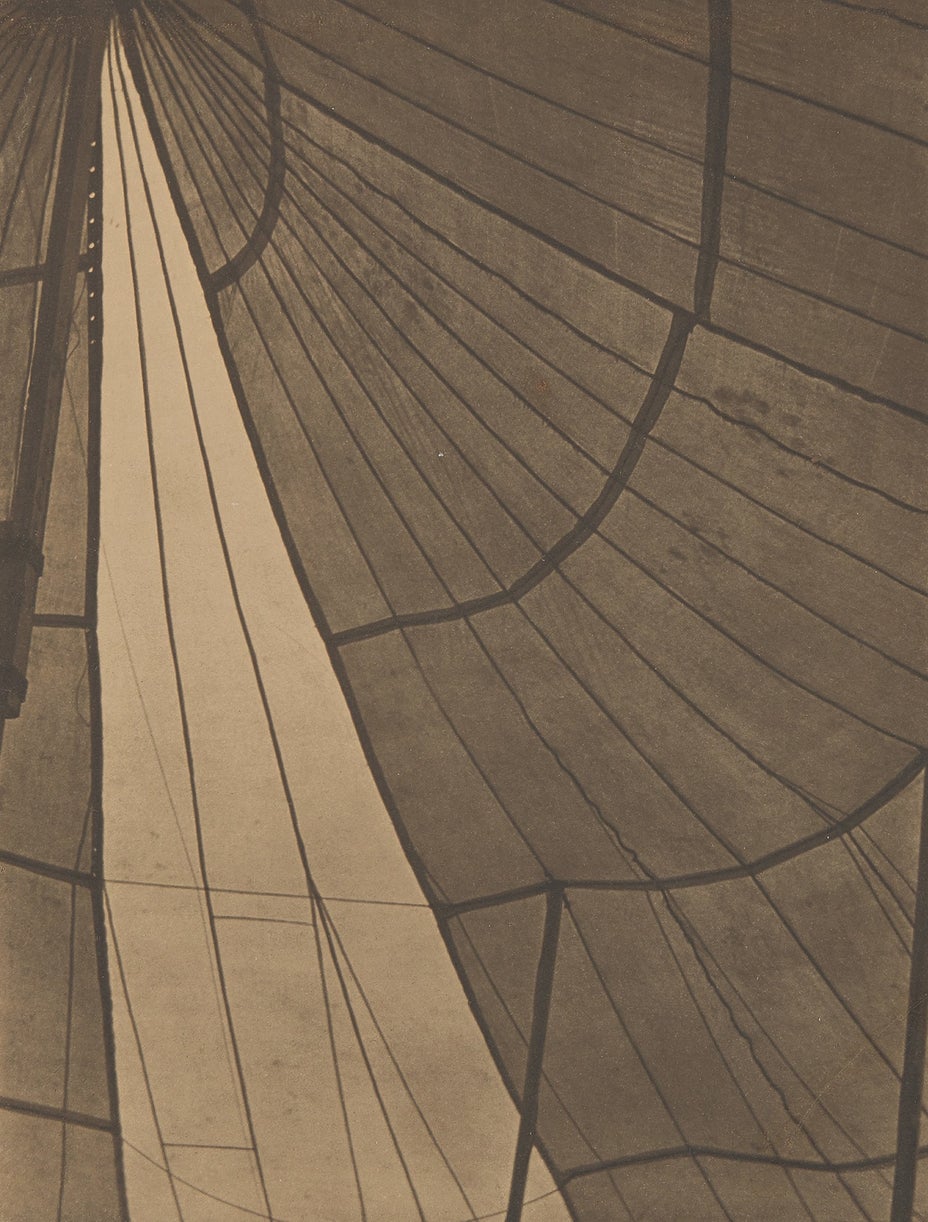
Circus Tent
Estimate
$400,000–600,000
Sold For
$788,000
1924
Platinum or palladium print.
9 1/4 x 7 1/4 in. (23.5 x 18.4 cm)
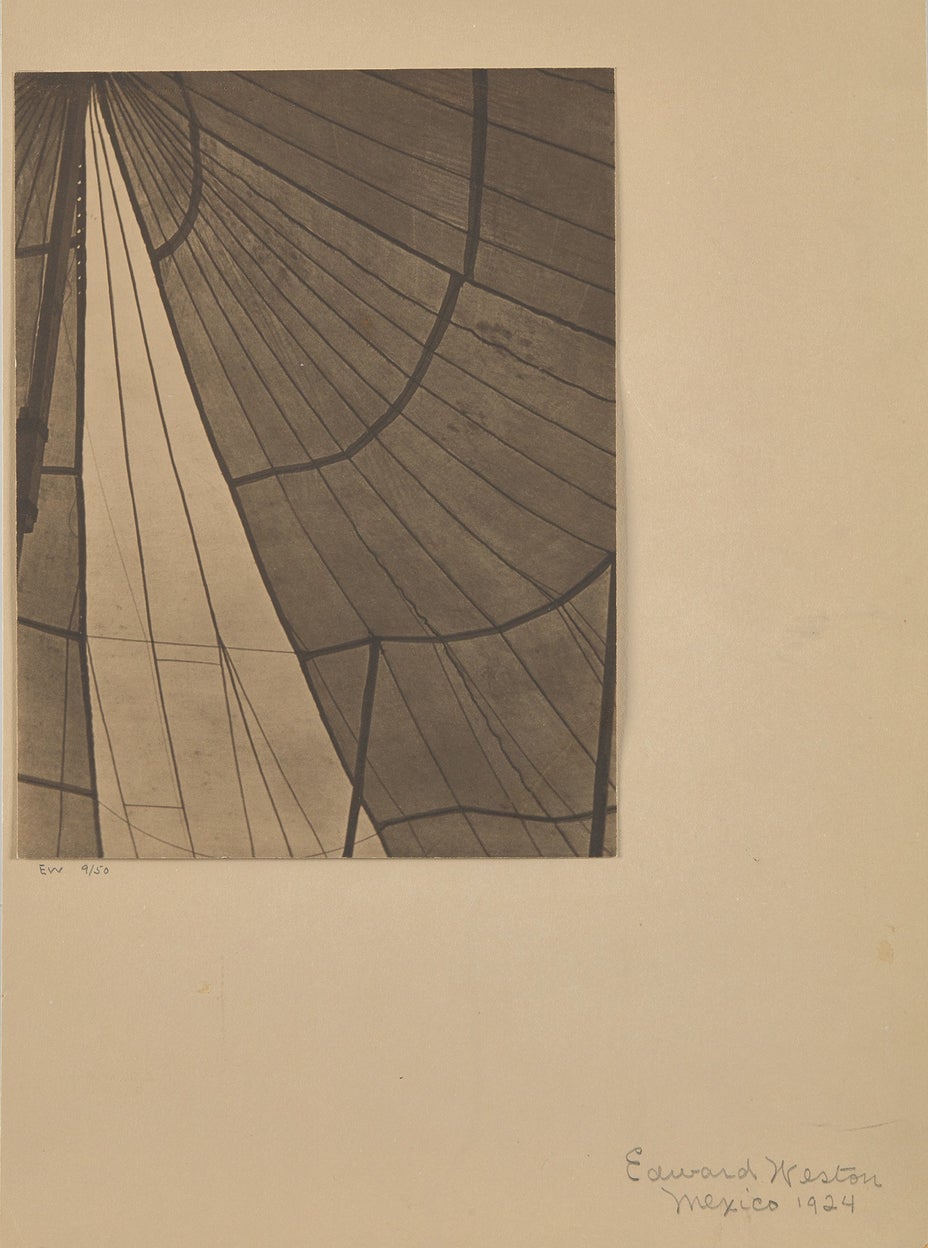
Signed, dated and annotated ‘Mexico D. F.’ in pencil on the verso; signed, initialed, annotated ‘Mexico D. F.,’ and numbered 9/50 in pencil on the mount.
Full-Cataloguing
Made within Edward Weston’s first year in Mexico, Circus Tent represents one of the photographer’s most decisive steps into abstraction. As with much of the work Weston created in Mexico, this image marks a departure from his previous approach and shows him entering a new phase of exploration which would take him in several productive aesthetic directions. Circus Tent is one of the triumphs of Weston’s Mexican period and is undeniably a stand-out image within an oeuvre that is remarkable for its quality. Presented here, on its original full mount, this print is a superb example of this formative period in Weston’s career.
Weston made this image in March 1924 on a visit to the Gran Circo Ruso, a circus outfit run by Russian refugees. After seeing an evening performance, he and Tina Modotti returned the next day with their cameras. In his daybook, he writes, ‘I took my Graflex to the circus, made negatives of the graceful folds, the poles and ropes of the tents,’ noting that ‘Tina too made several good things of the circus’ (Daybooks, Mexico, p. 53). On March 26 he recounts printing the photograph, pleased that he had ‘pulled a good print from the negative’ (ibid., p. 59).
The photograph proved to be an important one from the time of its making. Weston included it in his critically successful Aztec Land Gallery exhibition in that year, where Diego Rivera praised it as his favorite (ibid., p. 98). It was included in Weston’s 1927 exhibition at the Los Angeles County Museum. Additionally, designer and architect Richard Neutra, who had chosen Weston to select West Coast work for the 1929 Film und Foto exhibition in Stuttgart, illustrated it in his influential book Amerika (Vienna, 1930). Despite the image’s early and continuing significance, prints of it are scarce. The Center for Creative Photography, Tucson, and the Oakland Museum hold gelatin silver prints in their collections. Another platinum-palladium print is reported in a private collection. It is believed that this is the only early print of this image to appear at auction.
Weston made this image in March 1924 on a visit to the Gran Circo Ruso, a circus outfit run by Russian refugees. After seeing an evening performance, he and Tina Modotti returned the next day with their cameras. In his daybook, he writes, ‘I took my Graflex to the circus, made negatives of the graceful folds, the poles and ropes of the tents,’ noting that ‘Tina too made several good things of the circus’ (Daybooks, Mexico, p. 53). On March 26 he recounts printing the photograph, pleased that he had ‘pulled a good print from the negative’ (ibid., p. 59).
The photograph proved to be an important one from the time of its making. Weston included it in his critically successful Aztec Land Gallery exhibition in that year, where Diego Rivera praised it as his favorite (ibid., p. 98). It was included in Weston’s 1927 exhibition at the Los Angeles County Museum. Additionally, designer and architect Richard Neutra, who had chosen Weston to select West Coast work for the 1929 Film und Foto exhibition in Stuttgart, illustrated it in his influential book Amerika (Vienna, 1930). Despite the image’s early and continuing significance, prints of it are scarce. The Center for Creative Photography, Tucson, and the Oakland Museum hold gelatin silver prints in their collections. Another platinum-palladium print is reported in a private collection. It is believed that this is the only early print of this image to appear at auction.