Property of a Private Miami Collector
1
Ettore Sottsass, Jr.
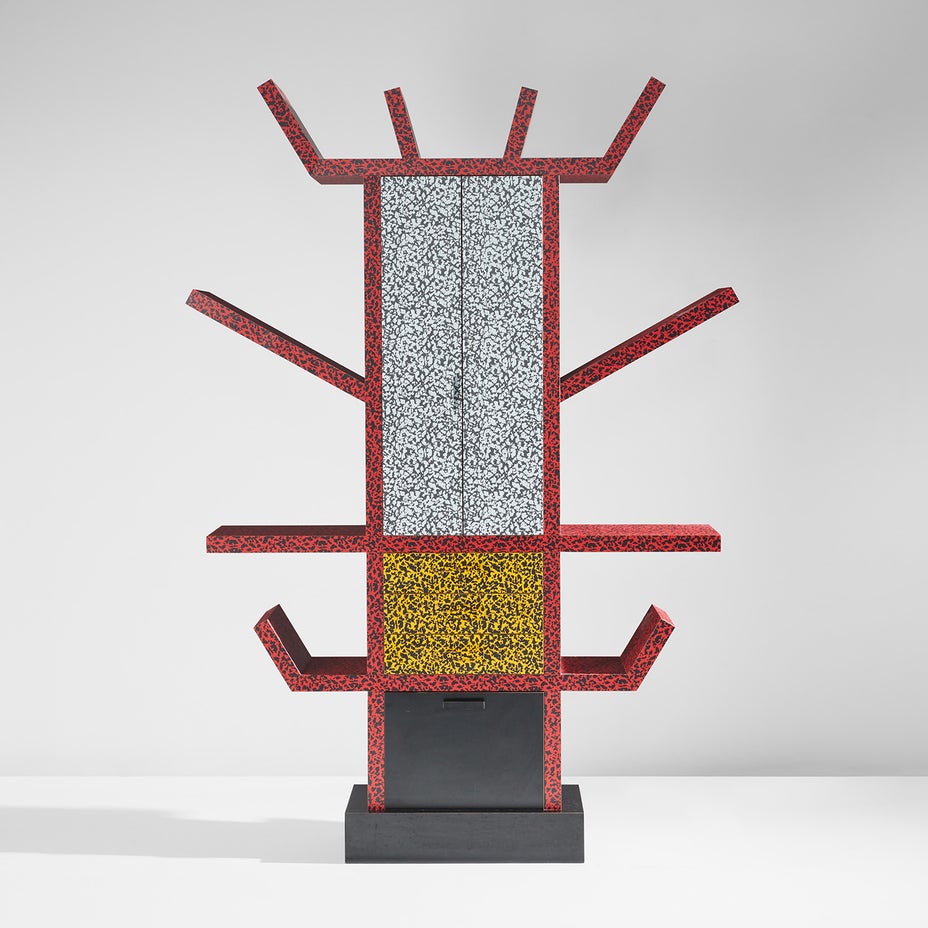
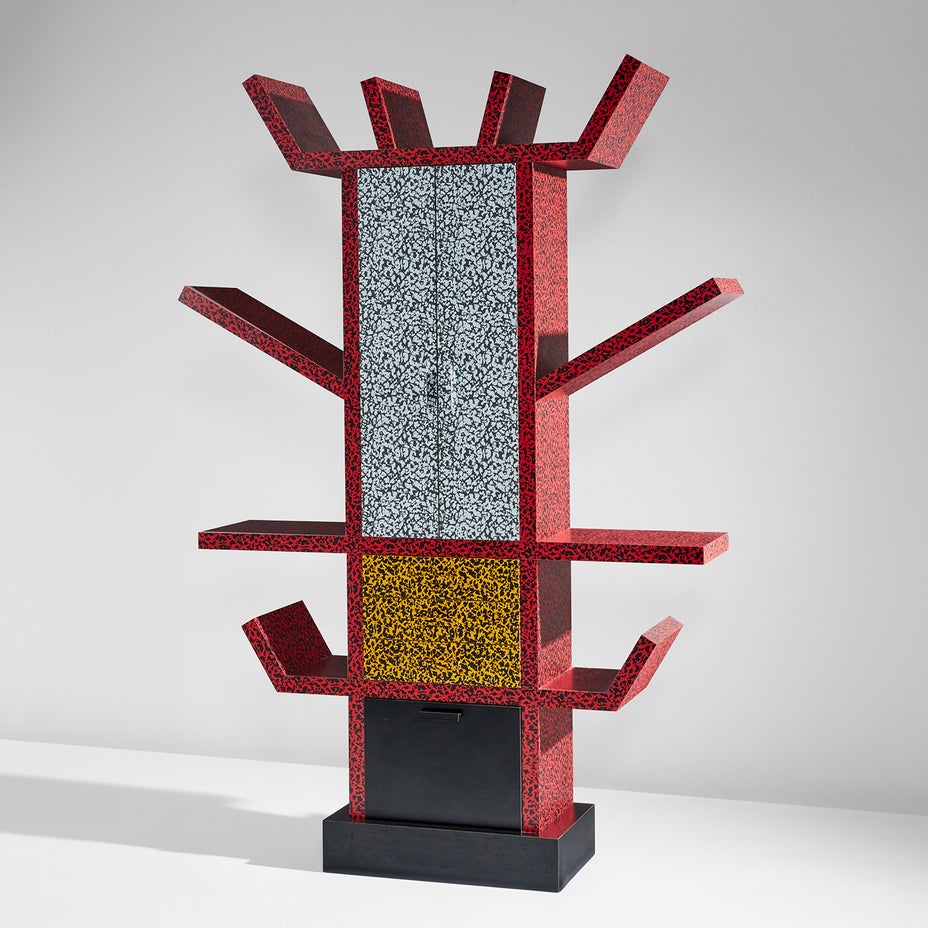
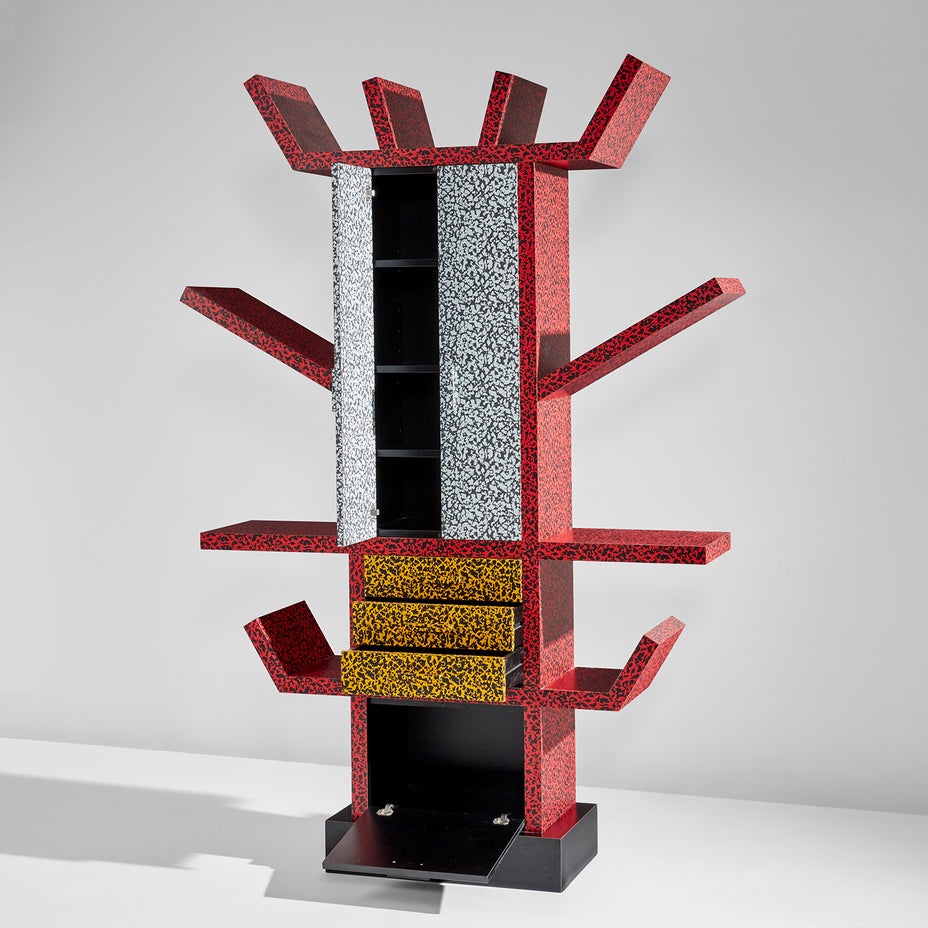
"Casablanca" sideboard
Estimate
$8,000–12,000
Sold
designed 1981, produced circa 1985
Plastic laminate-covered wood.
80 x 64 x 15 1/2 in. (203.2 x 162.6 x 39.4 cm)
Produced by Memphis, Milan, Italy. Reverse with metal plaque printed MEMPHIS/MADE IN ITALY MILANO/ETTORE SOTTSASS/1981/Nᵒ and impressed 16.
Full-Cataloguing
Phillips would like to thank Keith Johnson of Urban Architecture Inc., New York for his assistance cataloguing the present lot.
“One bookcase by Ettore Sottsass is enough to furnish a room.” –Michele de Lucchi
Designed in 1981 by Ettore Sottsass, Jr., the Casablanca sideboard has become synonymous with the inventiveness of the Memphis design cooperative and with postmodern attitudes toward furnishings more generally. Based in Milan, Sottsass founded Memphis with Andrea Branzi and Alessandro Mendini in 1980. The group never formally delineated their aims, yet their endeavors represented clear reactions against the decorous quality of modernist design. Memphis embraced kaleidoscopic color schemes and unusual forms, abandoning the cult of functionalism as canonized by the modernists. Reinterpreting classical forms, the group often covered traditional materials in patterned plastic laminates.
The present lot was included in the group’s first collection, which gained immediate attention and critical response when it was presented at the 1981 Salone de Mobile, Milan. Constructed of wood and overlaid with plastic laminate, the Casablanca sideboard is deceptively functional. Offering both cabinet space and open shelves, the work encourages both storage and display. Installed at an angle, the red shelves protruding from the central cabinet were intended to hold wine bottles. Sottsass imprinted the spugnato (sponged) pattern upon the work, a motif he developed in 1979. While the work appears to lack a formal precedent, its columnar construction, as well as its employment of a base and capital, recalls the design principles of the Classical period. The resulting effect is a novel work of design in dialogue with the field’s most cherished traditions.
“One bookcase by Ettore Sottsass is enough to furnish a room.” –Michele de Lucchi
Designed in 1981 by Ettore Sottsass, Jr., the Casablanca sideboard has become synonymous with the inventiveness of the Memphis design cooperative and with postmodern attitudes toward furnishings more generally. Based in Milan, Sottsass founded Memphis with Andrea Branzi and Alessandro Mendini in 1980. The group never formally delineated their aims, yet their endeavors represented clear reactions against the decorous quality of modernist design. Memphis embraced kaleidoscopic color schemes and unusual forms, abandoning the cult of functionalism as canonized by the modernists. Reinterpreting classical forms, the group often covered traditional materials in patterned plastic laminates.
The present lot was included in the group’s first collection, which gained immediate attention and critical response when it was presented at the 1981 Salone de Mobile, Milan. Constructed of wood and overlaid with plastic laminate, the Casablanca sideboard is deceptively functional. Offering both cabinet space and open shelves, the work encourages both storage and display. Installed at an angle, the red shelves protruding from the central cabinet were intended to hold wine bottles. Sottsass imprinted the spugnato (sponged) pattern upon the work, a motif he developed in 1979. While the work appears to lack a formal precedent, its columnar construction, as well as its employment of a base and capital, recalls the design principles of the Classical period. The resulting effect is a novel work of design in dialogue with the field’s most cherished traditions.