PLEASE NOTE, THIS LOT IS A PREMIUM LOT. TO BID ON THE LOT YOU MUST COMPLETE AND SATISFY OUR PREMIUM LOT PRE-REGISTRATION PROCEDURE NO LATER THAN 24 HOURS BEFORE THE START OF THE AUCTION SESSION IN WHICH IT IS OFFERED. PLEASE ALSO NOTE THAT ALL BIDDERS MUST PLACE BIDS IN PERSON, VIA ABSENTEE BID, OR BY TELEPHONE. PLEASE CONTACT THE DEPARTMENT FOR DETAILS.
PROPERTY OF FRANCIS FORD COPPOLA
PROPERTY OF FRANCIS FORD COPPOLA
17Σ︎
F.P. Journe
FFC Prototype
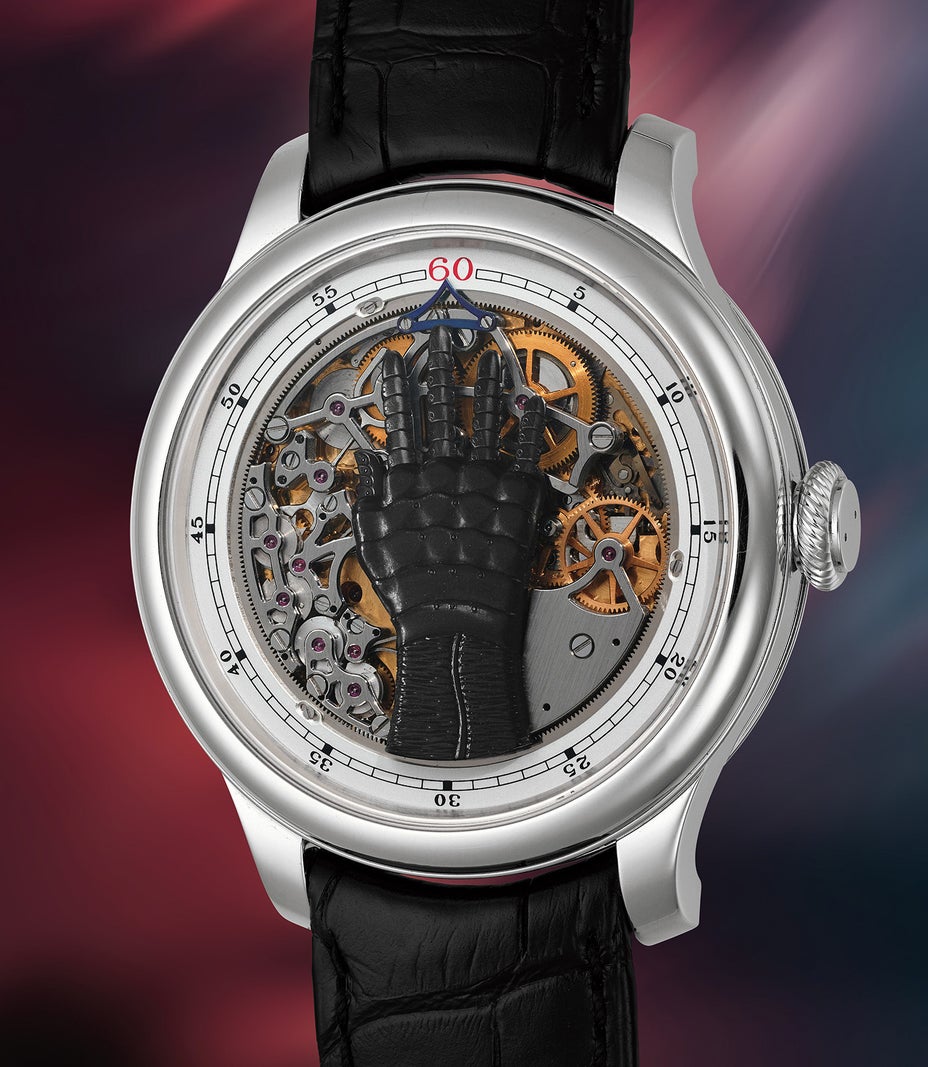
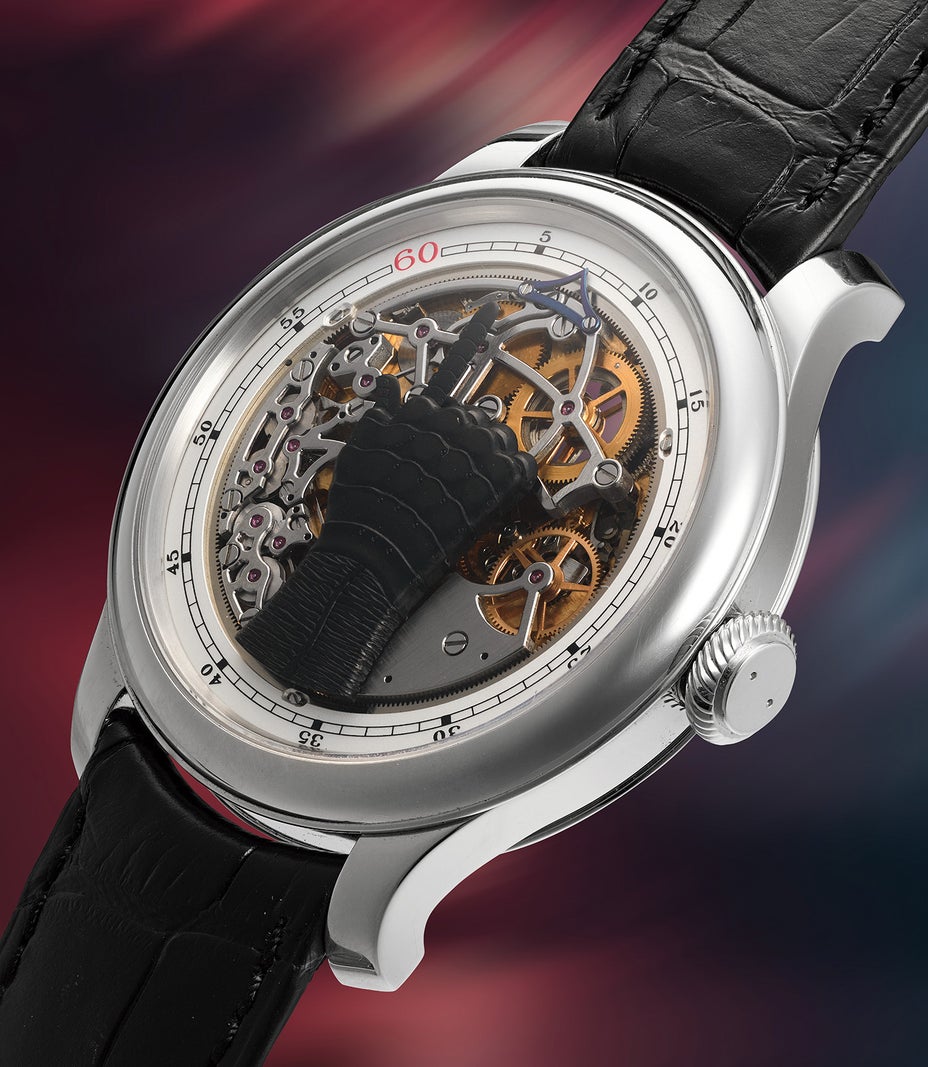
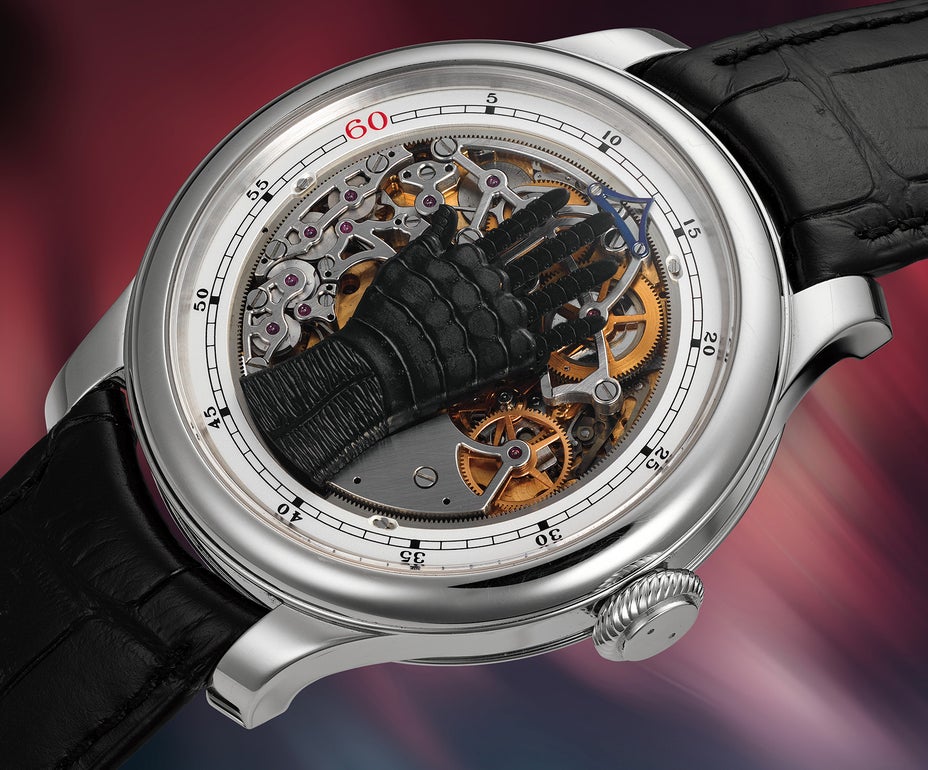
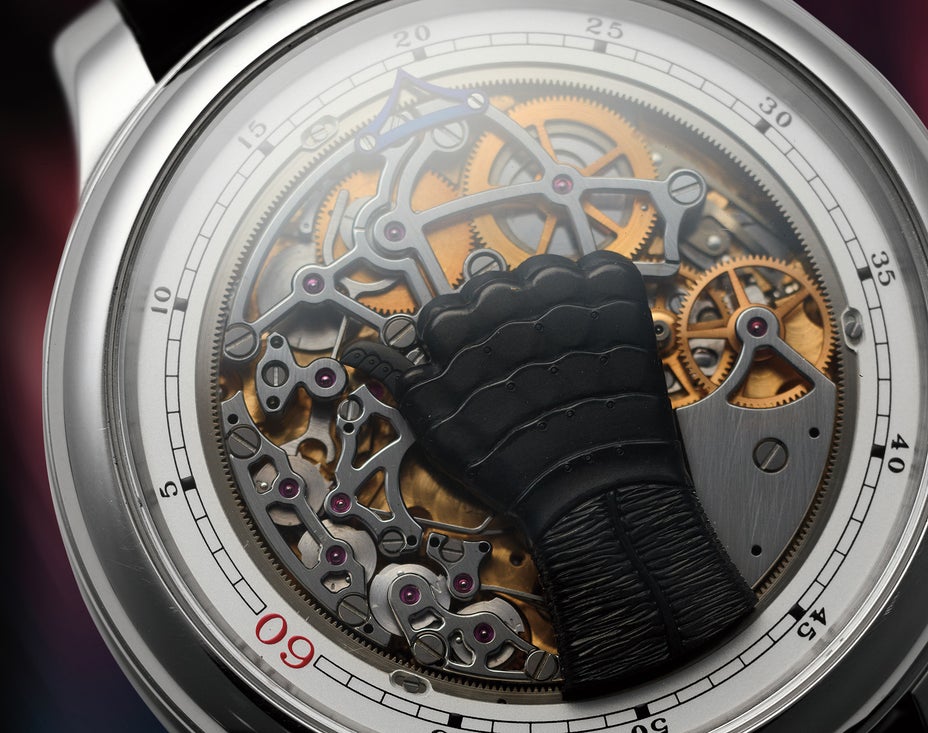
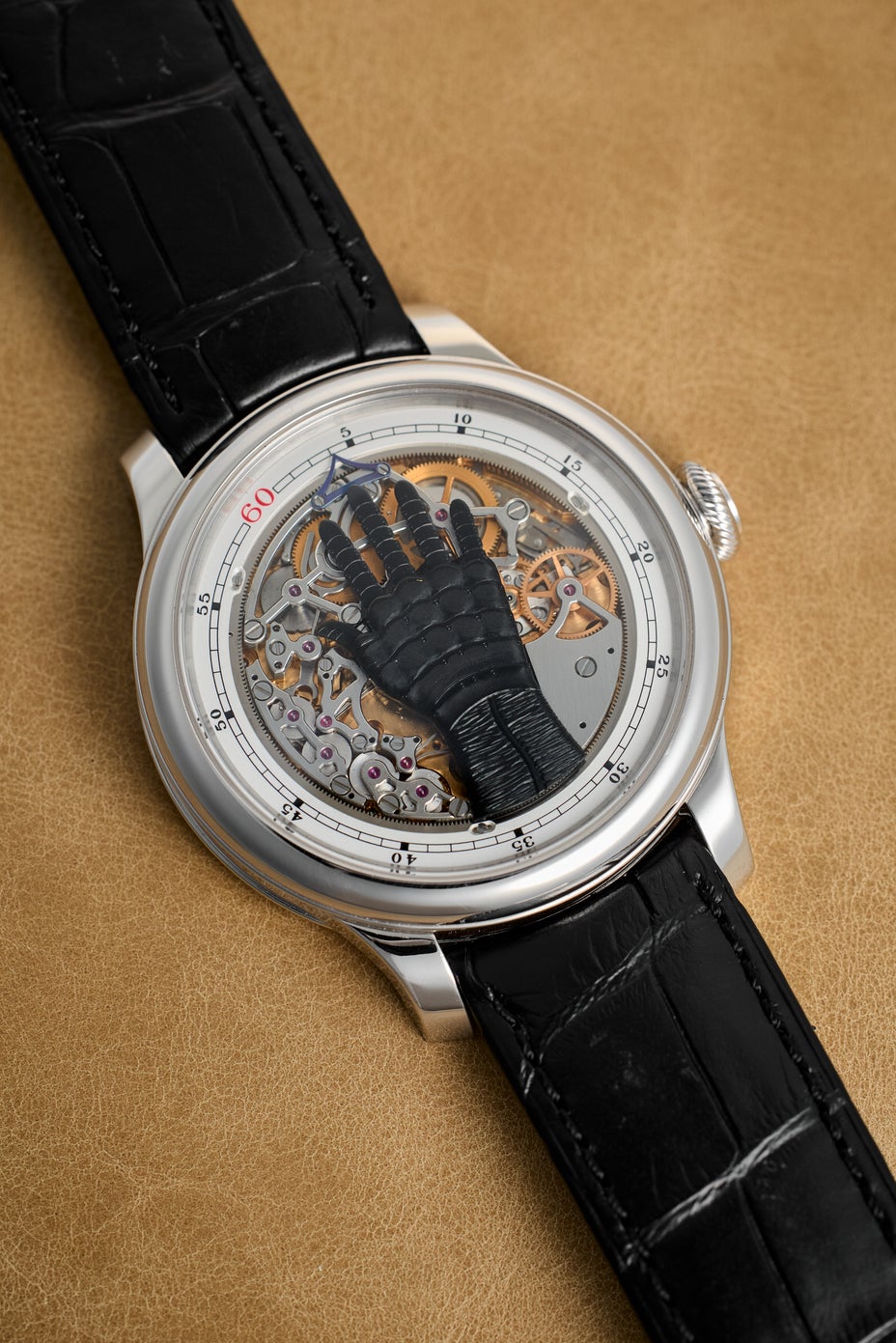
A unique and historically important prototype platinum wristwatch with instantaneous digital hours indicated by animated fingers, rotating minute dial, remontoir d’egalité, Certificate of Authenticity, and presentation box, made for Francis Ford Coppola, from the collection of Francis Ford Coppola
Estimate
In excess of $1,000,000
Sold For
$10,755,000
Manufacturer
F.P. Journe
Year
Circa 2021
Case No
“Francis Ford Coppola”
Model Name
FFC Prototype
Material
Platinum
Calibre
Automatic, cal. 1300.3, 63 jewels
Bracelet/Strap
Crocodile
Clasp/Buckle
Platinum and 18K white gold F.P. Journe deployant clasp
Dimensions
42mm Diameter
Signed
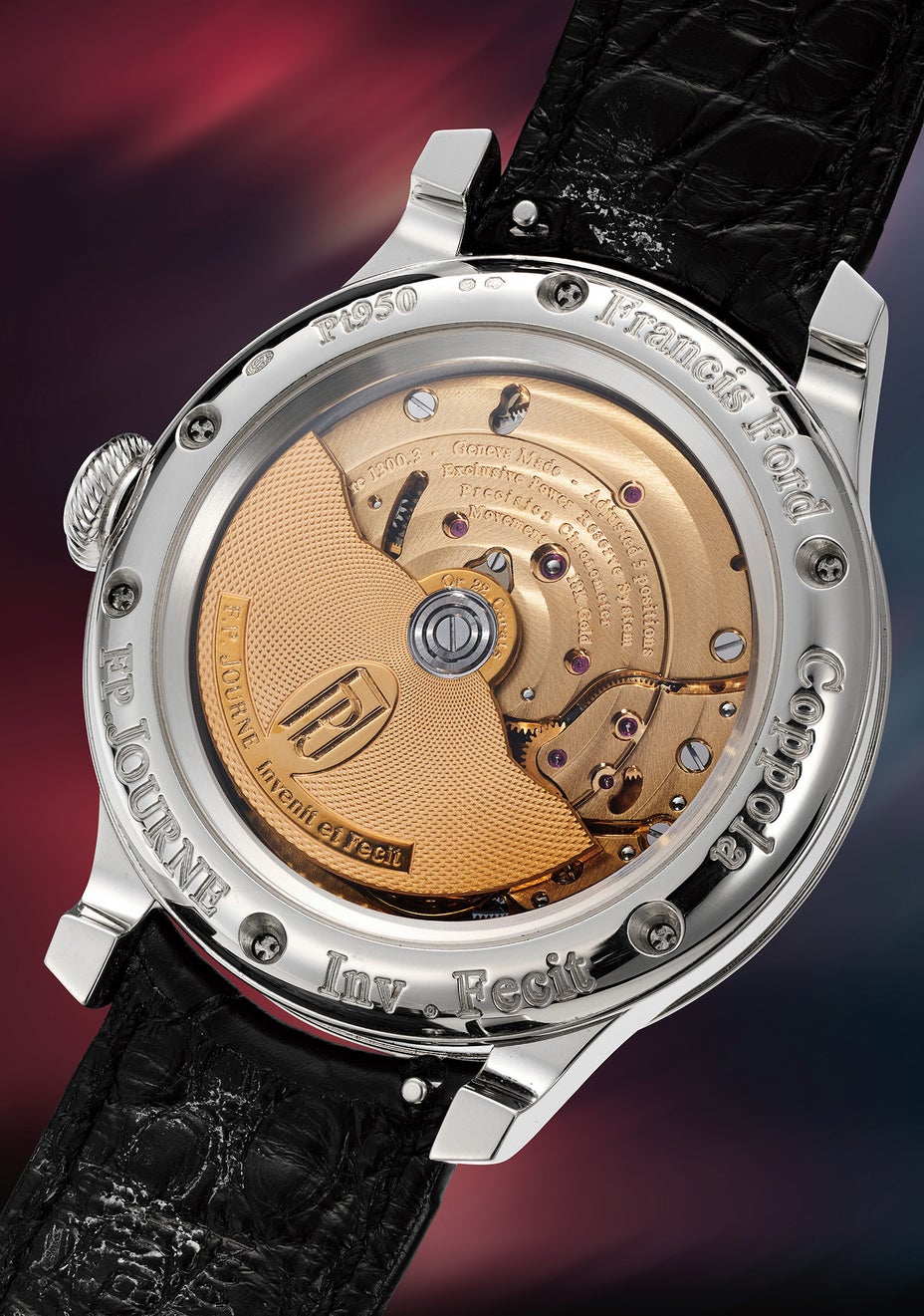
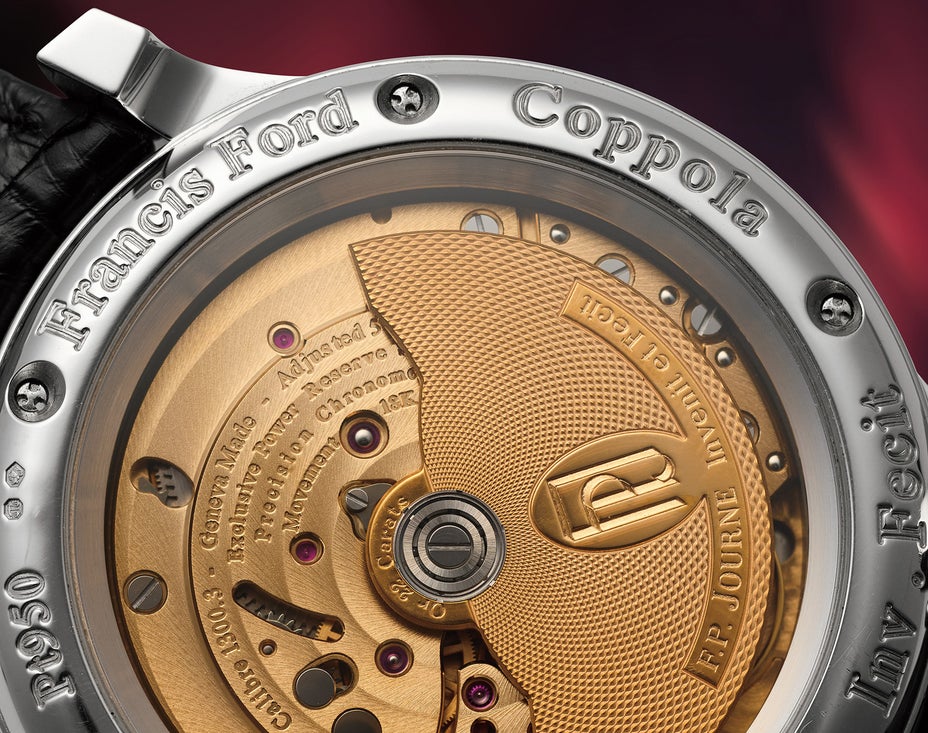
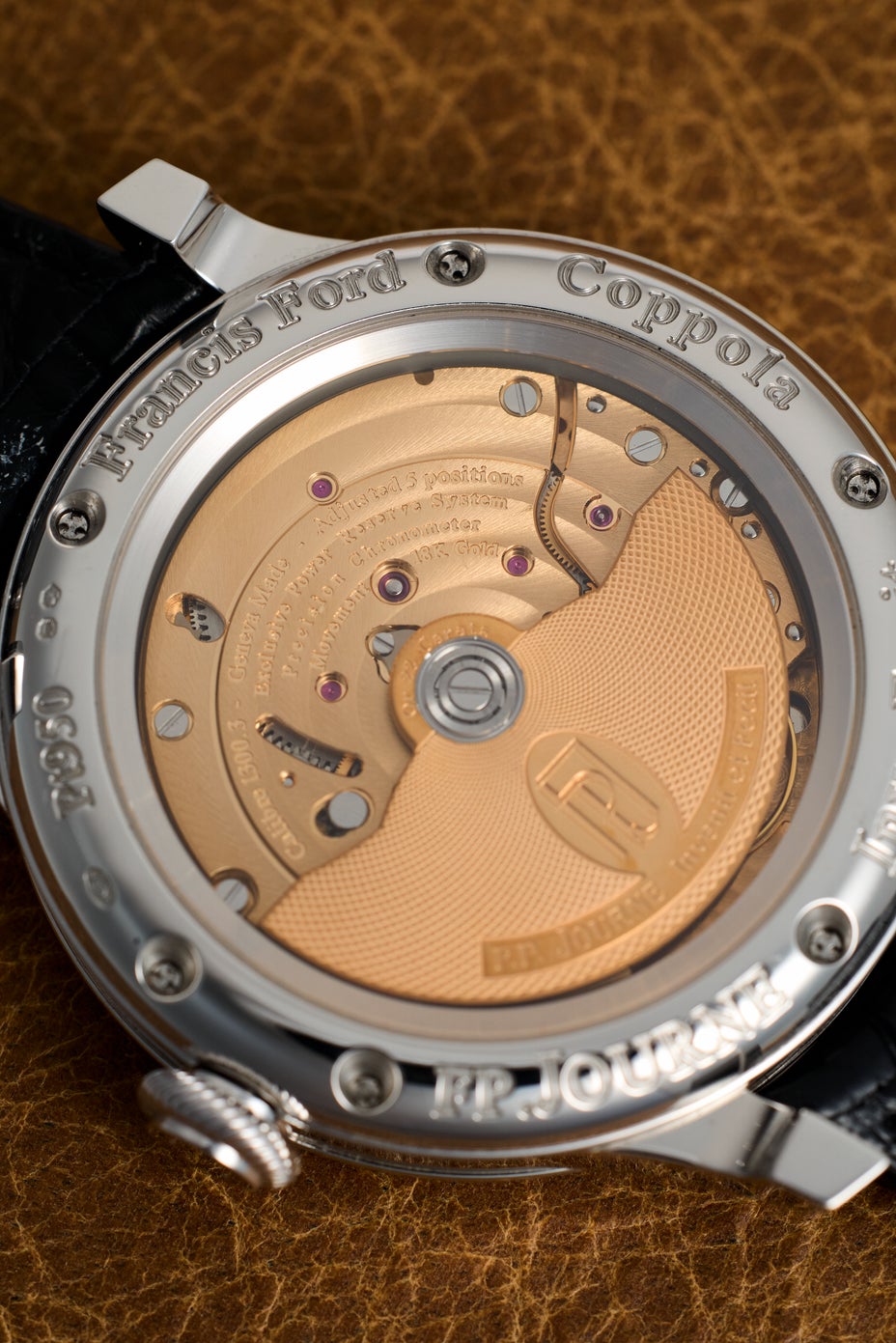
Case, dial, movement, and clasp signed F.P. Journe. Case additionally engraved “Francis Ford Coppola” as the unique serial number.
Accessories
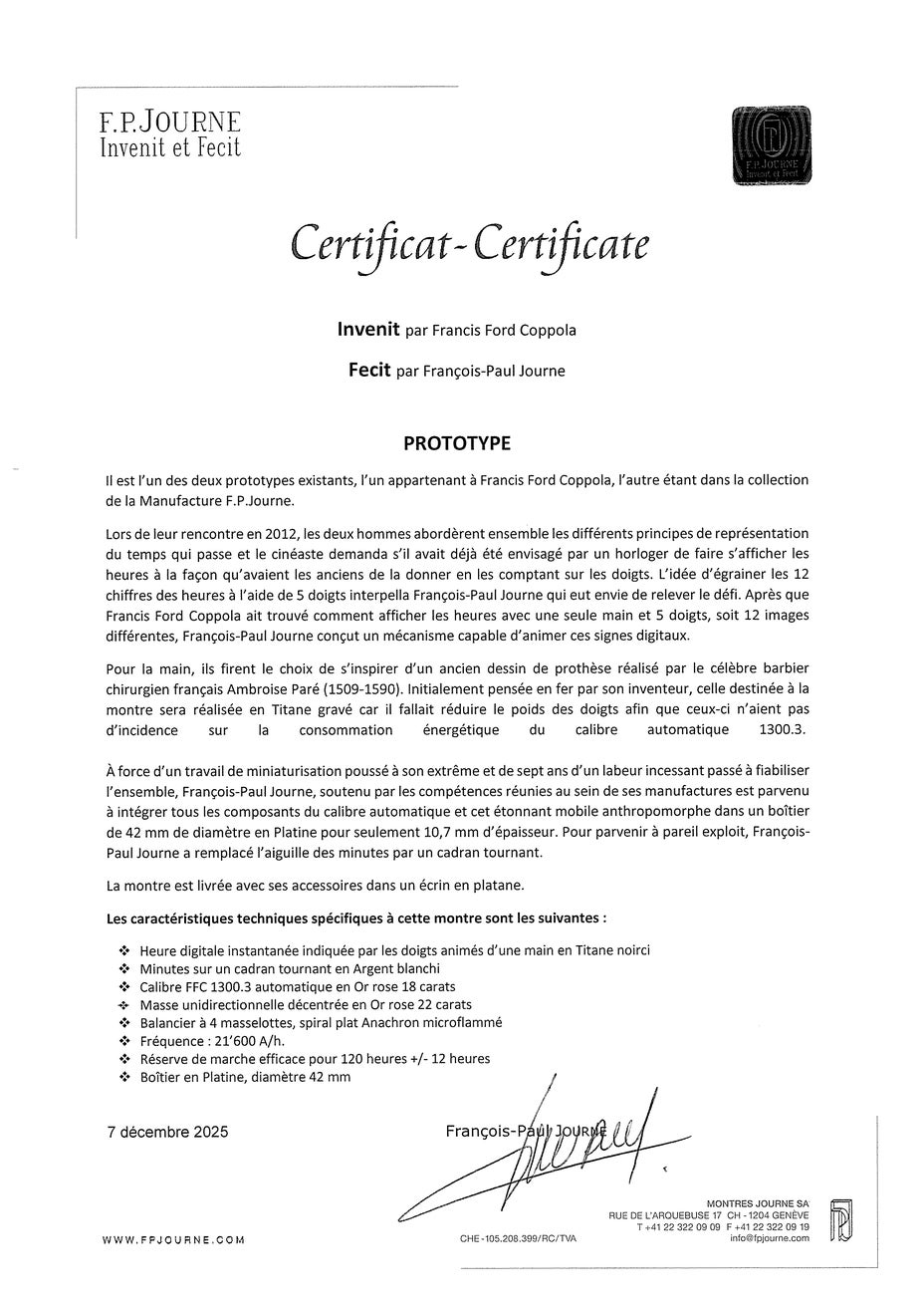
Accompanied by F.P. Journe Certificate of Authenticity confirming the present watch is one of two prototypes, fitted presentation box, outer box, FFC book, envelope, and travel sliding box.
Full-Cataloguing
GOING “ALL IN” – FRANCIS FORD COPPOLA
Born in Detroit to Italian immigrants Carmine and Italia, Francis Ford Coppola chose filmmaking as his tool to leave a mark on the world. And a significant mark it is, having so far received six Academy Awards, two Palmes d’Or, an AFI Life Achievement Award, and innumerable other accolades spanning the six decades of his career.
After film school in New York, Coppola spent the 1960s establishing himself as a screenwriter, director, and producer with small erotic productions and later diversifying into smaller movies of assorted genres. His first commercial success as a director came in 1968 with a film adaptation of Finian’s Rainbow and resulted in his introduction to a lifelong friend and collaborator, George Lucas. The two creatives established an independent “deviant” film studio called American Zoetrope.
In 1972, Coppola released The Godfather, one of the movies for which he is best known, and perhaps the crux upon which Coppola’s nascent career turned towards true fame – a permanent place in the annals of film history. The Godfather is now considered one of the greatest movies of all time. The “gangster film” genre, for which Coppola is known, has been defined by both The Godfather and its sequel directed by Coppola, The Godfather Part II from 1974.
Another critical and commercial success, Apocalypse Now, Coppola’s war film interpreted the highs and lows of the Vietnam War through the lens of Joseph Conrad’s novel Heart of Darkness (1899). Other notable films of the 1980s and 1990s include The Outsiders (1983), based on the novel of the same name by S.E. Hinton, The Godfather Part III (1990), Bram Stoker’s Dracula (1992), and The Rainmaker (1997). In the ensuing thirty years since The Rainmaker and before the 2024 release of Megalopolis, Coppola only made three additional movies.
Long time friend George Lucas once said of Coppola, “What Francis does creatively is jump off cliffs. When you spend enough time with Francis, you begin to believe you can jump off cliffs, too.”
Coppola’s work as a vineyard owner is equally impressive and a source of great pride and accomplishment for him. He and his late wife Eleanor purchased the historic Inglenook winery in 1975, one of Napa Valley’s most storied wineries and estates. The Inglenook estate was founded in 1879 by Finnish sea captain Gustave Niebaum, and its legacy carried on by Niebaum’s grandnephew John Daniel Jr., who created such heralded wines as its 1941 Cabernet Sauvignon. Once out of the founding family’s hands, the estate was broken up, and its prestige diminished.
On a mission to rebuild the estate to its original greatness, in 1995, he reacquired all of the estate’s original vineyards, including the original château. Housing what is most probably Napa Valley’s first tasting room, it was vital for Coppola to keep the interior true to its 19th century style.
Coppola understands the value of time, always looking to the past in order to secure a better future. In 2011 he did just that when he acquired the iconic Inglenook trademark, restoring a symbol of excellence to the Chateau. Coppola has said that he spent more money on the trademark than he did the entire estate, a true testament to just how important historical preservation is to one’s legacy, and the need to restore the past in order to be the best steward going forward, to the land and to its founder, Captain Niebaum.
In a recent interview, Coppola stated, “When I do work, I try to make it the greatest it can be, the most ambitious it can be. If I fail, so what? If I don’t try to make it the most wonderful it could be, I fail anyway.”
It was also around this time that Coppola began acquiring fine timepieces, with their intricate mechanics that corral and measure a thing unseen- time itself.
FFC AND FPJ – CREATING TOGETHER
The meeting of two legends of their respective industries came about due to a thoughtful Christmas gift from Coppola’s late wife in 2009 – a Chronomètre à Résonance (see lot 18) in platinum with a white gold dial. Delighted and fascinated by the timepiece, Coppola extended an invitation for François-Paul Journe to visit him at his Inglenook winery in the Napa Valley. Their meeting in 2012 was creatively fruitful, with Coppola, long fascinated by historic automatons, asking Journe if a human hand had ever been used, or could be used to indicate time. With no timepieces known to have ever been produced using a human hand, the seeds were planted in Journe’s mind to figure out a way to indicate the passage of time using a single hand.
This idea, “invenit” by Coppola, began whirring François-Paul’s creative gears and in 2014, Journe started ideating and prototyping the watch that would become the FFC.
Coppola’s idea, in fact, inspired the first and only Journe timepiece ever to be conceived by someone other than François-Paul himself.
Journe and Coppola together solved the dilemma of how to show the hours on a single hand. Of course, one through five is easy, as all relevant digits are present, but six through twelve presented a trickier conundrum. Ultimately, they worked through a way to clearly distinguish all twelve hours.
Now François-Paul was faced with the next hurdle – the mechanism of the hand and its architecture. For this, he drew inspiration from the pioneering French barber surgeon of the 1500s, Ambroise Paré (1510-1590), widely known as the father of modern surgery and an early innovator of prosthetic limbs. Gained from his experience on the battlefields of Europe and the public hospitals of Paris, Paré attempted to design functional prostheses for those soldiers who had lost limbs in battle to allow them to regain autonomy over their lives. Though he created many different limbs, his hand, nicknamed “Le Petit Lorrain”, was one of the most celebrated – both in the period and after. Crafted from iron and leather, the hand itself concealed gears and springs allowing the fingers to articulate and grasp objects, much like in watchmaking. Indeed, a French army captain wore “Le Petit Lorrain” into battle in 1551 (likely during one of the French campaigns of the Italian War of 1551-1559) and was able to grip the reins of his horse.
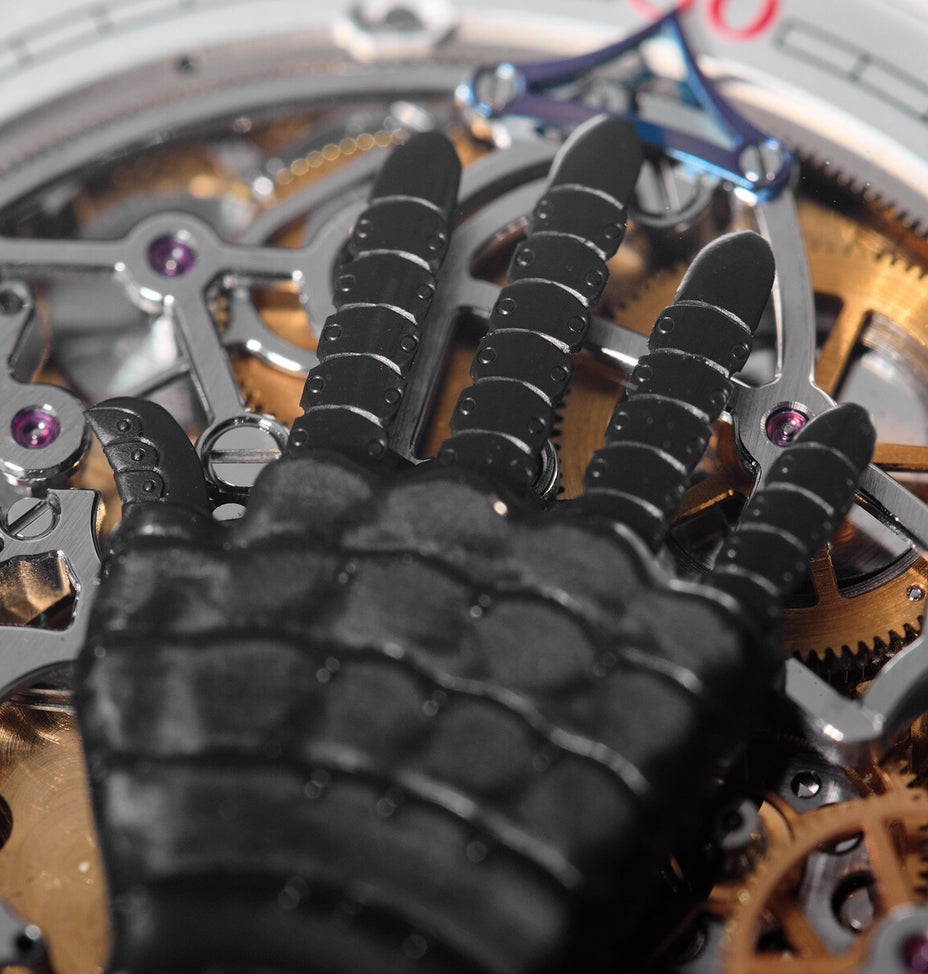
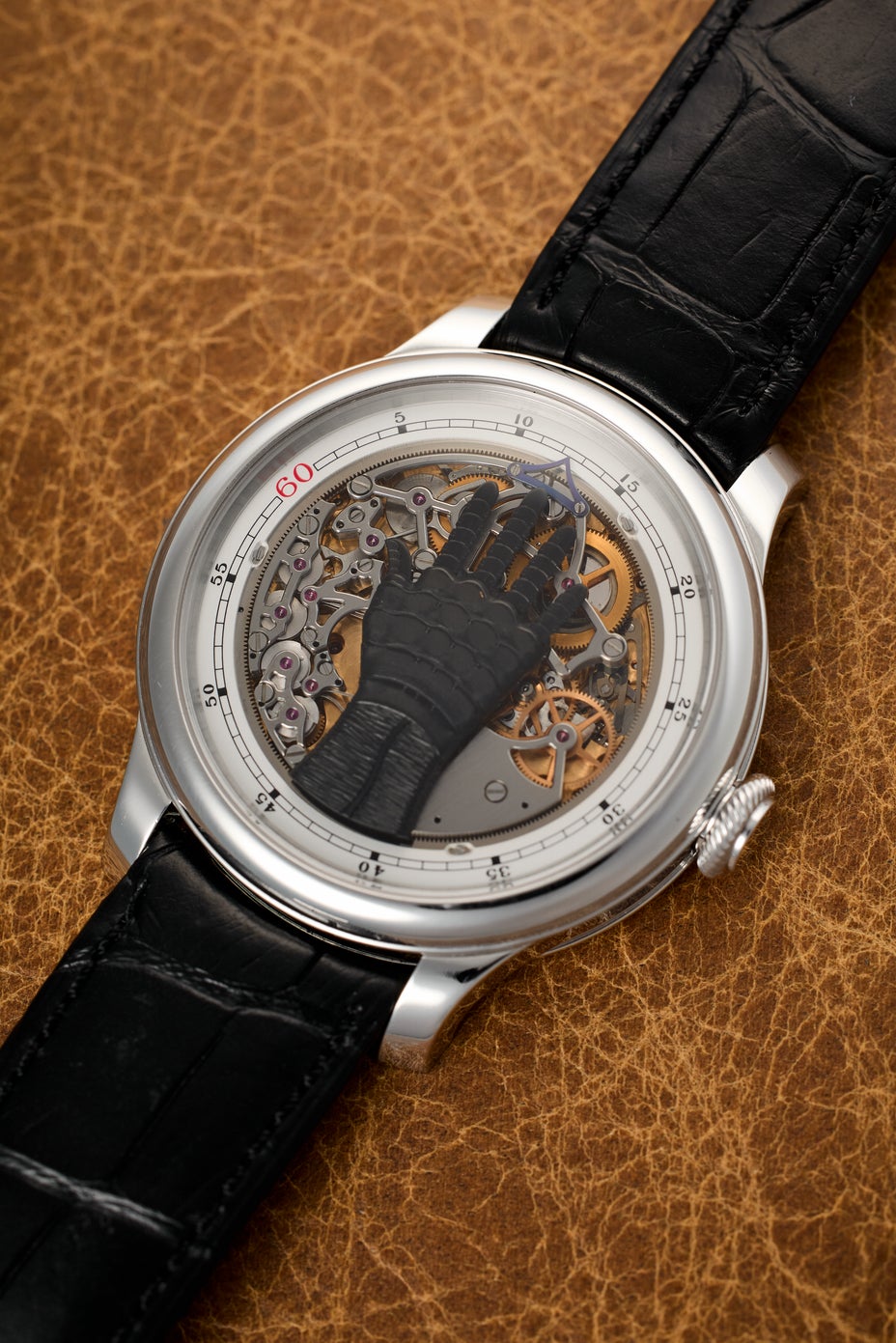
François-Paul wished to move away from “naturalism” in the appearance of the hand, and thus decided on Paré’s hand as the archetype for the automaton that would indicate the hours on this new watch. It has an almost steampunk vibe, with overlapping metallic plates with individual screws, reminiscent of medieval armor such as the gauntlet, made to protect the hands and wrists in battle.
FORTUNA AUDACES IUVAT
With its form decided, Journe attacked the next obstacle – how to efficiently power the hand mechanism without depleting the energy produced by the movement, and how to structure the movement in order to create a reliable timepiece. He turned to the tried and true automatic caliber he pioneered in 2001, the Octa caliber 1300.3, which possesses a power reserve of five days. To harness the energy, Journe incorporated another tried and true mechanism used in his previous creations, the remontoir d’egalité.
Ten cams, visible through the dial side of the watch, spring into motion once an hour to initiate the movement of the fingers from one hour configuration to the next. The same amount of energy is required to advance each motion of the fingers, no matter their position.
It took Journe seven years to integrate all these various aspects into a working watch and test it to make sure of its reliability. The result is a movement only 8.1mm thick – in line with the thickness of other complicated Octa caliber-based watches. All this was to “prove that the best way to make a complicated watch is to think about how to save energy in order to make it work without having to add any.” And thus, by François-Paul’s hand, the FFC was finally “fecit” to completion.
FROM THE HAND OF ONE MASTER TO ANOTHER
Made in two unique examples by François-Paul for both himself and Francis Ford Coppola, these prototypes vary from future production pieces in several ways. Journe’s of course, remains with him, while the present watch is the prototype made for Coppola, as shown by the engraving on the outer rim. Along with the unique FFC Blue prototype made for Only Watch 2021, these are the only FFCs, and one of very few watches ever, assembled by Journe’s own hand.
Coppola’s example also possesses an 18K pink gold Octa caliber rotor, instead of one engraved with his name such as the production pieces. Paré’s hand, rendered in titanium, is black, rather than the anthracite of production pieces, and the rotating minute ring is white instead of grey. The FFC Coppola has bridges made of steel, and the second steel bridge prototype belongs to the F.P.Journe Museum collection. Small tool marks are visible on both sides of the movement under very close examination, indicating the prototype nature of this specific timepiece.
Very few FFCs are produced and delivered every year since production began in 2023, going only to François-Paul’s best clients, and other than the FFC Blue prototype, one has never come up for public auction. This appearance of Francis Ford Coppola’s own FFC is a once-in-a-lifetime opportunity to receive a gift from the hand of a master of his craft, to another master of his craft – bearing the hand conceived by a master of his craft.
This synergy of greatness is contained in the 42mm platinum case of the FFC, and we at Phillips are honored to share the story of this creative genesis and offer for auction, the timepiece that resulted when great creative minds collaborate, igniting the fires of ingenuity. Both have similar “all-in” mindsets, committing everything and anything to the pursuit of their craft, and the FFC is the physical manifestation of this “go all in” mindset.
One of the most whimsical, creative, and complicated Journe timepieces ever made, along with its incredible provenance – consigned by Francis Ford Coppola, the importance of the present prototype watch cannot be overstated.
Born in Detroit to Italian immigrants Carmine and Italia, Francis Ford Coppola chose filmmaking as his tool to leave a mark on the world. And a significant mark it is, having so far received six Academy Awards, two Palmes d’Or, an AFI Life Achievement Award, and innumerable other accolades spanning the six decades of his career.
After film school in New York, Coppola spent the 1960s establishing himself as a screenwriter, director, and producer with small erotic productions and later diversifying into smaller movies of assorted genres. His first commercial success as a director came in 1968 with a film adaptation of Finian’s Rainbow and resulted in his introduction to a lifelong friend and collaborator, George Lucas. The two creatives established an independent “deviant” film studio called American Zoetrope.
In 1972, Coppola released The Godfather, one of the movies for which he is best known, and perhaps the crux upon which Coppola’s nascent career turned towards true fame – a permanent place in the annals of film history. The Godfather is now considered one of the greatest movies of all time. The “gangster film” genre, for which Coppola is known, has been defined by both The Godfather and its sequel directed by Coppola, The Godfather Part II from 1974.
Another critical and commercial success, Apocalypse Now, Coppola’s war film interpreted the highs and lows of the Vietnam War through the lens of Joseph Conrad’s novel Heart of Darkness (1899). Other notable films of the 1980s and 1990s include The Outsiders (1983), based on the novel of the same name by S.E. Hinton, The Godfather Part III (1990), Bram Stoker’s Dracula (1992), and The Rainmaker (1997). In the ensuing thirty years since The Rainmaker and before the 2024 release of Megalopolis, Coppola only made three additional movies.
Long time friend George Lucas once said of Coppola, “What Francis does creatively is jump off cliffs. When you spend enough time with Francis, you begin to believe you can jump off cliffs, too.”
Coppola’s work as a vineyard owner is equally impressive and a source of great pride and accomplishment for him. He and his late wife Eleanor purchased the historic Inglenook winery in 1975, one of Napa Valley’s most storied wineries and estates. The Inglenook estate was founded in 1879 by Finnish sea captain Gustave Niebaum, and its legacy carried on by Niebaum’s grandnephew John Daniel Jr., who created such heralded wines as its 1941 Cabernet Sauvignon. Once out of the founding family’s hands, the estate was broken up, and its prestige diminished.
On a mission to rebuild the estate to its original greatness, in 1995, he reacquired all of the estate’s original vineyards, including the original château. Housing what is most probably Napa Valley’s first tasting room, it was vital for Coppola to keep the interior true to its 19th century style.
Coppola understands the value of time, always looking to the past in order to secure a better future. In 2011 he did just that when he acquired the iconic Inglenook trademark, restoring a symbol of excellence to the Chateau. Coppola has said that he spent more money on the trademark than he did the entire estate, a true testament to just how important historical preservation is to one’s legacy, and the need to restore the past in order to be the best steward going forward, to the land and to its founder, Captain Niebaum.
In a recent interview, Coppola stated, “When I do work, I try to make it the greatest it can be, the most ambitious it can be. If I fail, so what? If I don’t try to make it the most wonderful it could be, I fail anyway.”
It was also around this time that Coppola began acquiring fine timepieces, with their intricate mechanics that corral and measure a thing unseen- time itself.
FFC AND FPJ – CREATING TOGETHER
The meeting of two legends of their respective industries came about due to a thoughtful Christmas gift from Coppola’s late wife in 2009 – a Chronomètre à Résonance (see lot 18) in platinum with a white gold dial. Delighted and fascinated by the timepiece, Coppola extended an invitation for François-Paul Journe to visit him at his Inglenook winery in the Napa Valley. Their meeting in 2012 was creatively fruitful, with Coppola, long fascinated by historic automatons, asking Journe if a human hand had ever been used, or could be used to indicate time. With no timepieces known to have ever been produced using a human hand, the seeds were planted in Journe’s mind to figure out a way to indicate the passage of time using a single hand.
This idea, “invenit” by Coppola, began whirring François-Paul’s creative gears and in 2014, Journe started ideating and prototyping the watch that would become the FFC.
Coppola’s idea, in fact, inspired the first and only Journe timepiece ever to be conceived by someone other than François-Paul himself.
Journe and Coppola together solved the dilemma of how to show the hours on a single hand. Of course, one through five is easy, as all relevant digits are present, but six through twelve presented a trickier conundrum. Ultimately, they worked through a way to clearly distinguish all twelve hours.
Now François-Paul was faced with the next hurdle – the mechanism of the hand and its architecture. For this, he drew inspiration from the pioneering French barber surgeon of the 1500s, Ambroise Paré (1510-1590), widely known as the father of modern surgery and an early innovator of prosthetic limbs. Gained from his experience on the battlefields of Europe and the public hospitals of Paris, Paré attempted to design functional prostheses for those soldiers who had lost limbs in battle to allow them to regain autonomy over their lives. Though he created many different limbs, his hand, nicknamed “Le Petit Lorrain”, was one of the most celebrated – both in the period and after. Crafted from iron and leather, the hand itself concealed gears and springs allowing the fingers to articulate and grasp objects, much like in watchmaking. Indeed, a French army captain wore “Le Petit Lorrain” into battle in 1551 (likely during one of the French campaigns of the Italian War of 1551-1559) and was able to grip the reins of his horse.
François-Paul wished to move away from “naturalism” in the appearance of the hand, and thus decided on Paré’s hand as the archetype for the automaton that would indicate the hours on this new watch. It has an almost steampunk vibe, with overlapping metallic plates with individual screws, reminiscent of medieval armor such as the gauntlet, made to protect the hands and wrists in battle.
FORTUNA AUDACES IUVAT
With its form decided, Journe attacked the next obstacle – how to efficiently power the hand mechanism without depleting the energy produced by the movement, and how to structure the movement in order to create a reliable timepiece. He turned to the tried and true automatic caliber he pioneered in 2001, the Octa caliber 1300.3, which possesses a power reserve of five days. To harness the energy, Journe incorporated another tried and true mechanism used in his previous creations, the remontoir d’egalité.
Ten cams, visible through the dial side of the watch, spring into motion once an hour to initiate the movement of the fingers from one hour configuration to the next. The same amount of energy is required to advance each motion of the fingers, no matter their position.
It took Journe seven years to integrate all these various aspects into a working watch and test it to make sure of its reliability. The result is a movement only 8.1mm thick – in line with the thickness of other complicated Octa caliber-based watches. All this was to “prove that the best way to make a complicated watch is to think about how to save energy in order to make it work without having to add any.” And thus, by François-Paul’s hand, the FFC was finally “fecit” to completion.
FROM THE HAND OF ONE MASTER TO ANOTHER
Made in two unique examples by François-Paul for both himself and Francis Ford Coppola, these prototypes vary from future production pieces in several ways. Journe’s of course, remains with him, while the present watch is the prototype made for Coppola, as shown by the engraving on the outer rim. Along with the unique FFC Blue prototype made for Only Watch 2021, these are the only FFCs, and one of very few watches ever, assembled by Journe’s own hand.
Coppola’s example also possesses an 18K pink gold Octa caliber rotor, instead of one engraved with his name such as the production pieces. Paré’s hand, rendered in titanium, is black, rather than the anthracite of production pieces, and the rotating minute ring is white instead of grey. The FFC Coppola has bridges made of steel, and the second steel bridge prototype belongs to the F.P.Journe Museum collection. Small tool marks are visible on both sides of the movement under very close examination, indicating the prototype nature of this specific timepiece.
Very few FFCs are produced and delivered every year since production began in 2023, going only to François-Paul’s best clients, and other than the FFC Blue prototype, one has never come up for public auction. This appearance of Francis Ford Coppola’s own FFC is a once-in-a-lifetime opportunity to receive a gift from the hand of a master of his craft, to another master of his craft – bearing the hand conceived by a master of his craft.
This synergy of greatness is contained in the 42mm platinum case of the FFC, and we at Phillips are honored to share the story of this creative genesis and offer for auction, the timepiece that resulted when great creative minds collaborate, igniting the fires of ingenuity. Both have similar “all-in” mindsets, committing everything and anything to the pursuit of their craft, and the FFC is the physical manifestation of this “go all in” mindset.
One of the most whimsical, creative, and complicated Journe timepieces ever made, along with its incredible provenance – consigned by Francis Ford Coppola, the importance of the present prototype watch cannot be overstated.
F.P. Journe
Swiss | 1999Founded by watchmaker François-Paul Journe in 1999, the F.P. Journe brand is relatively young, but already is as highly regarded by collectors as many distinguished manufacturers with centuries-old heritage. In the minds of the world's savviest collectors, Journe is producing some of the finest wristwatches the market has ever seen. Mastering his craft from restoring historical timepieces, he was the first to create a wristwatch incorporating two escapements that benefit from the phenomenon of resonance — the Chronomètre à Résonance.
Key models include the Résonance, tourbillon wristwatches incorporating a remontoir and the limited edition Vagabondage series. Especially sought-after are his earliest "souscription" watches, made in 1999.