PROPERTY FROM A PRIVATE AMERICAN COLLECTION
31Ο︎◆︎
Fred Sandback
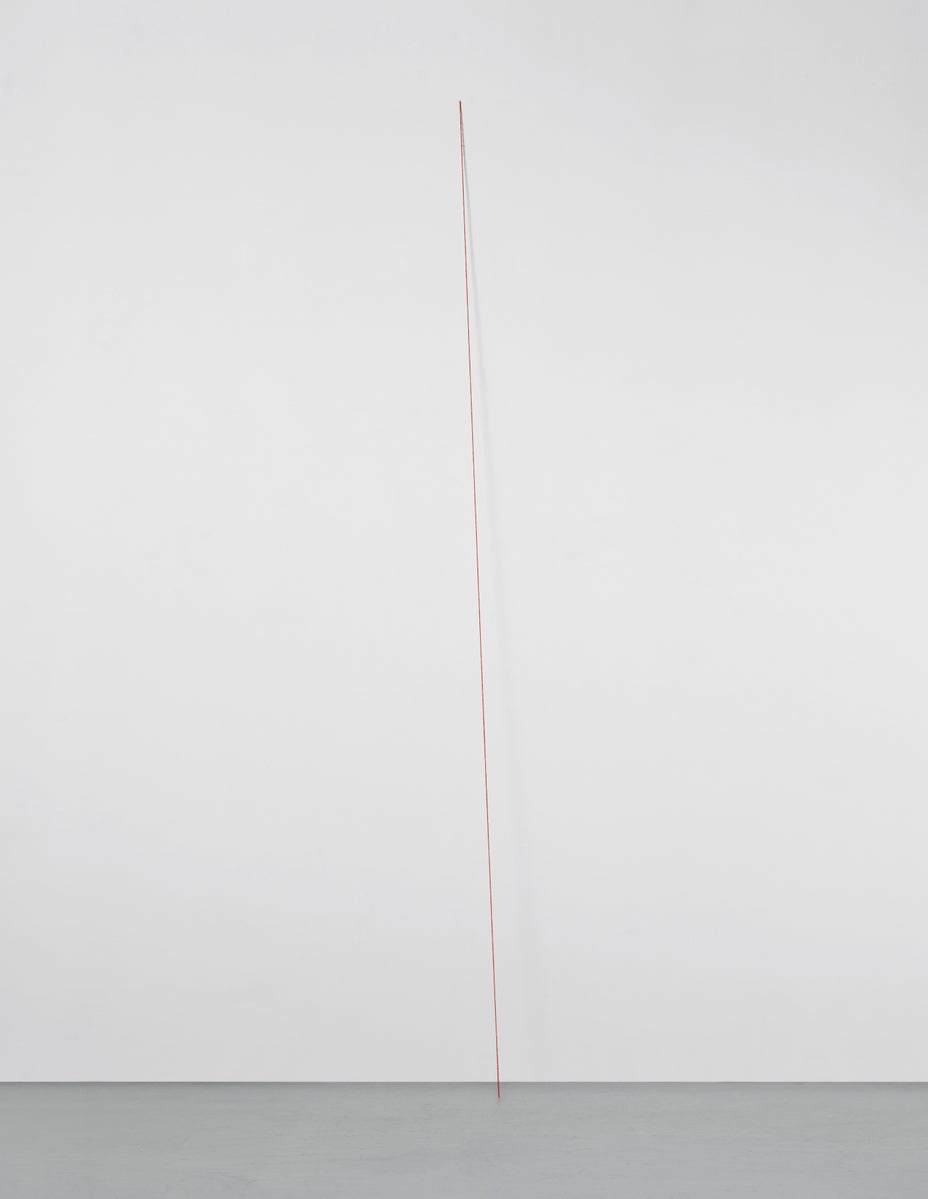
Untitled (Rust Brown Diagonal)
Estimate
£120,000–180,000‡︎
Sold For
£146,500
rust brown acrylic yarn
297.8 x 12.1 x 17.1 cm (117 1/4 x 4 3/4 x 6 3/4 in.)
This work is unique, accompanied by a letter of authenticity provided by the Estate and registered under Fred Sandback Estate Number 2432.
Full-Cataloguing
Fred Sandback's Minimalist sculptures are both deeply rooted in theory and highly personal. While studying at Yale, Sandback studied under and was inspired by visiting lecturers Donald Judd and Robert Morris. Both theorised and wrote extensively on Minimalism, deeming that it should focus on the essential physicality that distinguishes sculpture from painting and architecture by emphasising scale, proportion, shape and mass. The notion of the ‘literal’ is utilised by Minimalist sculpture to mean form which accentuates the physical nature of the sculptural surface, rather than figuratively illustrating an ideal in the way painting does. It is this exclusion of the figurative that distinctly marks Minimalism.
By creating works that disposed of the solidity and weight traditionally characteristic of sculptural materials, Sandback sought to define space in the simplest means. Using coloured yarn as a kind of frame, Sandback effectively rid sculpture of opaque mass while managing to retain a sense of volume. The uncomplicated geometric forms that Sandback fashioned out of lengths of yarn play with the architectural aspects of space – flooring, walls, and light – to create illusions of sculptural substance. They exist in what he referred to as ‘pedestrian space’ and do so with the intention of actively engaging the viewer in the work: the minimal form is completed by the viewer's participation.
The present lot is from a series known as Sandback’s ‘leaning’ works. Rather than seamlessly becoming a part of the space in which it is exhibited as his geometric forms do, these works appear to alter the space by slicing through it on a diagonal. Sandback viewed these works as a sort of ‘substructure’ that could be re-erected multiple times because each time the work would occur in a new light and space. By seemingly altering their environs, these works draw attention to the physical here and now, heightening sensitivity to the spatial reality of the present moment.
By creating works that disposed of the solidity and weight traditionally characteristic of sculptural materials, Sandback sought to define space in the simplest means. Using coloured yarn as a kind of frame, Sandback effectively rid sculpture of opaque mass while managing to retain a sense of volume. The uncomplicated geometric forms that Sandback fashioned out of lengths of yarn play with the architectural aspects of space – flooring, walls, and light – to create illusions of sculptural substance. They exist in what he referred to as ‘pedestrian space’ and do so with the intention of actively engaging the viewer in the work: the minimal form is completed by the viewer's participation.
The present lot is from a series known as Sandback’s ‘leaning’ works. Rather than seamlessly becoming a part of the space in which it is exhibited as his geometric forms do, these works appear to alter the space by slicing through it on a diagonal. Sandback viewed these works as a sort of ‘substructure’ that could be re-erected multiple times because each time the work would occur in a new light and space. By seemingly altering their environs, these works draw attention to the physical here and now, heightening sensitivity to the spatial reality of the present moment.
Fred Sandback
American | B. 1943 D. 2003There is more than meets the eye with the work of Fred Sandback. Employing a particularly unique material, acrylic yarn, the artist created architectural works by attaching yarn to surfaces and stretching it taut from floor to ceiling. The open space and surprising dimensions achieved by his pieces allow viewers to interact with them and complete them with their own imagination.
By studying alongside such fellow Minimalists as Robert Morris and Donald Judd, Sandback developed the conceptual, uncluttered method for which he is known.