
10
Gabriel Orozco
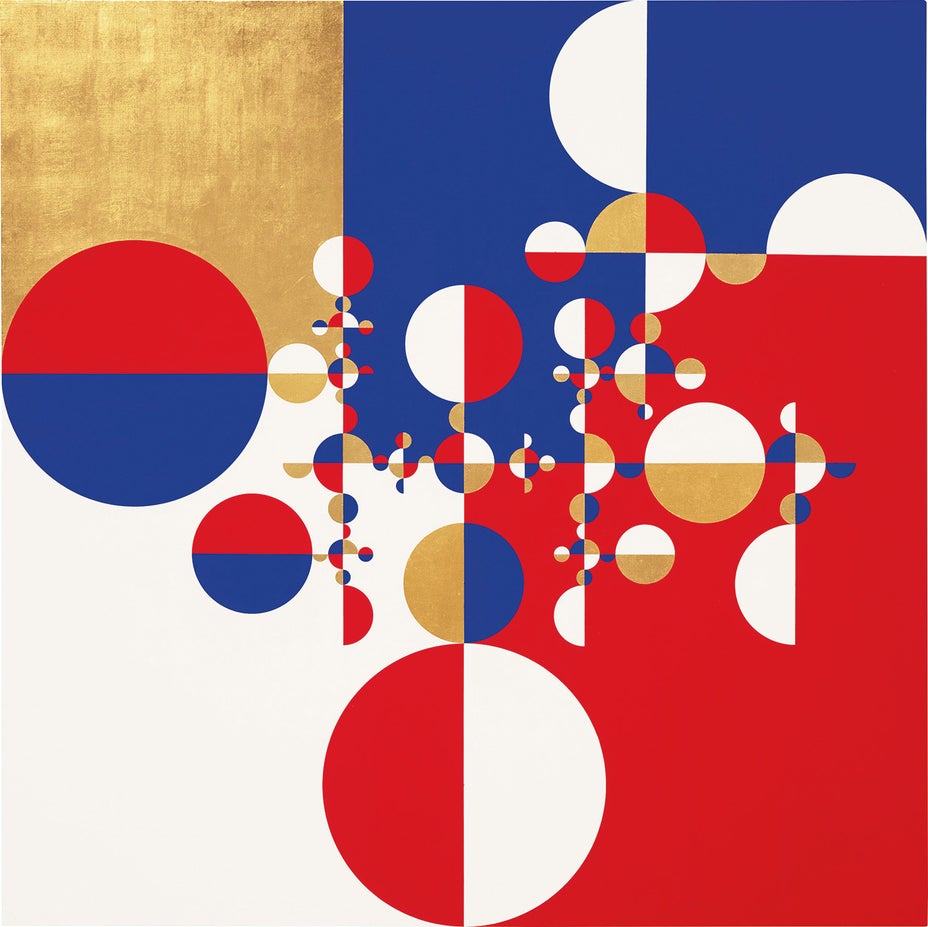
Samurai Tree (Invariant 23Q)
- Estimate
- $350,000 - 550,000
$429,000
Lot Details
tempera and gold leaf on canvas
47 1/4 x 47 1/4 in. (120 x 120 cm.)
Executed in 2018, this work is accompanied by a certificate of authenticity signed by the artist.
Specialist
Full-Cataloguing
Catalogue Essay
Gabriel Orozco lives and works in Mexico City, New York, and Paris. He completed his arts education at the Escuela Nacional de Artes Plásticas in Mexico City, as well as the Circulo de Bellas Artes in Madrid. From the beginning of his career, Orozco’s nomadic lifestyle had an effect on both the production and the aesthetic of his work. Playing with ideas of accessibility, his work revolves around various repeating themes, exploring materials in a way that allows the viewer’s imagination to discover creative associations between aspects of everyday life that are often overlooked or ignored.
Provenance
Gabriel Orozco
Mexican | 1954Gabriel Orozco's diverse practice, which includes sculpture, photography, painting and video, is centered on the rejection of the concept of a traditional studio. Alternatively, Orozco's conceptual process involves using quotidian objects as commentary on urban society. In the widely exhibited La DS (1993), Orozco cut a Citroën DS car into thirds, eliminating the central section and reconfiguring the remaining parts.
Another important motif in Orozco's lexicon is that of the colored ellipses. In his seminal series, Samurai Tree Invariants, the artist employs fragmented colored circles as the basis for geometric compositions, exploring the movements made by a knight on a chessboard. These not only represent Orozco's conceptual practices but illustrate his interest in both the geometric and organic world.
Browse ArtistAnother important motif in Orozco's lexicon is that of the colored ellipses. In his seminal series, Samurai Tree Invariants, the artist employs fragmented colored circles as the basis for geometric compositions, exploring the movements made by a knight on a chessboard. These not only represent Orozco's conceptual practices but illustrate his interest in both the geometric and organic world.