873Σ︎
Greubel Forsey
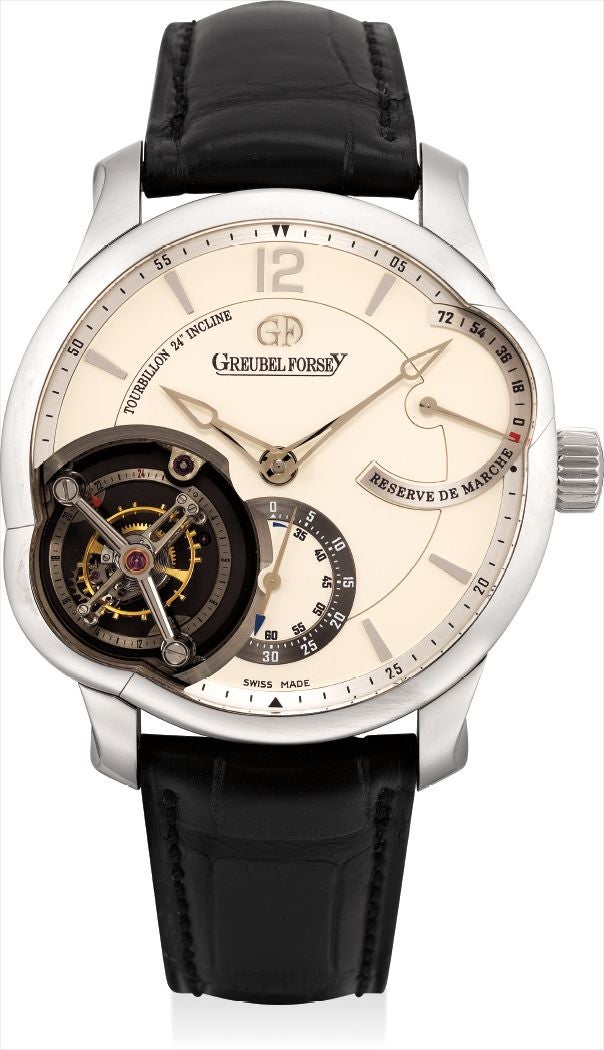
Tourbillon 24 Secondes Incline
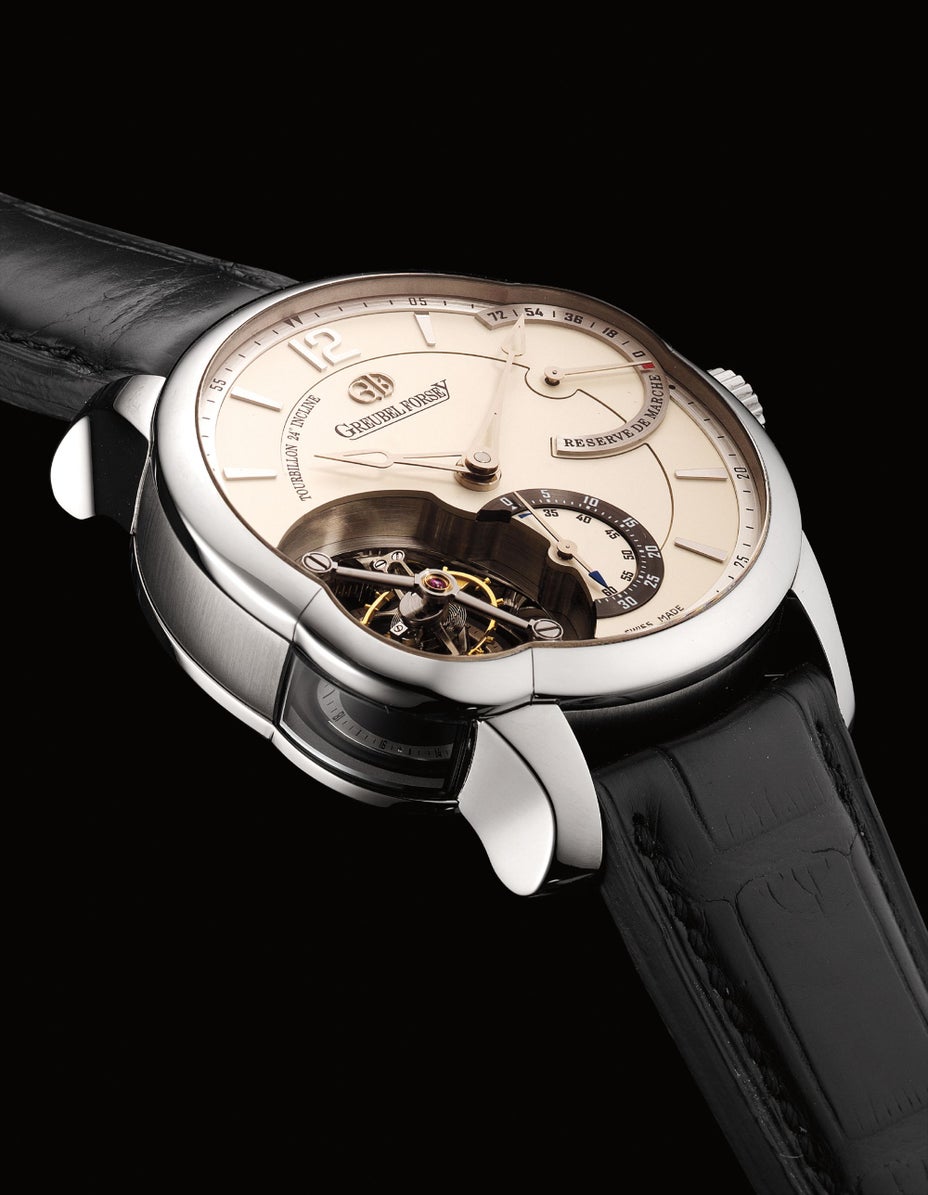
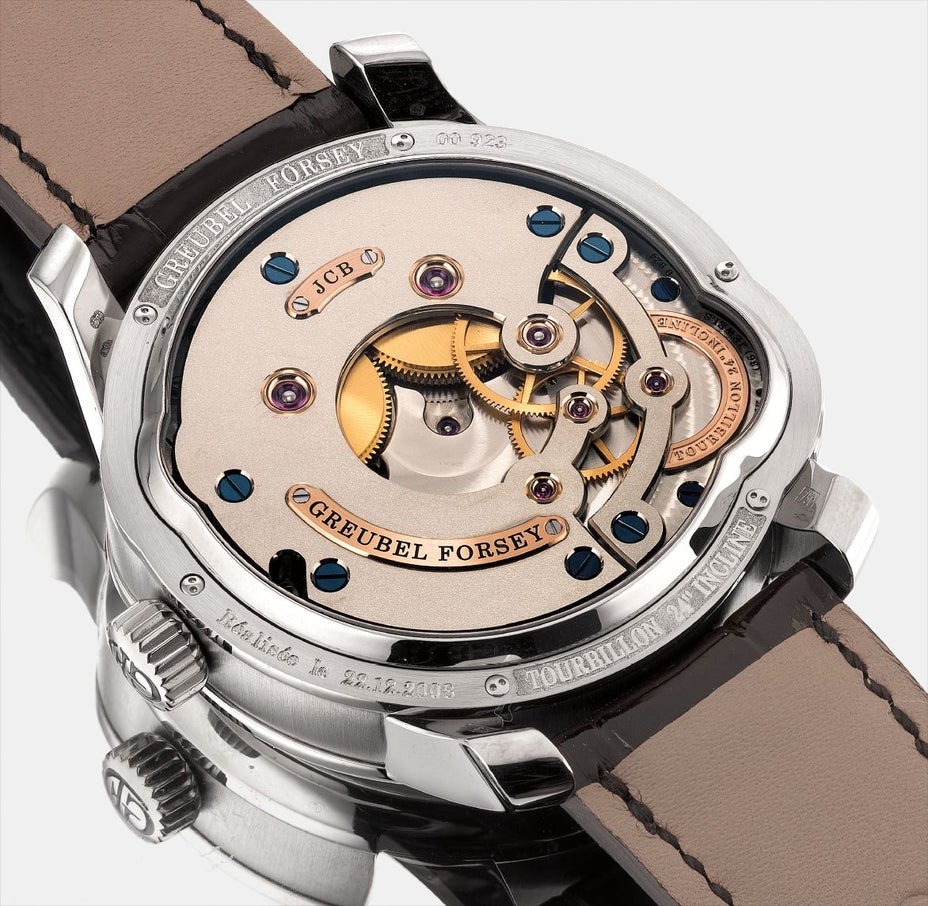
A very rare and extremely fine white gold wristwatch, with inclined tourbillon, power reserve, owner's manual and presentation box
Full-Cataloguing
This system was intended for pocket watches, which tend to remain in the same position in one’s pocket for an extended period of time. Greubel Forsey realized that a wristwatch is much more dynamic than a pocket watch, and thus created the 24 seconds inclined tourbillon: the 24 seconds revolving speed, much faster than the usual 60 seconds, is more suitable to compensate gravity in a wristwatch, which tends to change position in respect to gravity more swiftly than a pocket watch.
While the basic concept appears simple, the technical challenges that had to be overcome to realize a 24 seconds tourbillon were enormous. The stress imposed on the balance wheel and pinion by the faster motion – each “tick” of the 24 seconds tourbillon covers about 2.5 times more distance than that of a normal tourbillon – in a normal configuration threatens to create unbalances on its own and even wear the regulating organ down . The solution was to incline the entire cage: the energy is dissipated in a much more efficient and harmless way. Of course, specific gear trains had to be developed to achieve the result, and the side effect of this innovation is one of the most visually pleasing configuration ever seen for a tourbillon timepiece. The slightly asymmetric design which is by now unmistakably associated with Greubel Forsey has the added benefit of showing not only the tourbillon from the top, as in most tourbillon timepieces, but it furthermore allows for a side view thanks to the window present in the band.
Greubel Forsey
Swiss | 2004With the introduction of the Double Tourbillon 30 at Basel World in 2004, Robert Greubel and Stephen Forsey became major players in the world of haute horology and independent watchmaking. Their firm concentrates on high-end complicated movements with precision timekeeping and the highest quality hand finishing. They achieve this with movements featuring multiple tourbillons and inclined balance wheels — tourbillons designed for wristwatches. Forsey joined Greubel's team at Renaud & Papi SA, a high-complication specialist now part of Audemars Piguet. The team participated with Harry Winston and their Opus 6 project. In the span of 12 years, the firm has become highly sought-after by collectors for their innovative timekeeping and industrial design.