4
Hans Coper
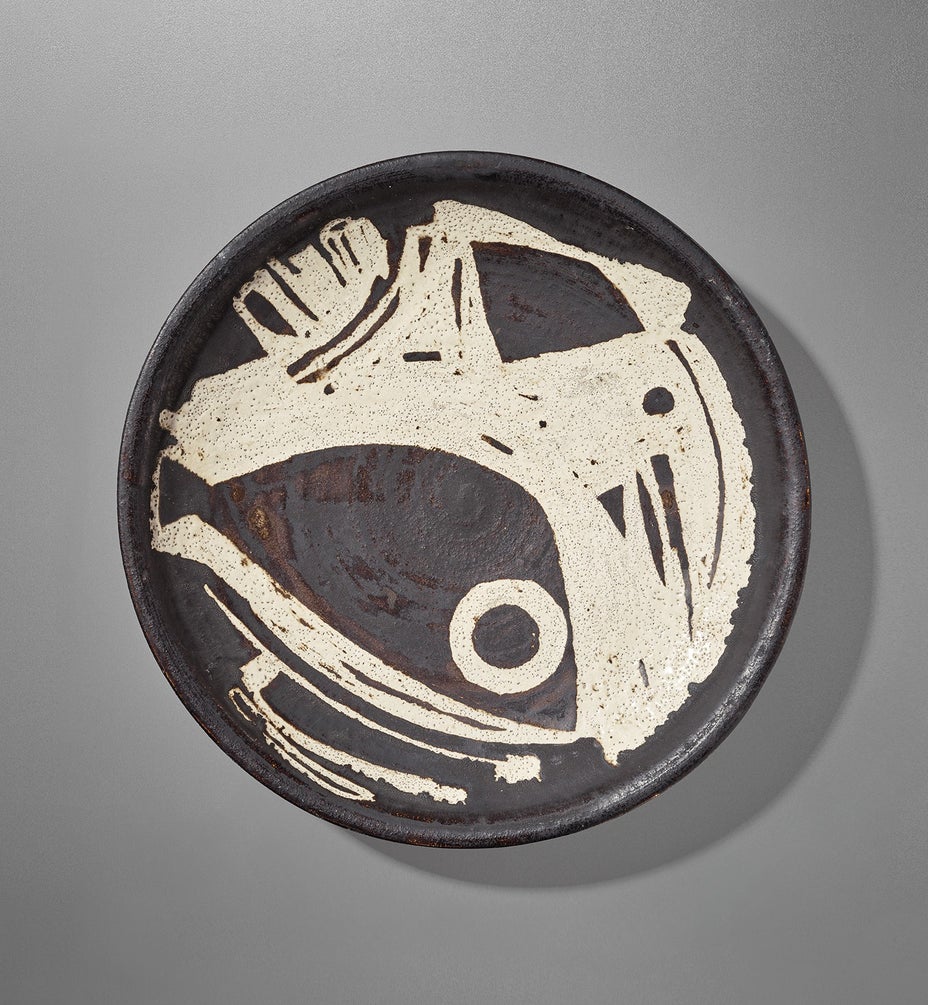
Large dish
Full-Cataloguing
'Coper's work expresses a highly inventive and disciplined exploration of form, line, proportion and design. Most of all his work articulates the way light caresses form and feels its delicate, probing path across a surface. In doing so Hans Coper created his own singular métier which is at once tangible and elusive, yet always endowed with the mysterious magic of artistry occurring solely in the rarefied realm of a great master.' -J.D.
Hans Coper
German | B. 1920 D. 1981Hans Coper learned his craft in the London studio of Lucie Rie, having emigrated from Germany as a young Jewish engineering student in 1939. He initially assisted Rie in the studio with the ceramic buttons she made for the fashion industry, as well as ceramic tableware, but soon Coper was producing his own work. By 1951 he had received considerable recognition exhibiting his pots in the "Festival of Britain."
Coper favored compound shapes that, while simple in appearance, were in fact complex in construction. Similar to the making of Joseon Dynasty Moon Jars (Rie in fact displayed a Moon Jar in the studio), he would build his vessels by bringing several thrown forms together, for example joining bowls rim to rim. Coper eschewed glazes and preferred the textured surfaces achieved through the application of white and black slips, evoking the abraded texture of excavated vessels. This interest in ancient objects was very much in step with other modernists of his time—Coper admired Constantin Brancusi and Alberto Giacometti and his textured markings have been compared to sculptors such as William Turnbull.
In the last phase of his career, Coper reduced the scale of his work creating small "Cycladic" pots that stood on pedestals or drums, recalling the clay figures of Bronze Age Greece.