360
Hans J. Wegner
'Valet' chair, model no. 540
Estimate
HK$40,000–60,000
€4,700–7,100
$5,100–7,700
Sold For
HK$133,350
teak, oak, brass, leather
93.8 x 51 x 50 cm. (36 7/8 x 20 1/8 x 19 5/8 in.)
Designed 1953. Executed by master cabinetmaker Johannes Hansen, Copenhagen, Denmark. Underside impressed with manufacturer's mark and JOHANNES HANSEN/COPENHAGEN/DENMARK.
Full-Cataloguing
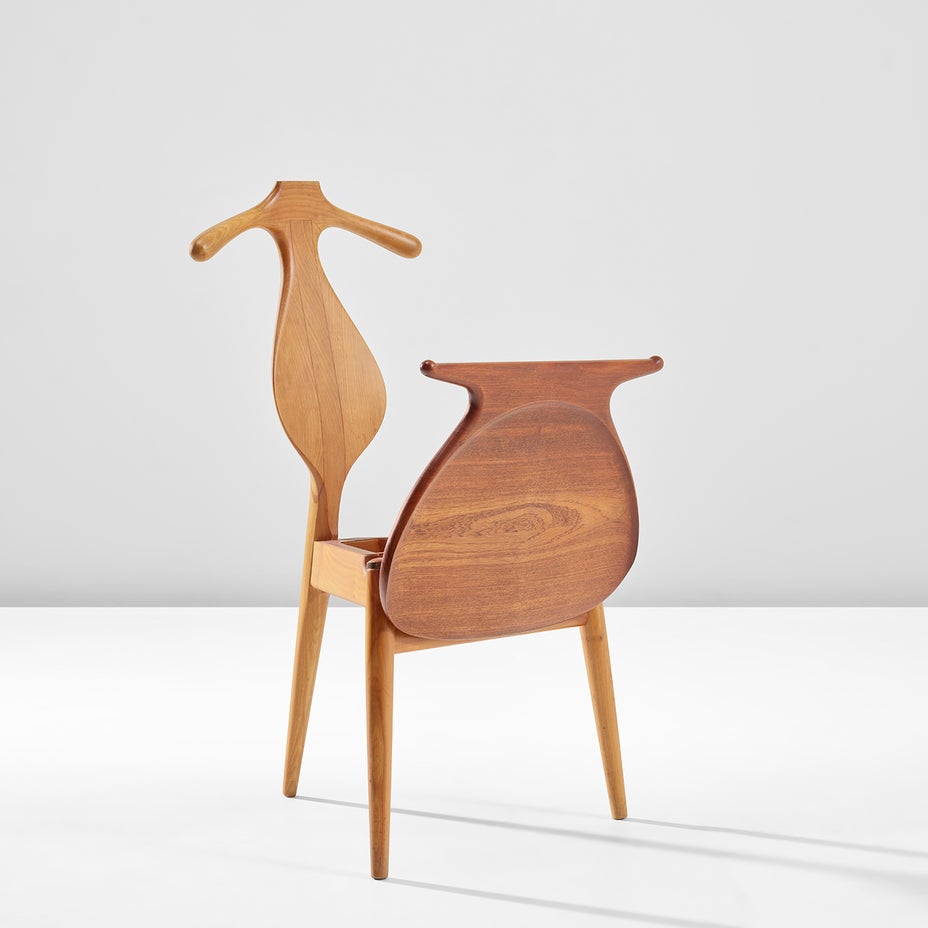
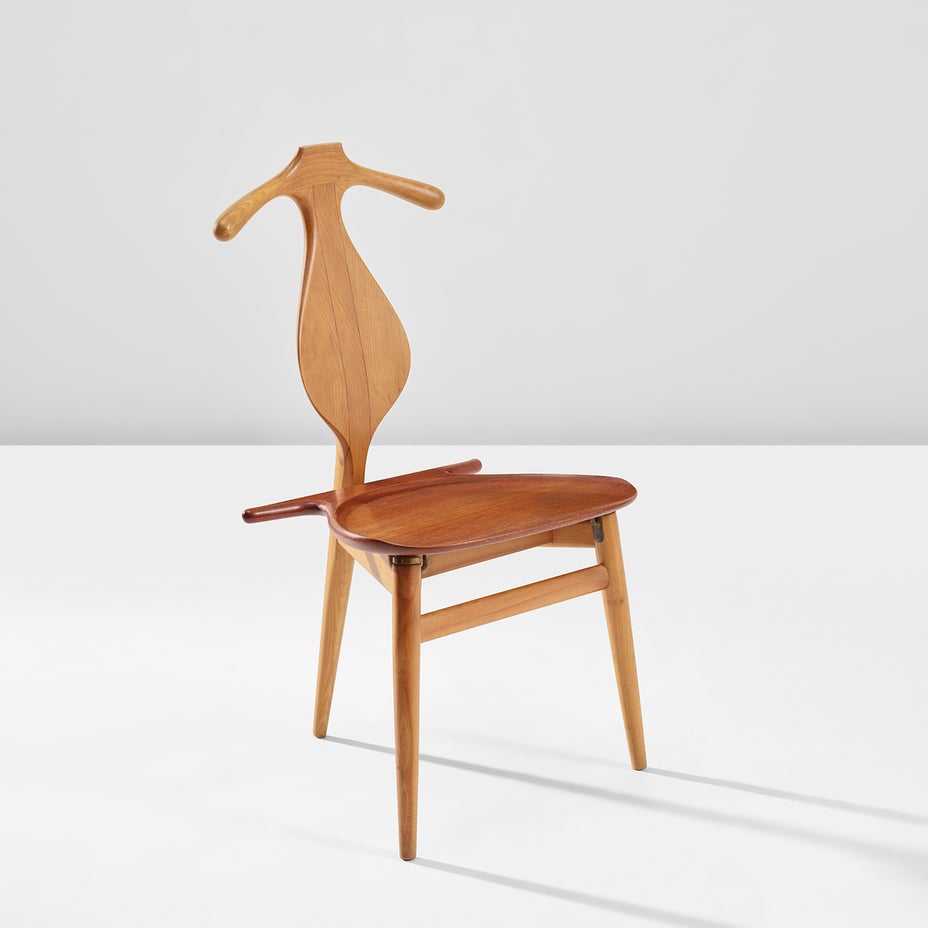
The present ‘Valet’ chair is a striking furniture piece that exemplifies the best of Danish modern design. The chair was designed in 1953 by Danish designer Hans J. Wegner who is widely regarded as one of the most influential designers of the mid-20th century. The teak and oak chair is a quintessential example of Wegner's style and design principles. Its well-crafted and useful form is streamlined and refined, making it a wonderful addition for any bedroom, or dressing room.
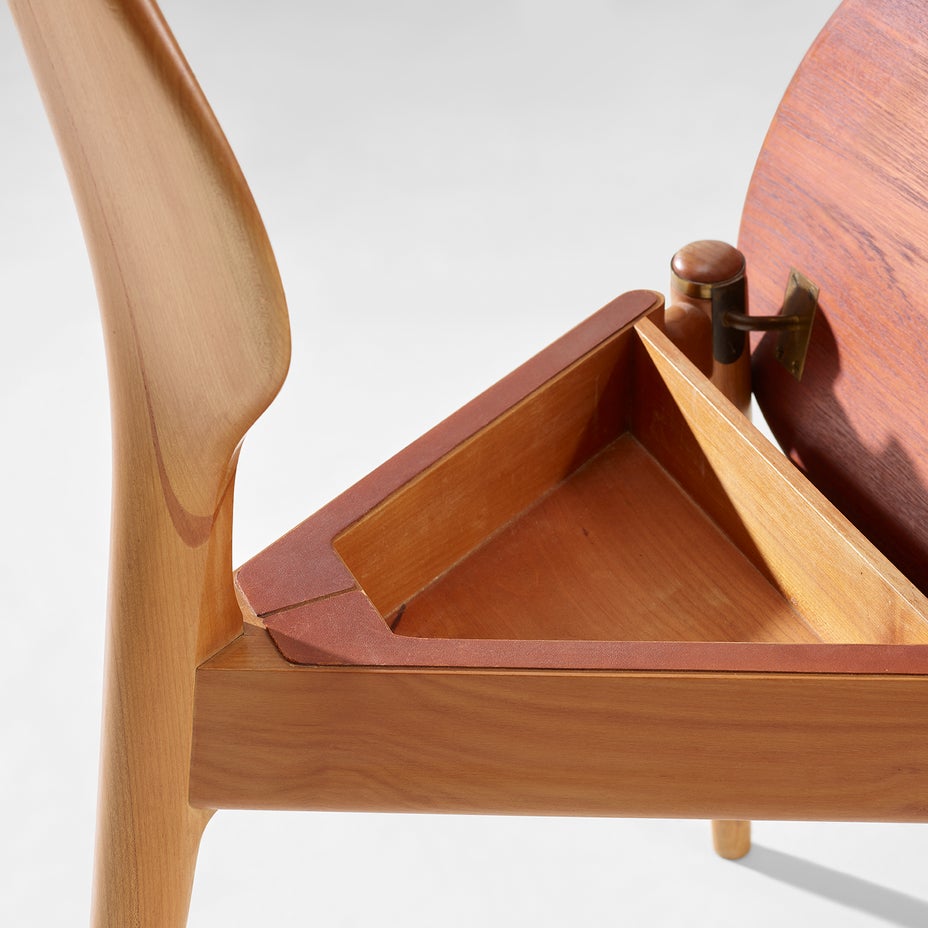
One of the most pleasing features of the chair is its elegant practicality. It was designed to be a multipurpose piece that can serve as both a chair and a valet stand. As early as 1951, Wegner had conceptualised this model after a discussion with Steen Eiler Rasmussen, a professor of architecture, and Kay Bojesen, a designer, about the challenges of folding clothes in the most functional manner before bedtime. However, it was not until the Danish King Frederik IX requested one after seeing the initial four-legged prototype that Wegner continued the design process. The integrated backrest-hanger is well suited to hang clothing and accessories, while the seat-storage unit with interior leather details is ideal for storing smaller items like wallets, watches, and jewellery. The chair's usefulness is further enhanced by its minimalist design, which allows it to blend seamlessly into any space. Wegner was a master of understatement, so the chair's clean lines and unadorned form make it a truly timeless piece.
Hans J. Wegner was born in Denmark in 1914 and began his career as a cabinetmaker. He later studied at the Copenhagen School of Arts and Crafts, where he developed his signature style. Throughout his career, he designed hundreds of pieces of furniture, many of which are now considered to be icons of 20th-century design. Wegner's designs were heavily influenced by the work of other designers and architects of his time, including Le Corbusier, Mies van der Rohe, and Alvar Aalto. Like several of his peers, Wegner was interested in creating furniture that was both beautiful and functional and believed that good design should be accessible to everyone.
One of the most pleasing features of the chair is its elegant practicality. It was designed to be a multipurpose piece that can serve as both a chair and a valet stand. As early as 1951, Wegner had conceptualised this model after a discussion with Steen Eiler Rasmussen, a professor of architecture, and Kay Bojesen, a designer, about the challenges of folding clothes in the most functional manner before bedtime. However, it was not until the Danish King Frederik IX requested one after seeing the initial four-legged prototype that Wegner continued the design process. The integrated backrest-hanger is well suited to hang clothing and accessories, while the seat-storage unit with interior leather details is ideal for storing smaller items like wallets, watches, and jewellery. The chair's usefulness is further enhanced by its minimalist design, which allows it to blend seamlessly into any space. Wegner was a master of understatement, so the chair's clean lines and unadorned form make it a truly timeless piece.
Hans J. Wegner was born in Denmark in 1914 and began his career as a cabinetmaker. He later studied at the Copenhagen School of Arts and Crafts, where he developed his signature style. Throughout his career, he designed hundreds of pieces of furniture, many of which are now considered to be icons of 20th-century design. Wegner's designs were heavily influenced by the work of other designers and architects of his time, including Le Corbusier, Mies van der Rohe, and Alvar Aalto. Like several of his peers, Wegner was interested in creating furniture that was both beautiful and functional and believed that good design should be accessible to everyone.