Priority Bidding is here! Secure a lower Buyer’s Premium today (excludes Online Auctions and Watches). Learn More

8

Hélio Oiticica

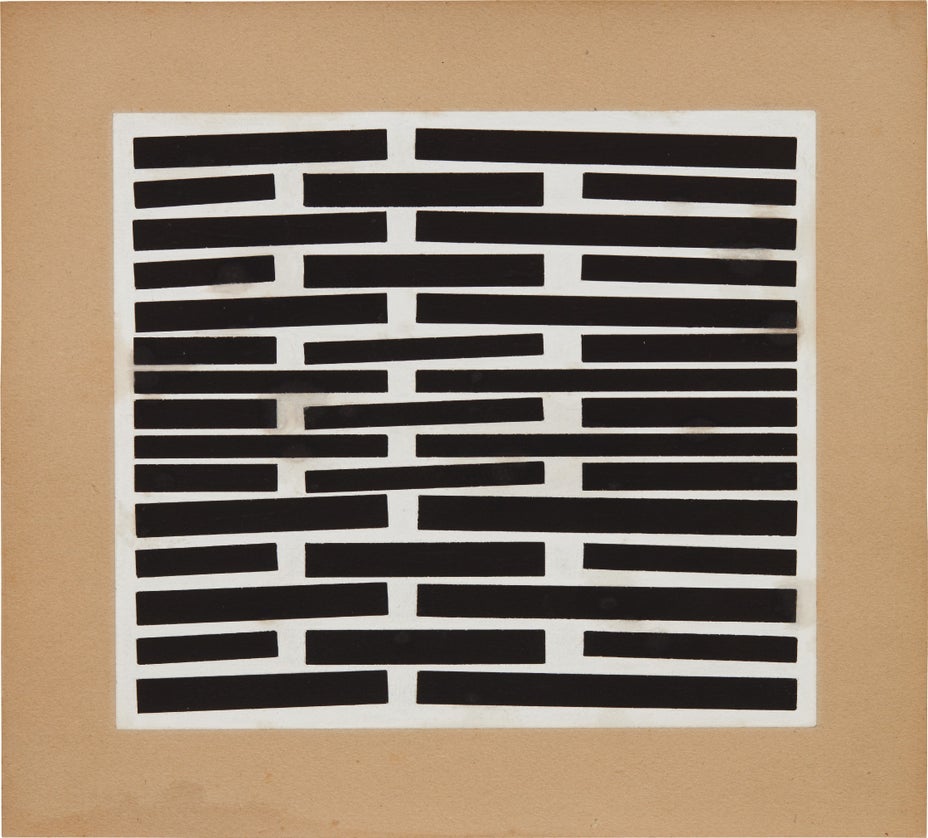
Metaesquema 193

Estimate
$150,000 - 250,000
Lot Details
gouache on cardboard
11 3/4 x 13 in. (29.8 x 33 cm)
Painted in 1958, this work is accompanied by a certificate of authenticity issued by the Projeto Hélio Oiticica.
Catalogue Essay
When Hélio Oiticica lived in Washington D.C. from 1947 to 1949, he viewed numerous works by Paul Klee in the National Gallery of Art, after which he encountered the great European artist’s work again at the São Paulo Bienal in 1953-54. During the 1950s, while studying under Ivan Serpa at the Museu de Arte Moderna in Rio de Janeiro, Oiticica would produce numerous jewel-like works on paper in which he explored various tenants of Concretism and color theory. Despite the fact that Oiticica was quick to disregard these early works, they were undoubtedly crucial to his later explorations in Neoconcretism, which critic Ferreira Gullar argued “represented a definitive break from the incomplete, overly formalist understanding of the historical avant-garde that had prevailed in Brazil theretofore and the adoption of a radical project to fulfill the spiritual and expressive transformations called for by Malevich and Mondrian” (Adele Nelson, Hélio Oiticica: To Organize Delirium, Carnegie Museum of Art and Del Monico Books, p. 44). Oiticica’s definitive importance within the international art milieu was recognized in a major retrospective in the United States, which traveled from the Carnegie Museum of Art, Pittsburgh, to the Art Institute of Chicago, to the Whitney Museum of American Art, New York (2016-2017).

Hélio Oiticica

Brazilian | B. 1937 D. 1980
Hélio Oiticica is one of Brazil's most influential artists. His work ranges from abstract compositions to early environmental installations exploring color, form, and material. He studied under Ivan Serpa in the mid-1950s and joined Grupo Frente, an association of artists in Rio de Janeiro interested in developing the legacy of European Constructivism within the context of the modernization of Brazil. Disagreements with the São Paulo Ruptura group led Oiticica and Lygia Clark to create the Neo-Concrete group (1959-'61).His Metaesquemas (1957-'58) are an important series of gouaches where color is reduced to a few tones and broken into irregular shapes that are isolated within a grid. However he soon rejected this conventional art form for more radical ones that demanded viewer participation, including his Parangoles (1964–'68), three-dimensional sculptures based on traditional Brazilian Carnival costumes. Yet an exploration of the physical nature of color remained a constant in his work up until his untimely death in 1980.
Browse Artist