10
Heuer
Ref. 1163T
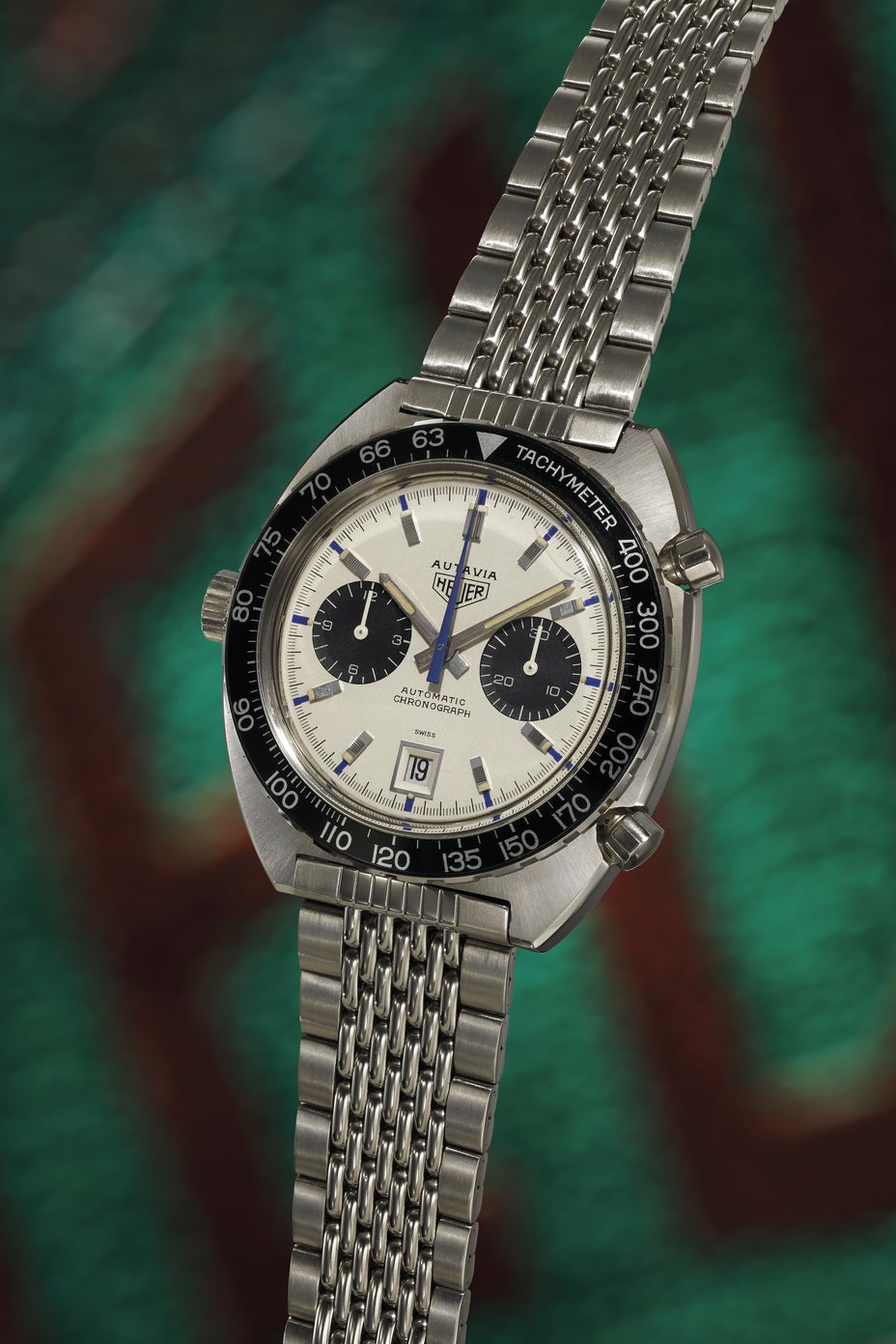
Autavia "Siffert 2nd execution with Flat V"
A fine and very rare stainless steel chronograph wristwatch with date, blue accents on the dial, tachymeter bezel, bracelet and original guarantee.
Estimate
CHF20,000–30,000
Sold For
CHF26,250
Manufacturer
Heuer
Year
Circa 1969
Reference No
1163T
Case No
142'509
Model Name
Autavia "Siffert 2nd execution with Flat V"
Material
Stainless steel
Calibre
Automatic, cal.11, 17 jewels
Bracelet/Strap
Stainless steel Gay Frères bracelet with endlinks stamped HLD, max length 205mm.
Clasp/Buckle
Stainless steel Heuer deployant clasp stamped 2.69
Dimensions
42mm. Diameter
Signed
Case, dial, movement and clasp signed
Accessories
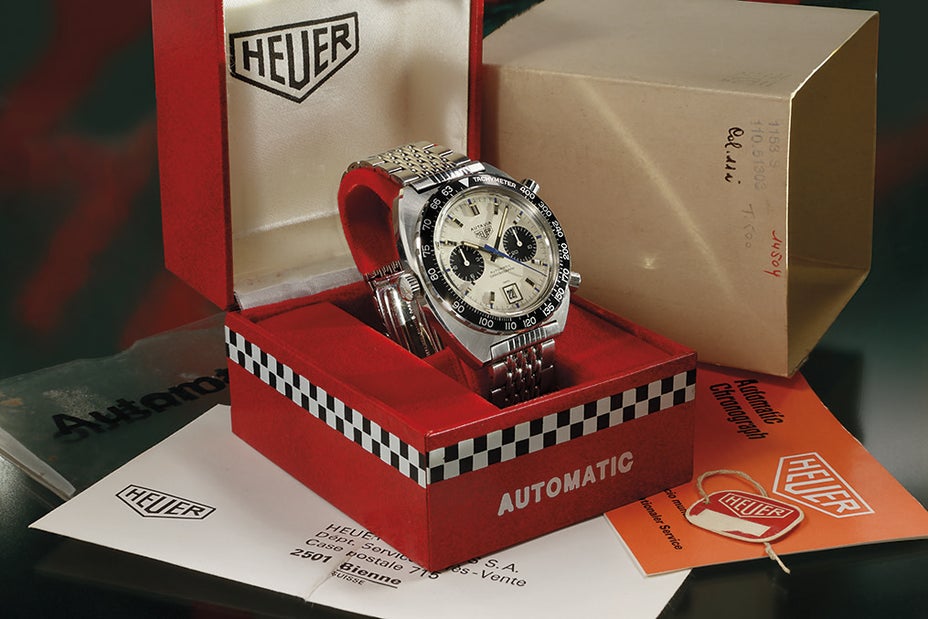
Accompanied by Heuer red chequerboard presentation box, numbered outer packaging, numbered red swing tag, guarantee booklet and plastic sleeve
Full-Cataloguing
The Autavia was the timepiece of choice for many famous Grand Prix drivers of the 1960s and 70s. Amongst them was Jo Siffert, the Swiss double Formula 1 Grand Prix champion who used to wear an Autavia 1163 with tachymeter scale, white dial with black registers, date and blue seconds chronograph hand and markers, explaining this lot’s nickname.
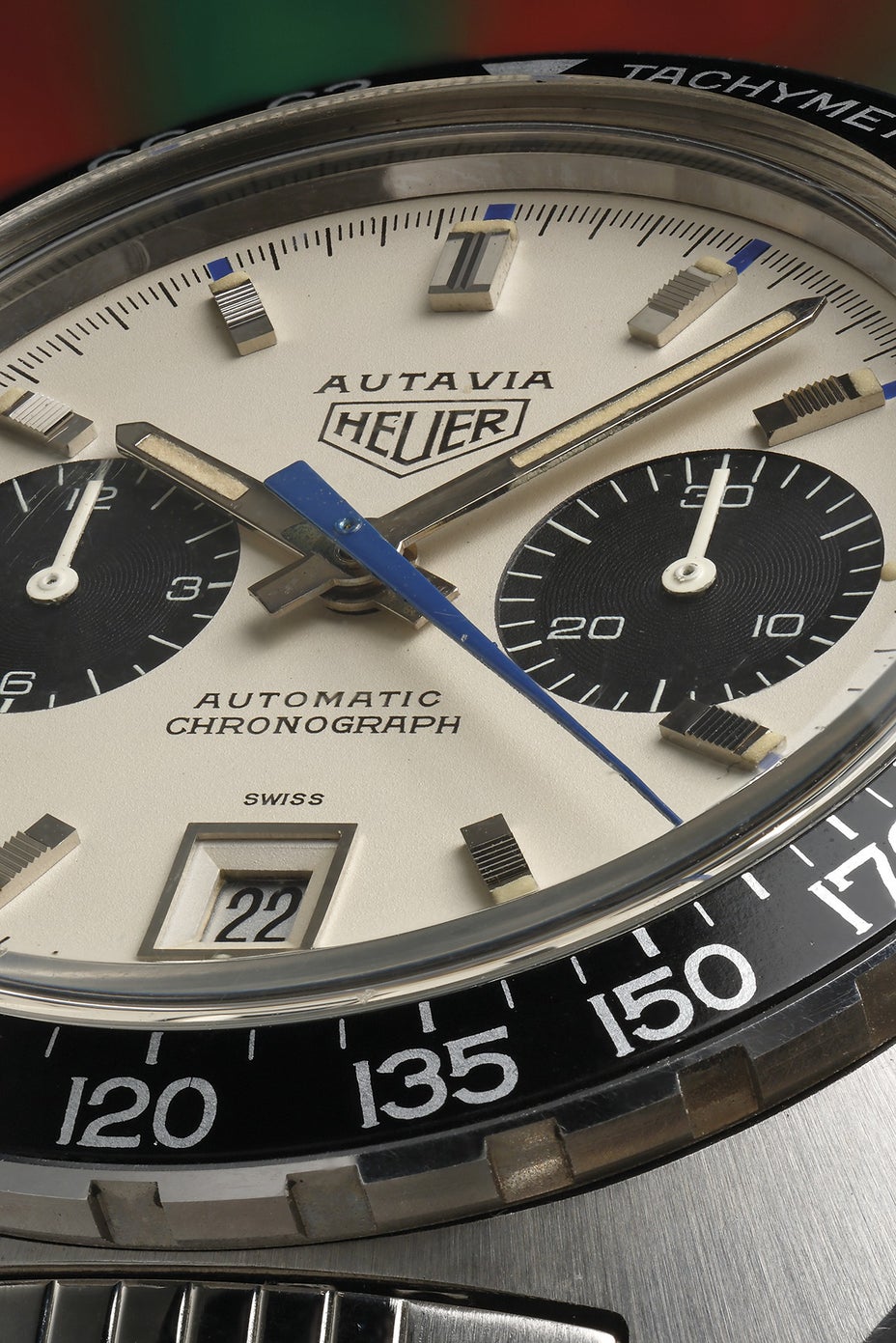
Whilst the 1st execution dials bore the “Chronomatic” script above Heuer, the 2nd execution dials dropped this and reverted back to the more explanatory, “Automatic Chronograph” and “Autavia” in place of “Chronomatic”. The grooved indexes remained the same, but this time the Heuer shield was made smaller and in some instances, the Autavia text included a “Flat V”, as illustrated in the present example. These 2nd execution dials remain much rarer than the later executions.
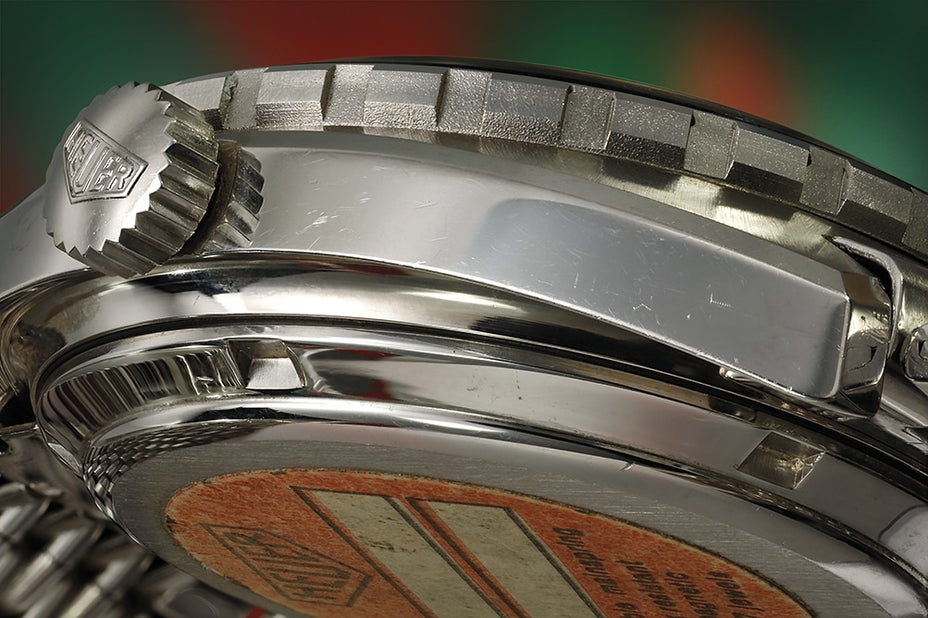
This amazing “Siffert” sat unsold in the store room of an Italian dealer until it closed for business several years ago. It retains the original red sticker, which signifies this watch was unworn; the crisp case exhibits sunburst finish and sharp edges. The date-stamped bracelet, along with the swing tag, guarantee red Heuer booklet and numbered outer card, make this a fantastic, possibly unique new old stock addition to any collection.
Whilst the 1st execution dials bore the “Chronomatic” script above Heuer, the 2nd execution dials dropped this and reverted back to the more explanatory, “Automatic Chronograph” and “Autavia” in place of “Chronomatic”. The grooved indexes remained the same, but this time the Heuer shield was made smaller and in some instances, the Autavia text included a “Flat V”, as illustrated in the present example. These 2nd execution dials remain much rarer than the later executions.
This amazing “Siffert” sat unsold in the store room of an Italian dealer until it closed for business several years ago. It retains the original red sticker, which signifies this watch was unworn; the crisp case exhibits sunburst finish and sharp edges. The date-stamped bracelet, along with the swing tag, guarantee red Heuer booklet and numbered outer card, make this a fantastic, possibly unique new old stock addition to any collection.
Heuer
Swiss | 1860This iconic chronograph manufacturer has a long tradition of precision timekeeping. As early as 1882, founder Edouard Heuer held a patent for a chronograph watch; in 1887, he received a patent for an oscillating pinion, which is still in use today. These specialized timepieces have been at the heart of the firm's success, enabling the brand to be chosen as early timekeepers for the Olympics. In 1969, the company introduced their first automatic chronograph watch, the Monaco Heuer, which celebrated the Monaco Grand Prix. Other key chronograph models include the Autavia and the Carrera, all of which having become iconic models of the firm.