US import tariffs: Non-US origin lots in this sale (including watches and timepieces with Swiss-made or non-US made movements) will be subject to special tariffs upon import to the USA, currently ranging from 10% to 39% on the total invoice price (hammer price plus buyer’s premium). Buyers are responsible for paying any applicable tariffs, duties, taxes and charges when importing their purchased lots. Due to the evolving nature of international trade regulations, we recommend clients consult with their local customs office or advisor for up-to-date information on the applicable tariffs.
39
J. Player & Sons
"Hyper Complication"
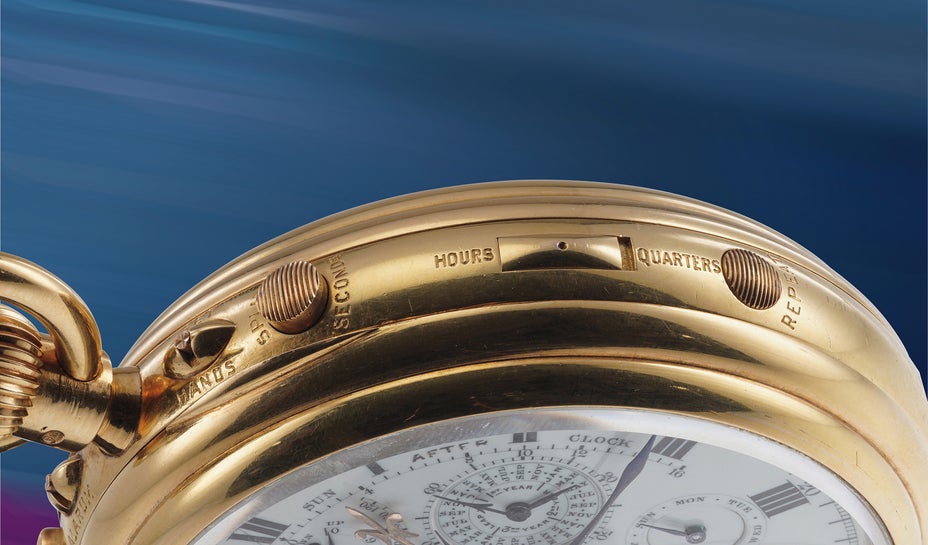
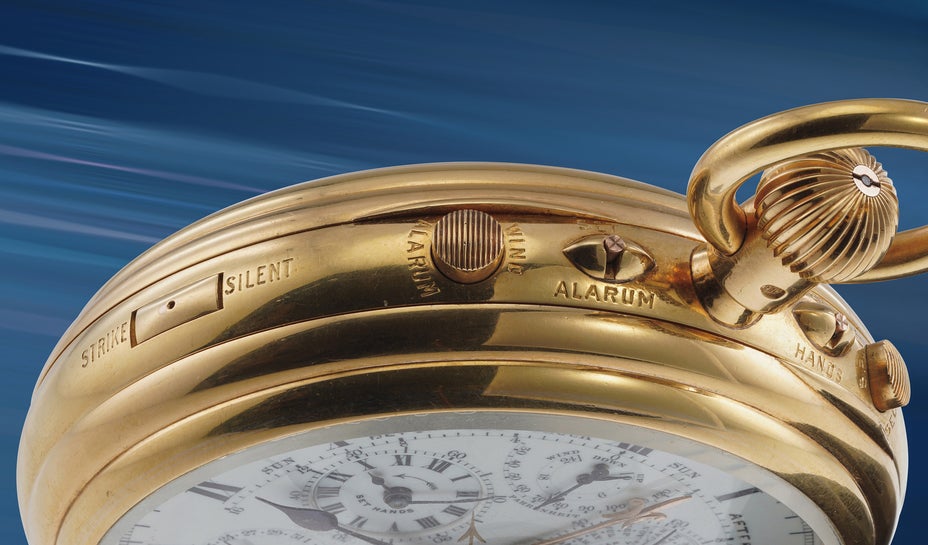
A significant, massive and unique openface yellow gold three train carillon minute repeating, grande & petite sonnerie, split seconds chronograph, tourbillon pocket watch with moonphases, equation of time, alarm, power reserve indicator and thermometer, one of the world's most complicated vintage pocket watches ever made
Estimate
CHF400,000–800,000
€430,000–859,000
$493,000–987,000
Sold For
CHF2,238,000
Manufacturer
J. Player & Sons
Year
1907
Movement No
11'901
Case No
11'901
Model Name
"Hyper Complication"
Material
18k yellow gold
Calibre
Manual, Nicole Nielsen ebauche, jeweled
Dimensions
77mm diameter
Signed
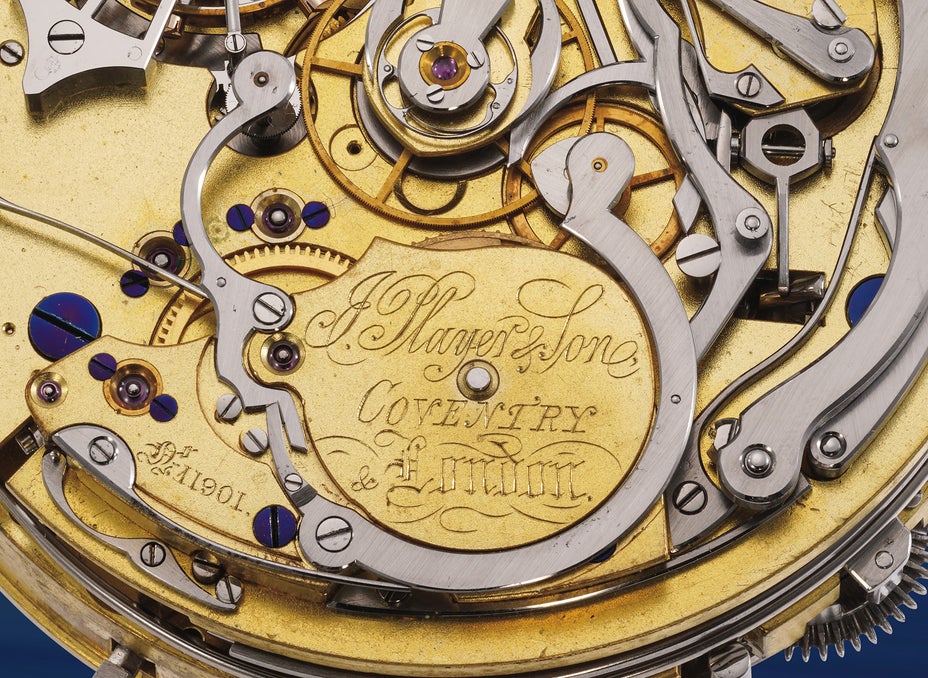
Dial and movement signed
Full-Cataloguing
J. Player & Son were a Coventry, England-based firm of high-quality watch and clockmakers, known for their complex and ornate timepieces, including a famous "Super Complication" pocket watch made for the banker J.P. Morgan around 1909, which was the most complicated English watch ever made at that time. Founded by Joseph Player in 1858, the firm achieved a strong reputation for precision instruments outside of London's main horological centers, making pocket watches with advanced features like astronomical functions, alarms, and thermometers.
The present spectacular timepiece demonstrated the incredible technical prowess of English watchmaking at the time. The watch impresses with its number of complications rarely seen together:
Grande & Petite Sonnerie (quarters striking on 3 gongs)
Carillon trip minute repeating (quarters striking on 3 gongs)
Split seconds chronograph with 60 minute register
Perpetual calendar with leap year indication
Moonphases and age of the moon
Equation of time
Alarm
Bimetallic thermometer
Power reserve
Tourbillon
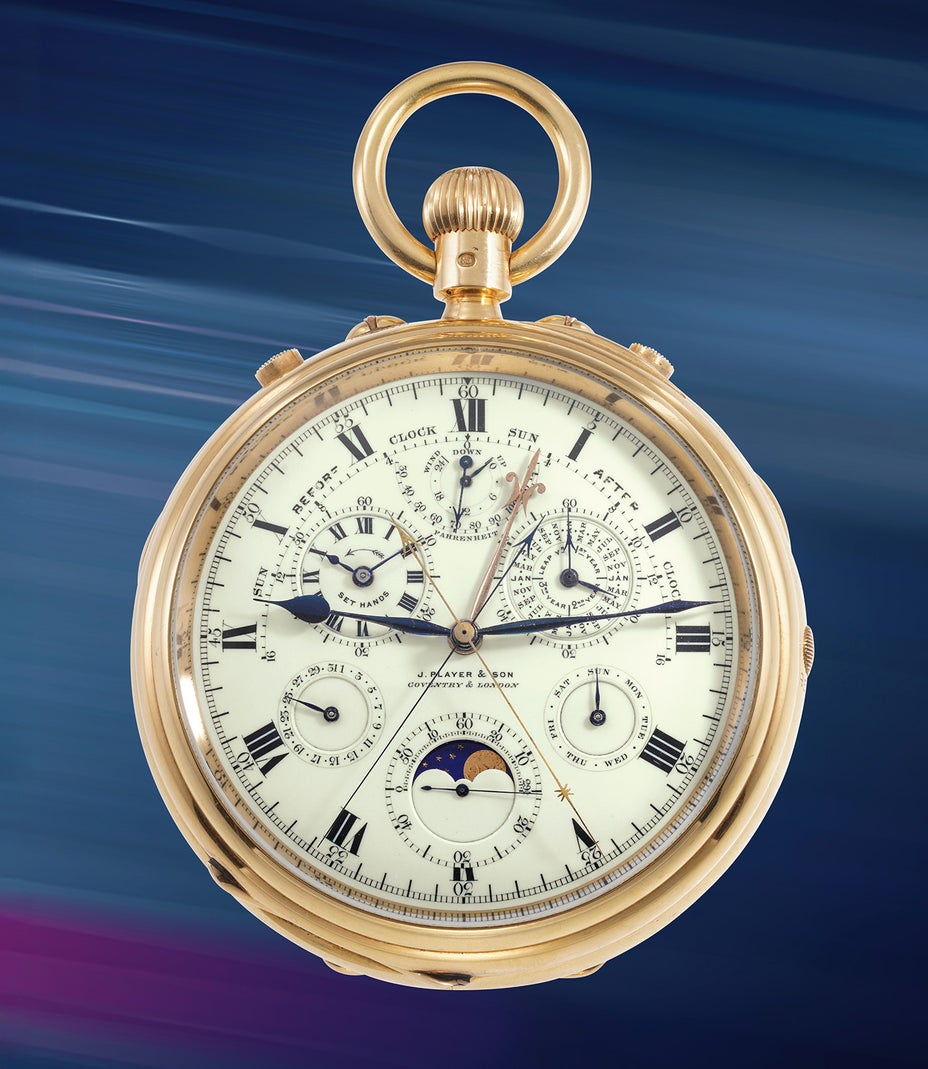
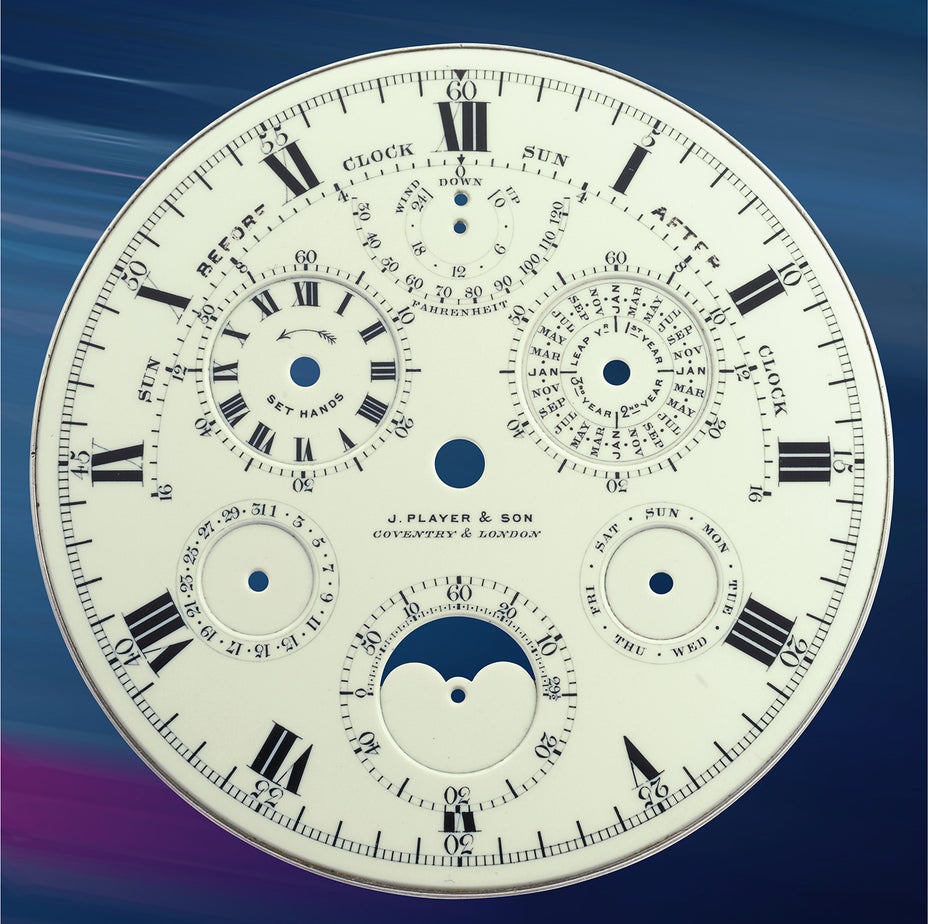
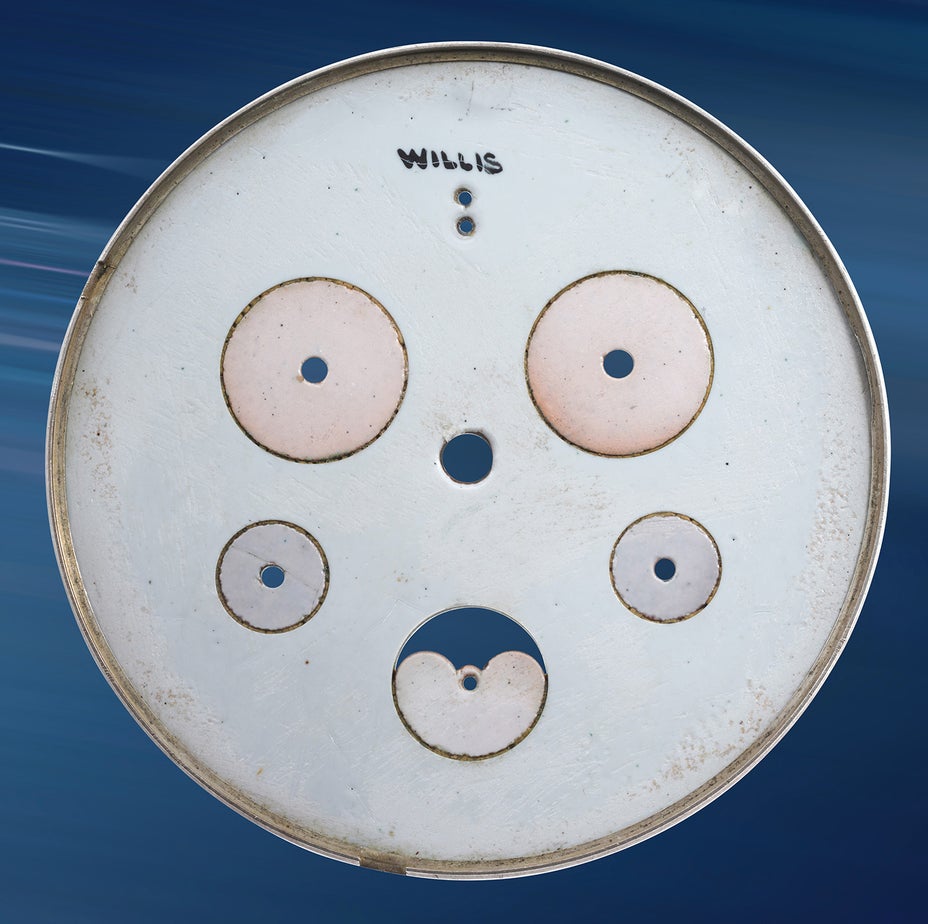
All these indications are superbly balanced in a legible manner on the beautiful dial made by Frederick Willis.
The power reserve is placed at 12 o’clock and surrounded by the thermometer (in Fahrenheit), the alarm dial that can be set to the minute is found near 10 o’clock and the month and leap year indications near 2 o’clock. An arc gong from 9 to 3 o’clock indicated the Equation of Time (difference between sidereal and civil time). At 4 o’clock is the month indicator, the moonphases at 6 o’clock and the date at 8 o’clock.
The movement ébauche is by Nicole, Nielsen & Co., who was the leading manufacturer of complicated watches in late 19th century London, and made watches and carriage clocks for leading makers such as Frodsham, but also marketed under their own name. The firm originated in 1840 when Adolphe Nicole, a partner in the firm of Nicole & Capt, Geneva, settled in London. In 1888 the firm was purchased by R.B. North, Nielsen being retained as joint managing director with Harrison Mill Frodsham. In 1888 the firm took the name of Nicole, Nielsen & Co.
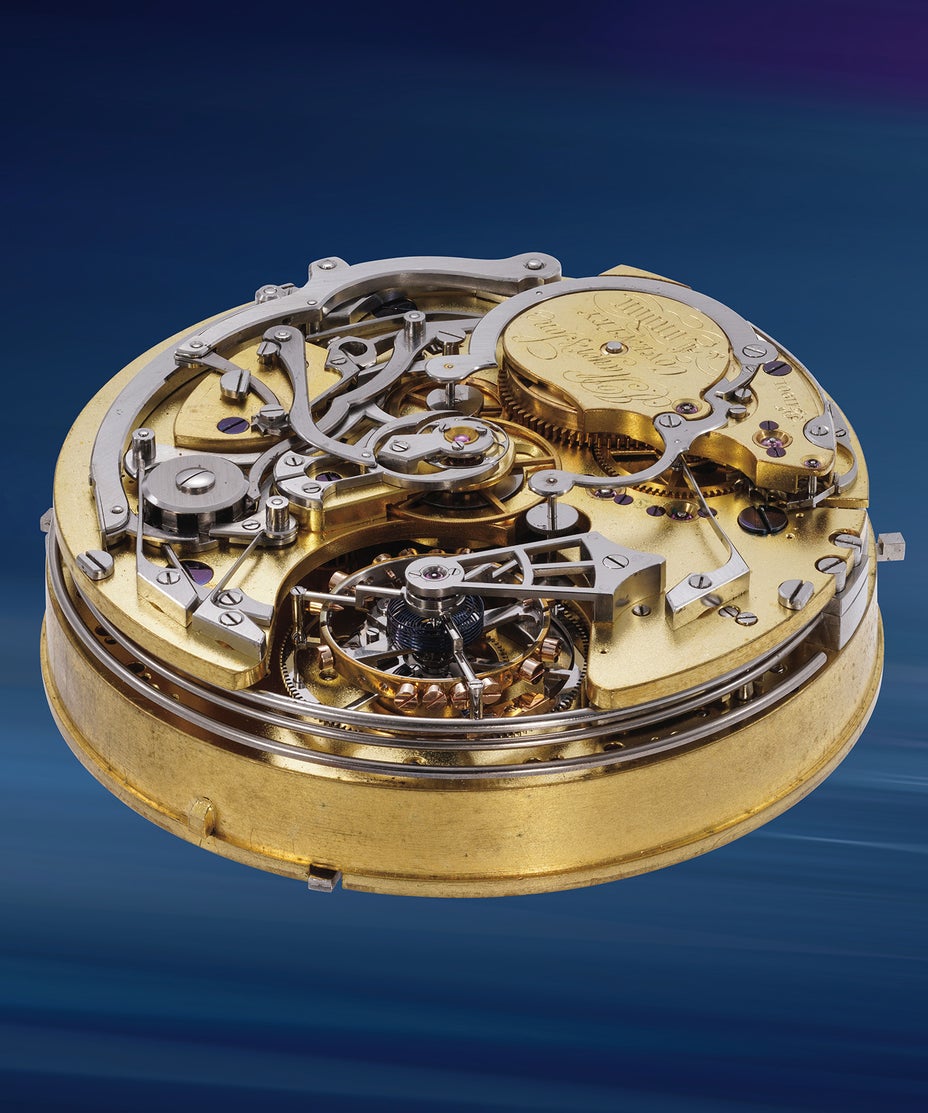
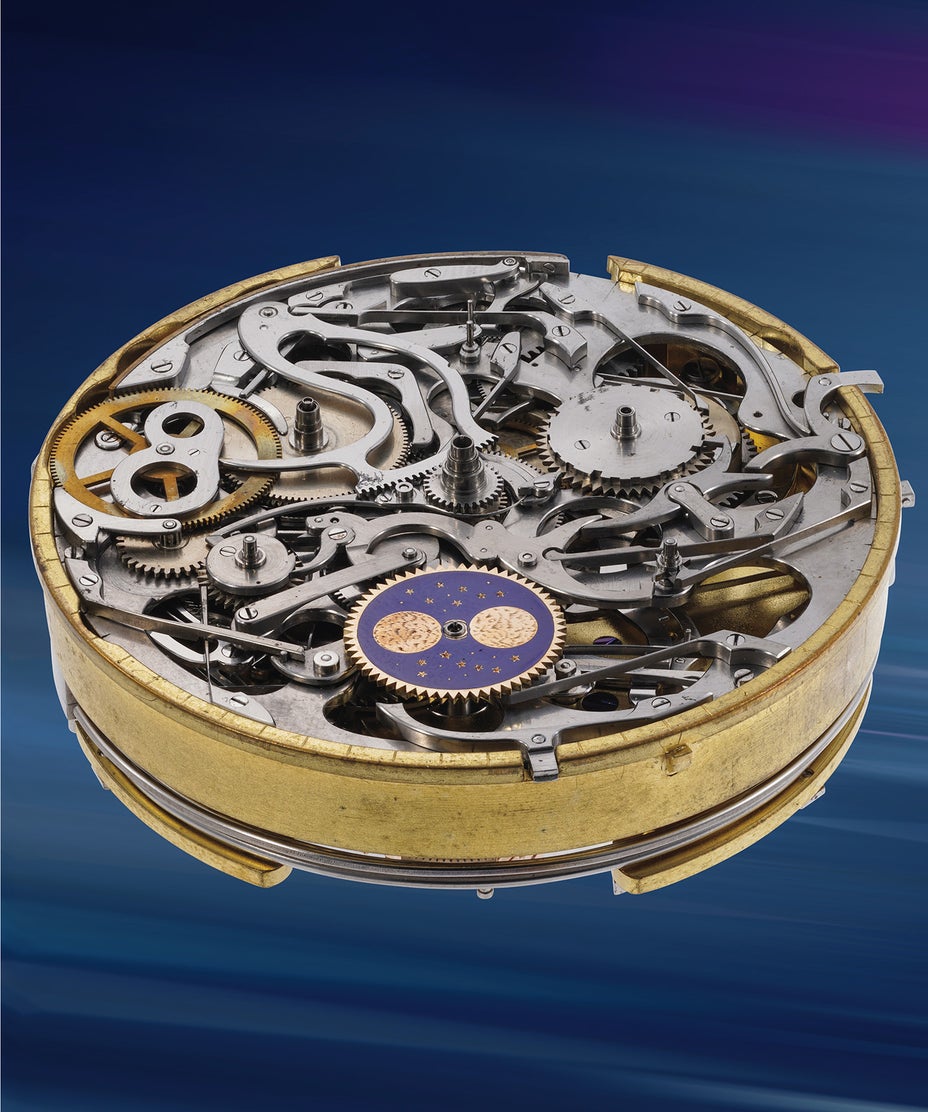
This remarkable timepiece is a mechanical tour de force delivering a horological punch rarely seen at this level. Merging complications rarely seen together whether visual (equation of time, alarm...) or hidden (carillon repeater and tourbillon) this J.Player & Son is a testament of the incredible technical creativity of English watchmaking ate the time.
The present spectacular timepiece demonstrated the incredible technical prowess of English watchmaking at the time. The watch impresses with its number of complications rarely seen together:
Grande & Petite Sonnerie (quarters striking on 3 gongs)
Carillon trip minute repeating (quarters striking on 3 gongs)
Split seconds chronograph with 60 minute register
Perpetual calendar with leap year indication
Moonphases and age of the moon
Equation of time
Alarm
Bimetallic thermometer
Power reserve
Tourbillon
All these indications are superbly balanced in a legible manner on the beautiful dial made by Frederick Willis.
The power reserve is placed at 12 o’clock and surrounded by the thermometer (in Fahrenheit), the alarm dial that can be set to the minute is found near 10 o’clock and the month and leap year indications near 2 o’clock. An arc gong from 9 to 3 o’clock indicated the Equation of Time (difference between sidereal and civil time). At 4 o’clock is the month indicator, the moonphases at 6 o’clock and the date at 8 o’clock.
The movement ébauche is by Nicole, Nielsen & Co., who was the leading manufacturer of complicated watches in late 19th century London, and made watches and carriage clocks for leading makers such as Frodsham, but also marketed under their own name. The firm originated in 1840 when Adolphe Nicole, a partner in the firm of Nicole & Capt, Geneva, settled in London. In 1888 the firm was purchased by R.B. North, Nielsen being retained as joint managing director with Harrison Mill Frodsham. In 1888 the firm took the name of Nicole, Nielsen & Co.
This remarkable timepiece is a mechanical tour de force delivering a horological punch rarely seen at this level. Merging complications rarely seen together whether visual (equation of time, alarm...) or hidden (carillon repeater and tourbillon) this J.Player & Son is a testament of the incredible technical creativity of English watchmaking ate the time.