
344
Jaeger-LeCoultre
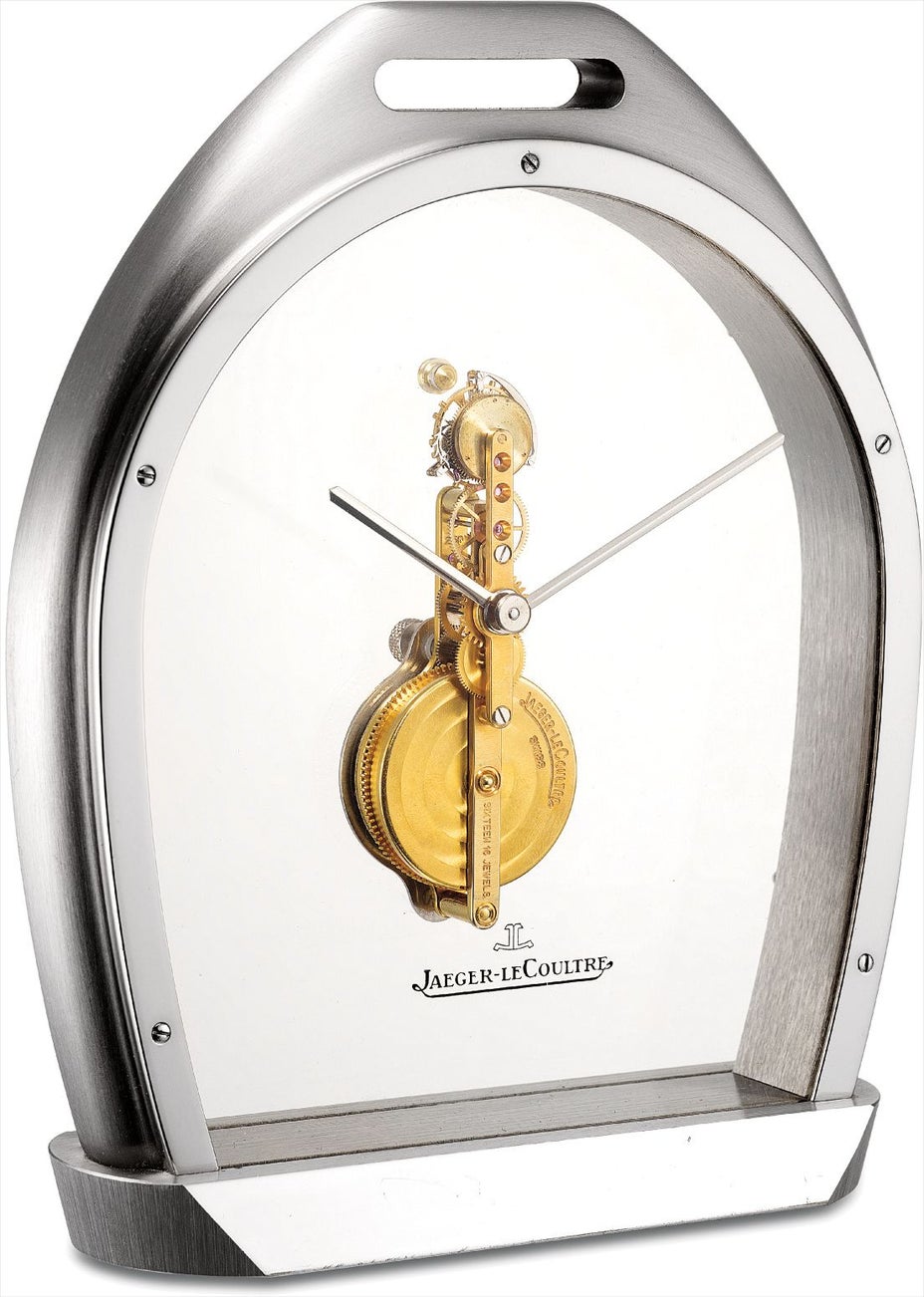
A fine and rare stainless steel tourbillon skeletonised desk clock
- Estimate
- HK$120,000 - 200,000
Lot Details
- Manufacturer
- Jaeger-LeCoultre
- Year
- Circa 1980
- Case No
- 3'215'006
- Material
- Stainless steel
- Calibre
- Mechanical, 16 jewels
- Dimensions
- 150 mm. length, 120 mm. width and 40 mm. depth
- Signed
- <em>Case, dial and movement signed </em>
Specialist
Full-Cataloguing
Catalogue Essay
The tourbillon complication was invited and patented by Abraham Louis Breguet in 1801, to ensure accurate time keeping and to counter the effect of gravity on pocket watches. Today, there are many iterations and variations of this iconic complication. The present example by Jaeger LeCoultre, housed in a skeletonized glass case, allows the viewer to marvel the complication in action, whilst reading the time.
The design of the present clock is focused on incorporating thinner movements. The movement is manufactured in a miniaturized form, featuring a free-end escape when and a free-end palette fork. The assembly allows the escape wheel pinion to engage with the tourbillon's stationary wheel which reduces the risk of damage. The movement also features ball bearings. The flying components, such as the palette fork and escape wheel, make the overall construction very unusual. We believe this clock may have been an early working model that Jaeger may have used as a study for its early 'Da Vinci' tourbillons. The movement is based on the caliber 210, and the caliber 250 was the improved version of the 210 and introduced to the market in 1979.
Jaeger-LeCoultre
Swiss | 1833Not all companies in the watchmaking field have been able to stand the test of time quite like Jaeger LeCoultre, also known as the "watchmaker's watchmaker." Founded in 1833 by Antoine LeCoultre and originally named LeCoutre, the firm provided watchmaking's top brands, such as Patek Philippe, Vacheron Constantin and Audemars Piguet, the high-grade, unfinished mechanical movements with which they completed their watches.
In the early 1900s, Cartier's watch supplier Edmond Jaeger sought out LeCoultre's help in creating the world's thinnest watches. The collaboration resulted in the creation of Cartier's earliest Tank and Santos watches, all housed with LeCoultre movements. The duo decided to merge in 1937, and the firm officially became the Jaeger-LeCoultre brand by which collectors know and adore it today. Some of the firm's most significant and important timepieces include the Reverso, the Memovox, the Atmos clock and, among modern watches, their Master Complications.
Browse MakerIn the early 1900s, Cartier's watch supplier Edmond Jaeger sought out LeCoultre's help in creating the world's thinnest watches. The collaboration resulted in the creation of Cartier's earliest Tank and Santos watches, all housed with LeCoultre movements. The duo decided to merge in 1937, and the firm officially became the Jaeger-LeCoultre brand by which collectors know and adore it today. Some of the firm's most significant and important timepieces include the Reverso, the Memovox, the Atmos clock and, among modern watches, their Master Complications.