SOLD TO BENEFIT AN ENDOWED SCHOLARSHIP FUND
26
Jim Hodges
The Good News, Ta Nea, 3/20/2007 (Athens Greece) 3/20/2007
Estimate
$30,000–40,000
Sold For
$30,000
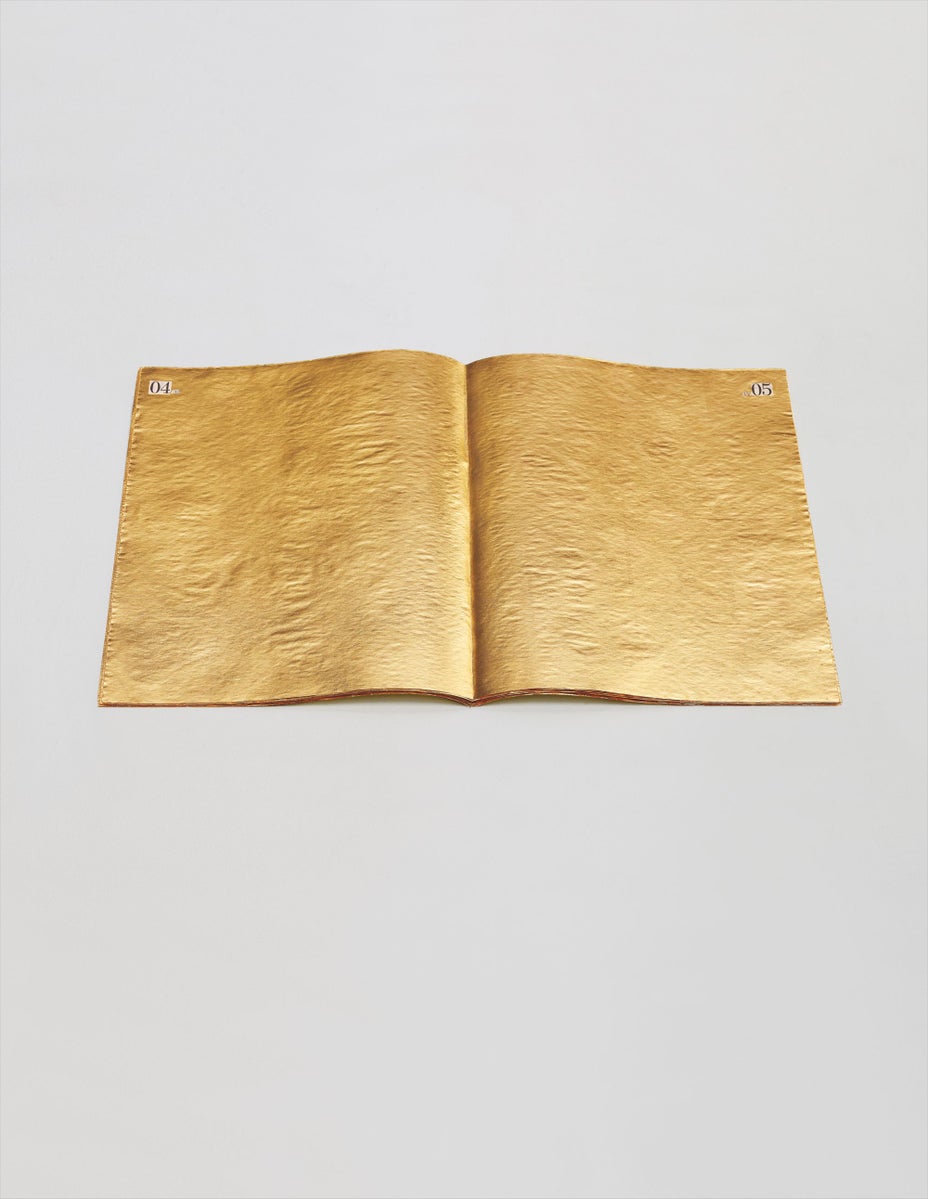
24K gold leaf on newspaper
open:14 ¼ x 23 in. (open) (36.2 x 58.4 cm)
closed: 14 ¼ x 11 in. (closed) (36.2 x 27.9 cm)
closed: 14 ¼ x 11 in. (closed) (36.2 x 27.9 cm)
Full-Cataloguing
“When I make art, I think about its ability to connect with others, to bring them into the process.”
JIM HODGES
Primarily recognized as an installation artist, New York-based Jim Hodges has been a mainstay of Contemporary aesthetes for nearly twenty-five years, producing a diverse body of work that extends from forms of large scale sculpture to delicate works on paper. Chartering medium and ephemerality, Hodges is well deserving of his forthcoming survey Jim Hodges: Sometimes Beauty, at the Dallas Museum of Art. Long overdue, this comprehensive exhibition will feature seventy-five works, punctuating the length of his career beginning in 1987.
Hodges’ oeuvre will triumphantly coalesce, exhibiting its formidable poetics, meditations on temporality, loss, and delicate beauty. The present lot, The Good News, Ta
Nea, 3/20/2007, (Athens Greece), 2007, personifies this upcoming exhibition in a striking manner: as a 24K gold leaf covered newspaper, one of his signature works, it represents both an essential mode of Hodges’ production and also a deep reflection into the pool of emotions that Hodges is so gifted in conjuring. Hodges’ use of gold leaf is nothing short of compelling, giving pause to the viewer. As though touched by Midas, the present lot can be read as a critique of news media as a valuable source; each gold page simultaneously imbuing the news with a heightened sense of value while obscuring it. Ta Nea, which translates to news in Greek, is the name of a daily newspaper out of Athens Greece. The reference here to medieval text and illuminations signies the inherent value of the printed word; associating text, precious element, and Godliness, once carefully transcribed, now fleeting and questionable. Here, the good news appears to fold into ‘the good word’ or holy word. Gold, the symbol of the perennial, reverberates against that most temporal emblem of the ephemeral, the newspaper; presenting us with a stunning truth: though we may desire to wrap one day in a veil of eternity, it is only our mementos which abide by our wishes. Indeed, Hodges’ dichotomy of materials prompts a serious investigation.
JIM HODGES
Primarily recognized as an installation artist, New York-based Jim Hodges has been a mainstay of Contemporary aesthetes for nearly twenty-five years, producing a diverse body of work that extends from forms of large scale sculpture to delicate works on paper. Chartering medium and ephemerality, Hodges is well deserving of his forthcoming survey Jim Hodges: Sometimes Beauty, at the Dallas Museum of Art. Long overdue, this comprehensive exhibition will feature seventy-five works, punctuating the length of his career beginning in 1987.
Hodges’ oeuvre will triumphantly coalesce, exhibiting its formidable poetics, meditations on temporality, loss, and delicate beauty. The present lot, The Good News, Ta
Nea, 3/20/2007, (Athens Greece), 2007, personifies this upcoming exhibition in a striking manner: as a 24K gold leaf covered newspaper, one of his signature works, it represents both an essential mode of Hodges’ production and also a deep reflection into the pool of emotions that Hodges is so gifted in conjuring. Hodges’ use of gold leaf is nothing short of compelling, giving pause to the viewer. As though touched by Midas, the present lot can be read as a critique of news media as a valuable source; each gold page simultaneously imbuing the news with a heightened sense of value while obscuring it. Ta Nea, which translates to news in Greek, is the name of a daily newspaper out of Athens Greece. The reference here to medieval text and illuminations signies the inherent value of the printed word; associating text, precious element, and Godliness, once carefully transcribed, now fleeting and questionable. Here, the good news appears to fold into ‘the good word’ or holy word. Gold, the symbol of the perennial, reverberates against that most temporal emblem of the ephemeral, the newspaper; presenting us with a stunning truth: though we may desire to wrap one day in a veil of eternity, it is only our mementos which abide by our wishes. Indeed, Hodges’ dichotomy of materials prompts a serious investigation.