Property from a New York Collection
3
Josef Frank
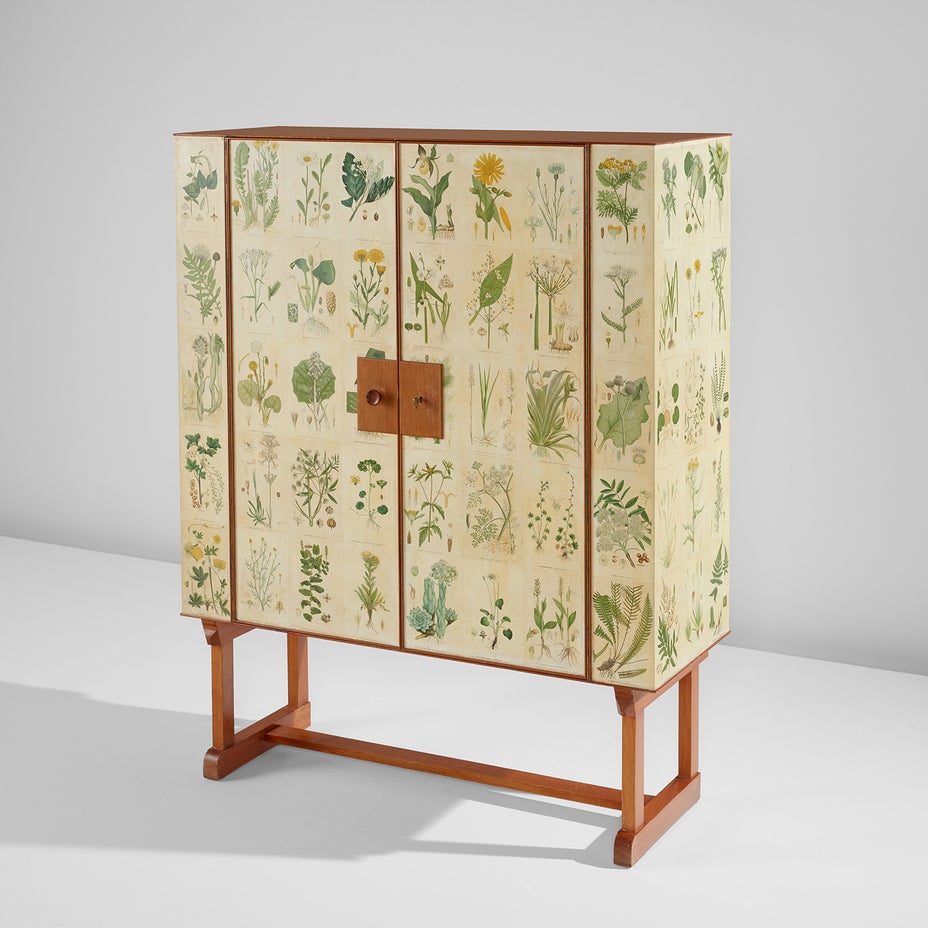
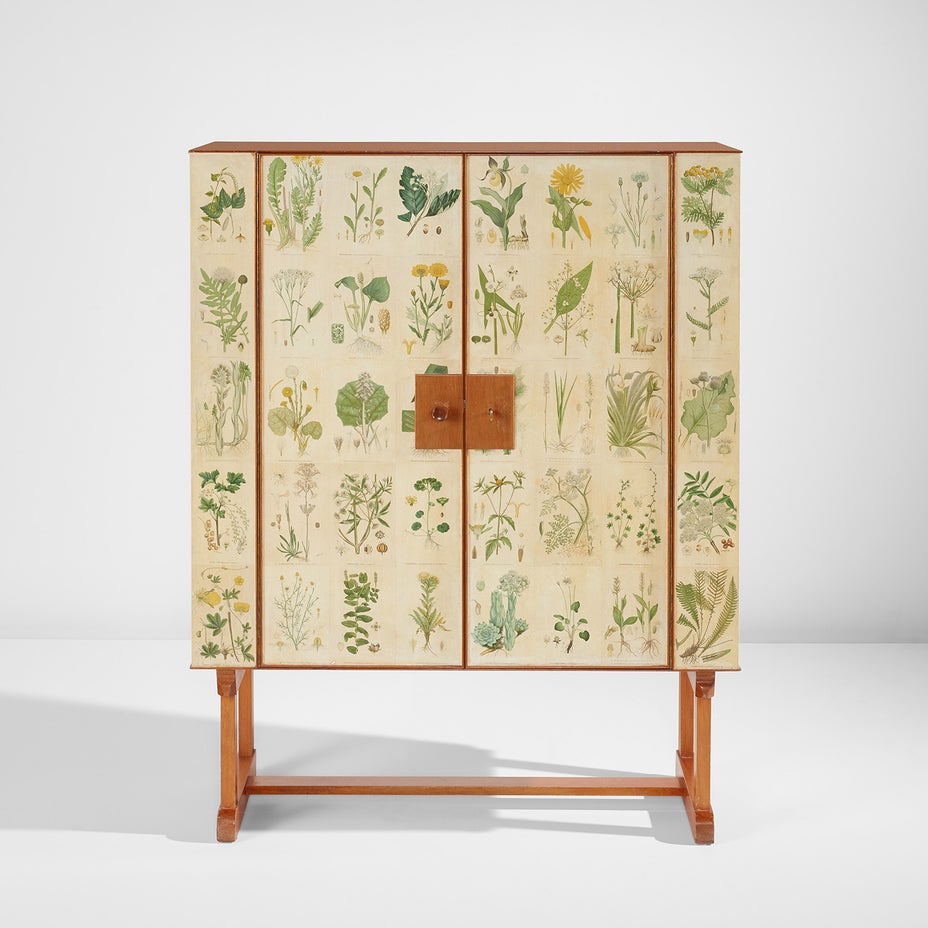
"Flora" cabinet, model no. 852
Estimate
$50,000–70,000
Sold For
$138,600
designed 1937, executed 1940s
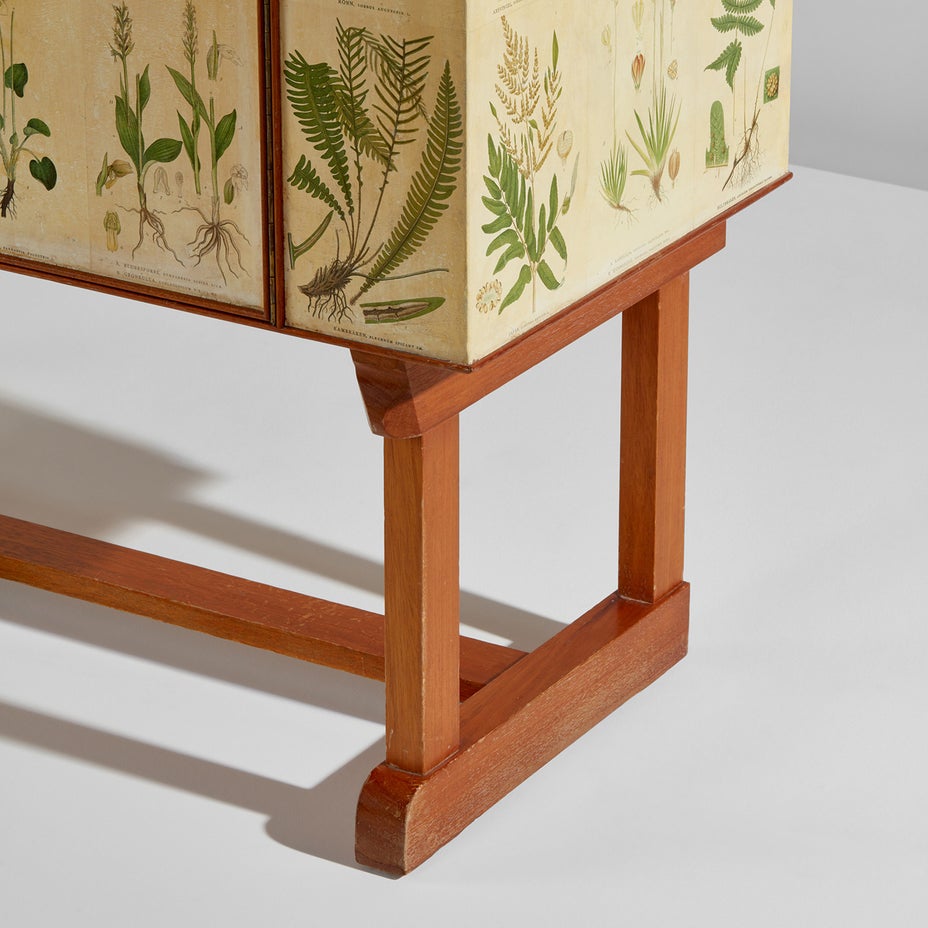
Honduran mahogany-veneered wood, Honduran mahogany, printed paper.
55 3/4 x 44 3/8 x 16 3/4 in. (141.6 x 112.7 x 42.5 cm)
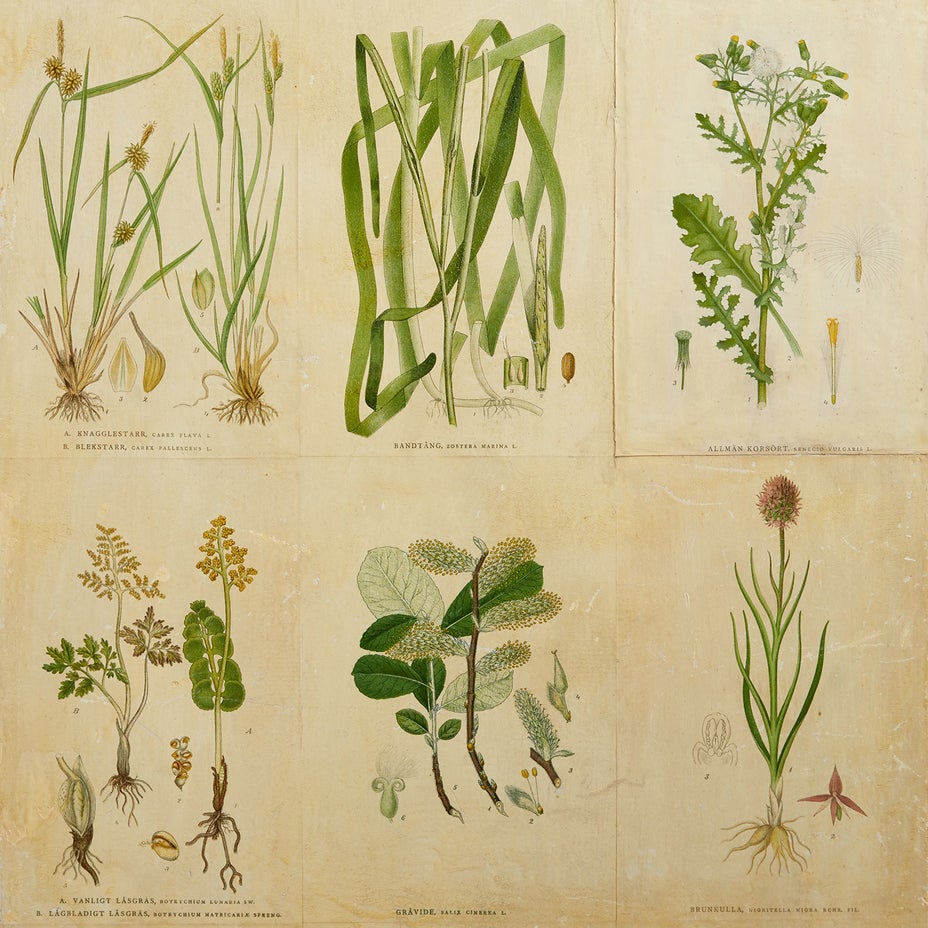
Manufactured by Svenskt Tenn, Stockholm, Sweden. Exterior covered with paper illustrations from Nordens Flora by C. A. Lindman.
Full-Cataloguing
Phillips would like to thank Per Ahldén of Svenskt Tenn for his assistance cataloguing the present lot.
Josef Frank, who arrived in Sweden from Austria in 1933, played a major role shaping the burgeoning idea of “Swedish Modern” in his role as a designer for the Stockholm interior design company Svenskt Tenn. Frank favored a softer form of modernism characterized by eclectic, individualistic decors as opposed to the hard-lined, rational modernism advocated by Le Corbusier and others. He also diverged from the Swedish modern movement, which had a nationalistic agenda and upheld Swedish folk traditions and rustic materials. Instead, he often employed imported veneers and drew inspiration from international historical precedents, as evidenced by the present Flora cabinet, which he based on the seventeenth-century cabinet-on-stand form and constructed from mahogany. The printed botanical illustrations that clad the cabinet’s exterior are from the book Bilder ur Nordens Flora by the Swedish botanist Carl Axel Magnus Lindman. Frank believed patterned surfaces were more calming than monochromatic surfaces and employed the Flora pattern, in particular, in several designs. Svenskt Tenn presented the same cabinet model in a 1951 exhibition at Kaufman’s Department Store in Pittsburgh—a fitting choice for introducing Swedish design to America.
Josef Frank, who arrived in Sweden from Austria in 1933, played a major role shaping the burgeoning idea of “Swedish Modern” in his role as a designer for the Stockholm interior design company Svenskt Tenn. Frank favored a softer form of modernism characterized by eclectic, individualistic decors as opposed to the hard-lined, rational modernism advocated by Le Corbusier and others. He also diverged from the Swedish modern movement, which had a nationalistic agenda and upheld Swedish folk traditions and rustic materials. Instead, he often employed imported veneers and drew inspiration from international historical precedents, as evidenced by the present Flora cabinet, which he based on the seventeenth-century cabinet-on-stand form and constructed from mahogany. The printed botanical illustrations that clad the cabinet’s exterior are from the book Bilder ur Nordens Flora by the Swedish botanist Carl Axel Magnus Lindman. Frank believed patterned surfaces were more calming than monochromatic surfaces and employed the Flora pattern, in particular, in several designs. Svenskt Tenn presented the same cabinet model in a 1951 exhibition at Kaufman’s Department Store in Pittsburgh—a fitting choice for introducing Swedish design to America.