

Property from an Important American Collection
21Ο◆
Julio González
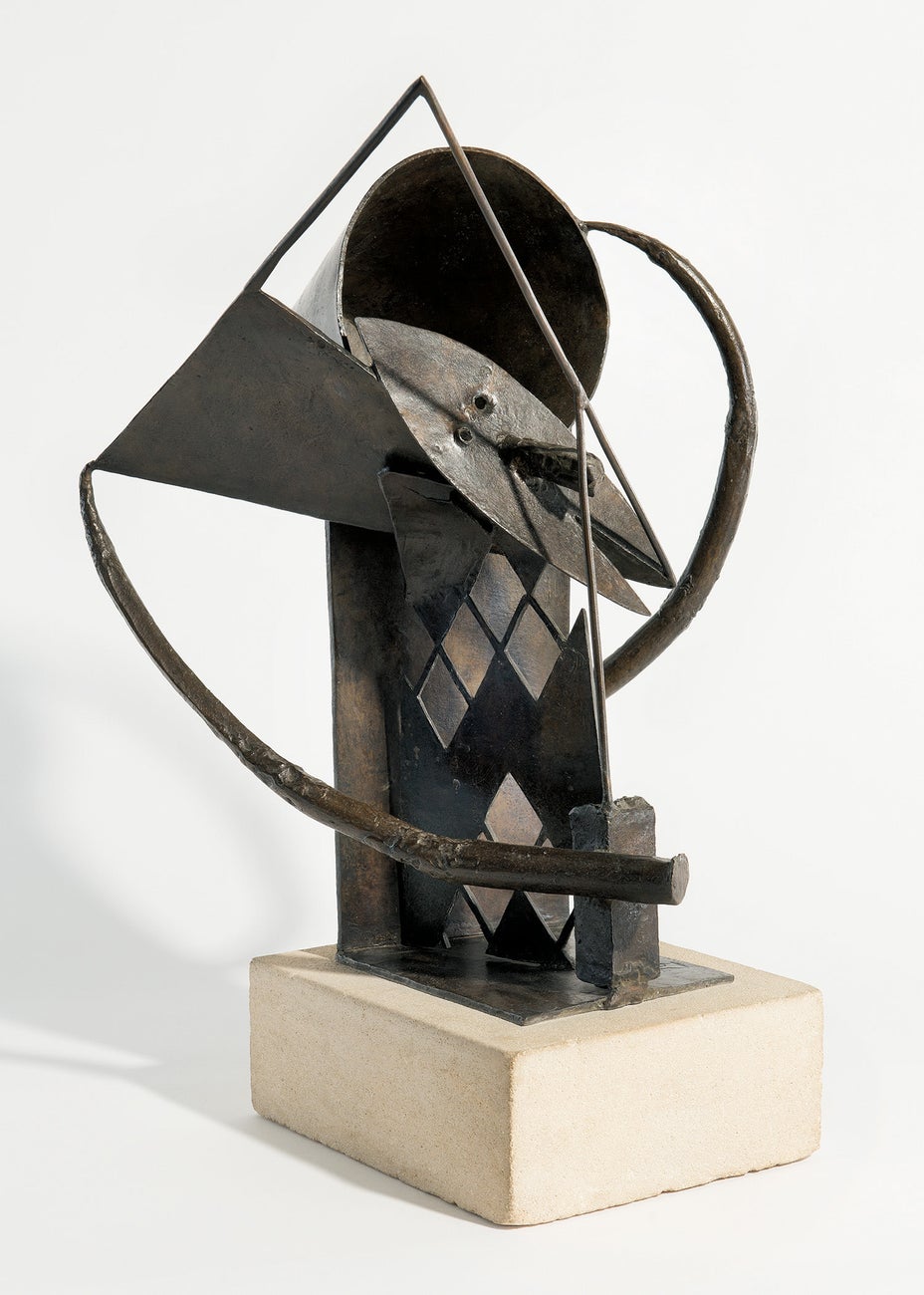
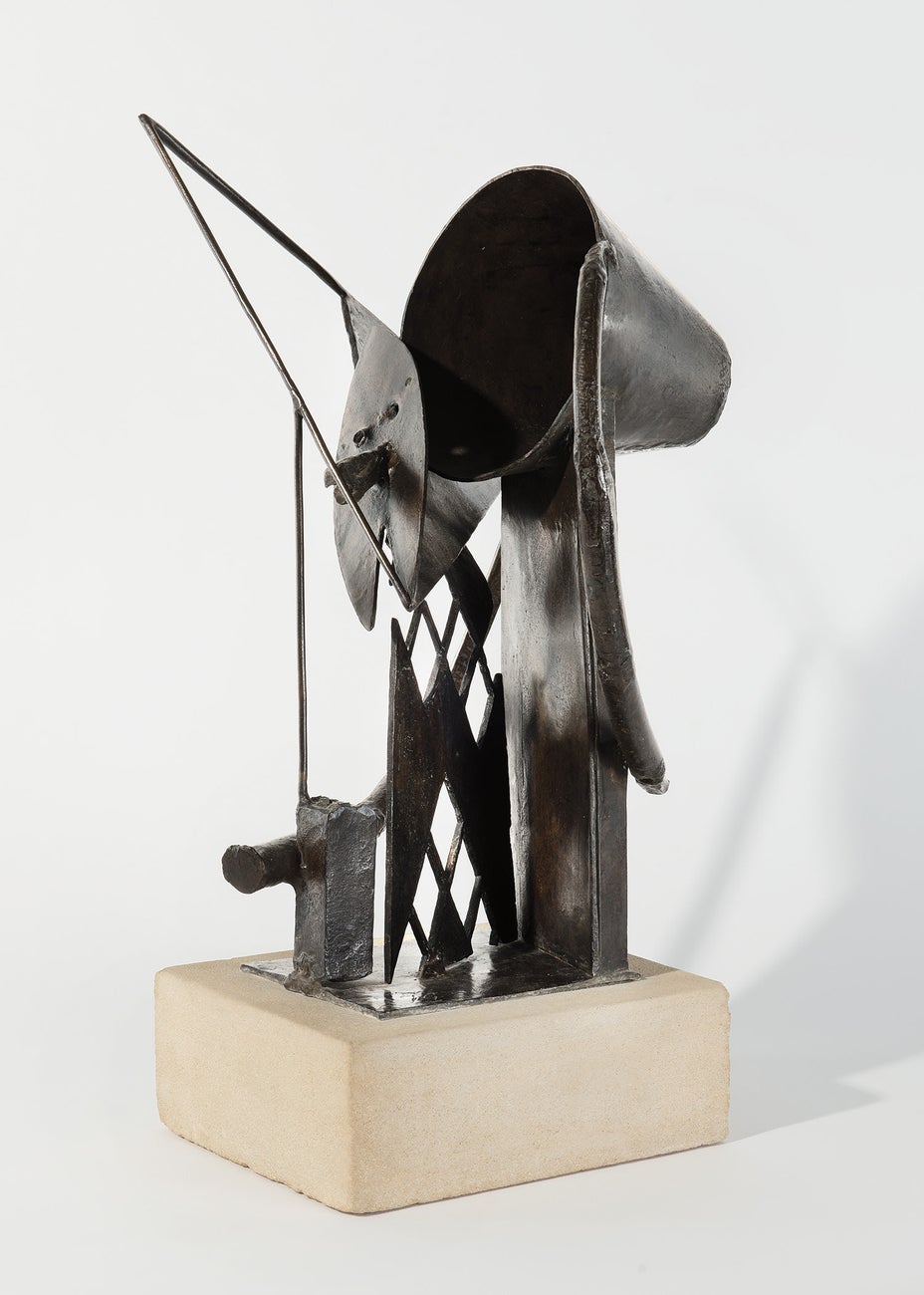
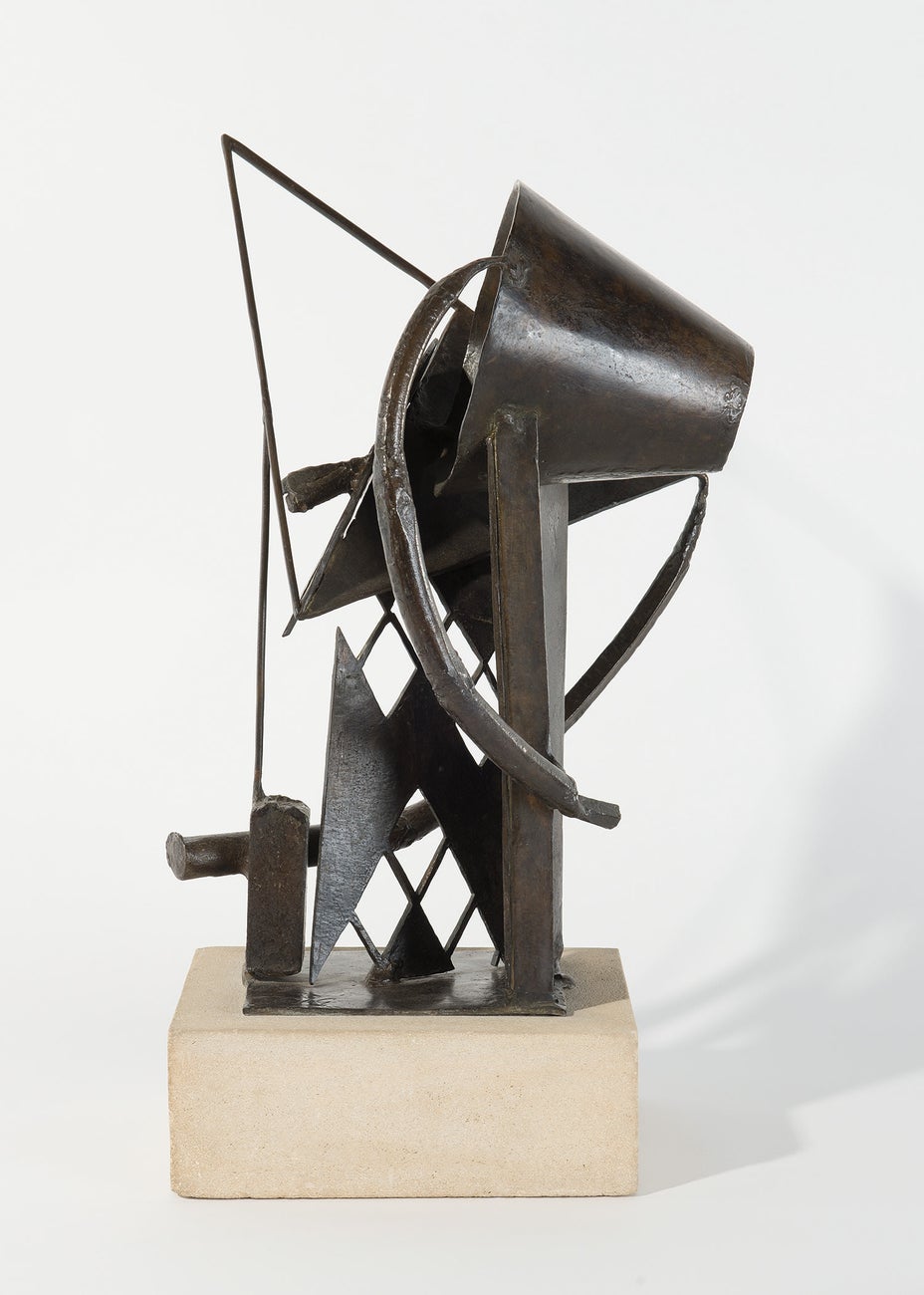
L'arlequin / Pierrot ou Colombine
- Estimate
- $500,000 - 700,000
$920,000
Lot Details
bronze
incised with the artist’s initials “J.G.” on the lower right edge; further incised with the artist’s name and number “GONZALEZ © 2/4” and stamped with the foundry mark “C. Valsuani cire perdue” on the lower left edge
sculpture 16 1/2 in. (41.9 cm)
base 3 1/2 x 7 1/4 x 8 3/4 in. (8.9 x 18.4 x 22.2 cm)
overall 20 in. (50.8 cm)
base 3 1/2 x 7 1/4 x 8 3/4 in. (8.9 x 18.4 x 22.2 cm)
overall 20 in. (50.8 cm)
Conceived in iron circa 1930 and cast in bronze at a later date, this work is number 2 from an edition of 4 plus 4 proofs marked 0, 00, EA, HC.
The iron example is housed in the permanent collection of the Kunsthaus Zürich and other examples from the bronze edition are housed in the permanent collections of the Fundación Amigos, Museo de Belles Artes, Caracas; Scottish National Gallery of Modern Art, Edinburgh; Albright-Knox Art Gallery, Buffalo; and the Institut Valencià d'Art Modern.
Specialist
Further Details
Full-Cataloguing
Provenance
Exhibited
Literature
Julio González
SpanishWidely regarded as the “father of all iron sculpture,” Julio González is best known for his expressive use of iron as a sculptural medium and his close collaboration with the leading artists of his day, including Pablo Picasso and Constantin Brancusi.
González was born in Barcelona in 1876 to a family of metalworkers. After their father died, González and his brother Joan assumed ownership of the family workshop and focused their attention to furthering their artistic aspirations. The brothers immersed themselves in Barcelona’s vibrant cultural scene, frequenting the Els Quatre Gats café, where they developed friendships with artists such as Pablo Picasso and Joan Miró. González later moved to Paris and undertook training in welding, the technique that would undergird his later artistic successes. While González worked with many of his contemporaries in Paris, his collaboration with Picasso was especially impactful as it provided González with an intellectual framework for creating linear, cubistic sculptures made of iron. González’s work from this time popularized the use of forged and welded iron in artmaking and is unique in that the artist participated directly in the creation of his work, in comparison to many of his contemporaries who sent their work to be executed at foundries.
Gonzales’s work has been celebrated during and after his lifetime. He exhibited at the Spanish Pavilion of the 1937’s World Fair in Paris alongside Picasso’s Guernica and his work is represented in the collections of leading cultural institutions such as the Art Institute of Chicago, the Museum of Modern Art, New York, the Museo Nacional Centro de Arte Reina Sofía, Madrid, and the Peggy Guggenheim Collection, Venice. González died in Arceuil, France in 1942.
Browse ArtistGonzález was born in Barcelona in 1876 to a family of metalworkers. After their father died, González and his brother Joan assumed ownership of the family workshop and focused their attention to furthering their artistic aspirations. The brothers immersed themselves in Barcelona’s vibrant cultural scene, frequenting the Els Quatre Gats café, where they developed friendships with artists such as Pablo Picasso and Joan Miró. González later moved to Paris and undertook training in welding, the technique that would undergird his later artistic successes. While González worked with many of his contemporaries in Paris, his collaboration with Picasso was especially impactful as it provided González with an intellectual framework for creating linear, cubistic sculptures made of iron. González’s work from this time popularized the use of forged and welded iron in artmaking and is unique in that the artist participated directly in the creation of his work, in comparison to many of his contemporaries who sent their work to be executed at foundries.
Gonzales’s work has been celebrated during and after his lifetime. He exhibited at the Spanish Pavilion of the 1937’s World Fair in Paris alongside Picasso’s Guernica and his work is represented in the collections of leading cultural institutions such as the Art Institute of Chicago, the Museum of Modern Art, New York, the Museo Nacional Centro de Arte Reina Sofía, Madrid, and the Peggy Guggenheim Collection, Venice. González died in Arceuil, France in 1942.