137
Louis Audemars & Co
La Royale "Super Complication"
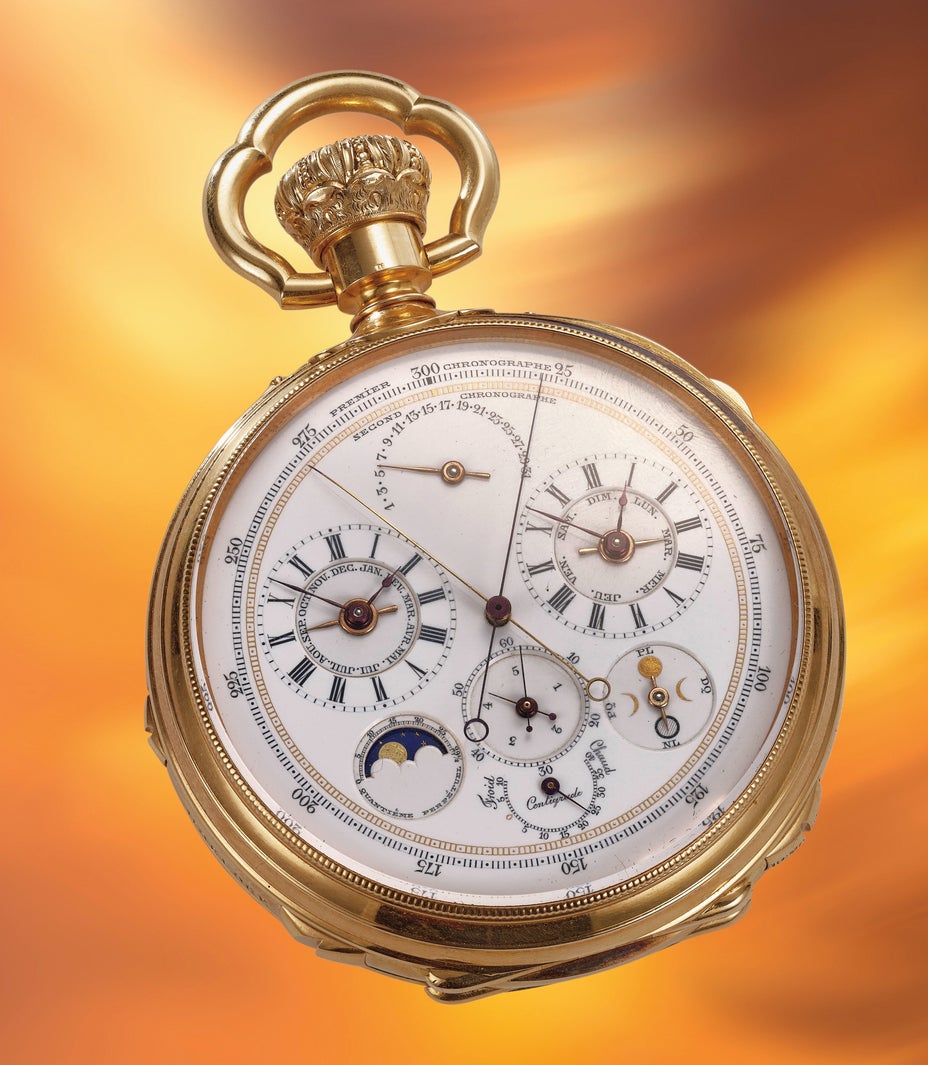
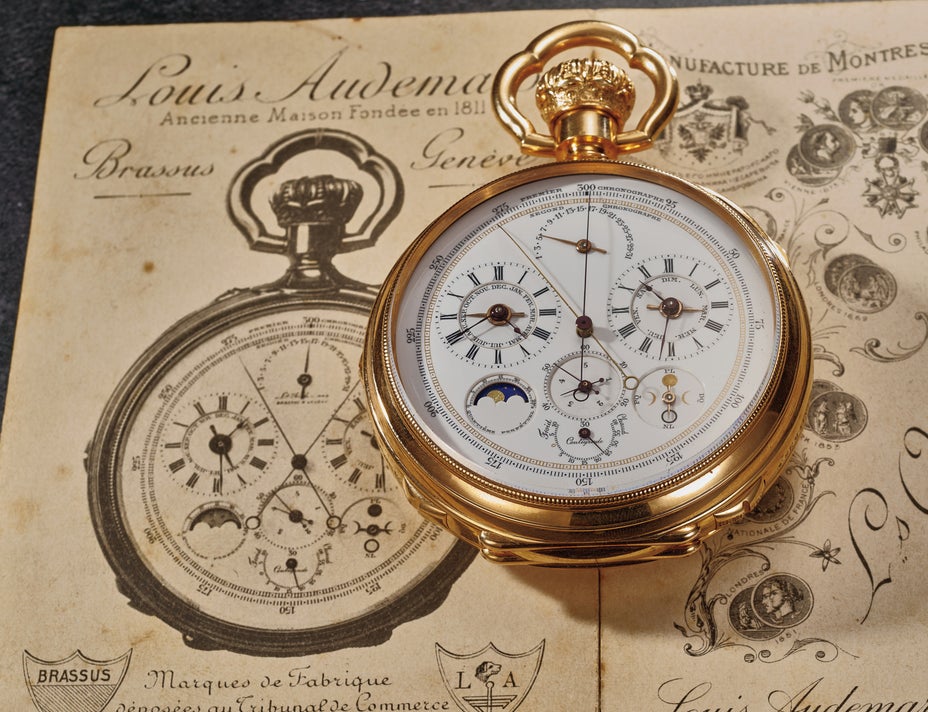
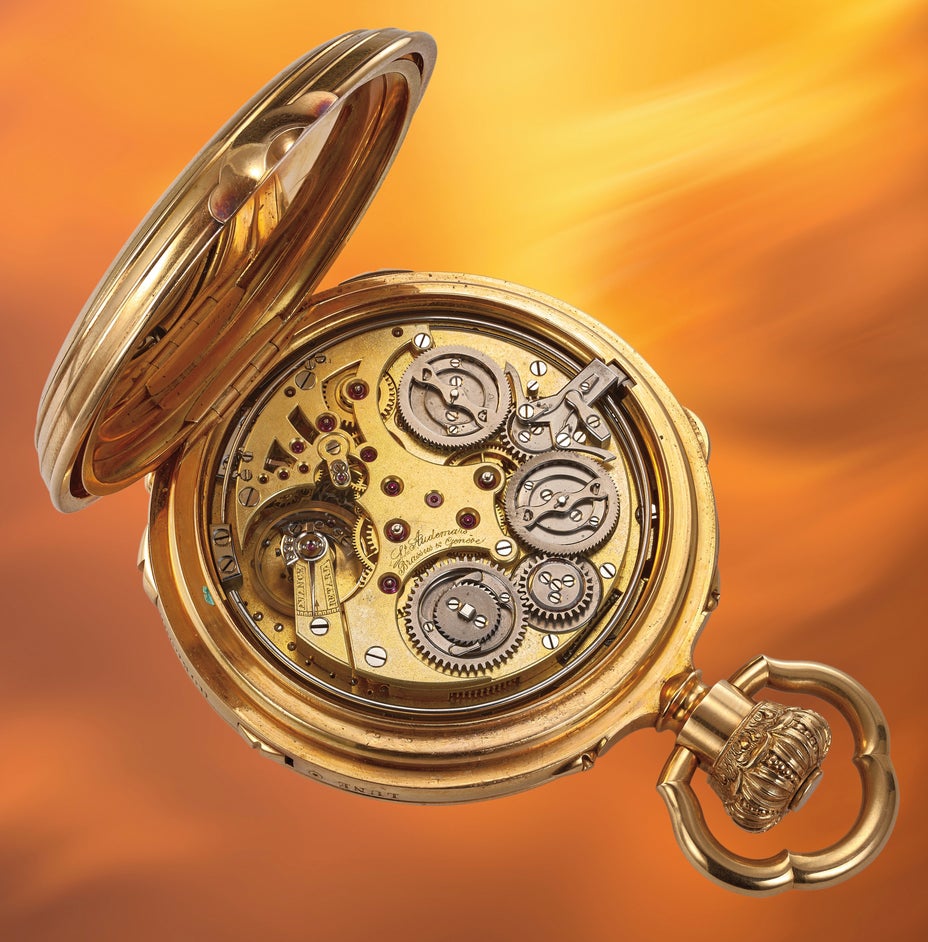
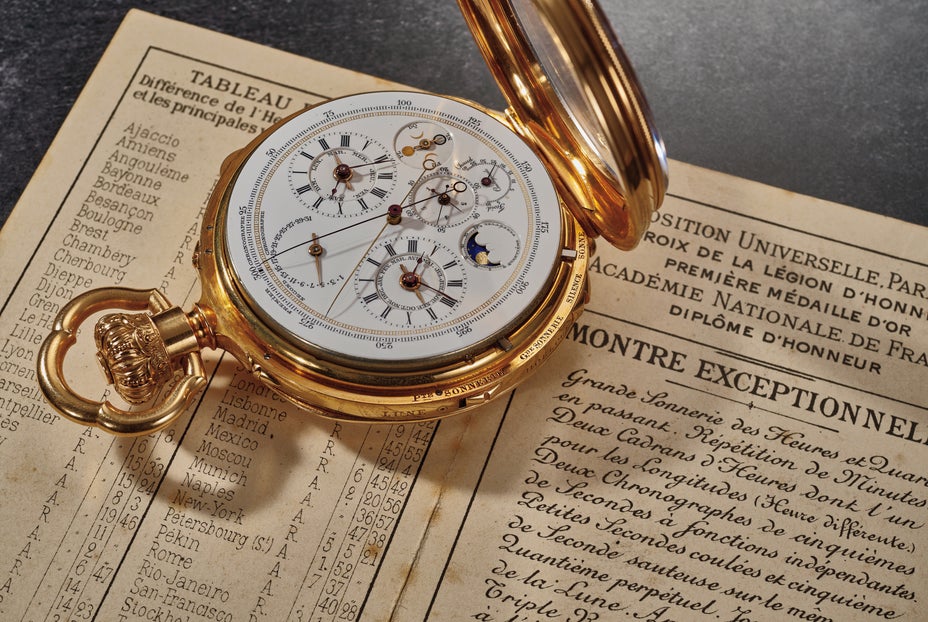
A unique, super complication openface yellow gold, dual time zone, minute repeating, grande & petite sonnerie, perpetual calendar double chronograph pocket watch with moonphases, retrograde date, thermometer, foudroyante and dead beat seconds, one of the world's most complicated pocket watches ever made
Estimate
CHF400,000–800,000
€435,000–870,000
$508,000–1,020,000
Sold For
CHF2,516,000
Manufacturer
Louis Audemars & Co
Year
1878
Case No
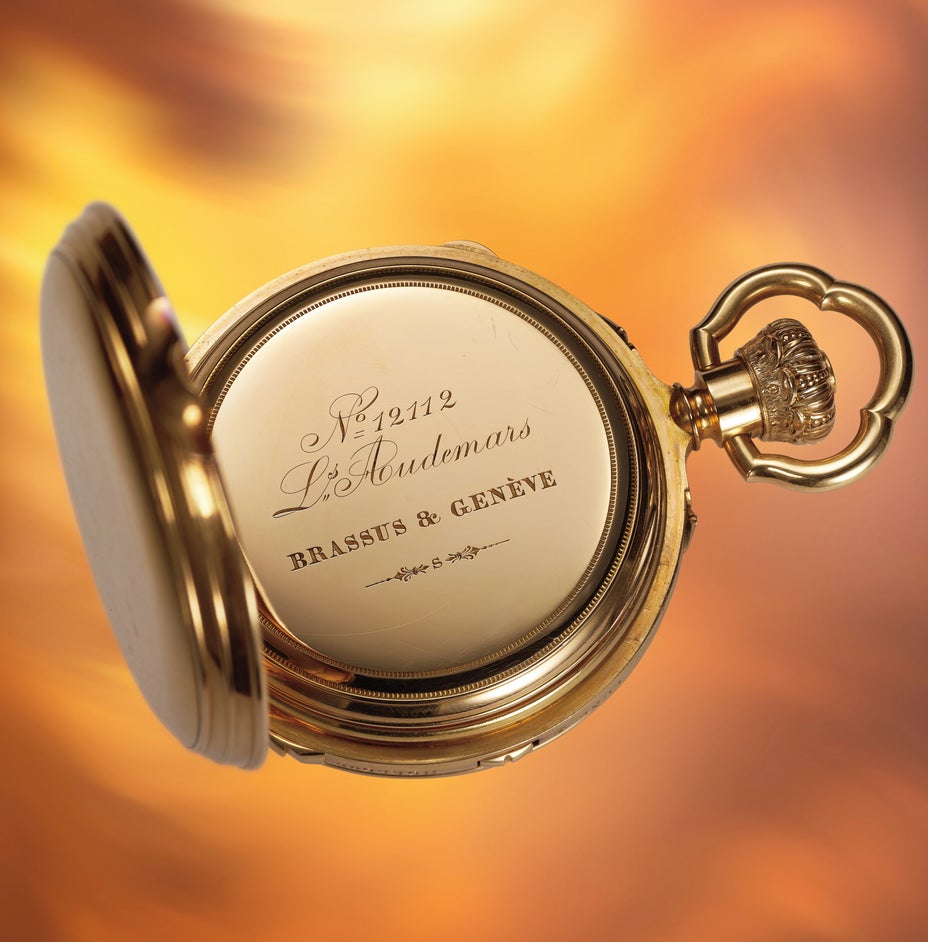
12112
Model Name
La Royale "Super Complication"
Material
18k yellow gold
Calibre
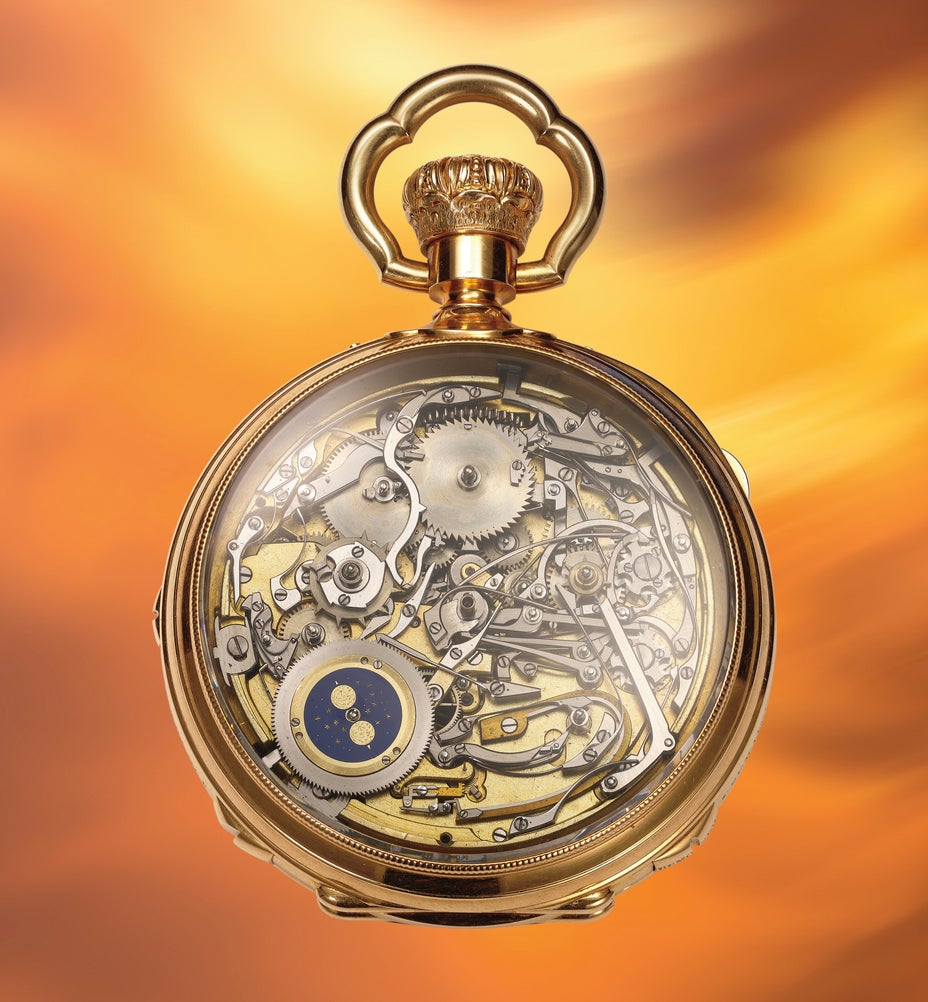
Manual, 3 train 21'", 45 jewels, Signed L. Audemars, Golay & Piguet ebauche
Dimensions
60mm diameter
Signed
Case, dial and movement signed
Accessories
Accompanied by fitted box, Extract from Louis Audemars confirming the production of La Royale from 1876 to 1878 as well as copies of ledgers and period advertisements.
Full-Cataloguing
Good to Know
- Super complication with following complications : Two time zones, grande & petite sonnerie, minute repeater, perpetual calendar with retrograde date, moonphase and moon quarters, double chronograph, foudroyante, dead beat seconds hand and thermometer
- Most complicated watch of its time and one of the world's most complicated pocket watches
- Presented at the Universal Exhibition in Paris in 1878
A cornerstone of the horological landscape in the Vallée de Joux, Louis-Benjamin Audemars (1782–1833) stands as the patriarch of a dynasty that defined the 19th-century "Grand Complication." Establishing his workshop in Le Brassus in 1811, Audemars was a master watchmaker whose movements powered the most prestigious creations of Breguet, Patek Philippe, and Vacheron Constantin. While his lineage directly informs the heritage of Audemars Piguet, founded by his great-nephew Jules Louis in 1875, the original Maison Louis Audemars remained a distinct titan of artisanal excellence until its liquidation in 1885. Renowned for pioneering keyless winding systems his work represents the pinnacle of Swiss precision and the ancestral soul of high watchmaking.
The present lot, named La Royale represents the absolute zenith of 19th-century horological ambition and one of the most complicated watches of its era. Made between 1876 and 1878 (using an ebauche by Auguste Golay and Louis Piguet) it was presented at the Universal Exhibition in Paris in 1878 and sold to the Duchesse de Bauffremont. the Duchesse was born Maria Cristina Osorio y Carvajal (1850-1904) and married to Pierre Eugene de Bauffremont (1843-1917) 6th Duke of Beauffremont.
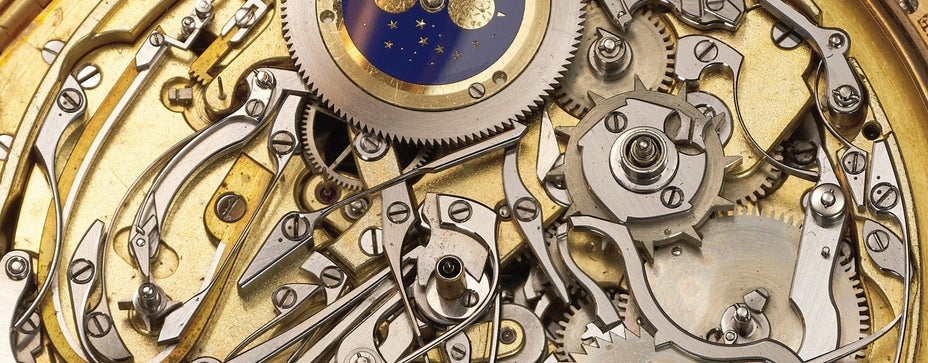
Constructed with an architectural complexity that predates the modern era of watchmaking, "La Royale" stands as one of the most mechanically complex objects of its period. It features a symphony of complications:
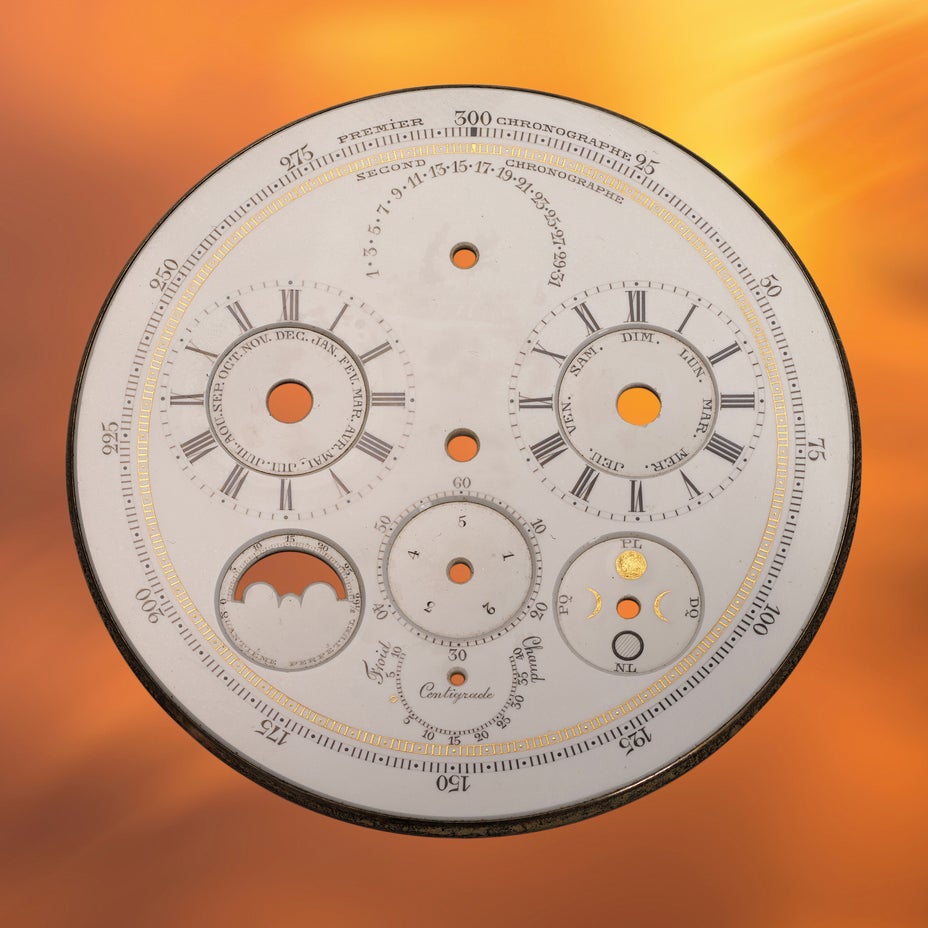
- Two time zones accurate to the minute via the dials on the right and left side of the dial
- Grande & Petite Sonnerie
- Minute Repeater
- Perpetual Calendar with retrograde date
- Moonphase and moon quarters
- Double chronograph
- Foudroyante or flying seconds hand placed at 6 o’clock along with a dead beat seconds hand. This foudroyante hand indicates 1/5th of a second.
- Thermometer (right below the seconds and foudroyante hands) and calibrated to Celsius
Louis Audemars made 4 super complications:
La Russe, made 1860/70. To the order of the Russian Imperial Court. 2-time zones, perpetual calendar with year indication, Russian & Gregorian calendars, ages and phases of the moon, seconds foudroyant and thermometer.
L’Universelle, made between 1860 and 1870. Double-dialled. Minute repeating, perpetual calendar, grande & petite sonnerie, split-seconds, seconds foudroyant, 3 time zones one with world time indication on reverse dial, age and phases of the moon, thermometer.
La Millésime, No.10834, made 1867. Exhibited Paris Exhibition 1867 & Vienna Exhibition 1873. Sold April 1873 for 15,000 Francs. Minute repeating, perpetual calendar with year indication, grande & petite sonnerie, split-seconds, seconds foudroyant, 2 time zones, age and phases of the moon and lunar quarter display, thermometer.
La Royale, the present lot which was the most complicated watch ever made at the time.
All four pieces features Audemars's triple winding mechanism, whereby the three trains and the independent setting of the movements are actuated via the crown.
Beyond its mechanical tour de force "La Royale" is the spiritual ancestor to the most celebrated watches that succeeded it of the late 19th/early 20th century, including the Audemars Piguet Universelle (1899) or La Grosse Piece(1921).
- Super complication with following complications : Two time zones, grande & petite sonnerie, minute repeater, perpetual calendar with retrograde date, moonphase and moon quarters, double chronograph, foudroyante, dead beat seconds hand and thermometer
- Most complicated watch of its time and one of the world's most complicated pocket watches
- Presented at the Universal Exhibition in Paris in 1878
A cornerstone of the horological landscape in the Vallée de Joux, Louis-Benjamin Audemars (1782–1833) stands as the patriarch of a dynasty that defined the 19th-century "Grand Complication." Establishing his workshop in Le Brassus in 1811, Audemars was a master watchmaker whose movements powered the most prestigious creations of Breguet, Patek Philippe, and Vacheron Constantin. While his lineage directly informs the heritage of Audemars Piguet, founded by his great-nephew Jules Louis in 1875, the original Maison Louis Audemars remained a distinct titan of artisanal excellence until its liquidation in 1885. Renowned for pioneering keyless winding systems his work represents the pinnacle of Swiss precision and the ancestral soul of high watchmaking.
The present lot, named La Royale represents the absolute zenith of 19th-century horological ambition and one of the most complicated watches of its era. Made between 1876 and 1878 (using an ebauche by Auguste Golay and Louis Piguet) it was presented at the Universal Exhibition in Paris in 1878 and sold to the Duchesse de Bauffremont. the Duchesse was born Maria Cristina Osorio y Carvajal (1850-1904) and married to Pierre Eugene de Bauffremont (1843-1917) 6th Duke of Beauffremont.
Constructed with an architectural complexity that predates the modern era of watchmaking, "La Royale" stands as one of the most mechanically complex objects of its period. It features a symphony of complications:
- Two time zones accurate to the minute via the dials on the right and left side of the dial
- Grande & Petite Sonnerie
- Minute Repeater
- Perpetual Calendar with retrograde date
- Moonphase and moon quarters
- Double chronograph
- Foudroyante or flying seconds hand placed at 6 o’clock along with a dead beat seconds hand. This foudroyante hand indicates 1/5th of a second.
- Thermometer (right below the seconds and foudroyante hands) and calibrated to Celsius
Louis Audemars made 4 super complications:
La Russe, made 1860/70. To the order of the Russian Imperial Court. 2-time zones, perpetual calendar with year indication, Russian & Gregorian calendars, ages and phases of the moon, seconds foudroyant and thermometer.
L’Universelle, made between 1860 and 1870. Double-dialled. Minute repeating, perpetual calendar, grande & petite sonnerie, split-seconds, seconds foudroyant, 3 time zones one with world time indication on reverse dial, age and phases of the moon, thermometer.
La Millésime, No.10834, made 1867. Exhibited Paris Exhibition 1867 & Vienna Exhibition 1873. Sold April 1873 for 15,000 Francs. Minute repeating, perpetual calendar with year indication, grande & petite sonnerie, split-seconds, seconds foudroyant, 2 time zones, age and phases of the moon and lunar quarter display, thermometer.
La Royale, the present lot which was the most complicated watch ever made at the time.
All four pieces features Audemars's triple winding mechanism, whereby the three trains and the independent setting of the movements are actuated via the crown.
Beyond its mechanical tour de force "La Royale" is the spiritual ancestor to the most celebrated watches that succeeded it of the late 19th/early 20th century, including the Audemars Piguet Universelle (1899) or La Grosse Piece(1921).