US import tariffs: Non-US origin lots in this sale (including watches and timepieces with Swiss-made or non-US made movements) will be subject to special tariffs upon import to the USA, currently ranging from 10% to 39% on the total invoice price (hammer price plus buyer’s premium). Buyers are responsible for paying any applicable tariffs, duties, taxes and charges when importing their purchased lots. Due to the evolving nature of international trade regulations, we recommend clients consult with their local customs office or advisor for up-to-date information on the applicable tariffs.
7
Louis Berthoud
N°52 - Marine Chronometer
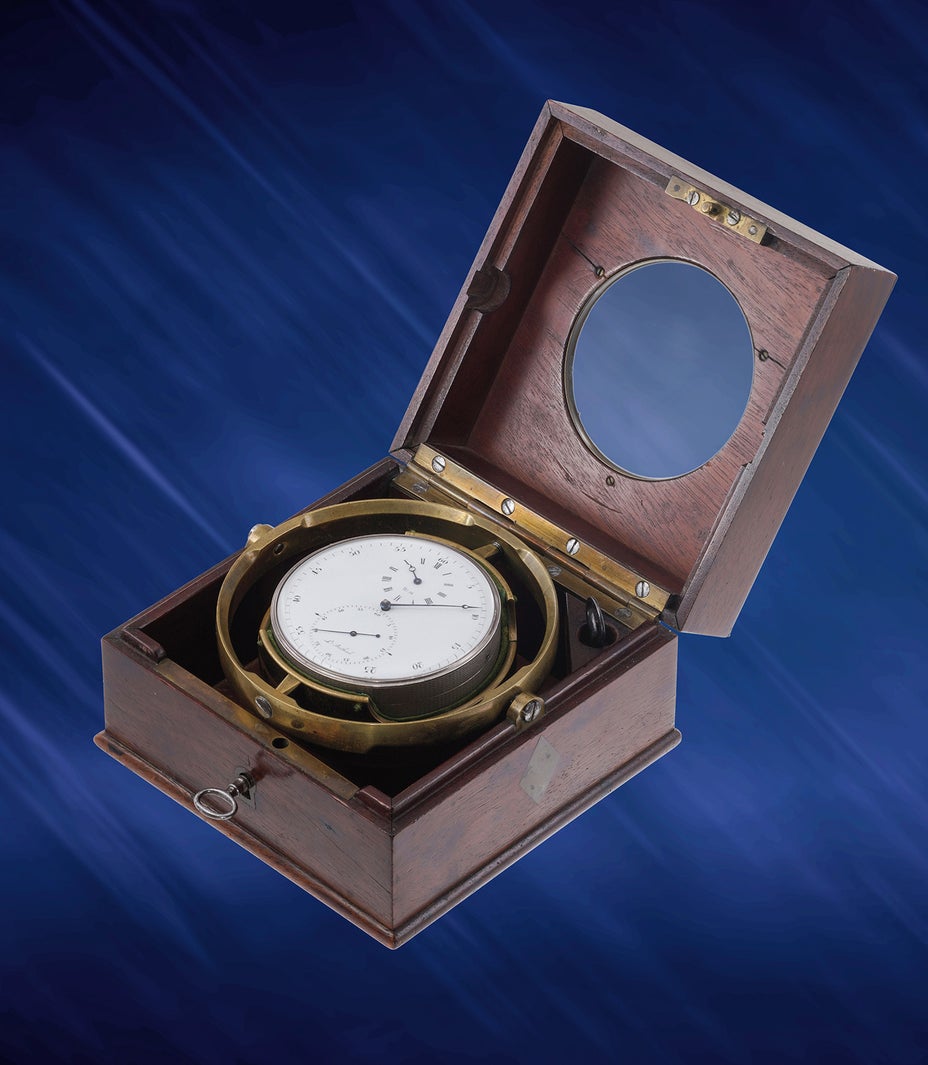
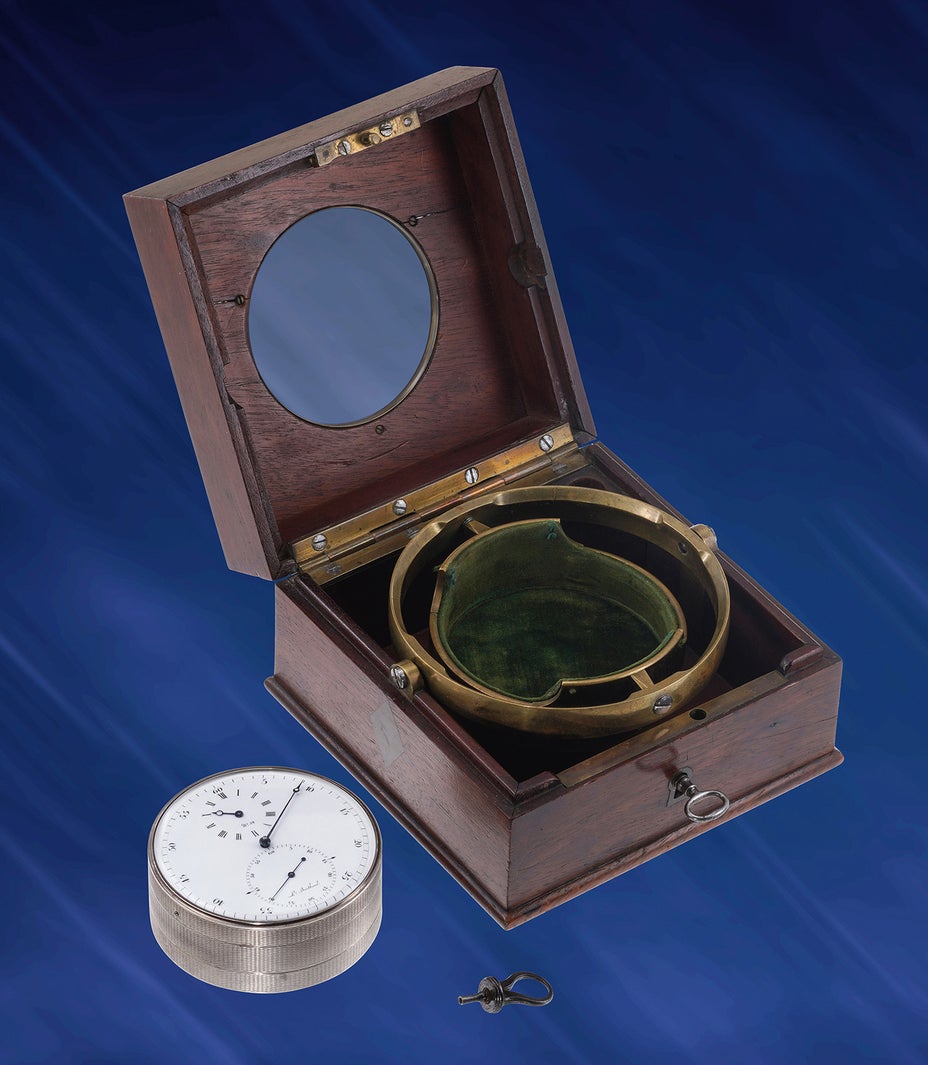
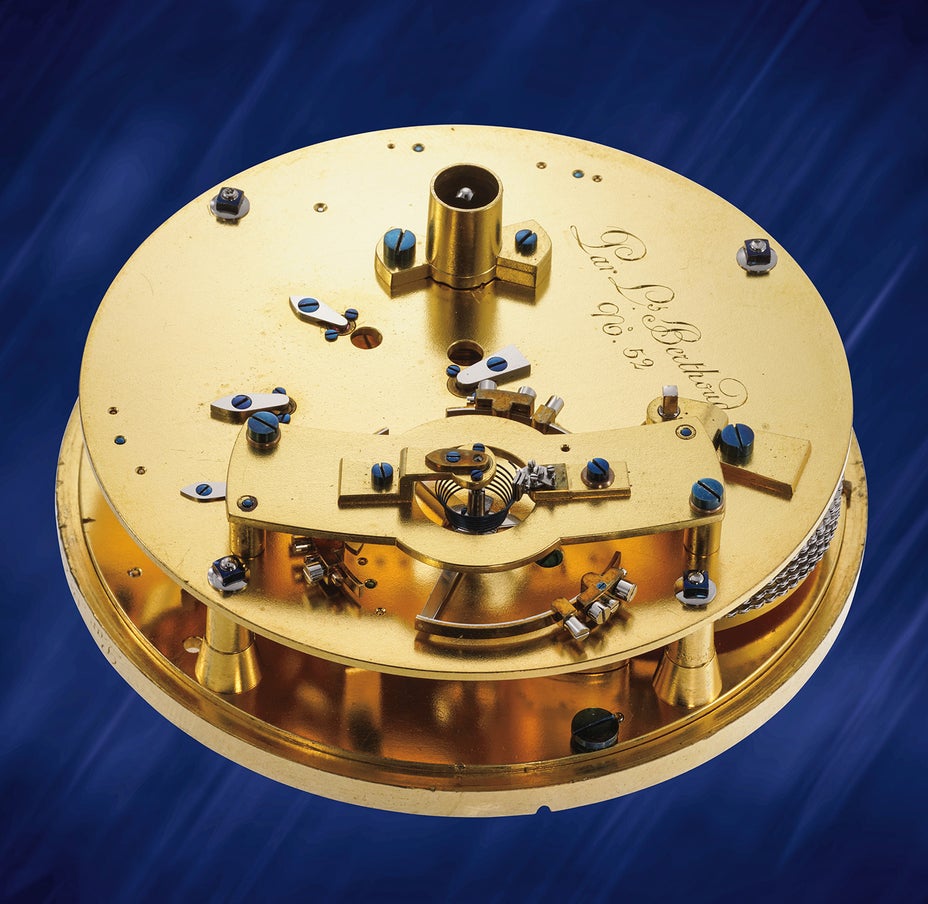
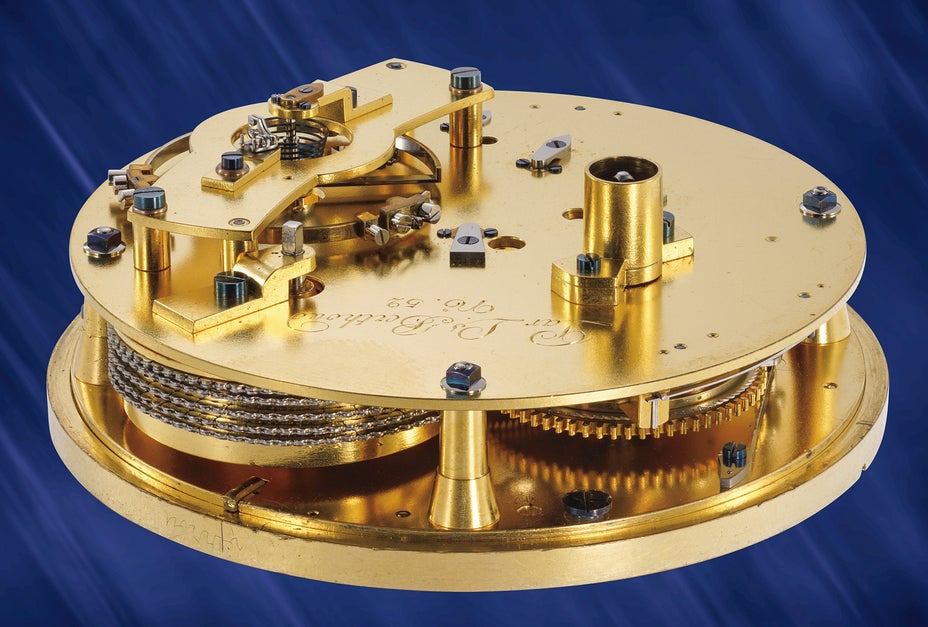
An incredibly rare and historically important Napoleonian silver cased marine chronometer with lever escapement and conical balance spring
Estimate
CHF60,000–120,000
€64,700–129,000
$75,400–151,000
Sold For
CHF406,400
Manufacturer
Louis Berthoud
Year
Circa 1801
Model Name
N°52 - Marine Chronometer
Material
Silver and mahogany
Calibre
Manual
Dimensions
watch 63mm diameter and box 128 mm. sq.
Signed
Case and movement signed, case with inscriptions
Accessories
Accompanied by box and key.
Full-Cataloguing
The Louis Berthoud Marine Chronometer N° 52 is not only a technical marvel of its time but also a timepiece that was in the ownership of some of the most impactful figures of the Napoleonic era.
Louis Berthoud, whilst born in Switzerland moved to Paris at age 15 to work with his esteemed uncle Ferdinand Berthoud. He took over the management of his uncle’s workshop in Paris in 1784.
Louis Berthoud was appointed as clock maker to the Observatoire and to the Bureau de Longitude. He won a gold medal at the Paris Exposition, l’an X (1800/1). In 1802 he received the position of Horologist to the Navy and in 1805, Horologist to the Observatory and the Board of Longitude in Paris. He was furthermore a member of the French Academy of Science.
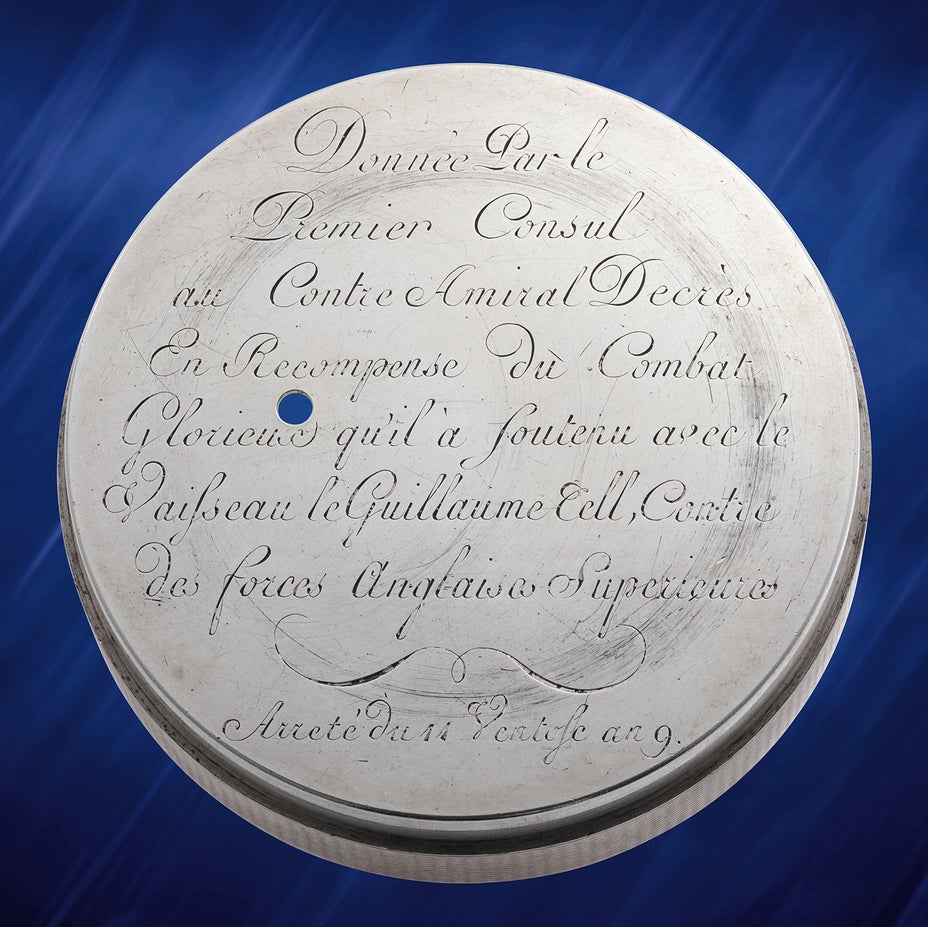
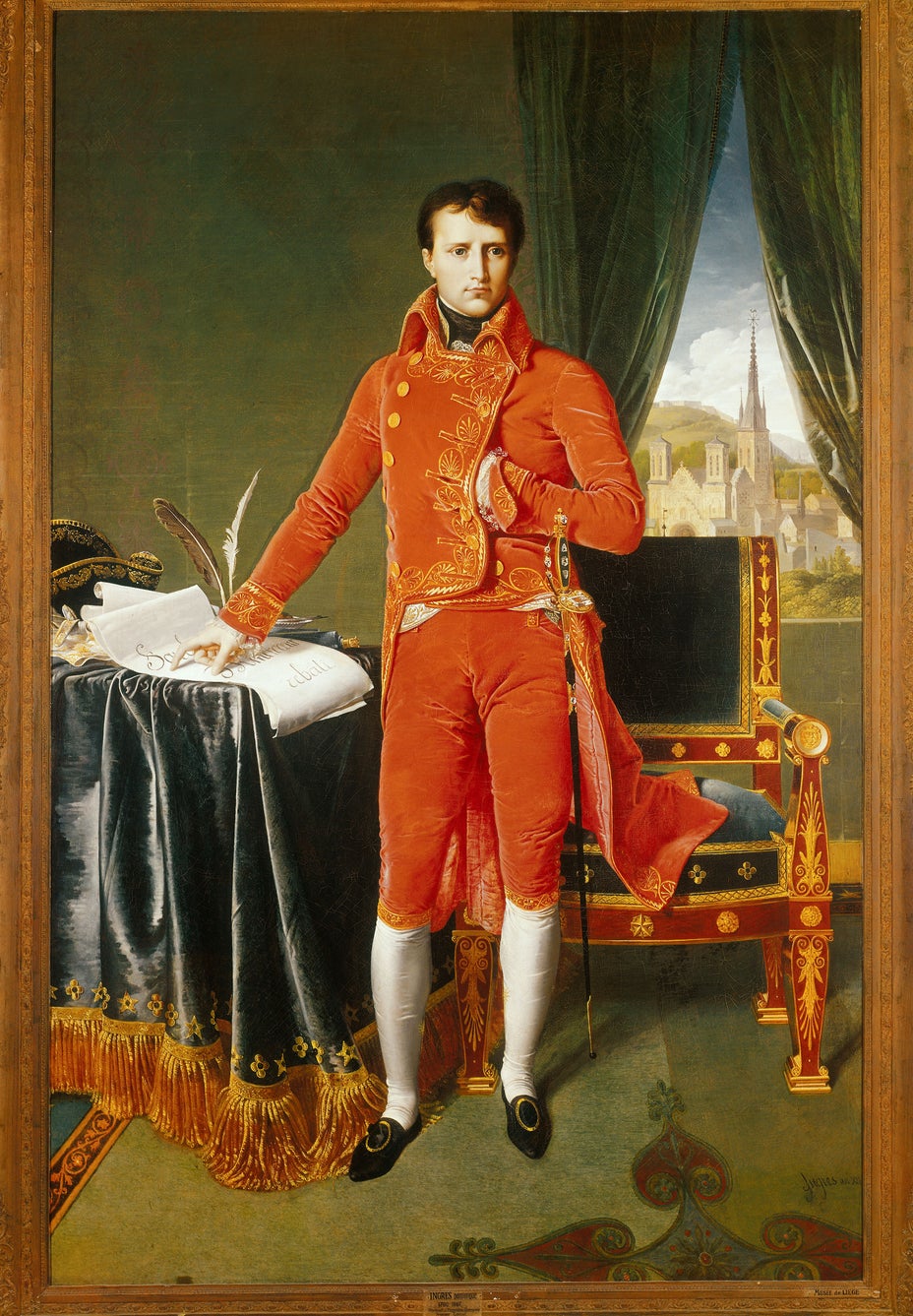
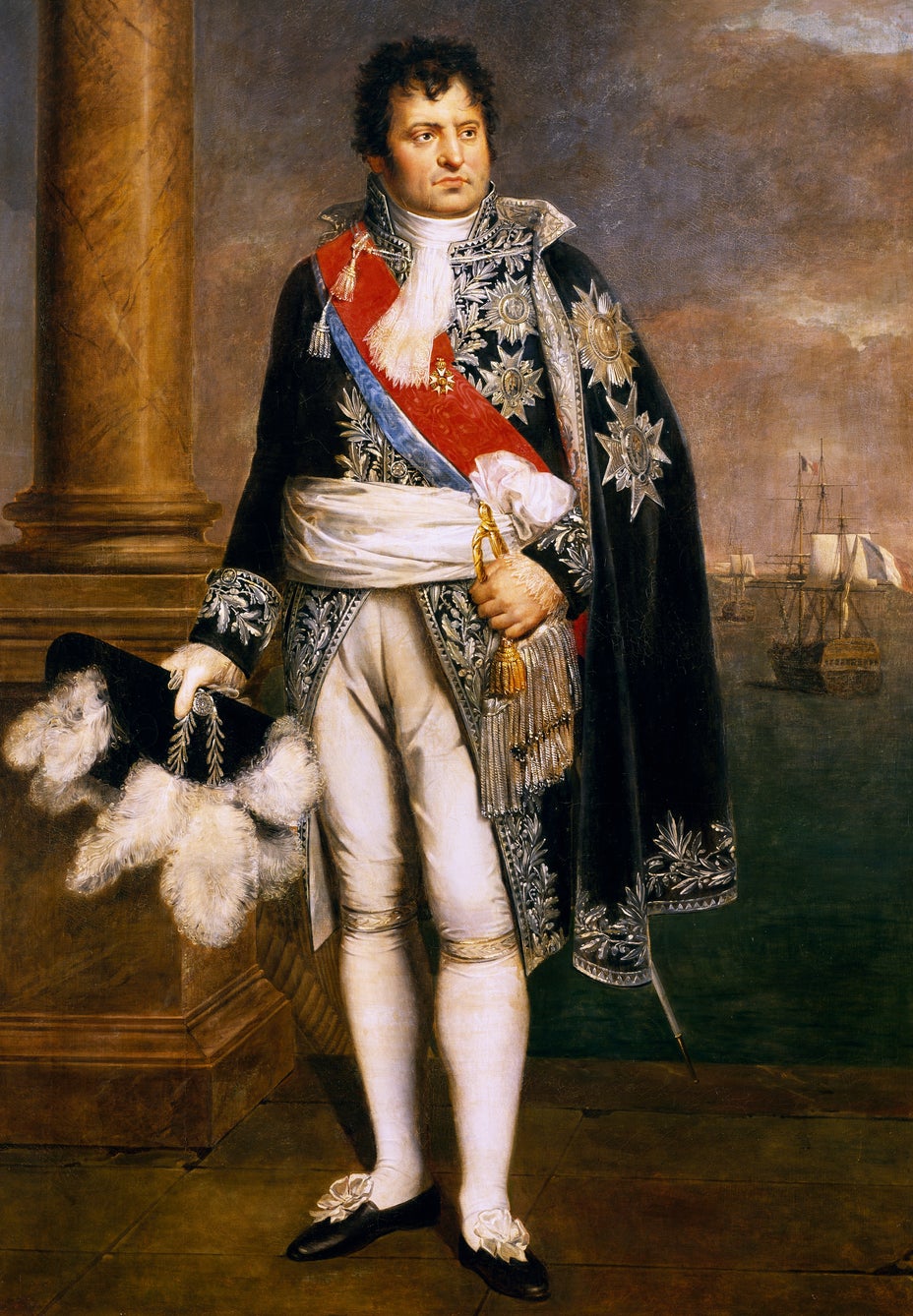
Berthoud’s N° 52 was sold in 1801 to the Premier Consul (Napoleon Bonaparte before he was crowned Emperor) to be gifted to Vice Admiral Decrès shortly after in recognition of his bravery in commanding the French boat Guillaume Tell as confirmed by the inscription on the case: "Given by the First Consul to Vice Admiral Decrès to mark the glorious combat he undertook with the Guillaume Tell against superior English Forces - Decree 11 Ventose IX : 2nd March 1801".
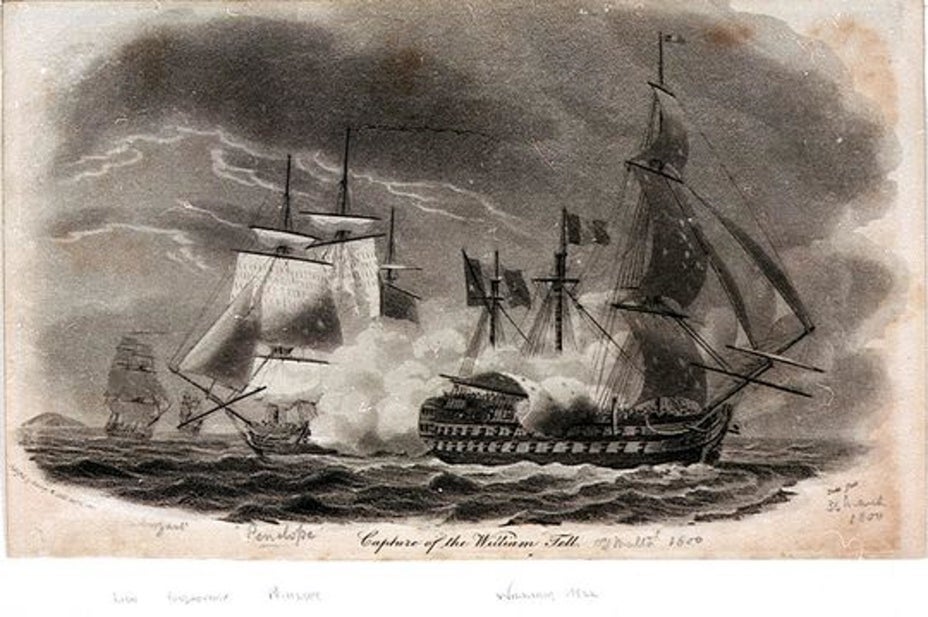
The Guillaume Tell, 80 guns, under the command of Vice Admiral Denis Decrès was one of the only two French ships-of-the-line to survive the engagement with Nelson’s fleet at the Battle of the Nile 1 August 1798. The vessel fled to Valletta, Malta, but was trapped by a British naval blockade. On Sunday 30 March 1800, the Guillaume Tell sailed from Valetta and was immediately intercepted and engaged by H.M. Ships Penelope 36 guns, Lion 64 guns and Foudroyant 80 guns. In the ensuing action over the next eight hours she fought gallantly against the much superior British force but at 8.20 a.m. the next morning Monday 31 March, dismasted and with most of her guns out of action she struck her colours and surrendered. Decrès was released and he returned with honour and triumph to France.
In 1800 Vice Admiral Decrès was promoted to Admiral and in October 1801 was appointed Minister of the Navy, a position which he held until his tragic death at the hand of his valet in 1820, aged fifty-eight.
Later the Guillaume Tell was recommissioned into the British Fleet and, in view of the location of her final distinguished action under the French flag, was aptly renamed H.M.S. Malta.
In 1804 the chronometer went back to Berthoud for cleaning and regulation. Soon afterwards Decrès wrote to Berthoud and ordered the watch to be handed over to Prince Jerome Bonaparte, King of Westphalia. The reason for this is still unknown but in November 1807, No. 52 was returned to Decrès via Berthoud’s workshops.
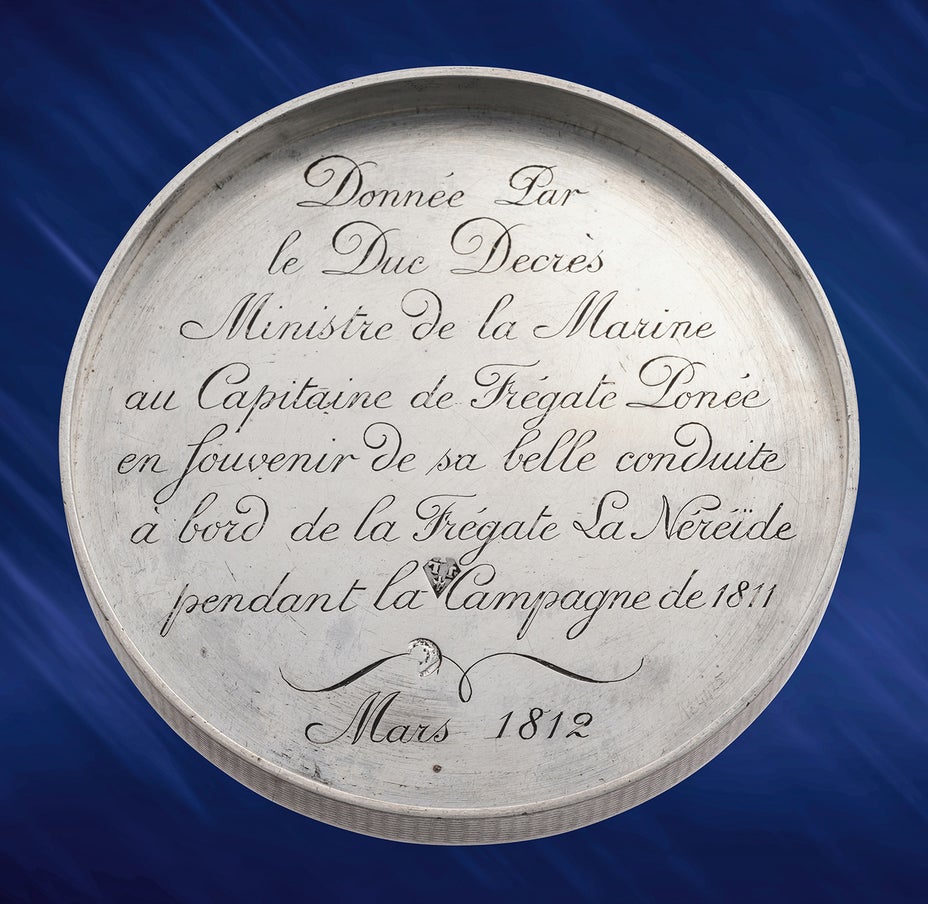
The inside of the dust cap carries the following inscription which continues the history of the chronometer. It reads. “Given by the Duc Decrès, Minister of the Marine, to the Frigate Captain Ponée to commemorate his gallantry onboard the Frigate Nereide during the campaign of 1811 : March 1812’"
This later inscription records the action between the three French frigates, Renommée, Clorinde and Nereide, and the three British frigates, H.M.S. Phoebe, H.M.S. Galatea and H.M.S. Racehorse.
The engagement took place in May 1811 off the Isle de France (Mauritius). The Nereide was heavily engaged by H.M.S. Phoebe but with very heavy casualties, including her commanding officer, she refused to strike her colours. Instead Lieutenant Francois Ponée, now in command, negotiated her honourable surrender to the British at Tamatave, Madagascar, on Sunday 26 May. The Nereide was subsequently recommissioned into the British Fleet and renamed H.M.S. Madagascar.
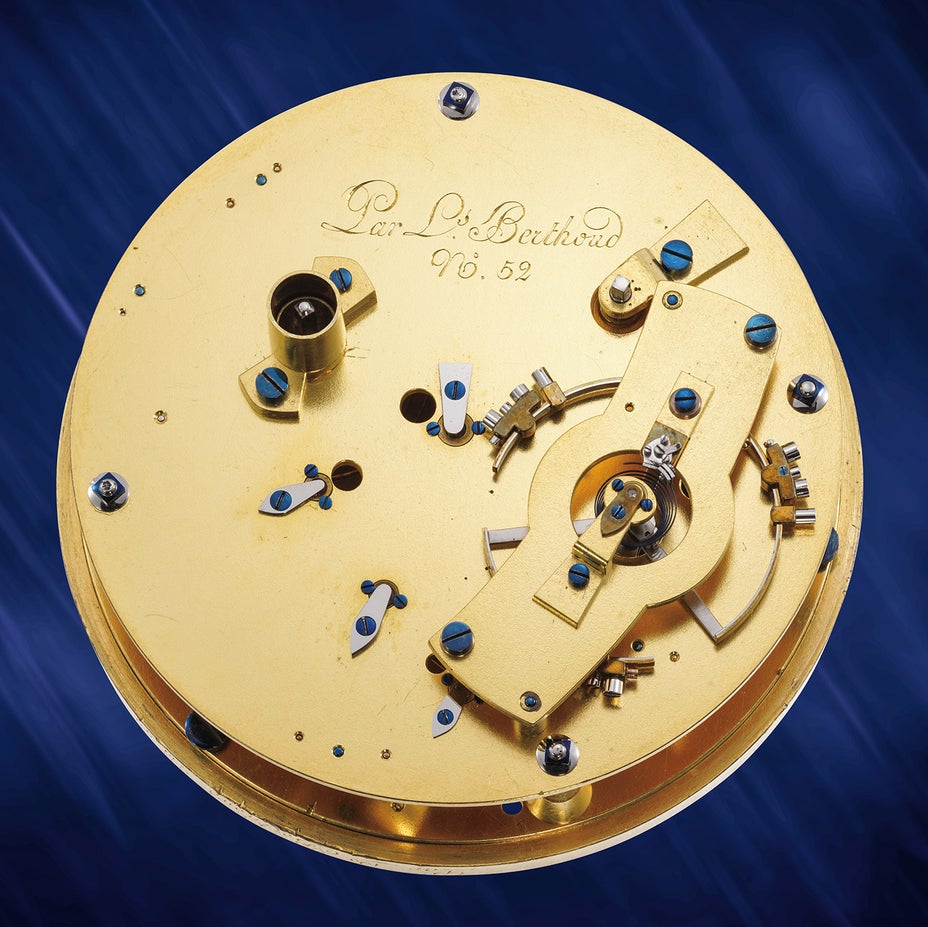
Berthoud like many of his peers had been testing the lever escapement but met challenges regulating the movements and more often than not replaced the lever escapement by a pivoted detent escapement.
N° 52 seems to have been an exception as from the start Berthout was very happy with its lever escapement writing in his notebook “This watch with a lever escapement, was sold in Floréal of the year IX in order to be given by the First Consul to Vice-Admirai Décrès. I considered it as one of my best watches, and since the month of Brumaire year X (November 1804) when it was returned to me for examination, I have often been astonished by its regularity”.
The present piece is the only known surviving Louis Berthoud timepiece with its original lever escapement.
Louis Berthoud, whilst born in Switzerland moved to Paris at age 15 to work with his esteemed uncle Ferdinand Berthoud. He took over the management of his uncle’s workshop in Paris in 1784.
Louis Berthoud was appointed as clock maker to the Observatoire and to the Bureau de Longitude. He won a gold medal at the Paris Exposition, l’an X (1800/1). In 1802 he received the position of Horologist to the Navy and in 1805, Horologist to the Observatory and the Board of Longitude in Paris. He was furthermore a member of the French Academy of Science.
Berthoud’s N° 52 was sold in 1801 to the Premier Consul (Napoleon Bonaparte before he was crowned Emperor) to be gifted to Vice Admiral Decrès shortly after in recognition of his bravery in commanding the French boat Guillaume Tell as confirmed by the inscription on the case: "Given by the First Consul to Vice Admiral Decrès to mark the glorious combat he undertook with the Guillaume Tell against superior English Forces - Decree 11 Ventose IX : 2nd March 1801".
The Guillaume Tell, 80 guns, under the command of Vice Admiral Denis Decrès was one of the only two French ships-of-the-line to survive the engagement with Nelson’s fleet at the Battle of the Nile 1 August 1798. The vessel fled to Valletta, Malta, but was trapped by a British naval blockade. On Sunday 30 March 1800, the Guillaume Tell sailed from Valetta and was immediately intercepted and engaged by H.M. Ships Penelope 36 guns, Lion 64 guns and Foudroyant 80 guns. In the ensuing action over the next eight hours she fought gallantly against the much superior British force but at 8.20 a.m. the next morning Monday 31 March, dismasted and with most of her guns out of action she struck her colours and surrendered. Decrès was released and he returned with honour and triumph to France.
In 1800 Vice Admiral Decrès was promoted to Admiral and in October 1801 was appointed Minister of the Navy, a position which he held until his tragic death at the hand of his valet in 1820, aged fifty-eight.
Later the Guillaume Tell was recommissioned into the British Fleet and, in view of the location of her final distinguished action under the French flag, was aptly renamed H.M.S. Malta.
In 1804 the chronometer went back to Berthoud for cleaning and regulation. Soon afterwards Decrès wrote to Berthoud and ordered the watch to be handed over to Prince Jerome Bonaparte, King of Westphalia. The reason for this is still unknown but in November 1807, No. 52 was returned to Decrès via Berthoud’s workshops.
The inside of the dust cap carries the following inscription which continues the history of the chronometer. It reads. “Given by the Duc Decrès, Minister of the Marine, to the Frigate Captain Ponée to commemorate his gallantry onboard the Frigate Nereide during the campaign of 1811 : March 1812’"
This later inscription records the action between the three French frigates, Renommée, Clorinde and Nereide, and the three British frigates, H.M.S. Phoebe, H.M.S. Galatea and H.M.S. Racehorse.
The engagement took place in May 1811 off the Isle de France (Mauritius). The Nereide was heavily engaged by H.M.S. Phoebe but with very heavy casualties, including her commanding officer, she refused to strike her colours. Instead Lieutenant Francois Ponée, now in command, negotiated her honourable surrender to the British at Tamatave, Madagascar, on Sunday 26 May. The Nereide was subsequently recommissioned into the British Fleet and renamed H.M.S. Madagascar.
Berthoud like many of his peers had been testing the lever escapement but met challenges regulating the movements and more often than not replaced the lever escapement by a pivoted detent escapement.
N° 52 seems to have been an exception as from the start Berthout was very happy with its lever escapement writing in his notebook “This watch with a lever escapement, was sold in Floréal of the year IX in order to be given by the First Consul to Vice-Admirai Décrès. I considered it as one of my best watches, and since the month of Brumaire year X (November 1804) when it was returned to me for examination, I have often been astonished by its regularity”.
The present piece is the only known surviving Louis Berthoud timepiece with its original lever escapement.