64
Lynn Chadwick, R.A.
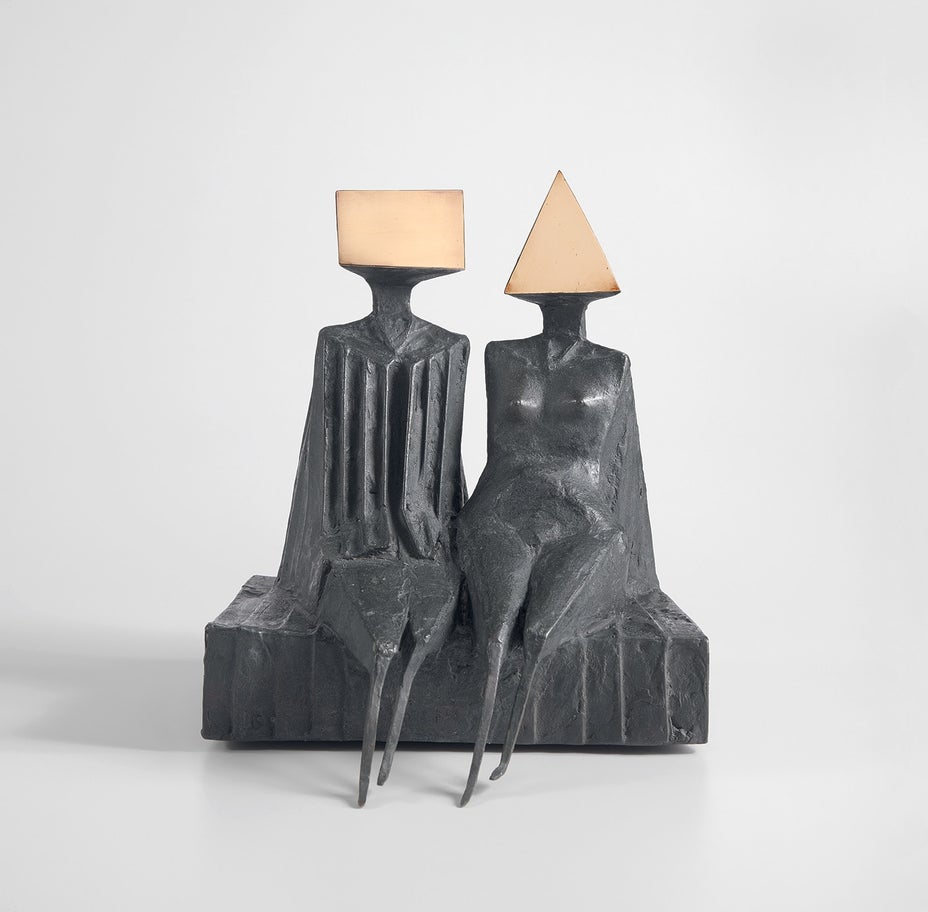
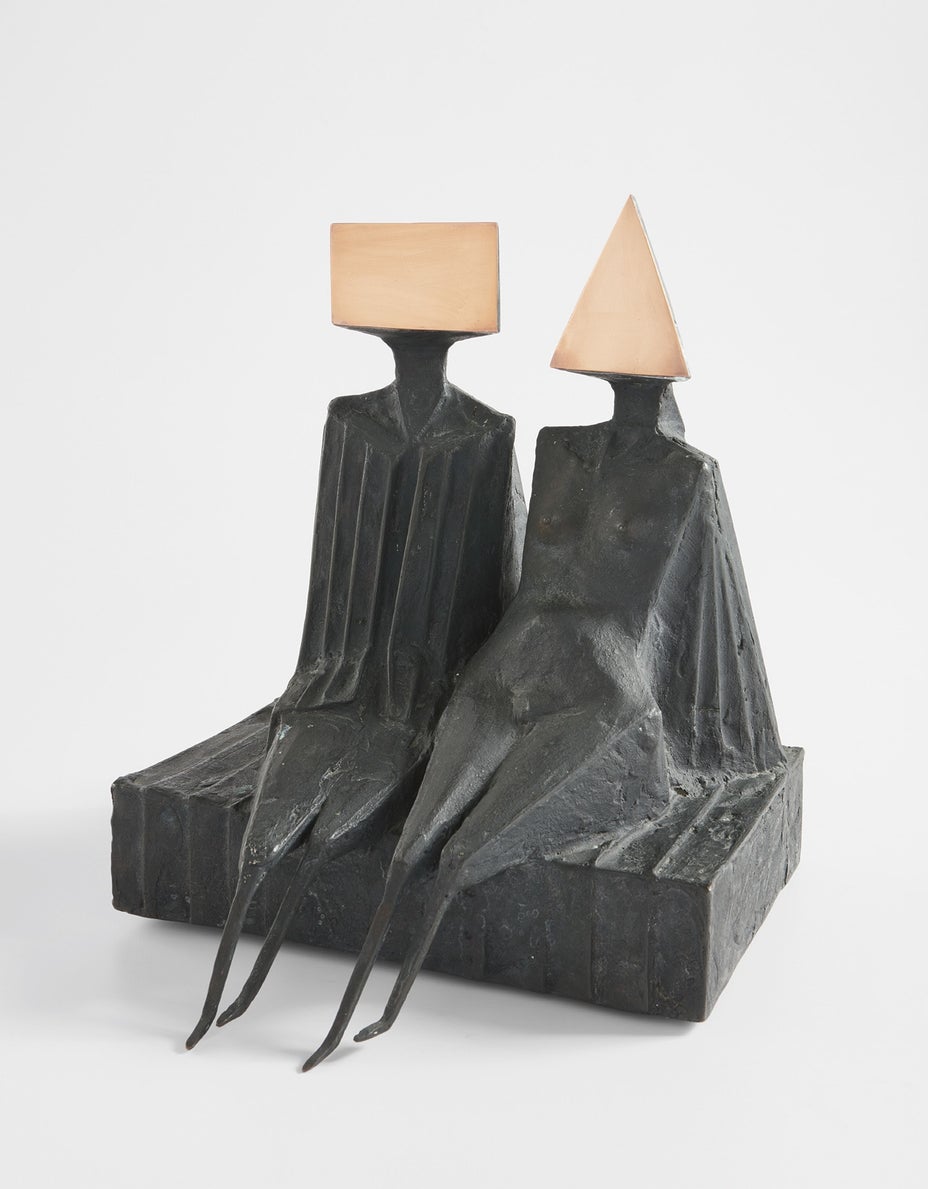
Sitting Couple on Base IV
Estimate
$80,000–120,000
Sold For
$150,000
numbered and dated "678S 1974 2/8" on the right side of the base
patinated and polished cast bronze
16 x 13 3/4 x 14 in. (40.6 x 34.9 x 35.6 cm.)
Executed in 1974, this work is number 2 from an edition of 8 plus 2 artist's proofs.
Full-Cataloguing
As Lynn Chadwick’s Sitting Couple on Base IV comes up as a highlight of the New Now sale, we look back to how he launched his extraordinary career at the Venice Biennale more than 60 years ago.
Having opened to great fanfare in May, the 58th Venice Biennale is in full swing. Inaugurated in 1895, the Biennale has been crucial in promoting and propelling many emerging artists to critical acclaim. Indeed, the 1952 iteration was instrumental in rocketing Lynn Chadwick from relative obscurity to his now canonical status as one of the leading British sculptors of the post-war era.
Chadwick’s inclusion in the British Pavilion alongside sculptors such as Eduardo Palozzi and Kenneth Armitage was key in launching his career. Lauded by one critic as “one of the revelations of the Biennale”, Chadwick immediately became known for his distinct sculptural idiom that powerfully captured the existentialism of the time. Breaking with sculptural tradition, he created his angular sculptures by welding iron rods and casting the resulting figures in bronze; Chadwick powerfully blurred figuration and abstraction in a manner that prompted British Pavilion curator Herbert Read to coin the phrase “the geometry of fear”. Only four years later, at the Venice Biennale in 1956, Chadwick was chosen as the sole sculptor for the British Pavilion and won the International Prize for Sculpture - notably besting the more established and celebrated Alberto Giacometti, an admirable runner-up.
Catapulted to international recognition, Chadwick continued to develop an influential oeuvre in which Sitting Couple on Base IV, 1974, figures as a quintessential example. Depicting the recurring motif of a seated couple, this work shows Chadwick brilliantly harnessing form, line and balance to explore both the physical and psychological relationship between two figures.
Having opened to great fanfare in May, the 58th Venice Biennale is in full swing. Inaugurated in 1895, the Biennale has been crucial in promoting and propelling many emerging artists to critical acclaim. Indeed, the 1952 iteration was instrumental in rocketing Lynn Chadwick from relative obscurity to his now canonical status as one of the leading British sculptors of the post-war era.
Chadwick’s inclusion in the British Pavilion alongside sculptors such as Eduardo Palozzi and Kenneth Armitage was key in launching his career. Lauded by one critic as “one of the revelations of the Biennale”, Chadwick immediately became known for his distinct sculptural idiom that powerfully captured the existentialism of the time. Breaking with sculptural tradition, he created his angular sculptures by welding iron rods and casting the resulting figures in bronze; Chadwick powerfully blurred figuration and abstraction in a manner that prompted British Pavilion curator Herbert Read to coin the phrase “the geometry of fear”. Only four years later, at the Venice Biennale in 1956, Chadwick was chosen as the sole sculptor for the British Pavilion and won the International Prize for Sculpture - notably besting the more established and celebrated Alberto Giacometti, an admirable runner-up.
Catapulted to international recognition, Chadwick continued to develop an influential oeuvre in which Sitting Couple on Base IV, 1974, figures as a quintessential example. Depicting the recurring motif of a seated couple, this work shows Chadwick brilliantly harnessing form, line and balance to explore both the physical and psychological relationship between two figures.