Kindly donated by Michael Lau in support of DESIGN TRUST CHARITY AUCTION
219
Michael Lau
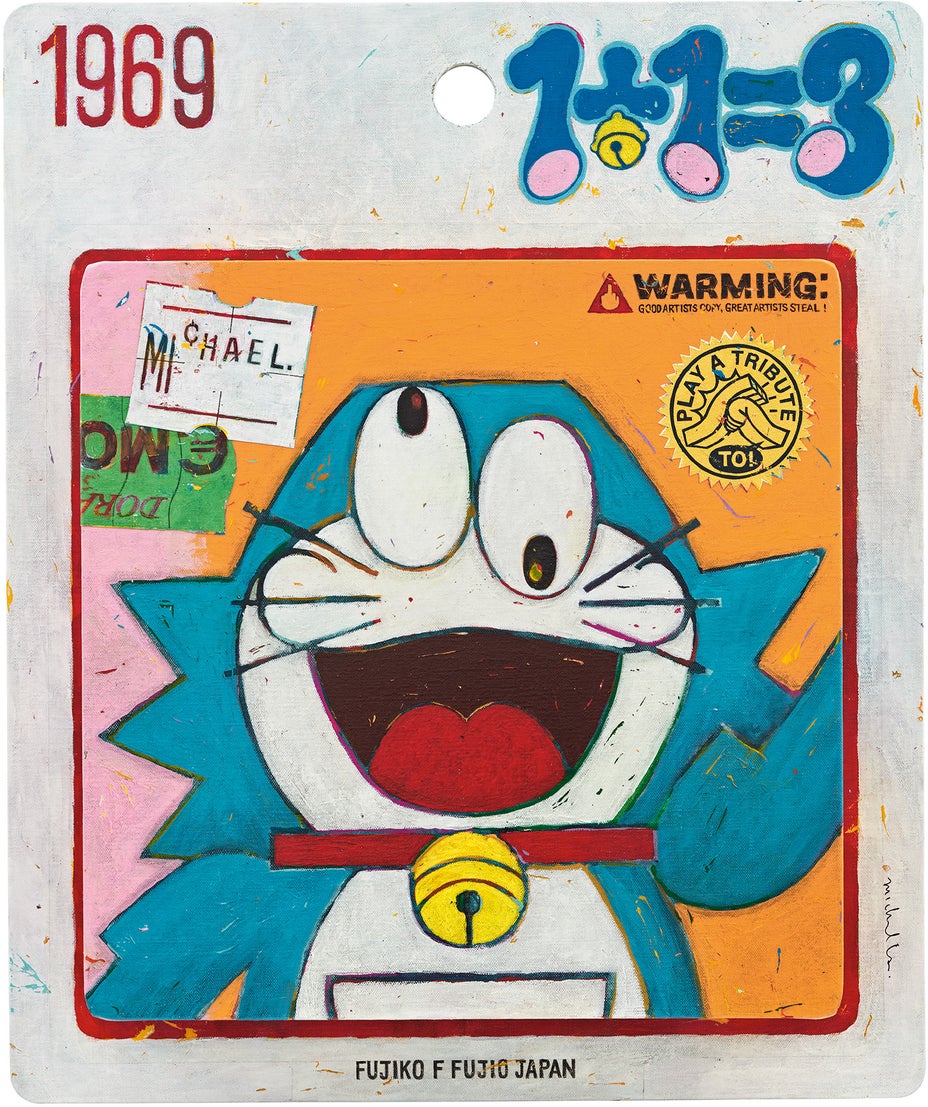
1+1=3 (1969)
Estimate
HK$120,000–180,000
€13,100–19,600
$15,400–23,100
Sold For
HK$275,000
signed 'michael lau' along the bottom right edge
acrylic on canvas
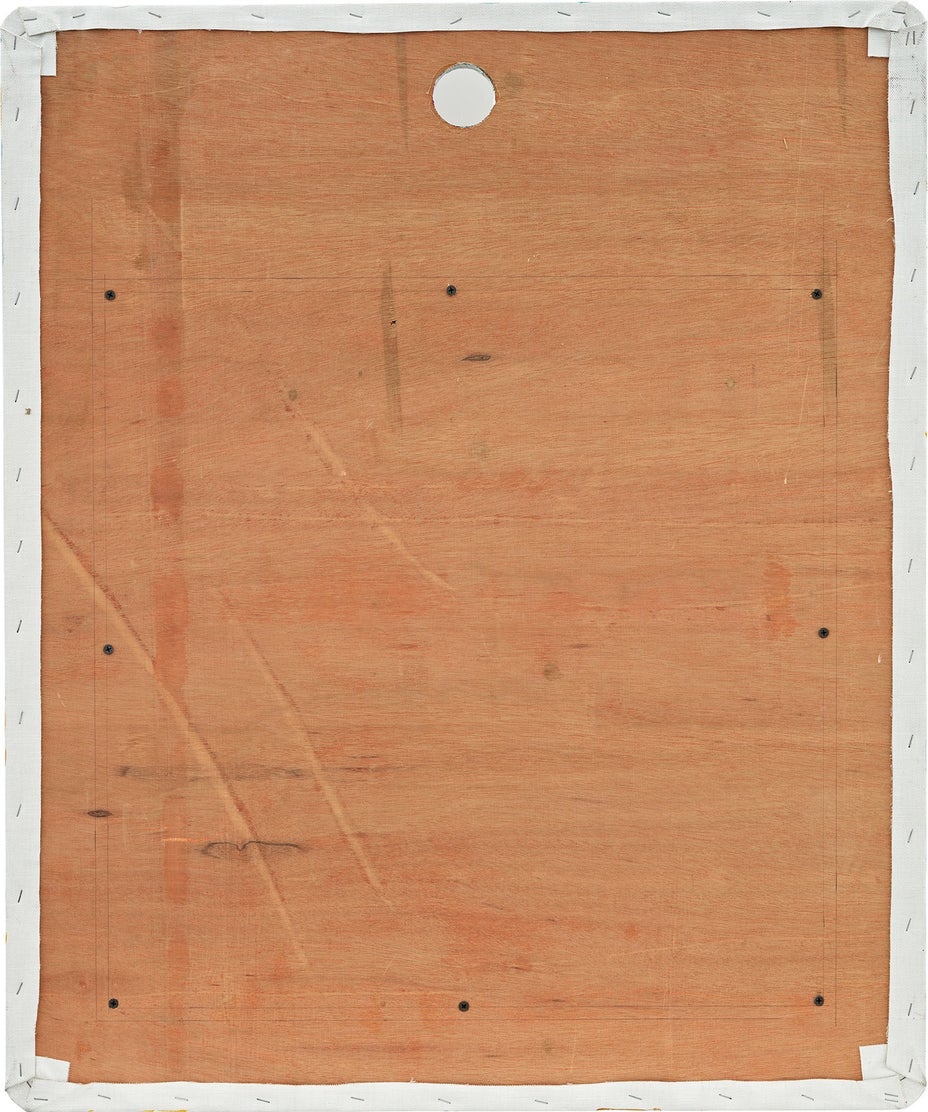
89.5 x 74.8 x 10.5 cm. (35 1/4 x 29 1/2 x 4 1/8 in.)
Painted in 2019.
Full-Cataloguing
Connecting characters from both the old and new era is a phenomenon of communication for designing contemporary Artoys. Such intimate connection of the heritage and present can be considered as an invisible mentorship of learning from the past to achieve the evolution of the future.
Within the classic modern characters from 1900 to 2000, Michael recognises their own characteristics, motions, originality, colours, fonts, style, and even packaging. Adding some slight touches of humour by changing a portion of the surface, Michael pays homage to the classics without losing his distinctive creativity. This is also considered as an artistic philosophy of Lau’s Package-Change series.
Package-Change relates the concept of packaging in toys to the way human beings package themselves to gain competitiveness in life, hence the name – Package-Change. Different parts of the painting reference traditional blister-pack toy packaging. The usual “warning” on the toy packaging transforms itself to become “warming” as a little gentle reminder on matter to be cautious about: “Good artists copy, Great artists steal!” is seen across the series.
Michael again challenges the use of materials and format by shaping the canvas frame to resemble an original toy blister pack, even including the die-cut shape at the top. Each character is seen painted within a transparent laminated acrylic ‘box’ in the painting to mimic a blister pack feeling.
To create this series of paintings, the artist first covered the canvas with a multi-coloured layer of paint, and the visuals on top were stencilled in with sponges. After the top layers dry, Michael then scrapes off layers of paint to reveal the colours underneath. The process allows him to discover the “surprises” underneath as it is impossible to predict what colours will be uncovered. The process also serves as a reminder that even if one intends to change, one’s history and background will be carried alongside, underlining the importance of respecting one’s roots.
Within the classic modern characters from 1900 to 2000, Michael recognises their own characteristics, motions, originality, colours, fonts, style, and even packaging. Adding some slight touches of humour by changing a portion of the surface, Michael pays homage to the classics without losing his distinctive creativity. This is also considered as an artistic philosophy of Lau’s Package-Change series.
Package-Change relates the concept of packaging in toys to the way human beings package themselves to gain competitiveness in life, hence the name – Package-Change. Different parts of the painting reference traditional blister-pack toy packaging. The usual “warning” on the toy packaging transforms itself to become “warming” as a little gentle reminder on matter to be cautious about: “Good artists copy, Great artists steal!” is seen across the series.
Michael again challenges the use of materials and format by shaping the canvas frame to resemble an original toy blister pack, even including the die-cut shape at the top. Each character is seen painted within a transparent laminated acrylic ‘box’ in the painting to mimic a blister pack feeling.
To create this series of paintings, the artist first covered the canvas with a multi-coloured layer of paint, and the visuals on top were stencilled in with sponges. After the top layers dry, Michael then scrapes off layers of paint to reveal the colours underneath. The process allows him to discover the “surprises” underneath as it is impossible to predict what colours will be uncovered. The process also serves as a reminder that even if one intends to change, one’s history and background will be carried alongside, underlining the importance of respecting one’s roots.