196
Minerva
Ref. Sector Dial: M'484'900
Pythagore
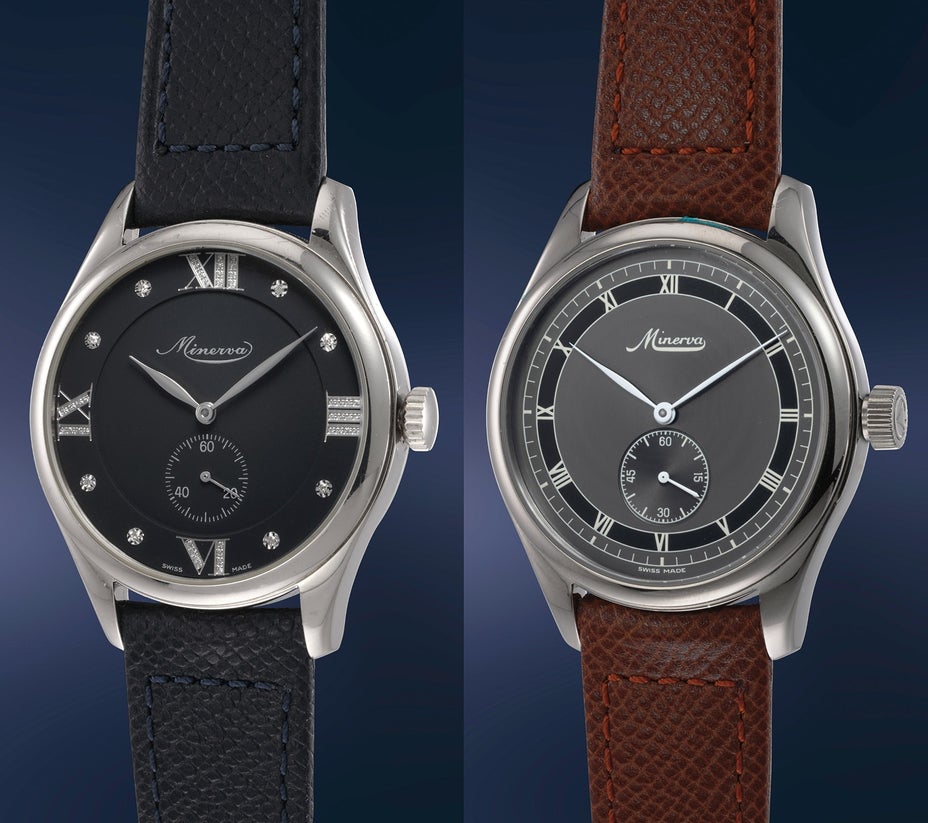
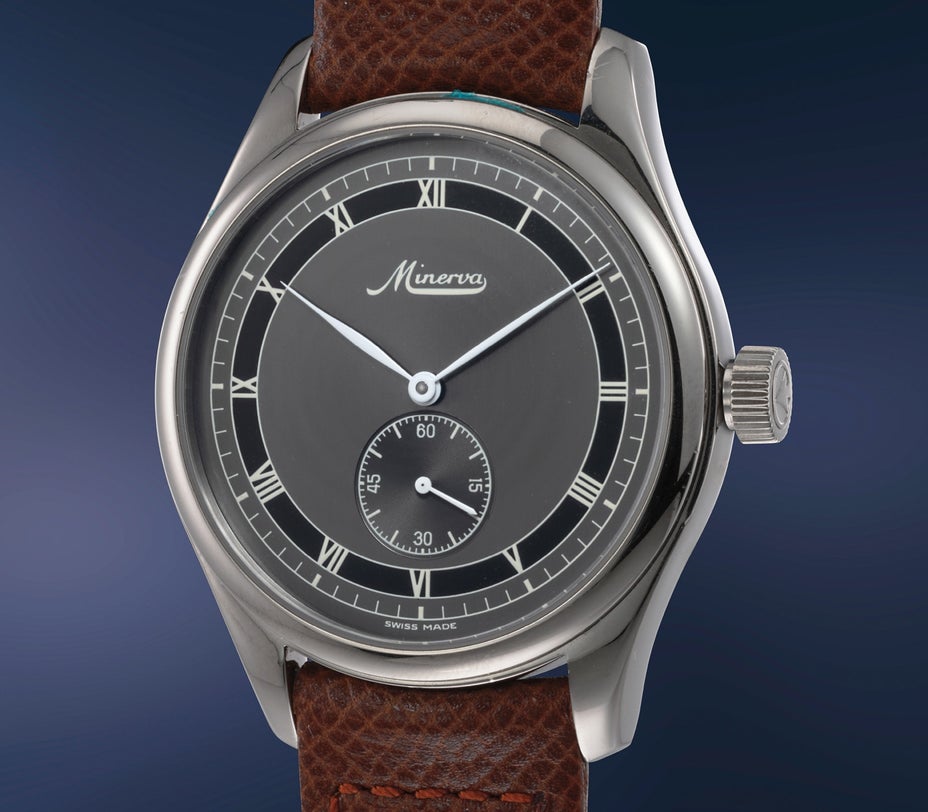
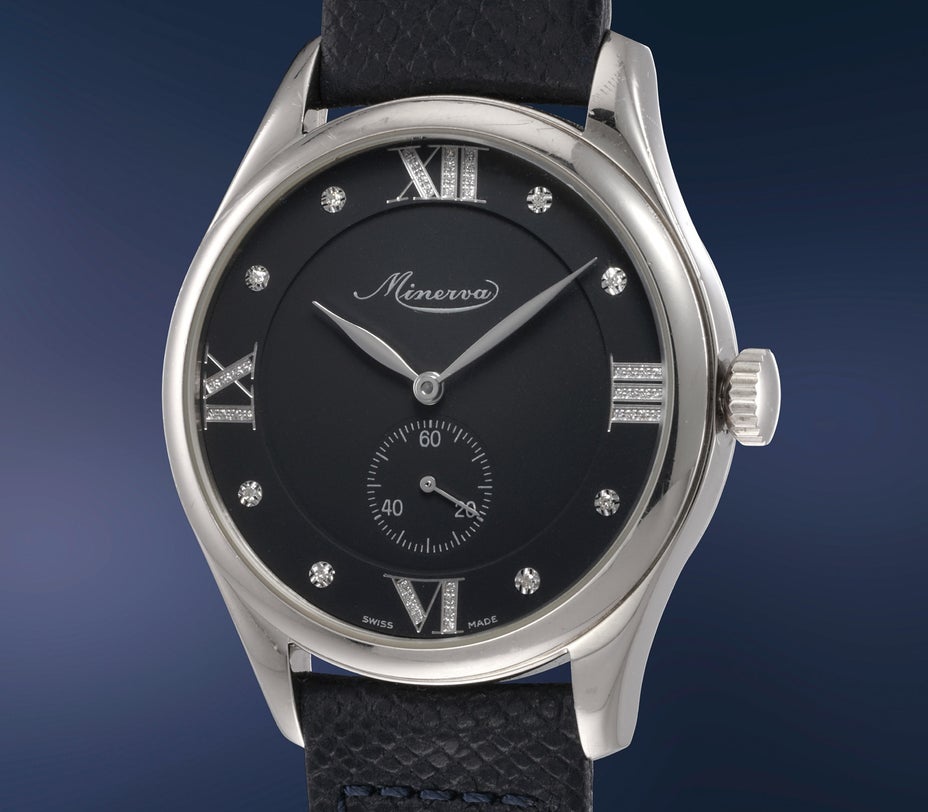
A pair of extremely pleasant and elegant white gold wristwatches, one with sector dial, the other with diamond-set numerals and part of a 50 pieces limited edition
Estimate
CHF4,000–8,000
€3,700–7,400
$4,300–8,700
Sold For
CHF18,900
Manufacturer
Minerva
Year
Circa 2001
Reference No
Sector Dial: M'484'900
Case No
Sector Dial: A185822
Diamond Dial: Edition 2001 50 exemplairs known
Model Name
Pythagore
Material
Sector Dial: 18K white gold
Diamond Dial: 18K white gold
Calibre
Sector Dial: Manual, cal. 48, 17 jewels
Diamond Dial: Manual, cal. 48, 17 jewels
Bracelet/Strap
Leather
Clasp/Buckle
18K white gold Minerva pin buckle
Dimensions
40mm Diameter
Signed
Sector Dial: Case, dial, movement and clasp signed
Diamond Dial: Case, dial, movement clasp signed
Full-Cataloguing
While it would be easy to think the relevance of the present two “Pythagore” watches is purely aesthetic, such reasoning could not be more wrong as these pieces have much more to tell, both historically and technically.
The present Pythagore is in fact a “resurrection” of sorts, as the “original” Minerva Pythagore dates back to 1943. This is already in fact a somewhat of an unusual detail, a precursor of sort to the re-editions that are commonplace today. Furthermore, the Pythagore is one of the last models to be designed while Minerva was still owned by the original family (Frey), as it will be sold to an Italian investor (and then to the Richemont Group) in 2000.
Both timepieces are incredibly attractive, and surprisingly complementary: a more sporty one with sector dial, and an elegant version with diamond-set numerals. This latter example is part of a limited edition of 50 pieces, as stated on the caseback, however research suggests that even the sector dial piece could be a 50 pieces limited edition, together with another 50 pieces pink gold version.
Finally, we get to the movement, which is the true star of the show. Calibre 48 was in fact designed in 1943 and a quick glance at it is enough to surprise the connoisseur: instead of the usual curves one is used to admire on virtually all vintage movements, the entire construction of this calibre is extremely linear, the bridges’ architecture defined (nearly) exclusively by straight lines and 45 or 90 degrees corners. This is because watchmaker Andre Frey designed the movement based on the golden ratio. Discovered by Pythagoras (hence the name of the watch), it is a ratio (1.618….) often seen in nature - and later applied also to human artifacts, from the Greek Parthenon to statistical analysis of financial market - which apparently defines perfect harmony.
The fact that an object of such beauty was originally designed in a time when casebacks were solid, and thus the movements were never admired, betrays a no-compromise approach to watchmaking that shows how, in this field, the boundaries between art and technology were blurred already back in 1943
The present Pythagore is in fact a “resurrection” of sorts, as the “original” Minerva Pythagore dates back to 1943. This is already in fact a somewhat of an unusual detail, a precursor of sort to the re-editions that are commonplace today. Furthermore, the Pythagore is one of the last models to be designed while Minerva was still owned by the original family (Frey), as it will be sold to an Italian investor (and then to the Richemont Group) in 2000.
Both timepieces are incredibly attractive, and surprisingly complementary: a more sporty one with sector dial, and an elegant version with diamond-set numerals. This latter example is part of a limited edition of 50 pieces, as stated on the caseback, however research suggests that even the sector dial piece could be a 50 pieces limited edition, together with another 50 pieces pink gold version.
Finally, we get to the movement, which is the true star of the show. Calibre 48 was in fact designed in 1943 and a quick glance at it is enough to surprise the connoisseur: instead of the usual curves one is used to admire on virtually all vintage movements, the entire construction of this calibre is extremely linear, the bridges’ architecture defined (nearly) exclusively by straight lines and 45 or 90 degrees corners. This is because watchmaker Andre Frey designed the movement based on the golden ratio. Discovered by Pythagoras (hence the name of the watch), it is a ratio (1.618….) often seen in nature - and later applied also to human artifacts, from the Greek Parthenon to statistical analysis of financial market - which apparently defines perfect harmony.
The fact that an object of such beauty was originally designed in a time when casebacks were solid, and thus the movements were never admired, betrays a no-compromise approach to watchmaking that shows how, in this field, the boundaries between art and technology were blurred already back in 1943