Contemporary Studio Artworks from the Estate of Jack R. Bershad
26
Nicholas Arroyave-Portela
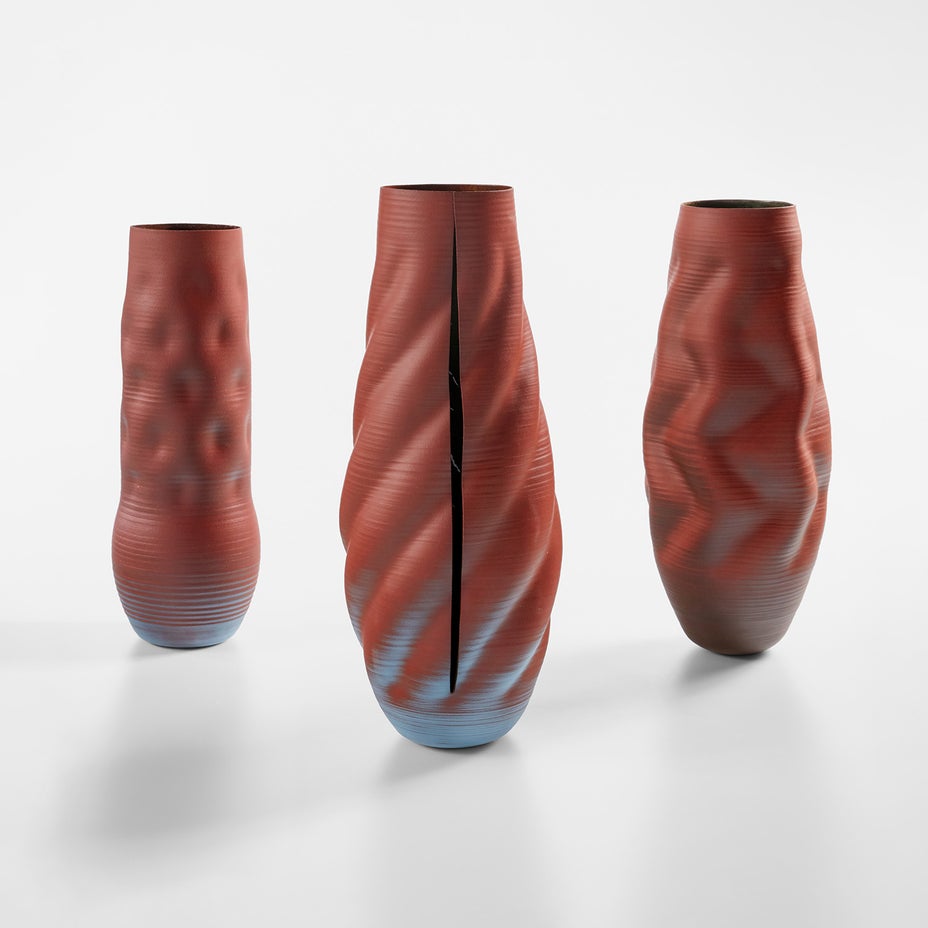
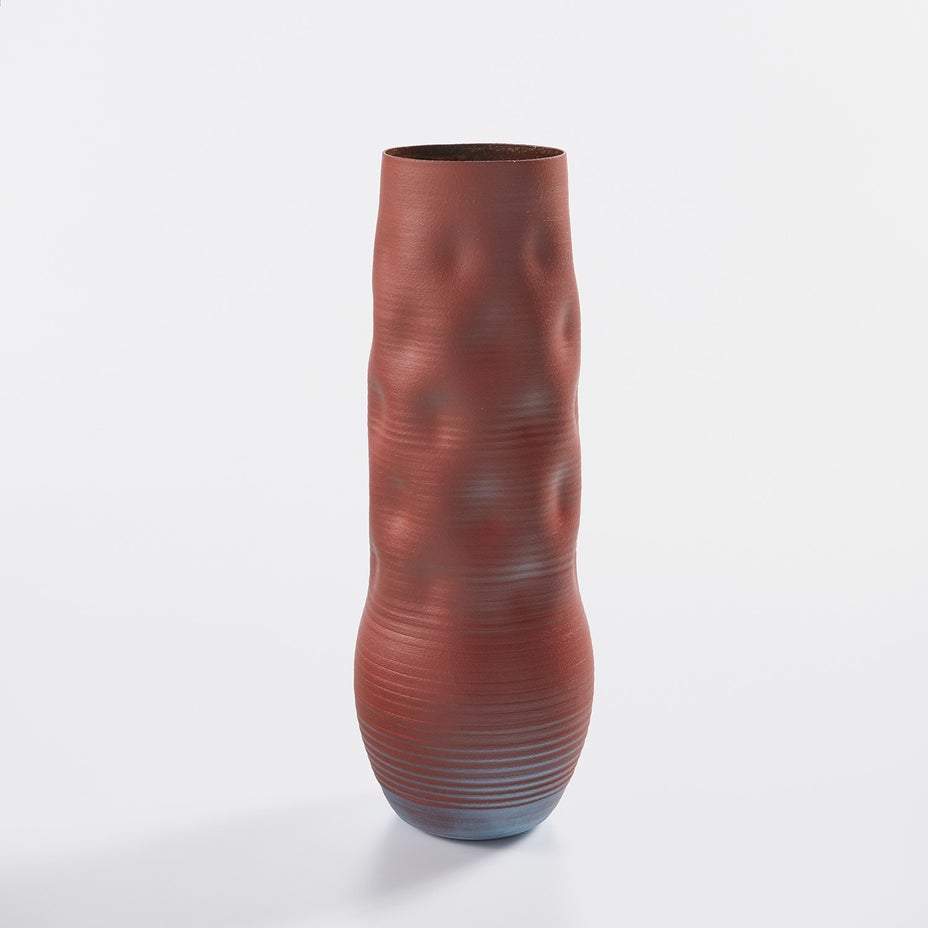
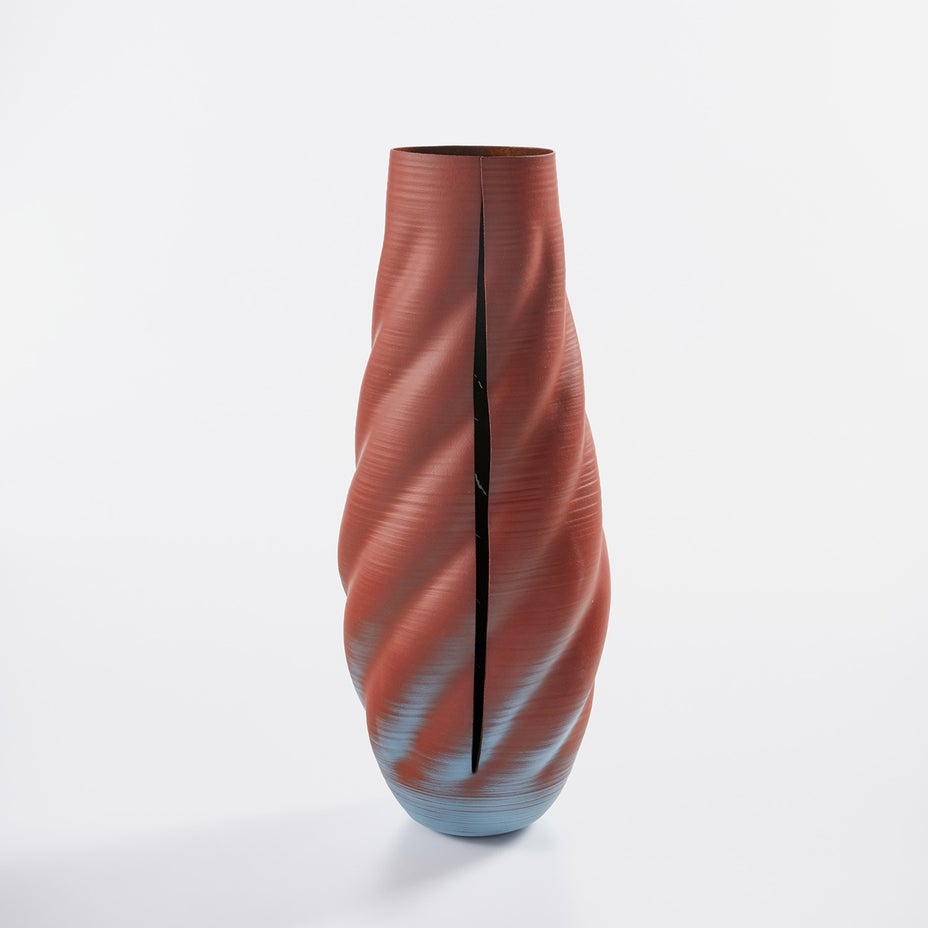
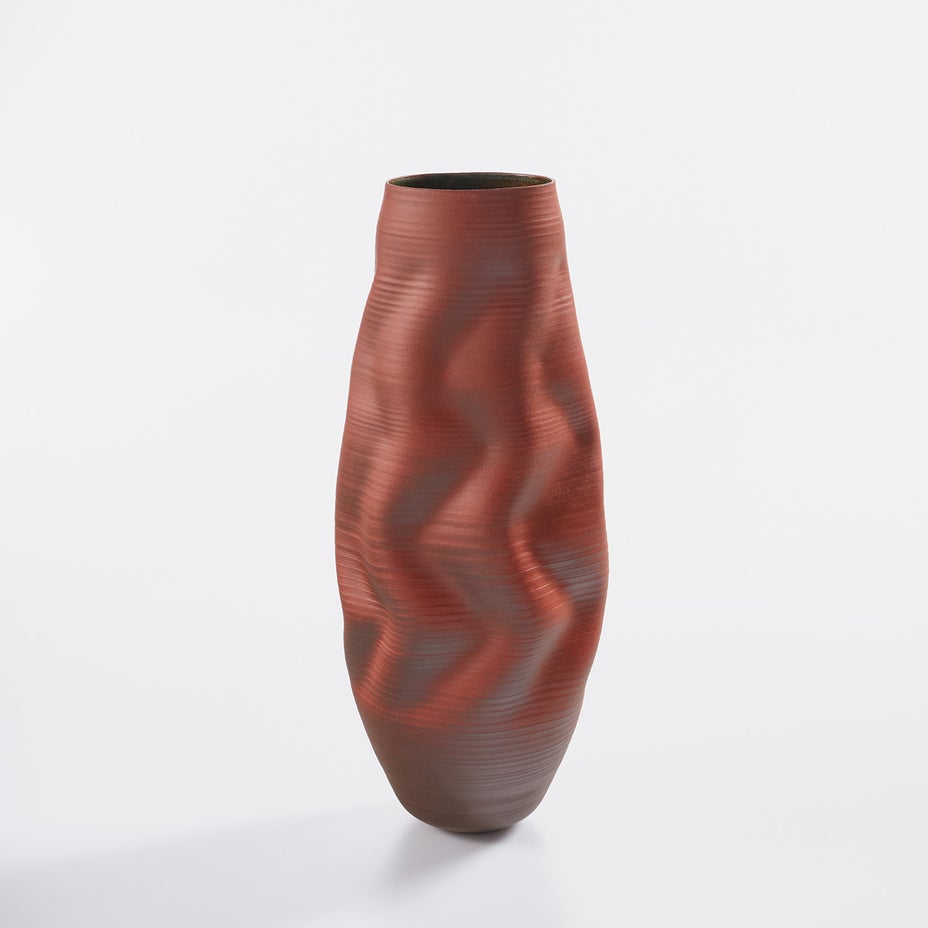
"Dimpled," "Cut Wave," and "Zig-Zag" forms
Estimate
$3,000–4,000
Sold For
$2,772
circa 2000
Stoneware with airbrushed terra sigillata.
Tallest: 19 in. (48.3 cm) high
Underside of "Cut Wave" and base of "Dimpled" form impressed with artist's seal.
Full-Cataloguing
As an art student at Bath College, Nicholas Arroyave-Portela became mesmerized by the moiré silks that he saw at the city’s Museum of Costume. Wanting to emulate these textiles’ sense of movement, he began creating vessels with delicate, undulating surfaces that resemble flowing water. Arroyave-Portela was equally inspired by artists such as Lucio Fontana and Anish Kapoor, and his work began taking on some of the same formal and conceptual preoccupations as the modern art that he saw during visits to museums and galleries in London.
Arroyave-Portela’s works are wheel-thrown. After he creates the basic, thin-walled form and before the clay becomes leather hard, he manipulates their surfaces, sometimes slicing through the body of the vessel—as seen in the present “Slashed” form. He sprays on a terra sigilata slip which gives the outside of the form a satin-like appearance while the inside is glazed with a high-gloss finish. Ceramist and writer Emmanuel Cooper described this element of Arroyave-Portela’s work, saying, “There is an intriguing element of risk in the bowls and vessel forms of Nicholas Arroyave-Portela; the walls are so lean and minimal, the edges so crisp and precise, the undulating surfaces both controlled and wayward.”
Arroyave-Portela’s works are wheel-thrown. After he creates the basic, thin-walled form and before the clay becomes leather hard, he manipulates their surfaces, sometimes slicing through the body of the vessel—as seen in the present “Slashed” form. He sprays on a terra sigilata slip which gives the outside of the form a satin-like appearance while the inside is glazed with a high-gloss finish. Ceramist and writer Emmanuel Cooper described this element of Arroyave-Portela’s work, saying, “There is an intriguing element of risk in the bowls and vessel forms of Nicholas Arroyave-Portela; the walls are so lean and minimal, the edges so crisp and precise, the undulating surfaces both controlled and wayward.”