83
Omega
Ref. ST 396.0839
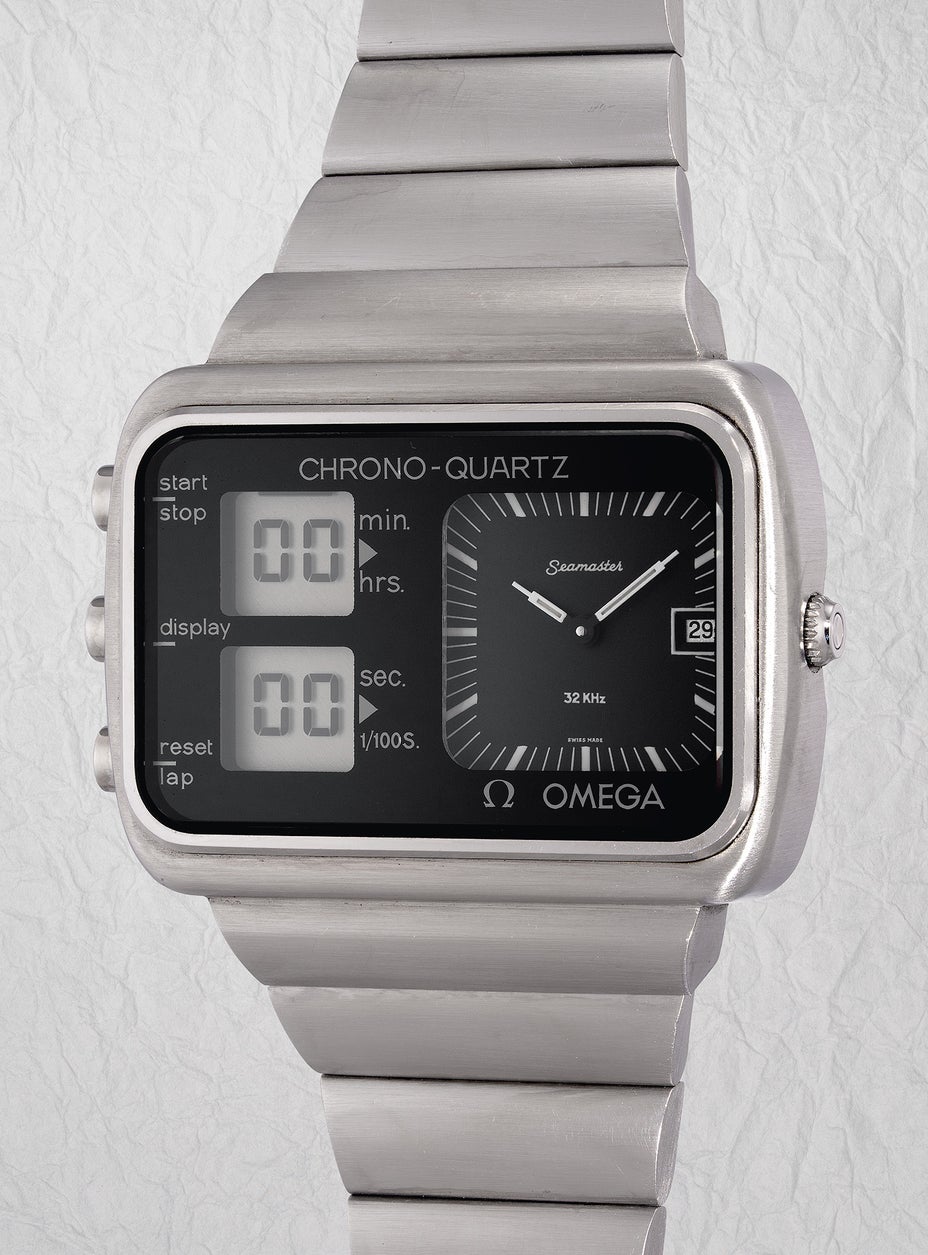
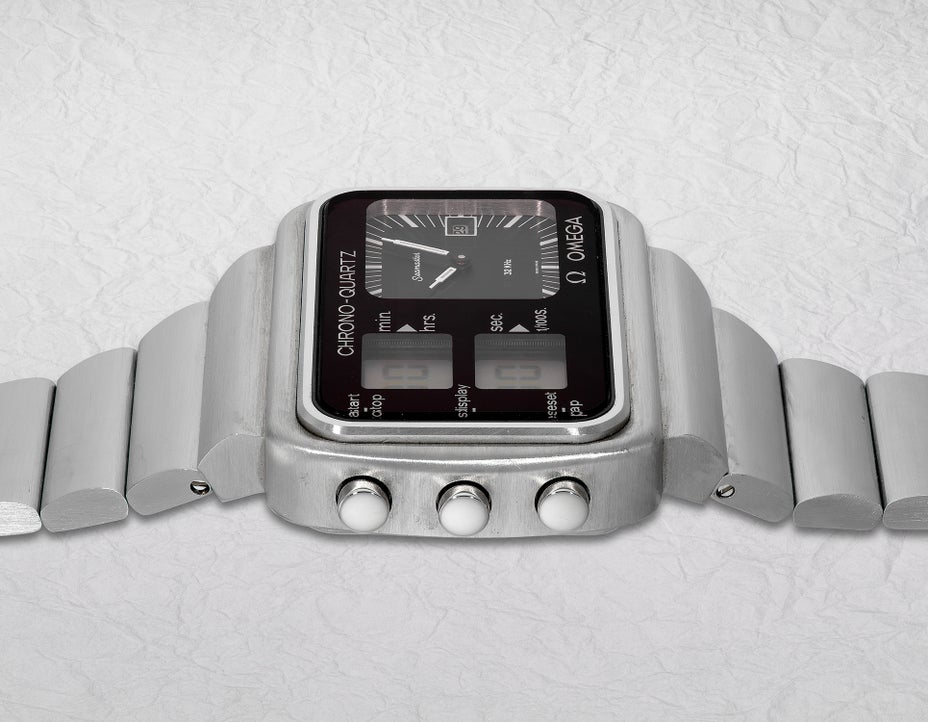
Chrono-Quartz
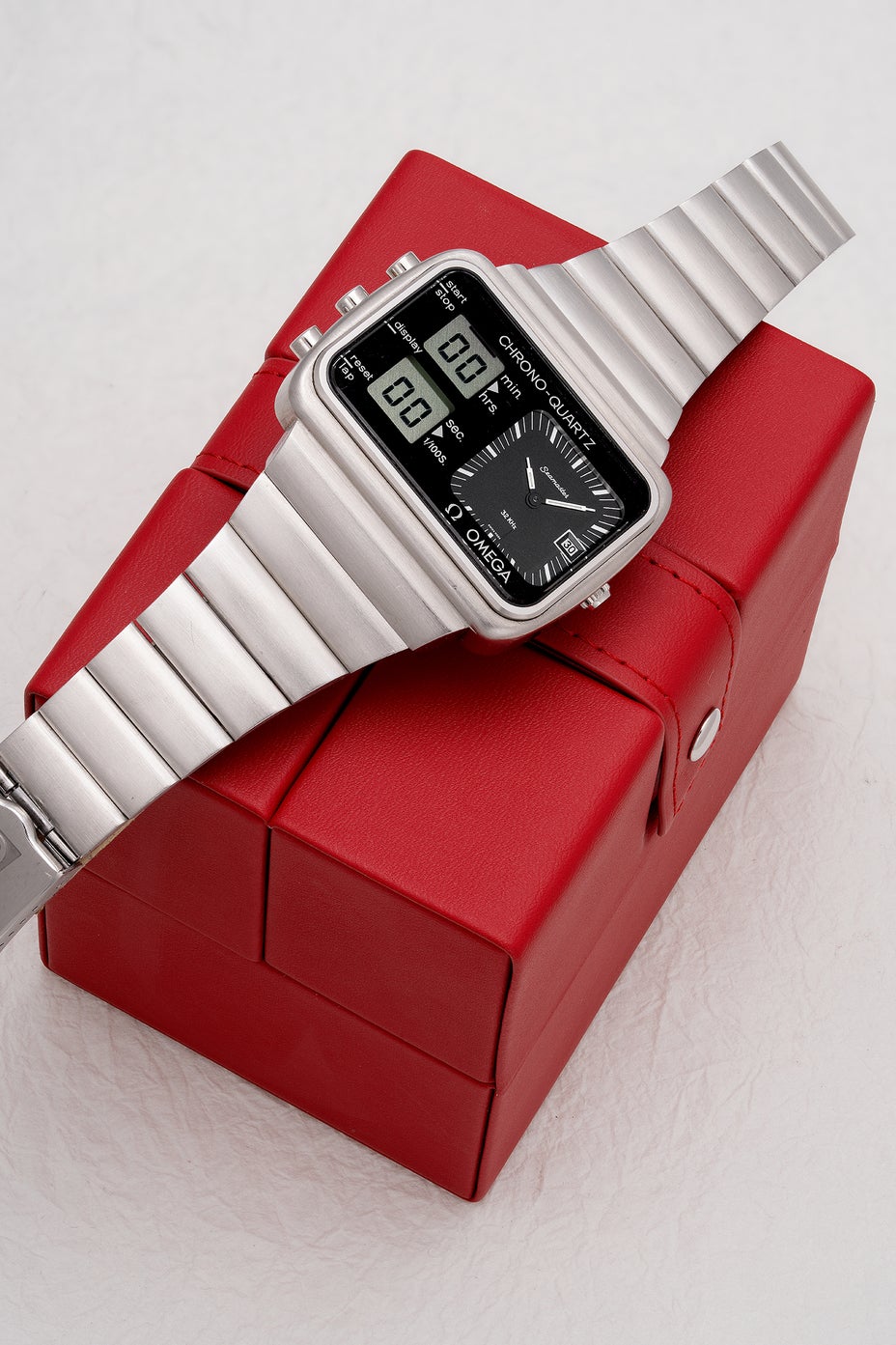
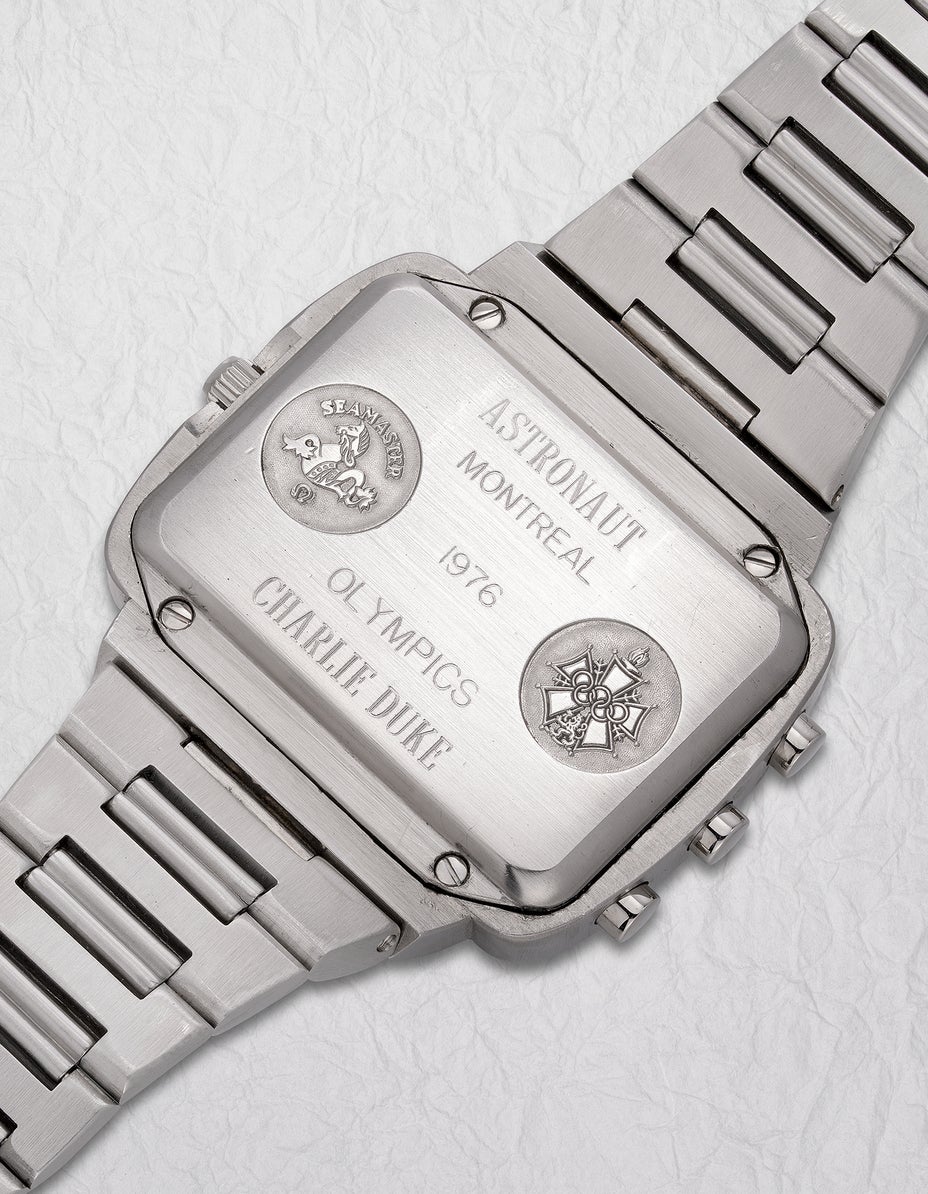
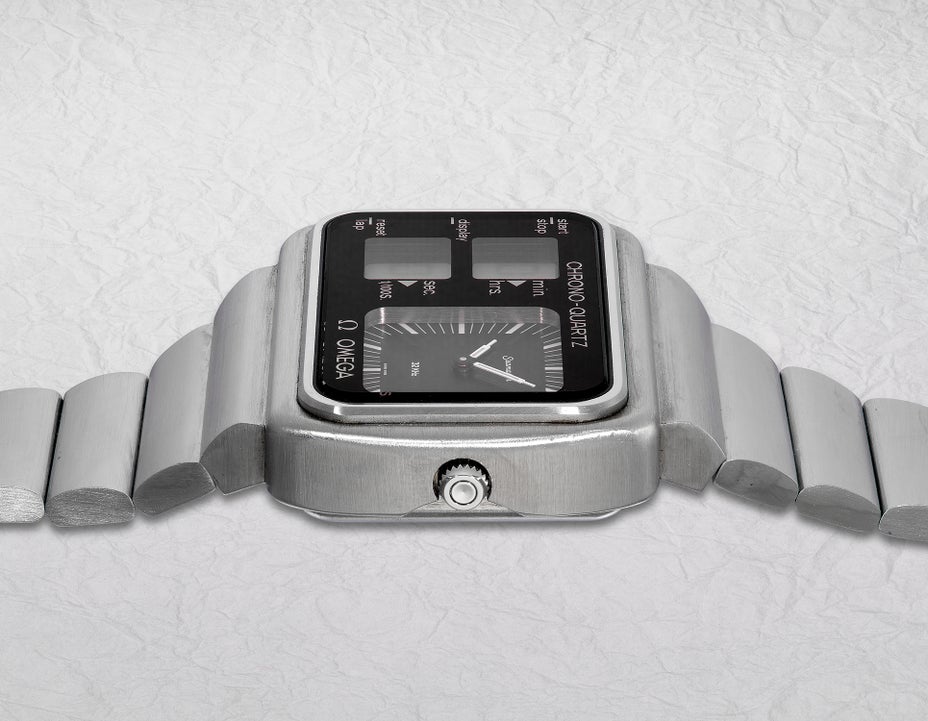
A highly rare and historically important rectangular stainless steel quartz-chronograph wristwatch with 1/100 seconds, date, analogue and digital display, integrated bracelet and presentation box, presented to Astronaut Charlie Duke for the Montreal Olympics games in 1976
Full-Cataloguing
In April 1972, with a few minutes left on the Moon during their Apollo 16 mission, American astronaut Charles Duke and his commander John Young decided to do a few high-jump exercises in what they called the “Lunar Olympics” to celebrate the Munich Olympic games.
Shortly after the Apollo 16 mission in 1972 came another historical event of human race, the 1976 Olympics hosted by Montréal, Canada. The first Olympics to be held in Canada, that year Japan won a total of 25 medals. Omega was proud to be the Official Timekeeper at the Olympic Games in Montreal for two record breaking weeks, the manufacture themselves also broke their record for launching the world’s first digital/analogue chronograph, the present Omega Chrono-Quartz. This is the Chrono-quartz given to Charles Duke in 1976 for his "Lunar Olympics".
A well-preserved time-capsule specimen owned by an American icon, it has been 27 years since this rare bird was last offered in the market.
Omega
Swiss | 1848Omega's rich history begins with its founder, Louis Brandt, who established the firm in 1848 in La Chaux de Fonds. In 1903, the company changed its name to Omega, becoming the only watch brand in history to have been named after one its own movements. A full-fledged manufacturer of highly accurate, affordable and reliable watches, its sterling reputation enabled them to be chosen as the first watch company to time the Olympic Games beginning in 1932. Its continued focus on precision and reliability ultimately led their Speedmaster chronograph wristwatch to be chosen by NASA in 1965 — the first watch worn on the moon.
Key models sought-after by collectors include their first, oversized water-resistant chronograph — the reference 2077, early Speedmaster models such as the CK 2915 and 2998, military-issued versions of the Seamaster and oversized chronometer models such as those fitted with their prestigious caliber 30T2Rg.