151
Omega
Ref. 23.7 widened into 17'''
Lépine
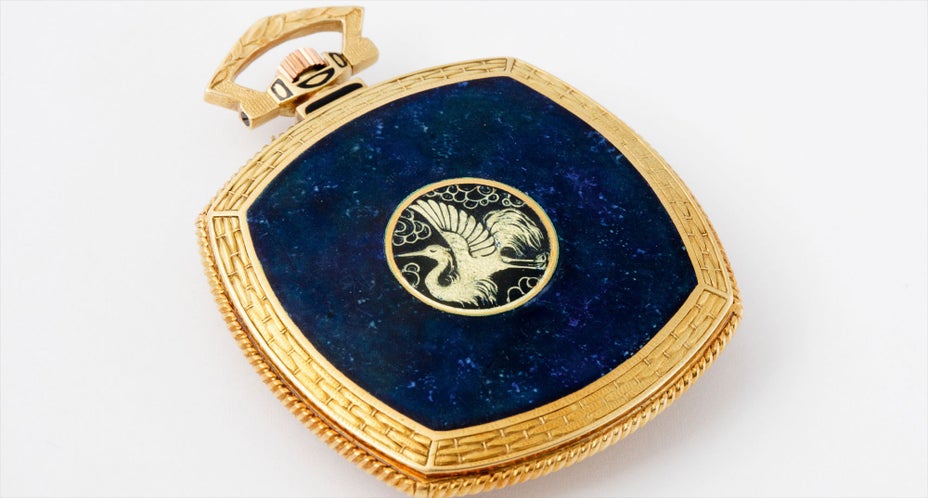
A very attractive and extremely rare yellow gold-cushion shaped dress watch with enameled case back simulating lapis lazuli and centered by a panel depicting a crane
Full-Cataloguing
The present watch, manufactured by Omega in 1923 is a perfect representation of this influence. The engraved and enameled crane found at the center of the faux Lapis Lazuli enameled caseback is an auspicious bird symbolizing longevity in the Japanese culture. This influence is also visible with the stylized Asian-inspired numerals and the FRM engraving on the dial. The 18-karat yellow gold case features a delightful chased bamboo design. Simultaneously a timepiece and a piece of decorative art, this pocket watch is a testimony of Asian influence on European arts.
Omega
Swiss | 1848Omega's rich history begins with its founder, Louis Brandt, who established the firm in 1848 in La Chaux de Fonds. In 1903, the company changed its name to Omega, becoming the only watch brand in history to have been named after one its own movements. A full-fledged manufacturer of highly accurate, affordable and reliable watches, its sterling reputation enabled them to be chosen as the first watch company to time the Olympic Games beginning in 1932. Its continued focus on precision and reliability ultimately led their Speedmaster chronograph wristwatch to be chosen by NASA in 1965 — the first watch worn on the moon.
Key models sought-after by collectors include their first, oversized water-resistant chronograph — the reference 2077, early Speedmaster models such as the CK 2915 and 2998, military-issued versions of the Seamaster and oversized chronometer models such as those fitted with their prestigious caliber 30T2Rg.