51
Patek Philippe
Ref. 130
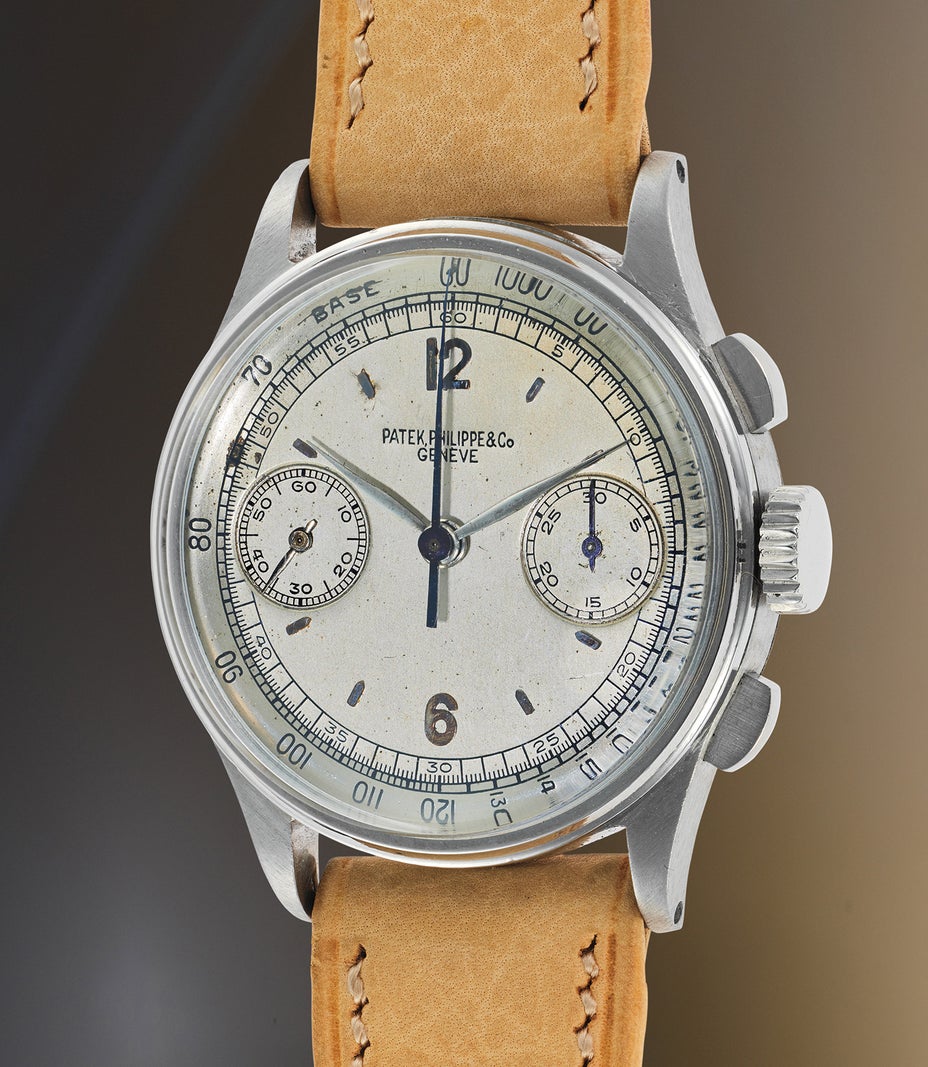
A rare, early, and attractive stainless steel chronograph wristwatch with two-tone dial
Full-Cataloguing
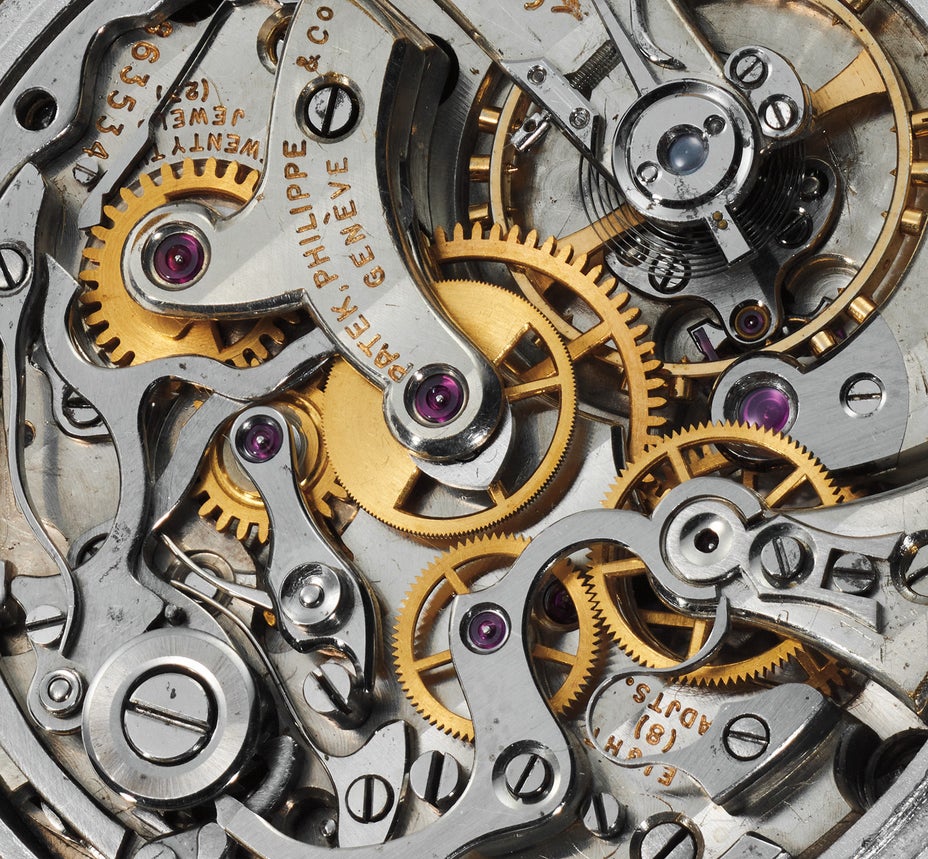
Early examples of the reference were mono-pusher chronographs powered by a Victorin Piguet-based caliber. In 1936, the firm switched to a Valjoux-based cal. 13’’’, with each movement hand finished with Geneva stripes by the most skilled watchmakers at the time. While gold cases were made by master case-maker Vichet featuring slightly thinner, more elongated lugs, stainless steel cases were made by three different case-makers including Wenger, as well as Georges Croisier and Dubois.
It is estimated that only 270 examples in stainless steel were produced between 1937 to 1951, and those can be divided into three distinct series:
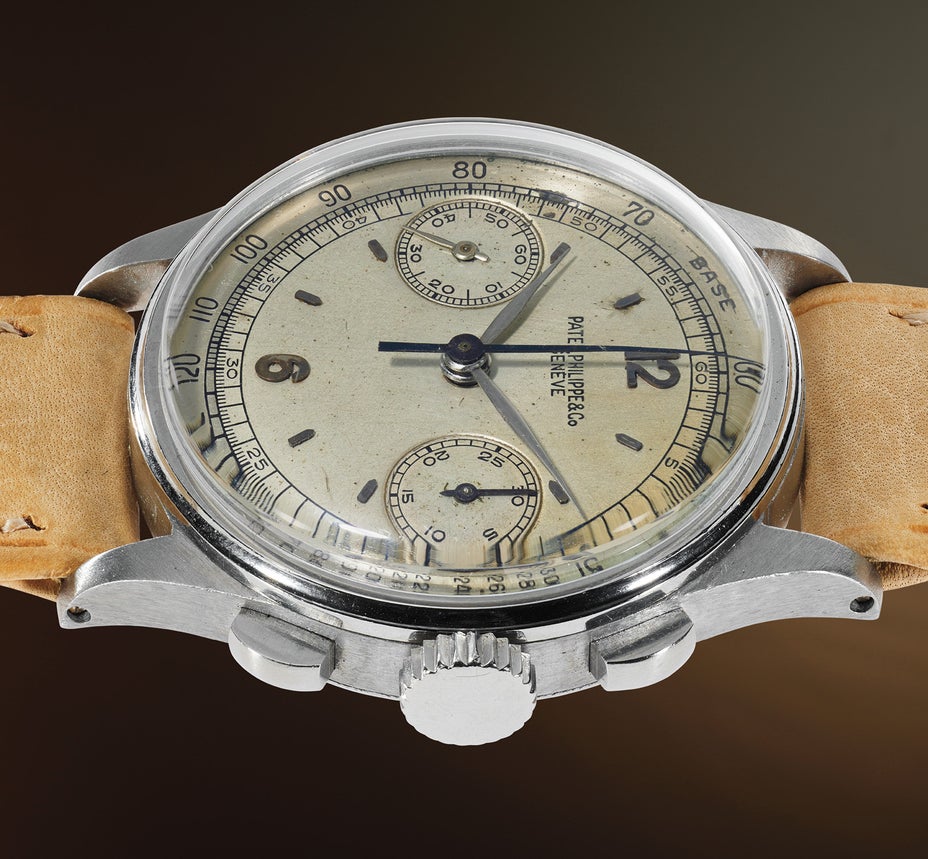
- First series (1937 – 1942): Estimated 125 cases produced by Geneva-based case maker Georges Croisier. Earlier examples feature a lug width of 18mm, while later examples feature a 20mm lug width. Both variants retain pin holes to the sides of the lugs. (the present watch)
- Second series (1942 – 1944): Estimated 135 cases produced by Le Locle-based case maker Dubois.
- Third series (1950 – 1951): Estimated 25 cases produced by Geneva-based case maker Wenger. No pin holes on the side of the lugs.
With a charmingly aged two-tone dial, turning to an ivory tone, and desirable long Patek Philippe signature, the present reference 130 in stainless steel remains as aesthetically relevant today as it did almost nine decades ago. Fitted with a period-correct Patek Philippe calfskin strap, it will certainly heighten the profile of any vintage watch collection.
Patek Philippe
Swiss | 1839Since its founding in 1839, this famous Geneva-based firm has been surprising its clientele with superbly crafted timepieces fitted with watchmaking's most prestigious complications. Traditional and conservative designs are found across Patek Philippe's watches made throughout their history — the utmost in understated elegance.
Well-known for the Graves Supercomplication — a highly complicated pocket watch that was the world’s most complicated watch for 50 years — this family-owned brand has earned a reputation of excellence around the world. Patek's complicated vintage watches hold the highest number of world records for results achieved at auction compared with any other brand. For collectors, key models include the reference 1518, the world's first serially produced perpetual calendar chronograph, and its successor, the reference 2499. Other famous models include perpetual calendars such as the ref. 1526, ref. 3448 and 3450, chronographs such as the reference 130, 530 and 1463, as well as reference 1436 and 1563 split seconds chronographs. Patek is also well-known for their classically styled, time-only "Calatrava" dress watches, and the "Nautilus," an iconic luxury sports watch first introduced in 1976 as the reference 3700 that is still in production today.