105Σ︎
Patek Philippe
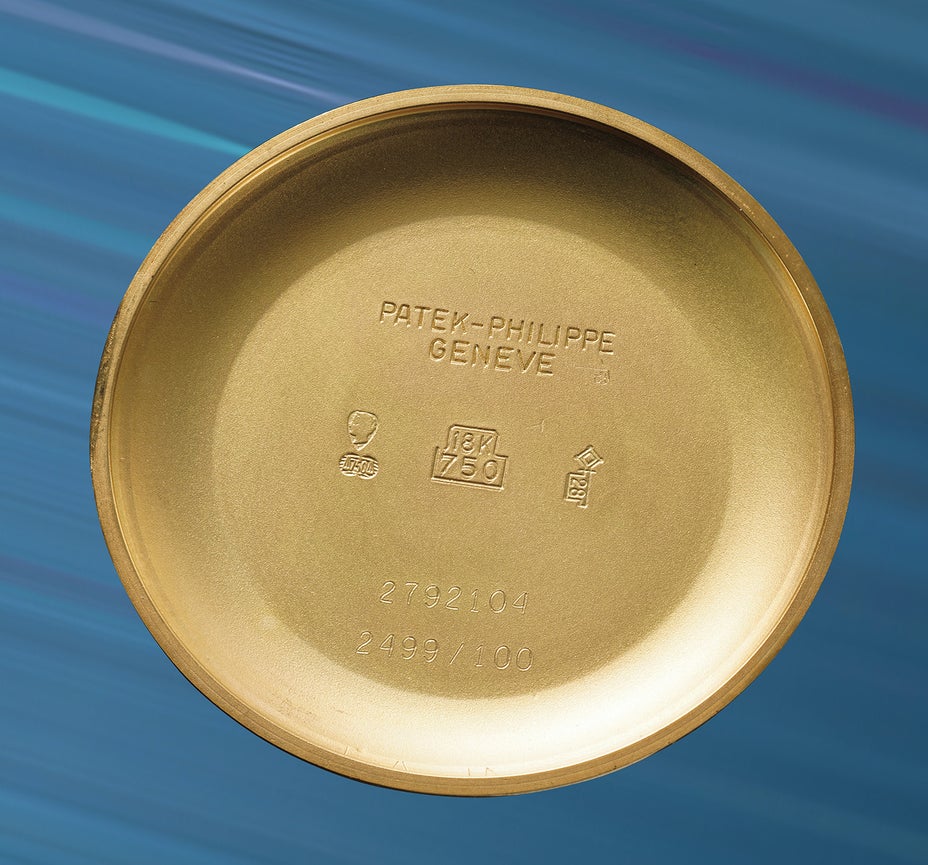
Ref. 2499/100
"Gübelin"
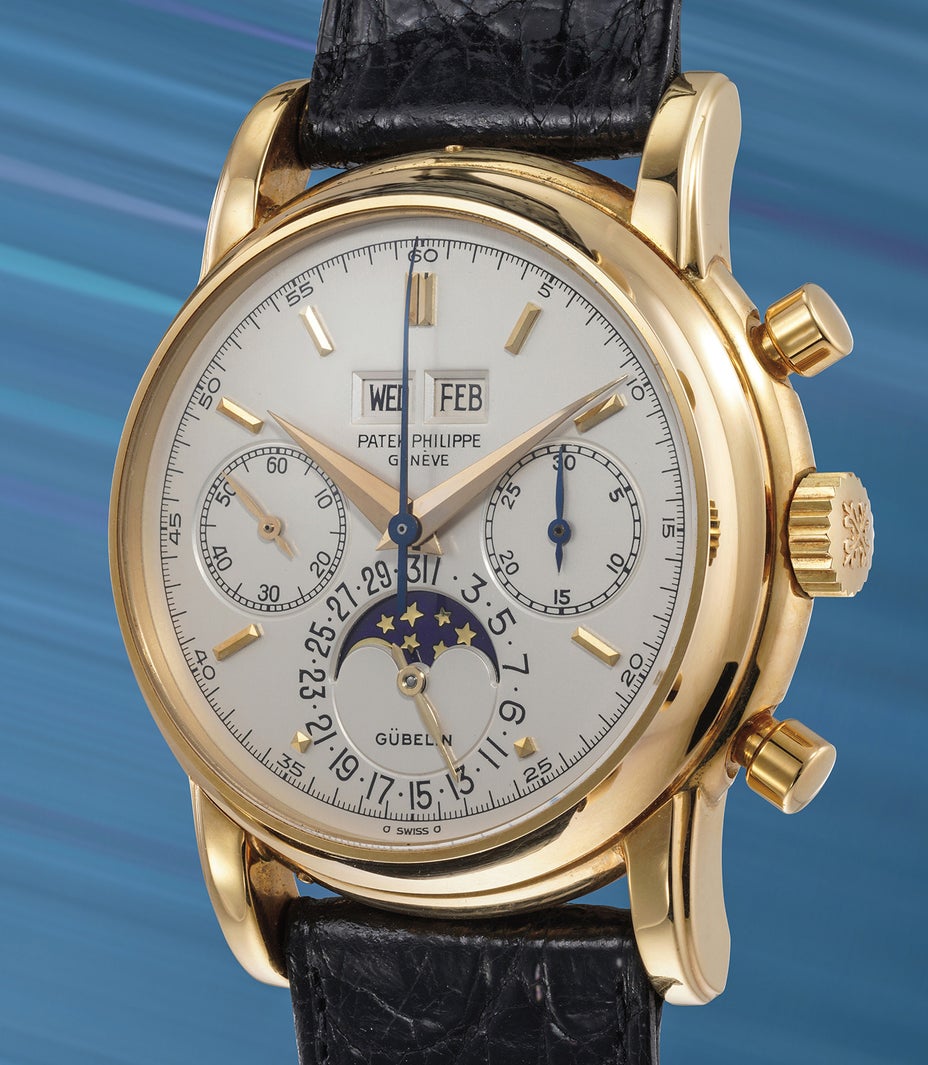
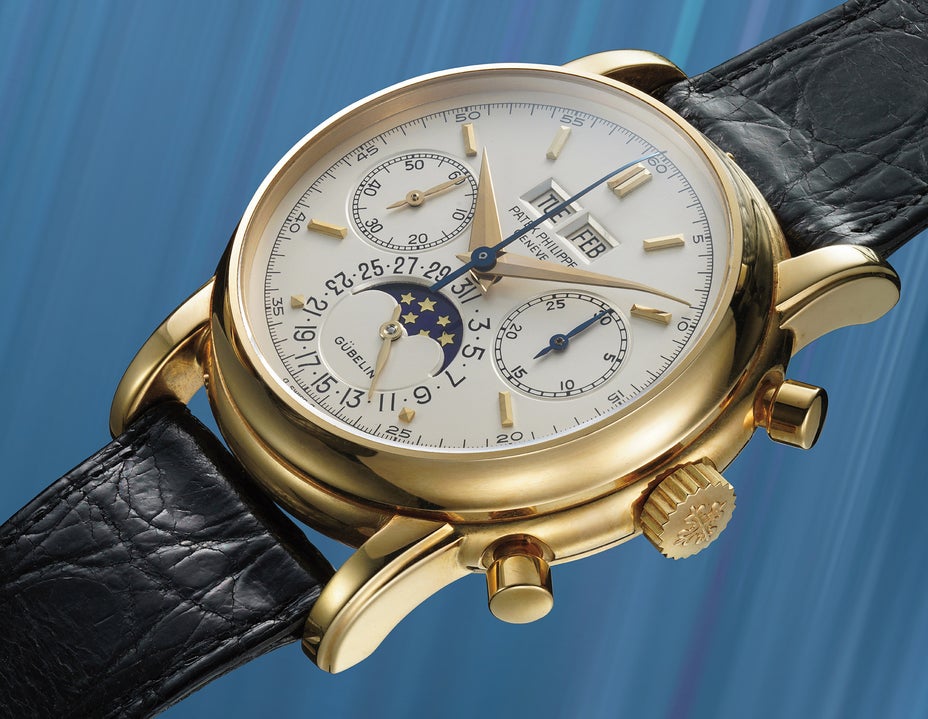
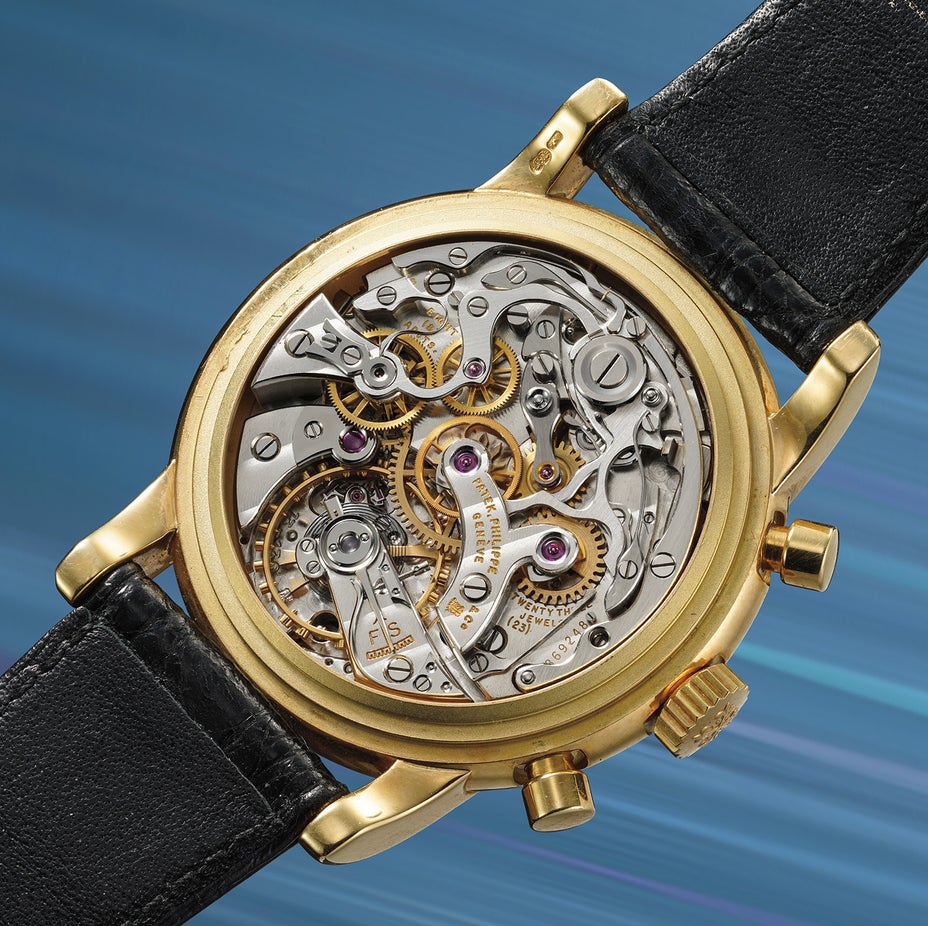
A superbly well-preserved, very rare and extremely collectible yellow gold perpetual calendar chronograph wristwatch with moonphases, retailed by Gübelin
Full-Cataloguing
In production for 34 years, the reference 2499 succeeded the reference 1518 beginning in 1951 and was made in only 349 pieces (approximately 10 units per year). Early examples featured cases made by Vichet, soon to be replaced by Wenger, whose production is most notable for its modern 37.5mm diameter case - among other subtle differences. Later, case production was internalized within Patek Philippe and assigned to in-house company Atelier Reunis (casemaker number 28), which also made the last 2499 cases, such as the present watch. Departing from the very Calatrava-inspired, frill-less design of its parent model, reference 2499 sports instead a remarkably large-for-the-time case, a game of concave and convex surfaces on its band and bezel, sculpted lugs… It truly was a much more architectural watch, with the final result incredibly managing to convey stately importance merged with a hint of whimsy. Such remarkable design consecrated the model as one of the most attractive watch models ever. Such attractiveness combined with its rarity went on to make it a "grail model” since the very beginning of wristwatch collecting. By now, it has developed a truly mythical aura and is rightfully considered an “endgame” watch for many experienced collectors.
The reference 2499 can be divided into four series:
- First series: square chronograph pushers, Arabic numerals, tachymeter scale.
- Second series: round chronograph pushers, either baton or Arabic numerals, tachymeter scale.
- Third series: round chronograph pushers, applied baton numerals, outer seconds divisions without tachymeter scale.
- Fourth series, like the present watch, feature round chronograph pushers, applied baton numerals, outer seconds divisions, and a sapphire crystal - which prompts a slightly higher bezel with a subtly more prominent wrist presence. Fourth Series examples bear the reference 2499/100.
The present piece is further distinguished both by its condition and by the retailer signature. Gübelin is Lucerne-based watch retailer, widely considered one of the most respected in Switzerland. Gübelin-signed 2499 are enormously rare: out of the entire production only five pieces are known beyond the present watch, and out of these only four are /100.
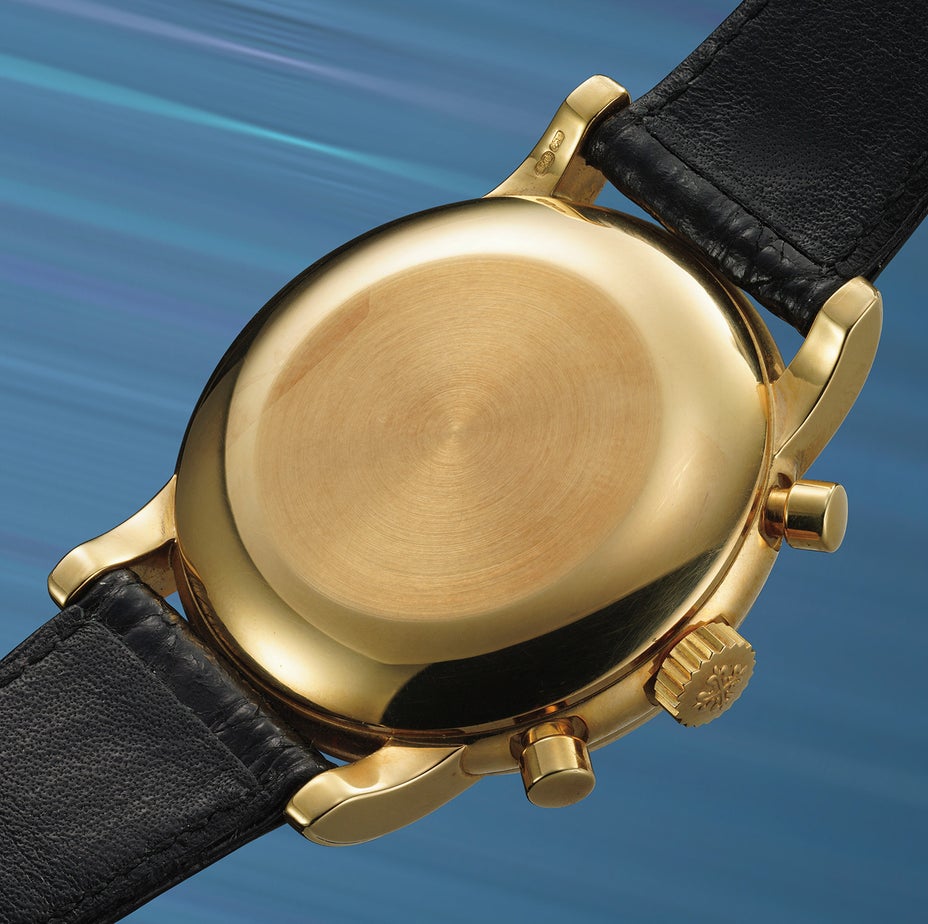
The condition of the watch is as remarkable as its double signed dial. The dial itself, in fact, is preserved in absolutely stunning condition, without hints of the oxidation that at times is seen on Fourth Series examples. The case follows suit featuring strong, unmolested proportions, crisp hallmarks and strong satin finish to the back.
Without a doubt, the present watch is one of the best preserved and most unusual iterations of this hallowed model.
Patek Philippe
Swiss | 1839Since its founding in 1839, this famous Geneva-based firm has been surprising its clientele with superbly crafted timepieces fitted with watchmaking's most prestigious complications. Traditional and conservative designs are found across Patek Philippe's watches made throughout their history — the utmost in understated elegance.
Well-known for the Graves Supercomplication — a highly complicated pocket watch that was the world’s most complicated watch for 50 years — this family-owned brand has earned a reputation of excellence around the world. Patek's complicated vintage watches hold the highest number of world records for results achieved at auction compared with any other brand. For collectors, key models include the reference 1518, the world's first serially produced perpetual calendar chronograph, and its successor, the reference 2499. Other famous models include perpetual calendars such as the ref. 1526, ref. 3448 and 3450, chronographs such as the reference 130, 530 and 1463, as well as reference 1436 and 1563 split seconds chronographs. Patek is also well-known for their classically styled, time-only "Calatrava" dress watches, and the "Nautilus," an iconic luxury sports watch first introduced in 1976 as the reference 3700 that is still in production today.