143
Patek Philippe
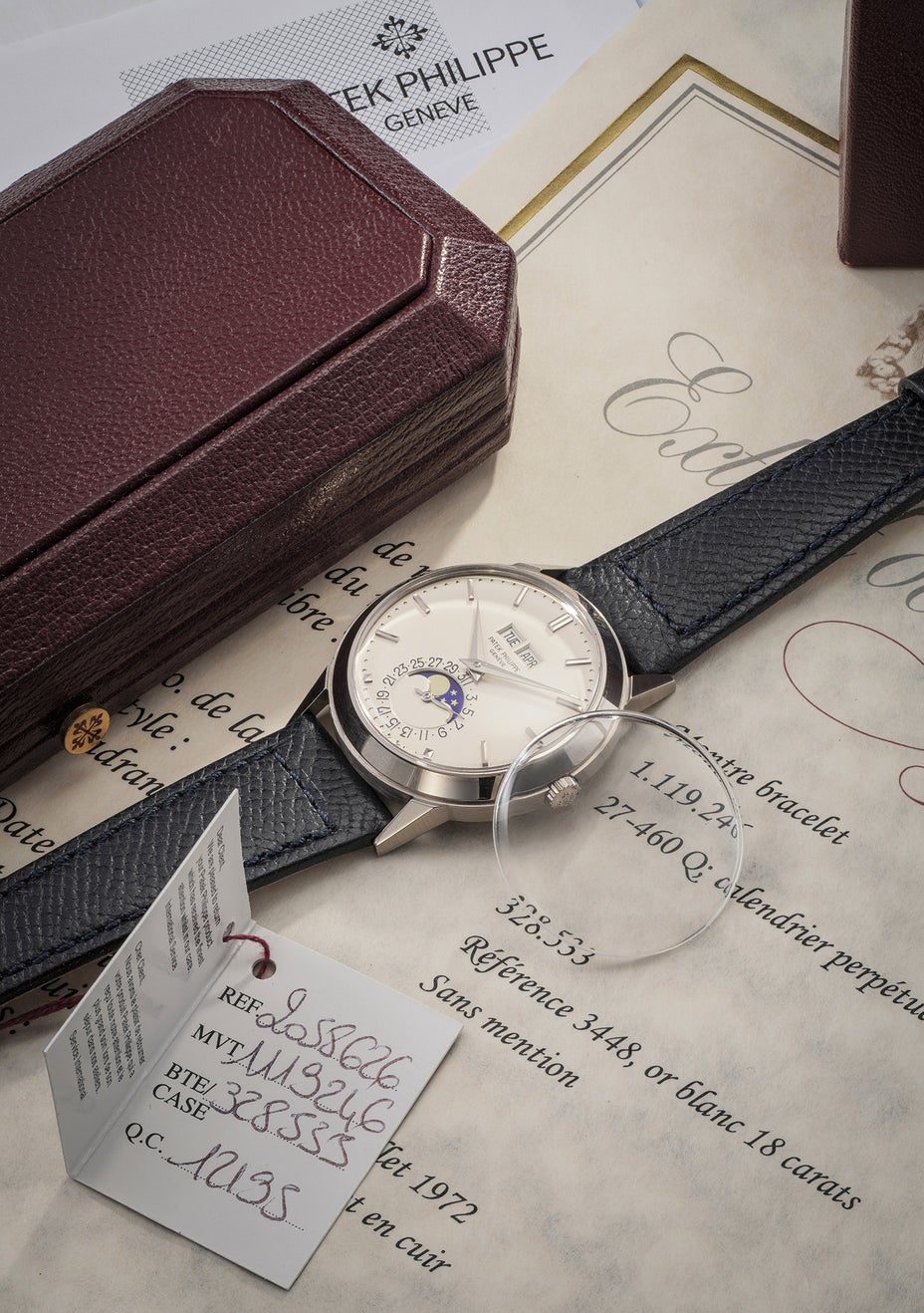
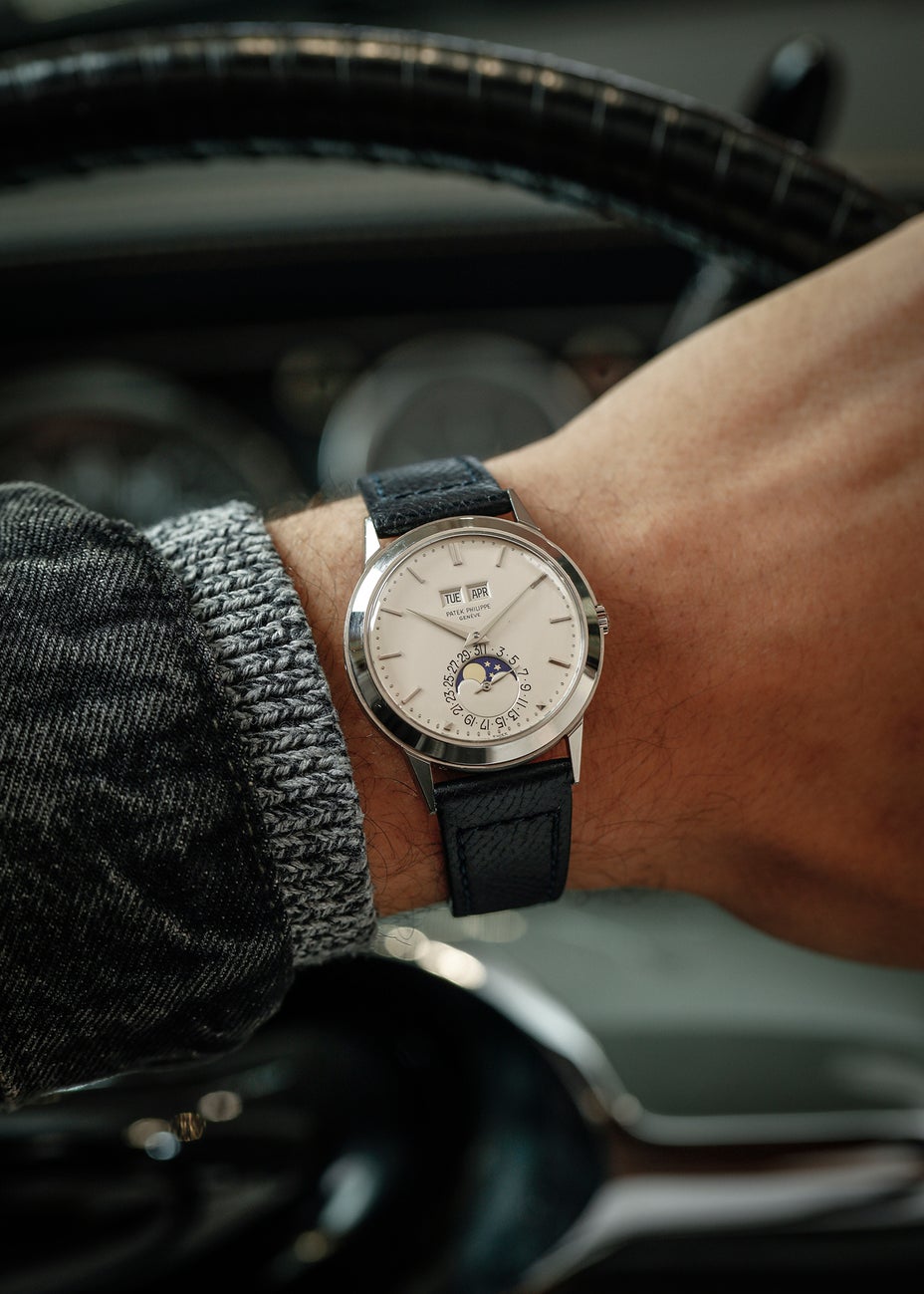
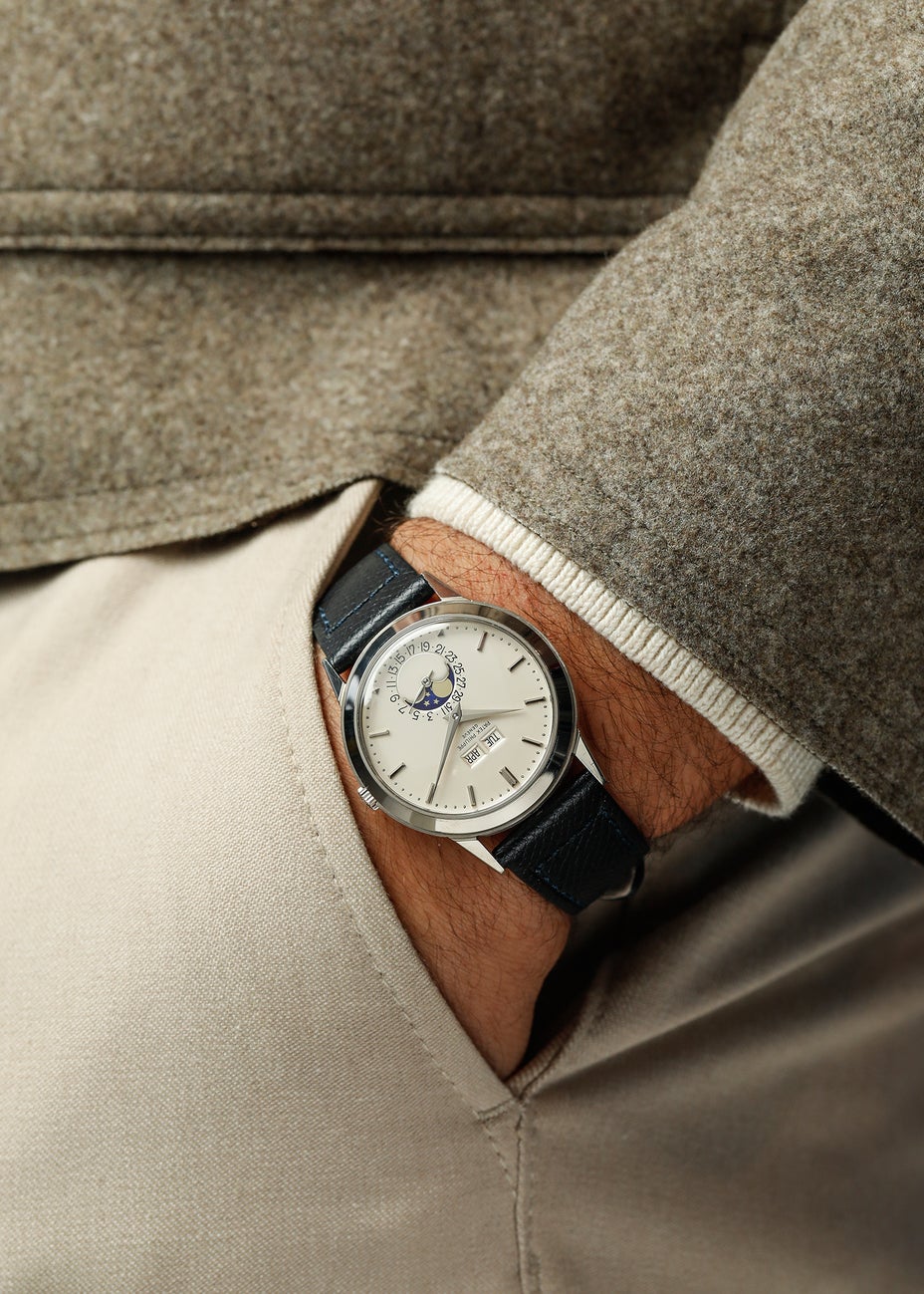
Ref. 3448
"Padellone"
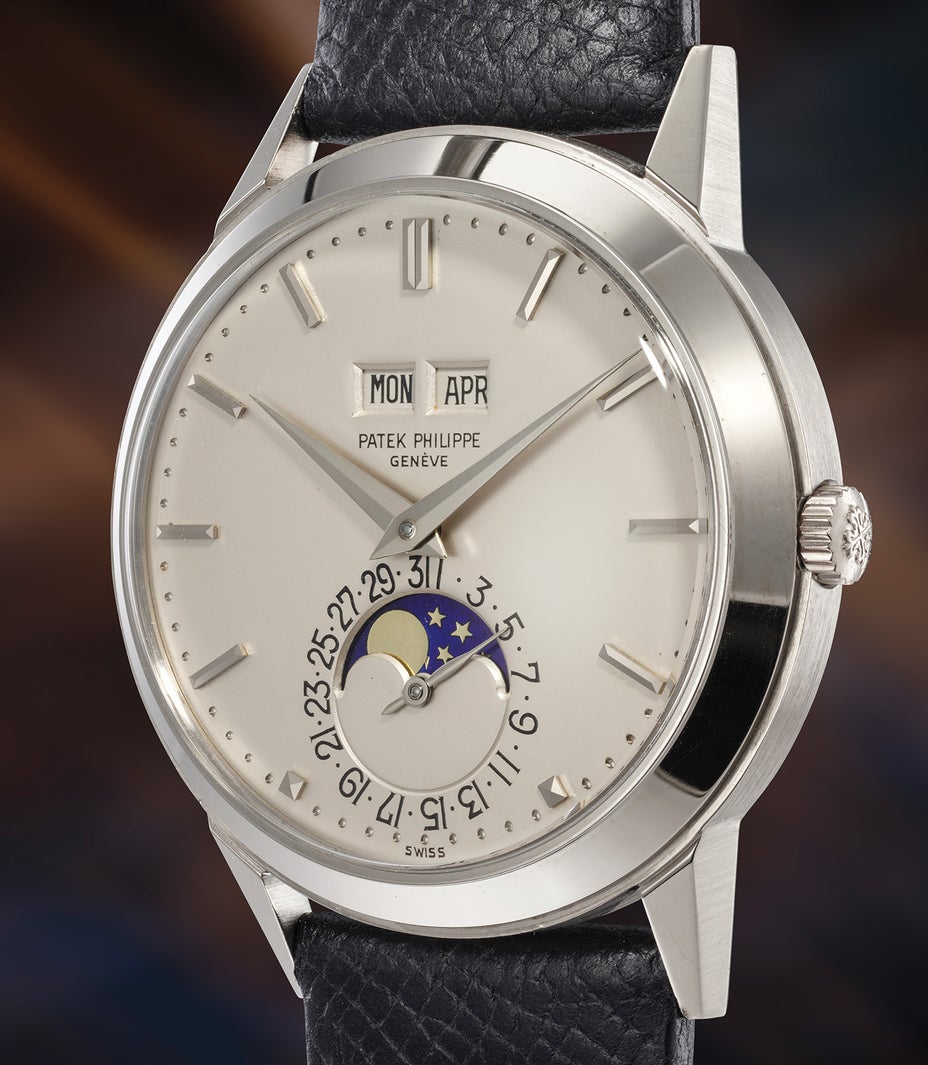
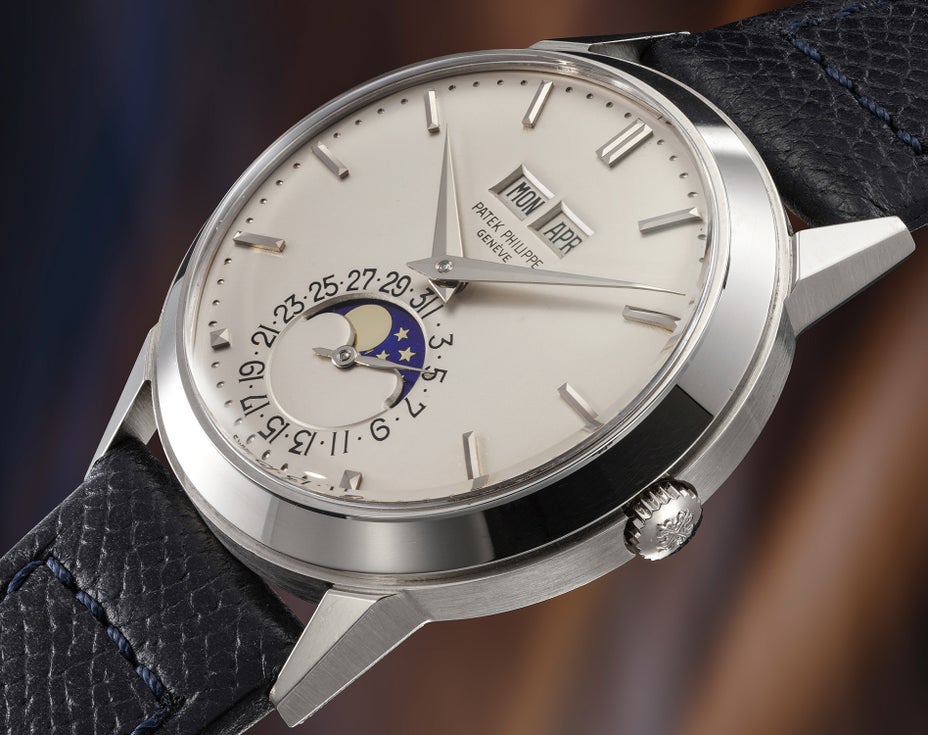
An extremely well-preserved, important and attractive white gold automatic perpetual calendar wristwatch with moonphases and "inverted date" dial
Full-Cataloguing
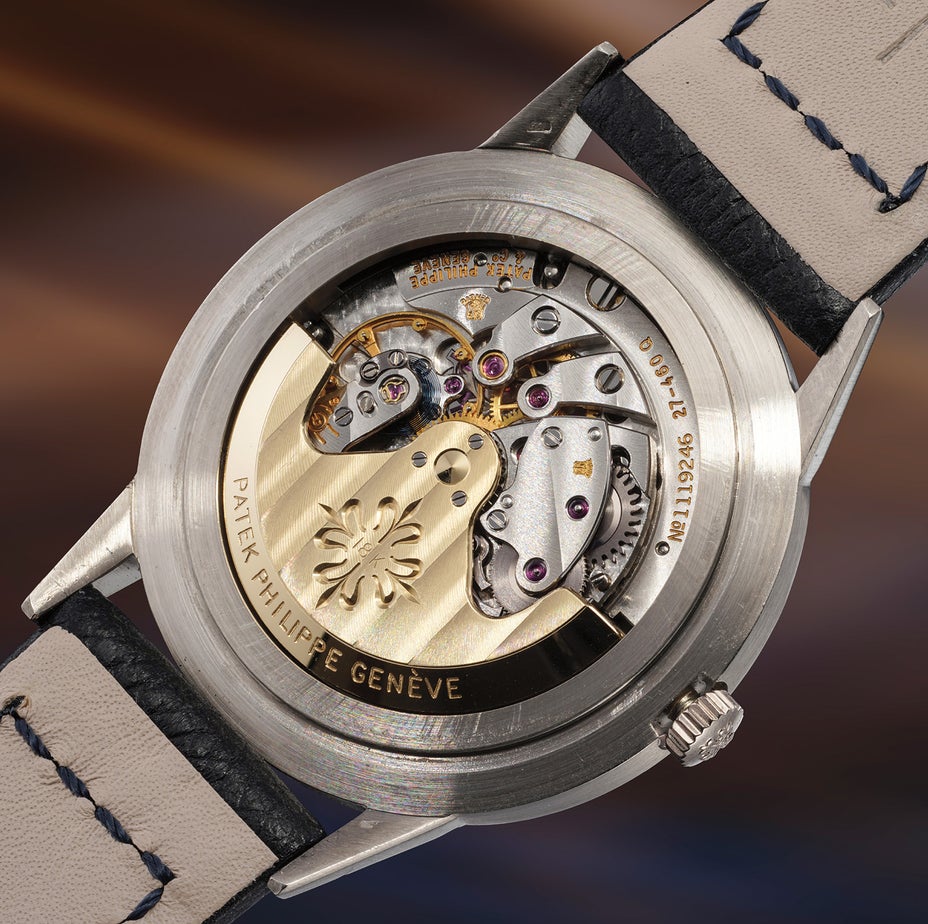
The movement beating inside this landmark model is a masterpiece of engineering with the addition of a perpetual/moonphase module to cal. 27-460, which is the final evolution of cal. 12-600 (the one powering ref. 2526), and universally considered one of the best automatic movements (if not the best automatic movement) of all times.
The model - somewhat of a “sleeper” for years - is eventually and quickly gaining the attention it deserves among the community, most likely due to its nature of somewhat “tràit d’unión” between the practicality of a modern automatic perpetual calendar and the allure rarity and collectability of a vintage Patek Philippe wristwatch. While anyone lucky enough to wear any variant of the reference should be thanking her or his good star, white gold examples are on a tier of their own, amounting to something like 10% of the total production.
The present reference 3448 merges such rarity with a most impressive overall condition. It displays beautiful finishes, from the mini bevels on the bottom side of the lugs, to the multi faceted bezel - all of these sporting sharp edges. Compounding to its remarkable state of preservation, the watch sports a rare “inverted date” dial. A four Series division is generally accepted for the dial of 3448: -1st Series: small baton minute divisions, engraved/enamelled graphics - 1962 to circa 1965; -2nd series: pearl minute divisions and small date ring (earlier ones have engraved/enameled graphics, later ones are printed - 1965 to circa 1973; -3rd Series: pearl minute divisions and large date ring, printed - 1971 to circa 1978; -4th Series: small baton minute divisions, printed - from circa 1978.
Normally, the date ring features upright graphics in both the lower and upper part of the ring (thus switching the orientation of the letters midway through it on the left and right). However, for a short time in the early 1970s, Patek Philippe experimented with an “inverted date” ring: where the lower part of the ring features upside down numerals. This detail amplifies the aesthetic balance of the design - as there is not switch in the orientation of the numbers relative to the center of the subdial - but makes it less readable - as some numbers are upside down. Thus, the company soon reverted to the “full upright” design, most likely deciding to have form following function. The result is a remarkable scarcity of “inverted date” examples - a pity given their increased aesthetic balance.
Given that the “inverted date experiment” was made at the same time as the switch form 2nd to 3rd Series, it can be found in both of them - in this instance, the large date classifies the piece as a 3rd Series dial. An intriguing detail is the lack of Sigma. Due to a change in Swiss law and regulation, all dials produced from 1971 feature this designation, which was eventually phased out approximately a decade later. The dial condition is as impressive as the case one. All graphics are crisp and strong, and the dial hardly betrays the passage of time if not for a hint of ivory/off-white patina which enormously amplifies the charme of the piece.
An incredibly careful custodian, the owner hardly wore it at all save for a few special occasions, and none at all since its last Patek Philippe service of 2021. It is important to note that the service was exclusively mechanical, without any interventions whatsoever on the case or the dial, which is the reason for its somewhat conservative cost - for a Patek Philippe service - of 4’200 EUR as testified by the fiscal receipt accompanying the watch.
Patek Philippe
Swiss | 1839Since its founding in 1839, this famous Geneva-based firm has been surprising its clientele with superbly crafted timepieces fitted with watchmaking's most prestigious complications. Traditional and conservative designs are found across Patek Philippe's watches made throughout their history — the utmost in understated elegance.
Well-known for the Graves Supercomplication — a highly complicated pocket watch that was the world’s most complicated watch for 50 years — this family-owned brand has earned a reputation of excellence around the world. Patek's complicated vintage watches hold the highest number of world records for results achieved at auction compared with any other brand. For collectors, key models include the reference 1518, the world's first serially produced perpetual calendar chronograph, and its successor, the reference 2499. Other famous models include perpetual calendars such as the ref. 1526, ref. 3448 and 3450, chronographs such as the reference 130, 530 and 1463, as well as reference 1436 and 1563 split seconds chronographs. Patek is also well-known for their classically styled, time-only "Calatrava" dress watches, and the "Nautilus," an iconic luxury sports watch first introduced in 1976 as the reference 3700 that is still in production today.