57Δ︎
Patek Philippe
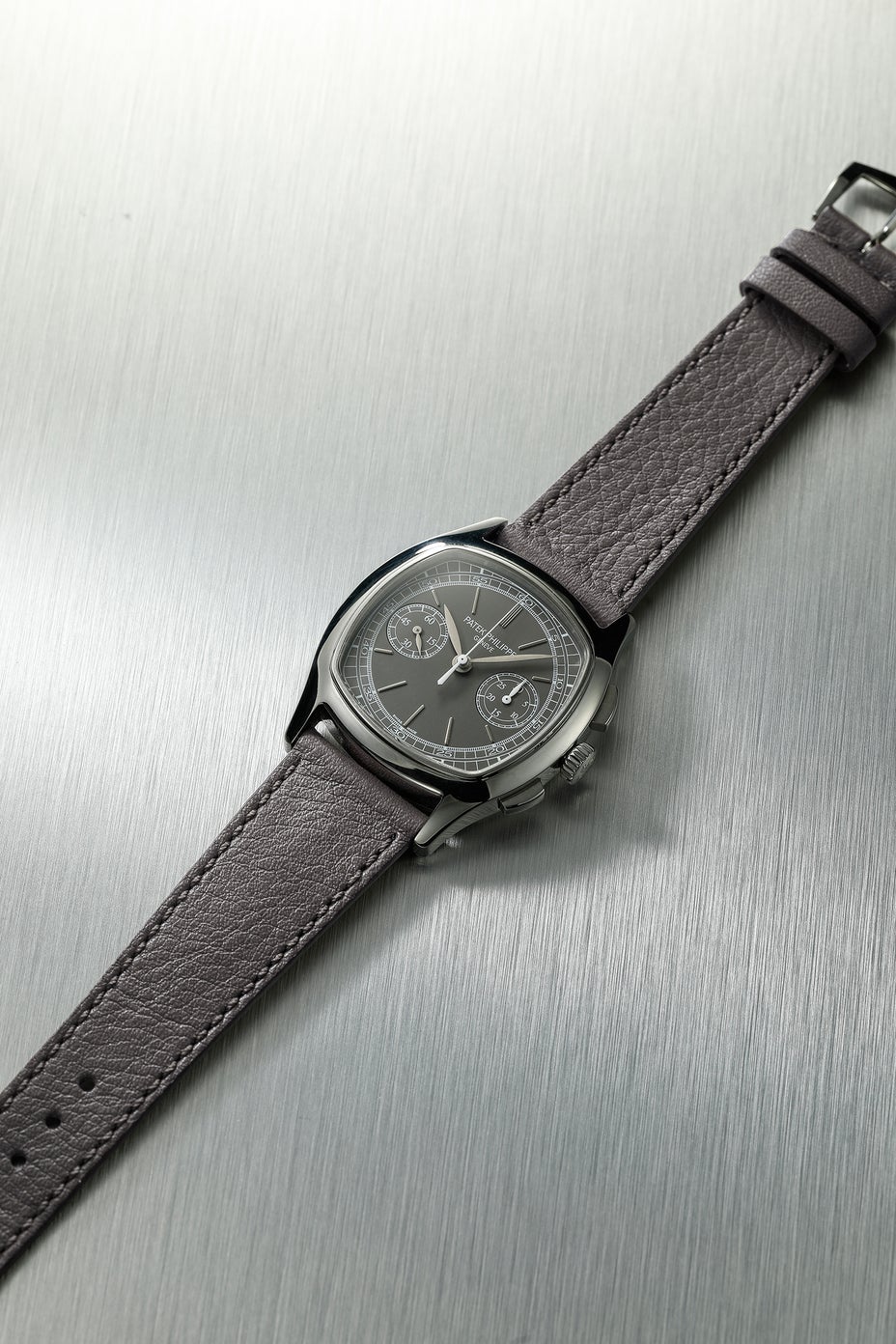
Ref. 3670A-001
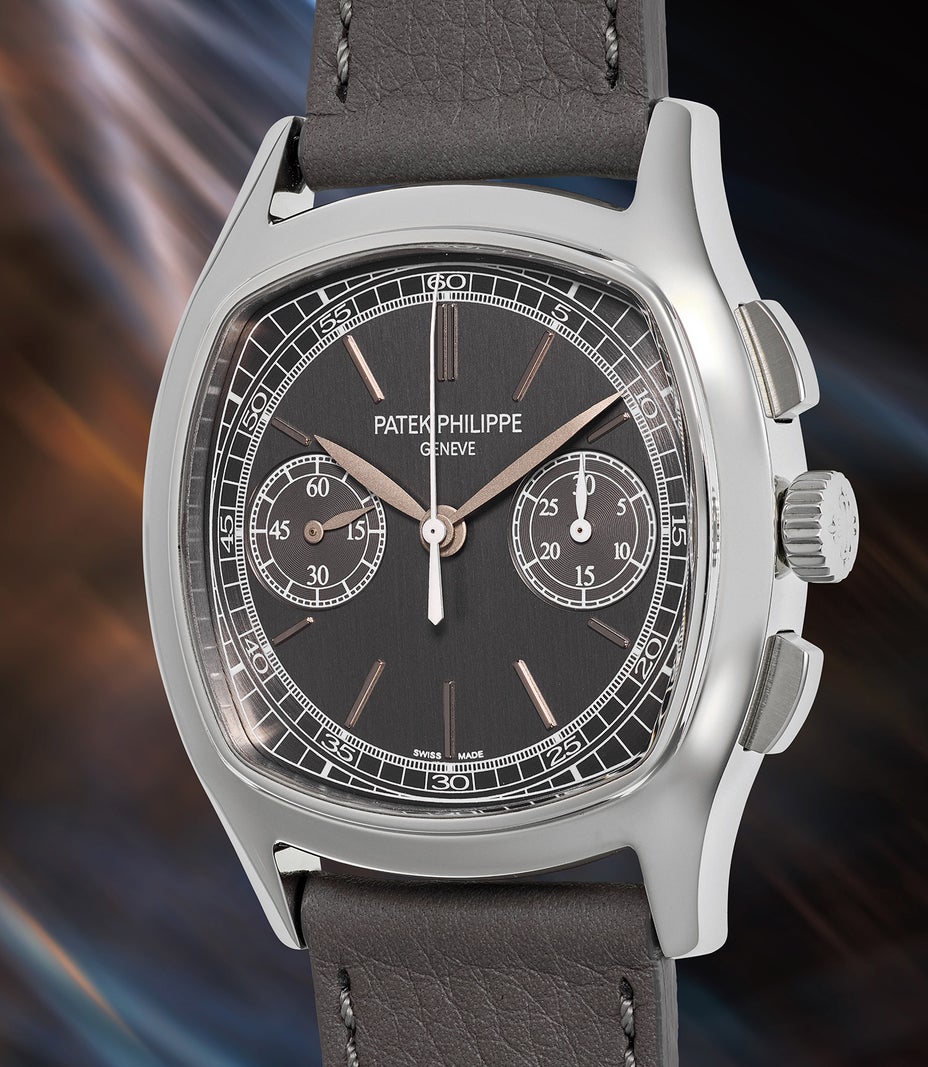
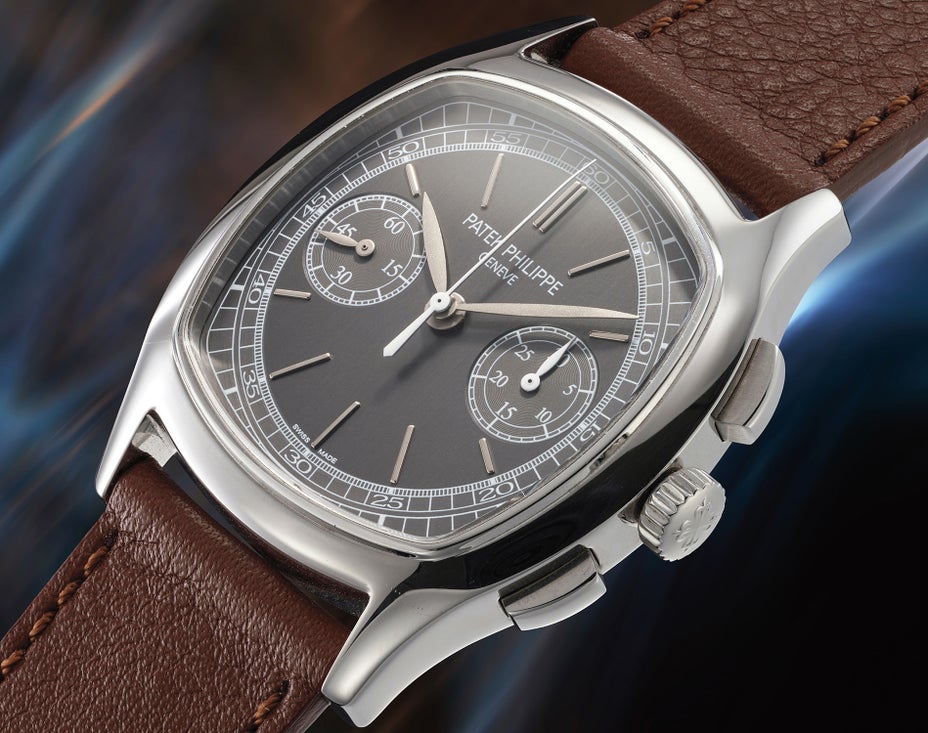
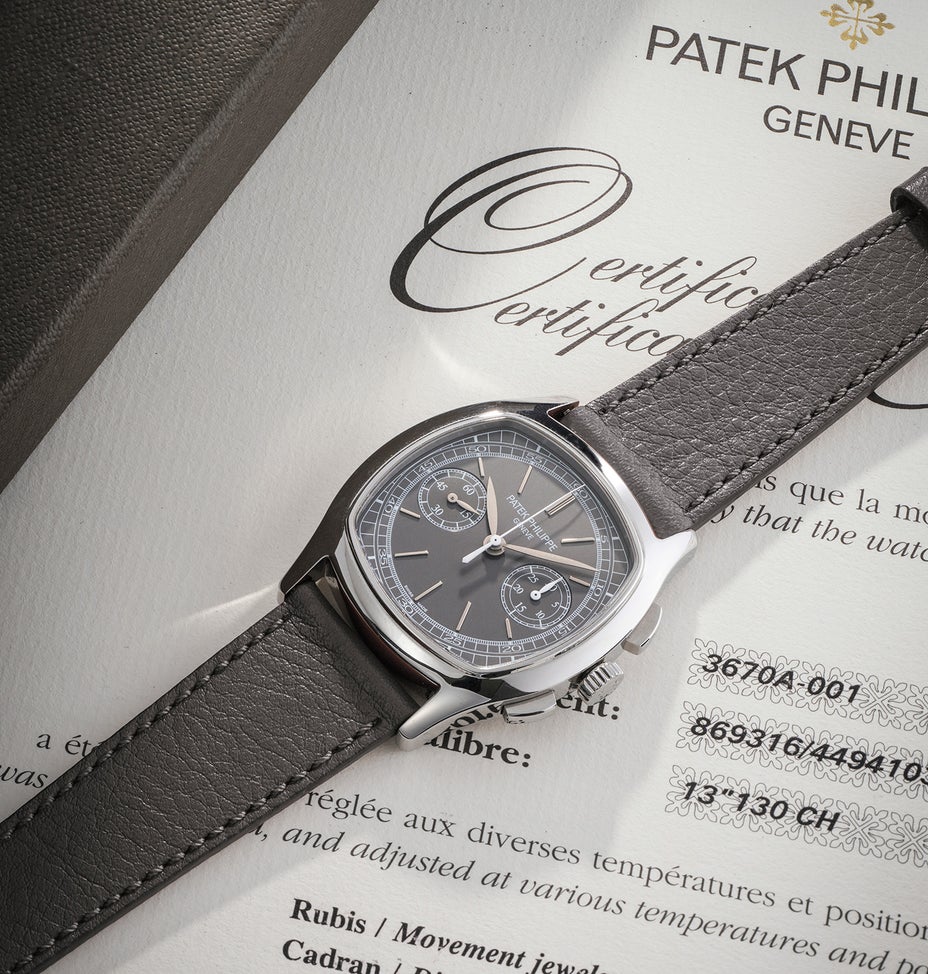
An extremely rare and highly important stainless steel limited edition chronograph cushion-shaped wristwatch, 1950s movement, and Certificate of Origin, part of a limited edition of 16 pieces
Full-Cataloguing
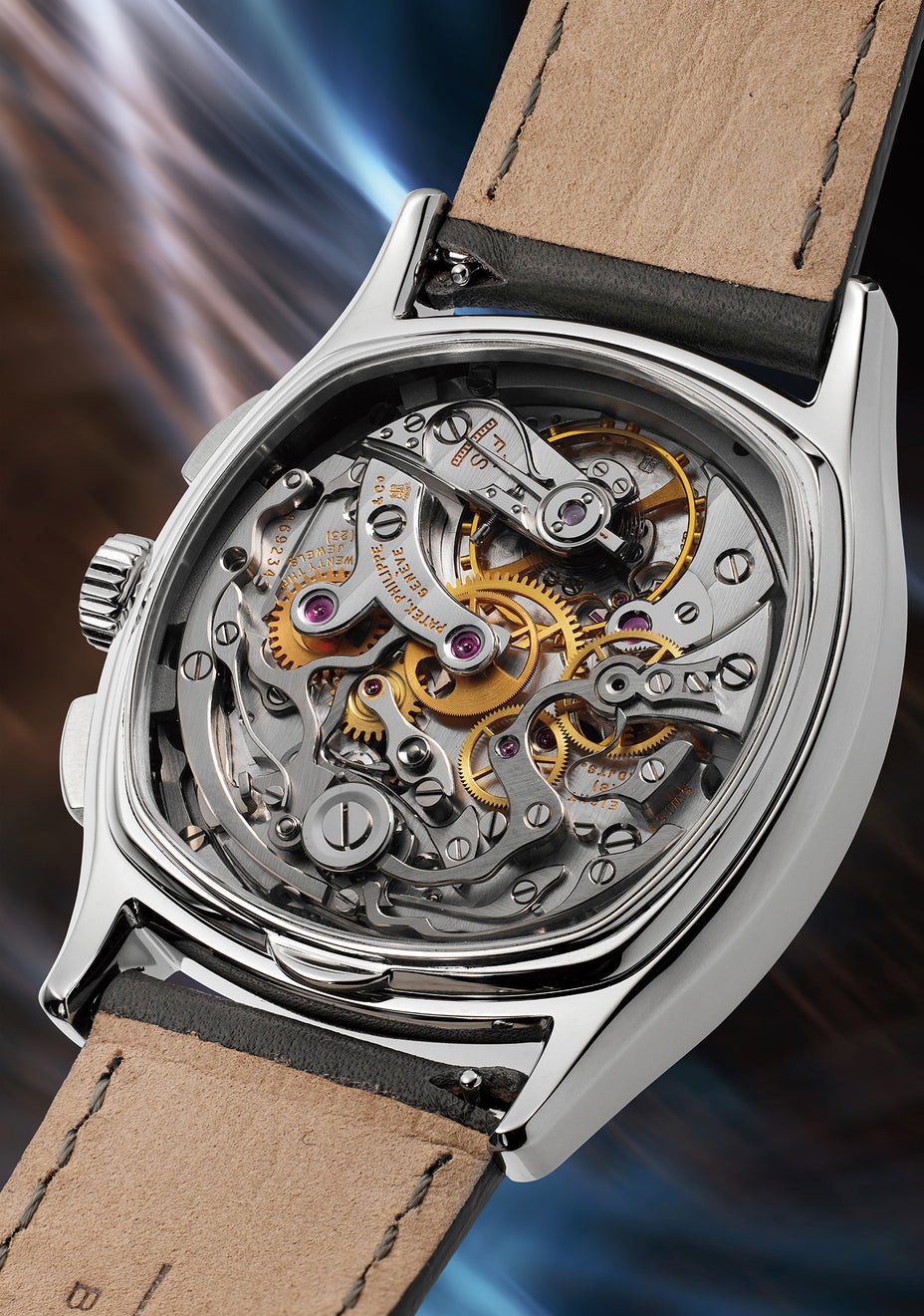
The caliber 13-130 had long been a hallmark of Patek Philippe's chronographs, gracing iconic models such as references 130 and 1463, to name a few. To commemorate this remarkable find, Patek Philippe made the bold decision to disassemble and reassemble these 16 movements, encasing them in stainless steel cushion cases reminiscent of 1920s chronographs. The discovery of these unused movements was nothing short of extraordinary, but housing them in stainless steel was an audacious and unprecedented choice for the brand. Apart from the split-seconds chronograph reference 5950 or the ultra-rare perpetual calendar split-seconds reference 5004A, Patek Philippe seldom used stainless steel for their high-end timepieces, reserving the material for charity events or unique pieces.
The creation of a limited series stainless steel chronograph with an original vintage movement was a daring move, igniting immediate excitement among collectors. Each watch was adorned with a grey dial, lending a modern and sporty edge to its design.
Launched in 2011, reference 3670 was an “application” watch, meaning only Patek Philippe’s most esteemed, loyal clients were given the opportunity to acquire one. With its striking aesthetics, extreme rarity of only 16 examples made, and immense collectability, this timepiece unquestionably ranks among the most significant in Patek Philippe’s modern legacy.
Patek Philippe
Swiss | 1839Since its founding in 1839, this famous Geneva-based firm has been surprising its clientele with superbly crafted timepieces fitted with watchmaking's most prestigious complications. Traditional and conservative designs are found across Patek Philippe's watches made throughout their history — the utmost in understated elegance.
Well-known for the Graves Supercomplication — a highly complicated pocket watch that was the world’s most complicated watch for 50 years — this family-owned brand has earned a reputation of excellence around the world. Patek's complicated vintage watches hold the highest number of world records for results achieved at auction compared with any other brand. For collectors, key models include the reference 1518, the world's first serially produced perpetual calendar chronograph, and its successor, the reference 2499. Other famous models include perpetual calendars such as the ref. 1526, ref. 3448 and 3450, chronographs such as the reference 130, 530 and 1463, as well as reference 1436 and 1563 split seconds chronographs. Patek is also well-known for their classically styled, time-only "Calatrava" dress watches, and the "Nautilus," an iconic luxury sports watch first introduced in 1976 as the reference 3700 that is still in production today.