213
Patek Philippe
Ref. 2499
"First Series"
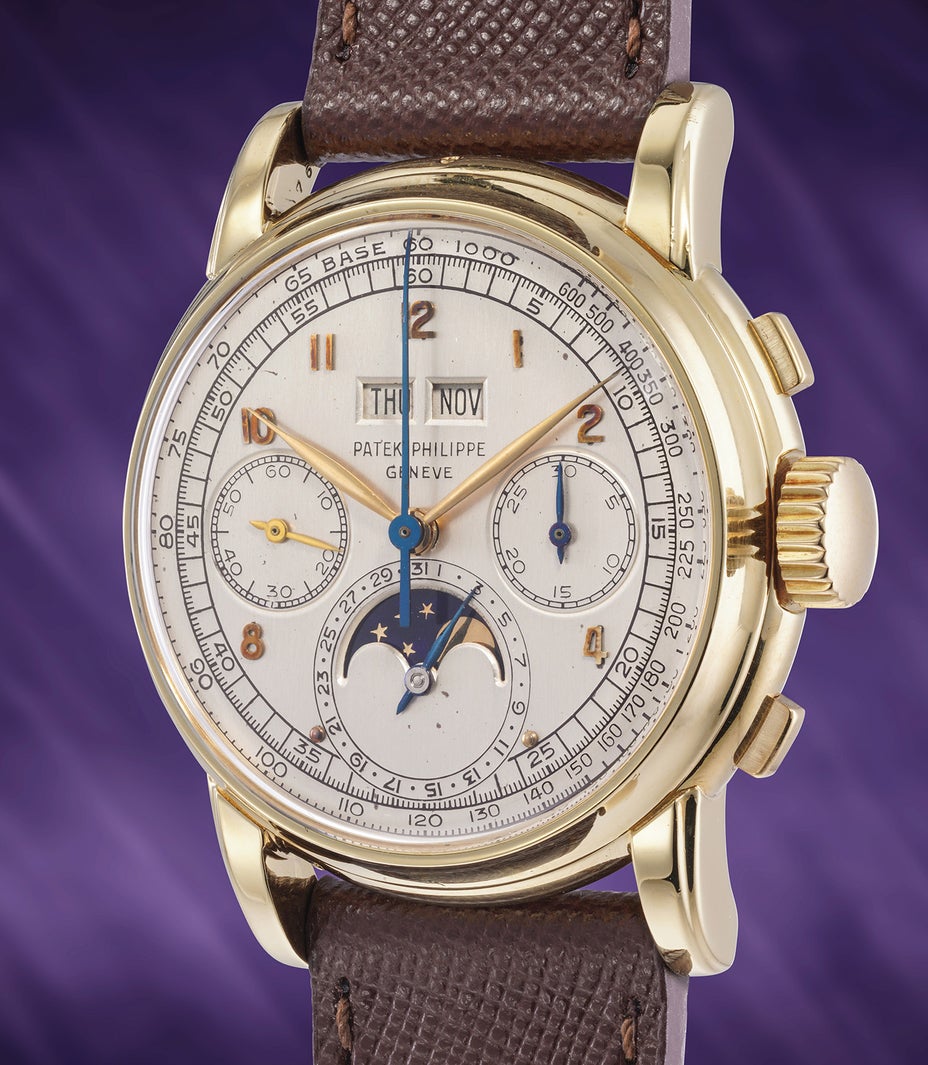
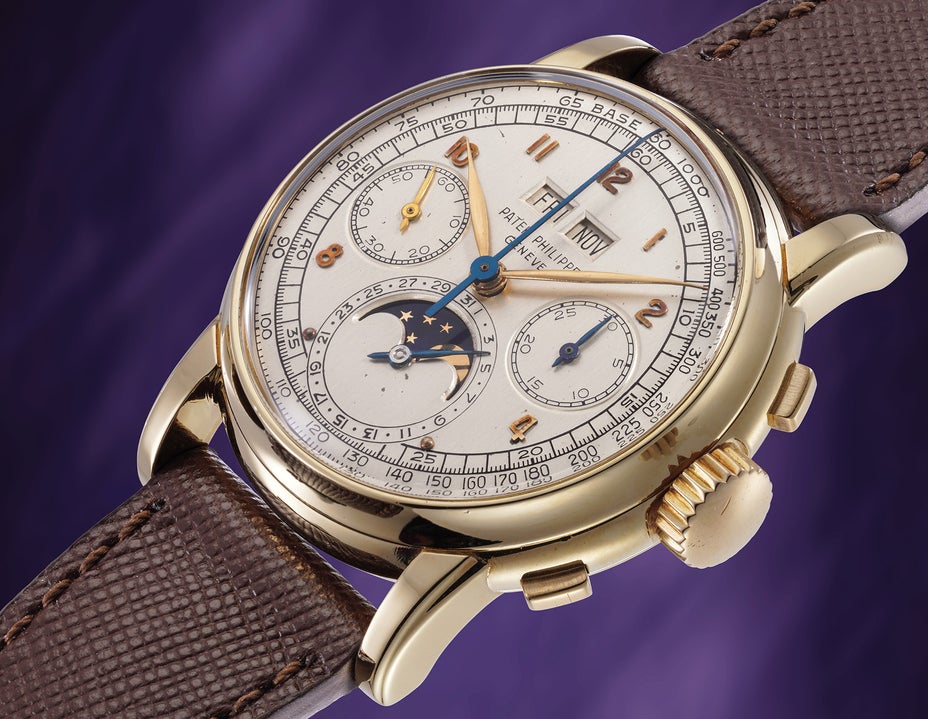
An extremely scarce, highly coveted and very important yellow gold First Series perpetual calendar chronograph wristwatch with moonphases and Wenger case
Full-Cataloguing
Praised by many and yet rarely seen by most, the Patek Philippe ref. 2499 is with no doubt an absolute treasure in the rich heritage of the firm. To many collectors, it is perhaps one of the most impressive wristwatch models ever made by any manufacturer. Regarded as the most prestigious manufacturer of timepieces of the utmost quality, elegance and importance, Patek Philippe has garnered a loyal following of collectors through their technical mastery and great horological innovations. However, it was one of the firm’s most prized innovations that have secured their position as an all-time great: the perpetual calendar chronograph.
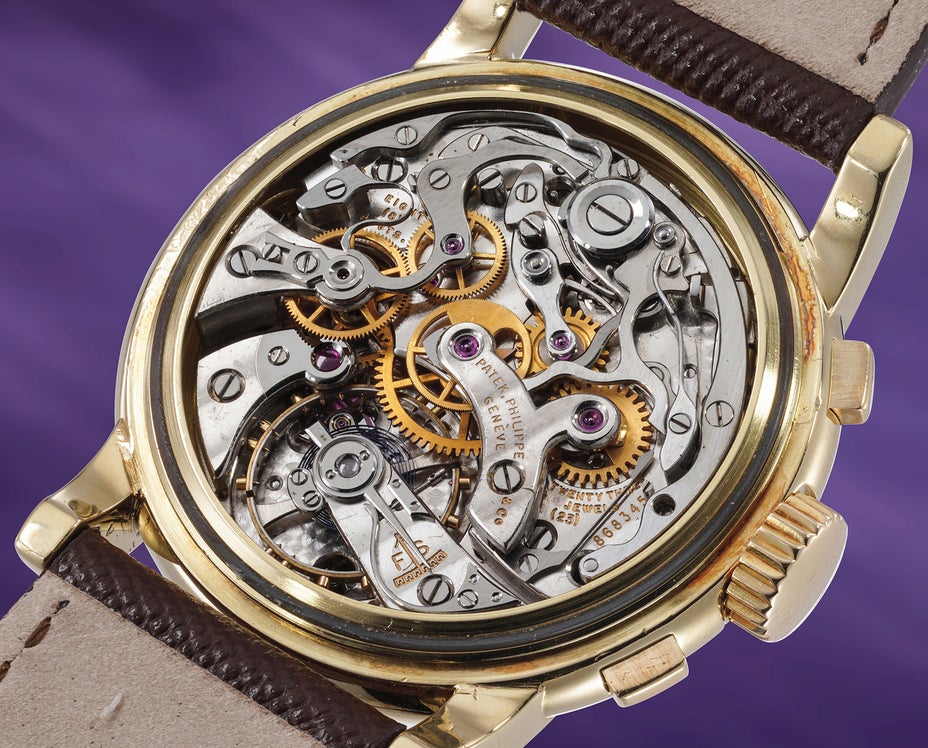
Being the first ever manufacture to release the world’s first serially produced perpetual calendar chronograph wristwatch in 1941 via the ref. 1518, it paved a new path of what would come next. Taking over the important reign in 1951, Patek Philippe released the coveted ref. 2499, which was still the only wristwatch with such complication in any watch catalogue at the time. Utilizing the same movement cal. 13-130 (Valjoux VZ 23 base) as the ref. 1518, the ref. 2499 boasted a completely new and refreshed case design. While the ref. 1518 features a rather traditional Calatrava inspired case with thin and elegant elongated lugs reminiscent of the stylistic period of the 1940s, collectors believe that the ref. 2499 is the perfect interpretation of a timeless appeal.
With excellent proportions and perfect symmetry, the ref. 2499 features an elegant bassine-style case with distinctive fluted lugs. Early examples of the reference featured a tachymeter scale, applied gold Arabic numerals and square chronographic pushers that are similar to the ref. 1518. Discontinued in 1985 with a production spanning 34 years, only 349 examples of the ref. 2499 left the manufacturer across all metals and series resulting in an average of 9 pieces made annually.
The Patek Philippe ref. 2499 across four series:
First series (1951 – 1960): Square chronograph pushers, applied Arabic or baton numerals and tachometer scale. Furthermore divisible according to dial evolution as:
- bordered date ring, Arabic numerals - same design as ref. 1518. The present watch, representing the earliest design iteration of the model.
- “floating” date ring, Arabic numerals
- “floating” date ring, Baton numerals
- Second series (1955 – 1964): Round chronograph buttons, either applied Baton or applied Arabic numerals, tachometer scale, “floating” date ring
- Third series (1960 – 1978): Round chronograph buttons, applied baton numerals, outer seconds divisions, "floating" date ring, no tachometer scale.
- Fourth series (1978 – 1985): Round chronograph buttons, applied baton numerals, “floating” date ring, outer seconds divisions (shorter than Third Series), no tachometer scale, sapphire crystal commanding a thicker bezel.
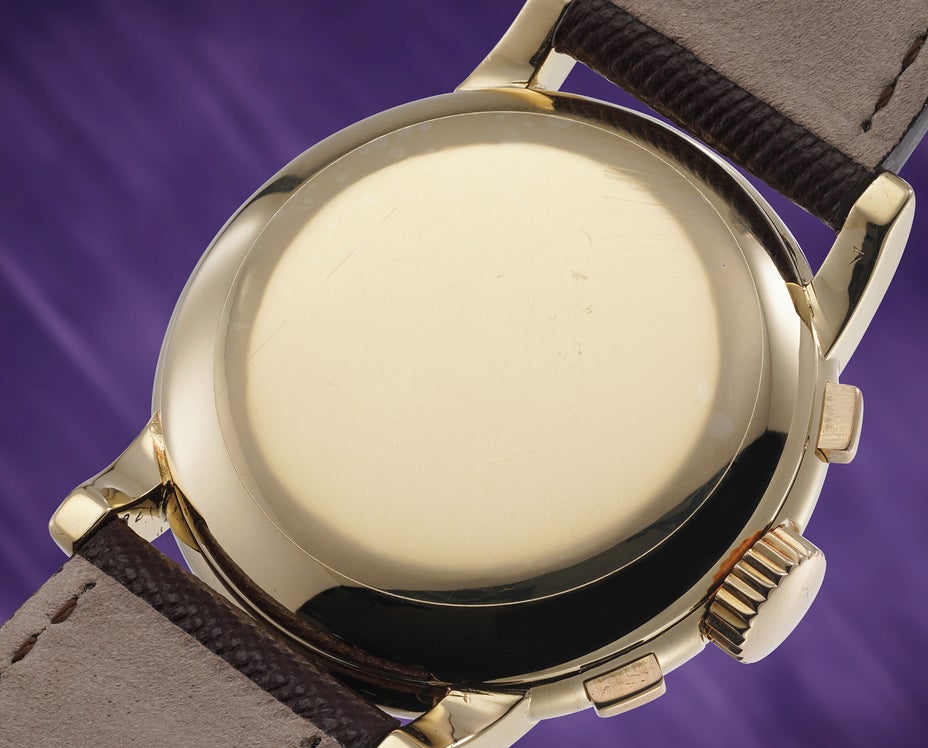
Extremely scarce, it is estimated that less than 50 pieces throughout the entire production were examples from the First Series across all case metals. Bearing traits that are unique to the specific series transitioning over from the ref. 1518, the first series can also be subdivided into two separate generations with cases made by two different case makers, Vichet (Key no. 9) and the Wenger (Key no. 1), this watch being an example of the latter.
- Vichet Case: Identifiable via Key no. 9 inside the caseback. 36.2mm diameter. Flat caseback and elongated lugs. Vichet cases are found nearly exclusively within the First Series - with a couple of exception from the Second Series.
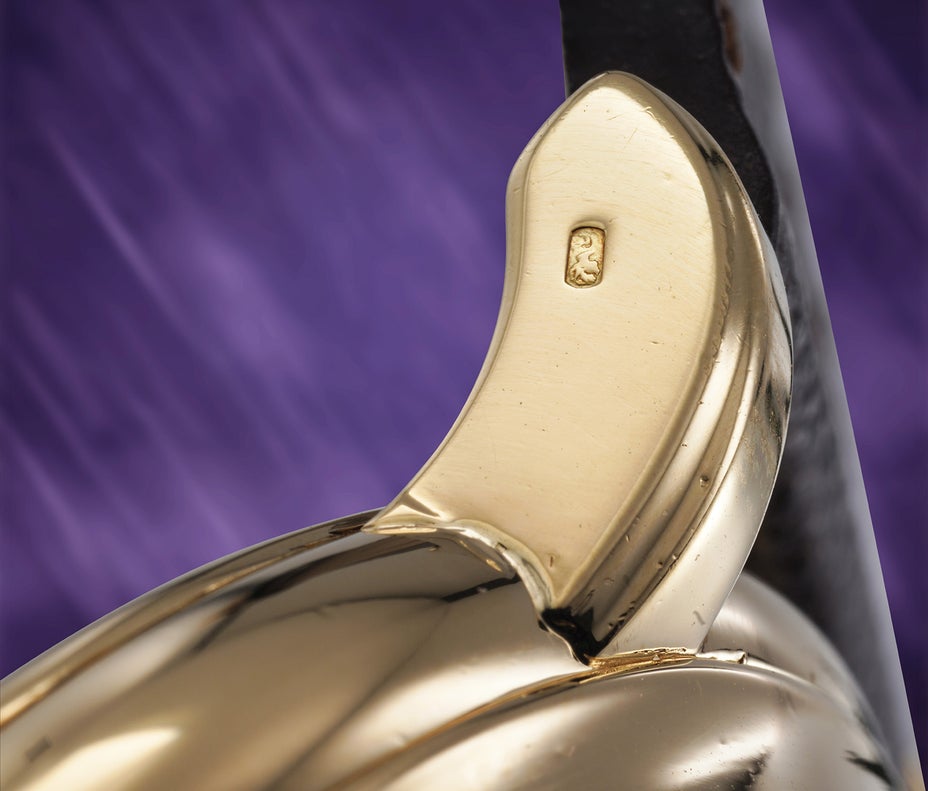
- Wenger Case: Identifiable via Key no. 1 inside the caseback. 37.5mm diameter. Domed caseback with slightly shorter lugs. The larger diameter and shorter lugs grant this variation a markedly more modern look, so much so that Wenger-style cases will be employed until the end of the production of the model virtually unchanged (save for a bezel adjustment in the Fourth Series).
The present example Patek Philippe ref. 2499 from the First Series in yellow gold manufactured in a Wenger-made 37.5mm diameter case with bordered date Arabic dial is truly a rare and momentous occasion for vintage connoisseurs and collectors of the highest caliber to have the chance to acquire such an example. Hidden and tucked away in the same collection for nearly 40 years, its reappearance on the market marks a momentous occasion for collectors of fine and rare timepieces.
Patek Philippe
Swiss | 1839Since its founding in 1839, this famous Geneva-based firm has been surprising its clientele with superbly crafted timepieces fitted with watchmaking's most prestigious complications. Traditional and conservative designs are found across Patek Philippe's watches made throughout their history — the utmost in understated elegance.
Well-known for the Graves Supercomplication — a highly complicated pocket watch that was the world’s most complicated watch for 50 years — this family-owned brand has earned a reputation of excellence around the world. Patek's complicated vintage watches hold the highest number of world records for results achieved at auction compared with any other brand. For collectors, key models include the reference 1518, the world's first serially produced perpetual calendar chronograph, and its successor, the reference 2499. Other famous models include perpetual calendars such as the ref. 1526, ref. 3448 and 3450, chronographs such as the reference 130, 530 and 1463, as well as reference 1436 and 1563 split seconds chronographs. Patek is also well-known for their classically styled, time-only "Calatrava" dress watches, and the "Nautilus," an iconic luxury sports watch first introduced in 1976 as the reference 3700 that is still in production today.