1050Σ︎
Patek Philippe
Ref. 5050P
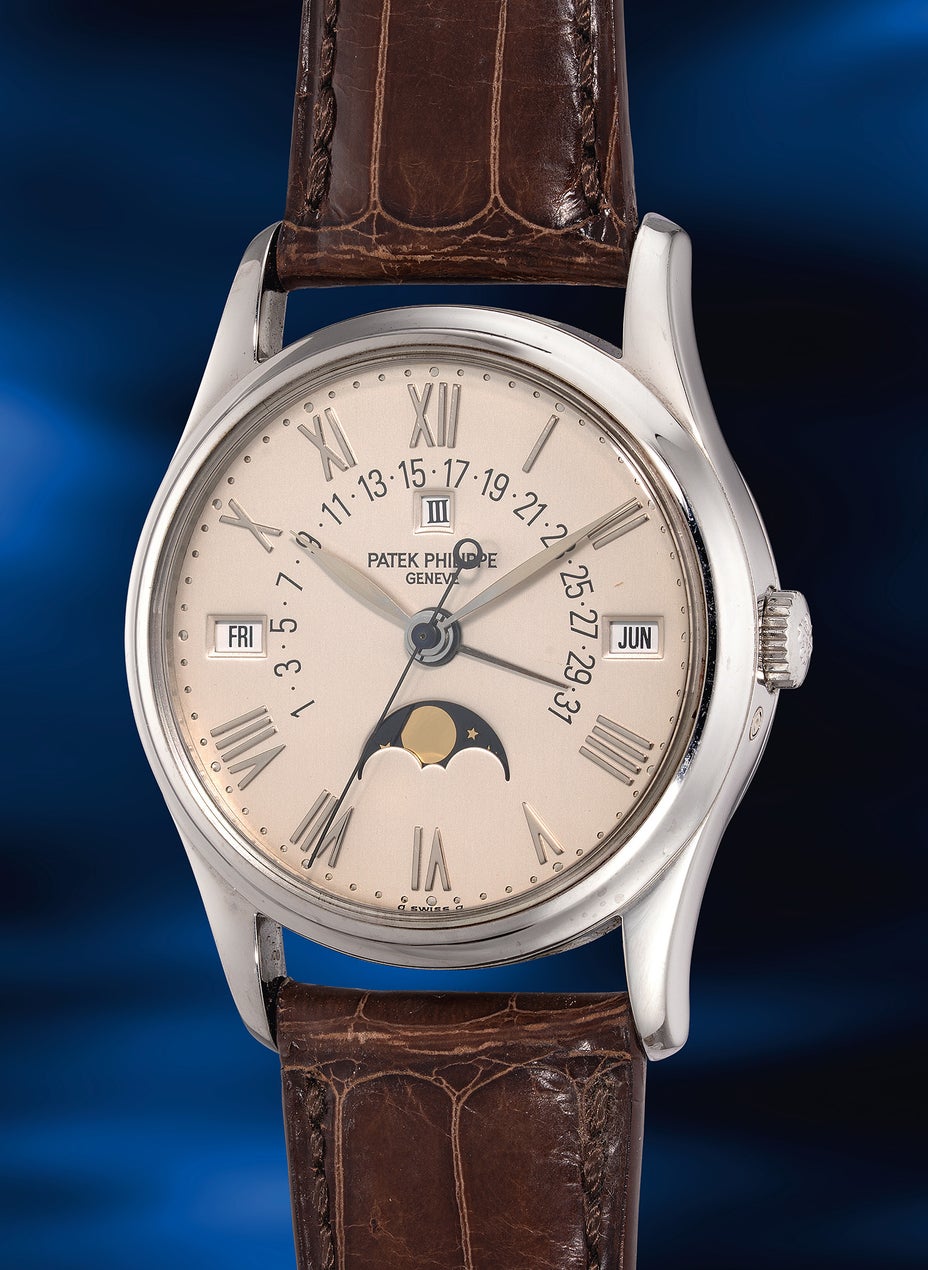
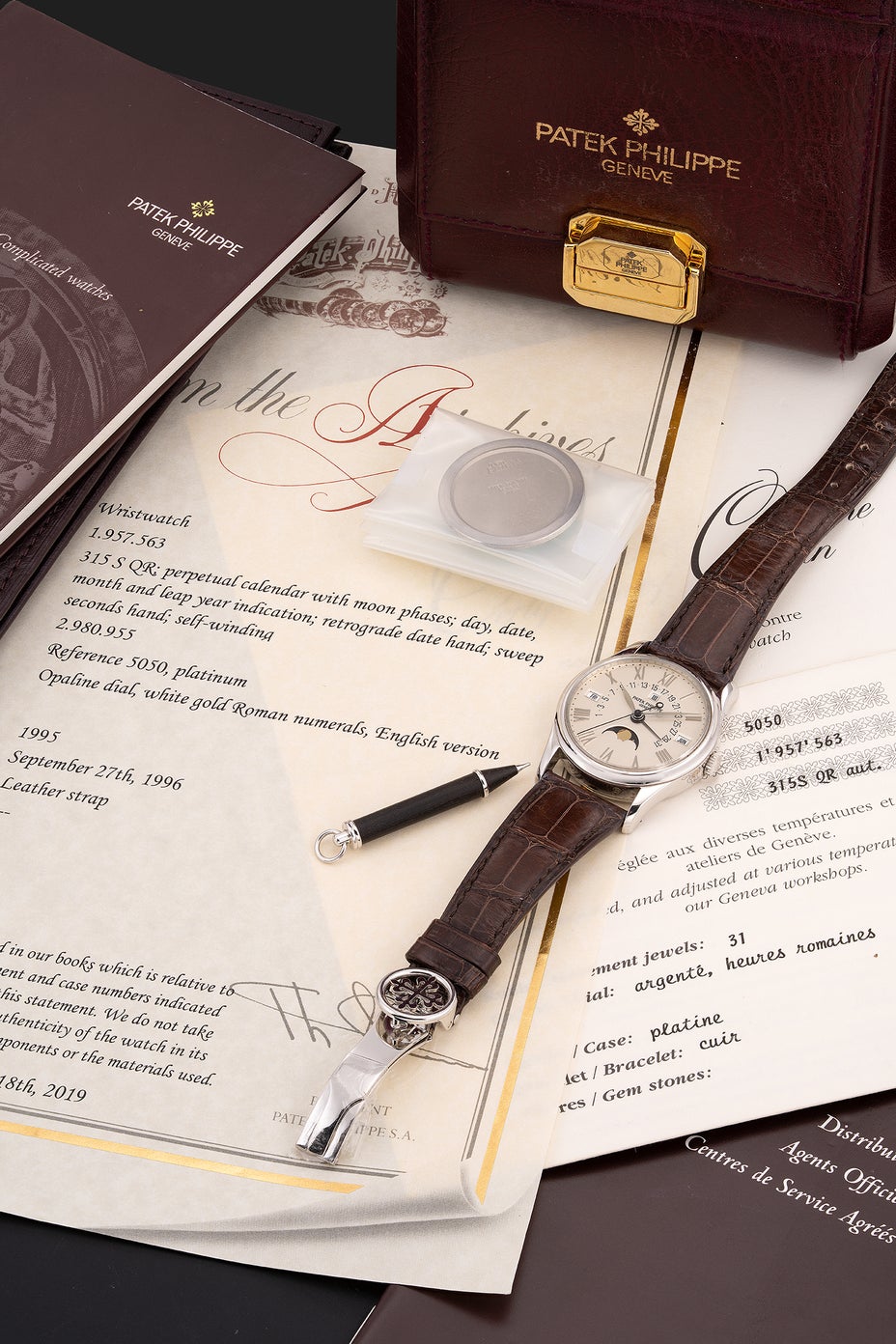
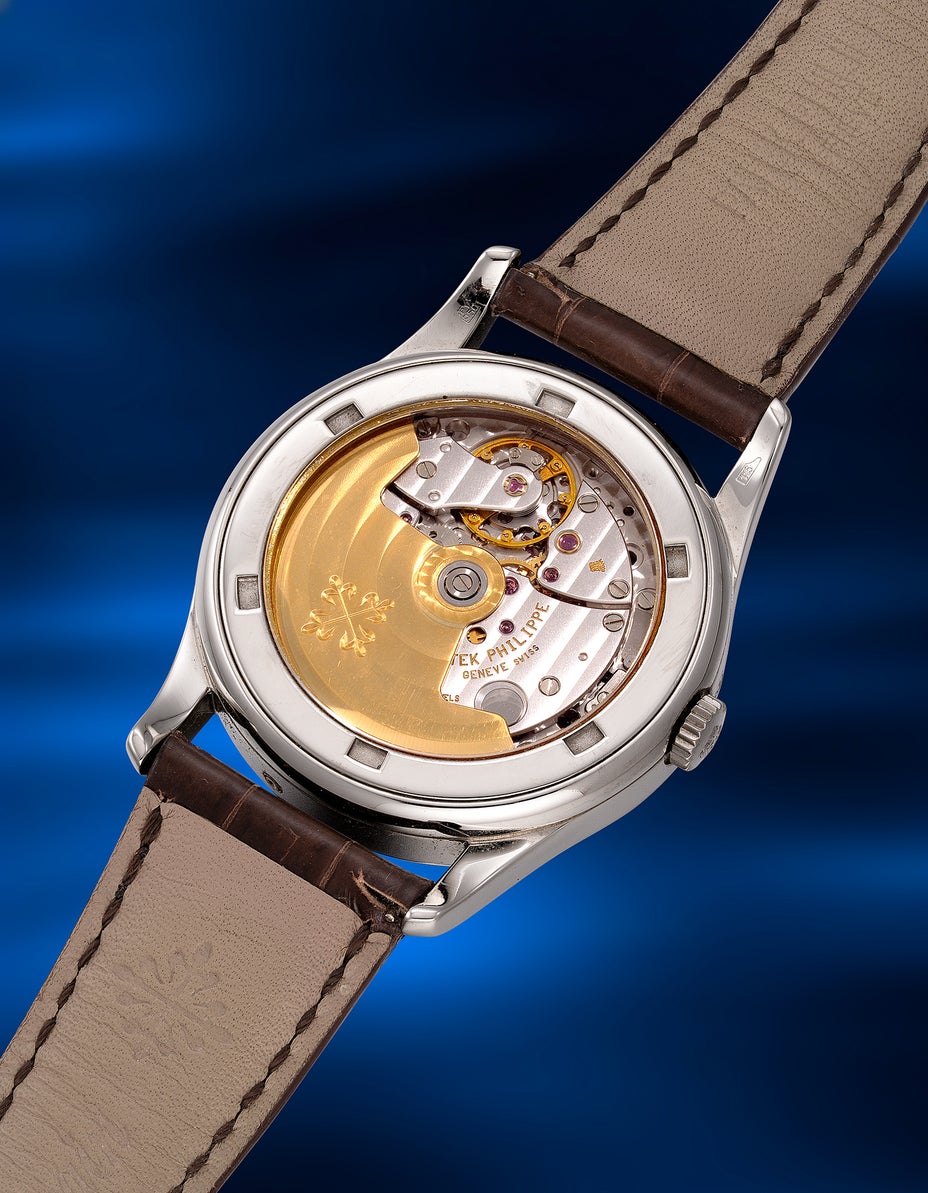
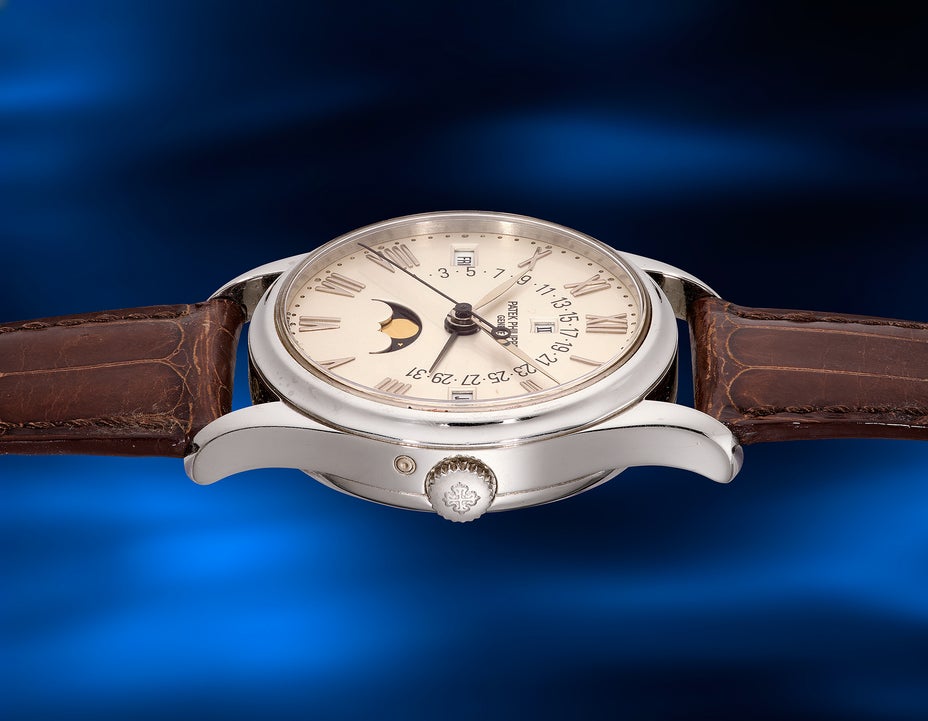
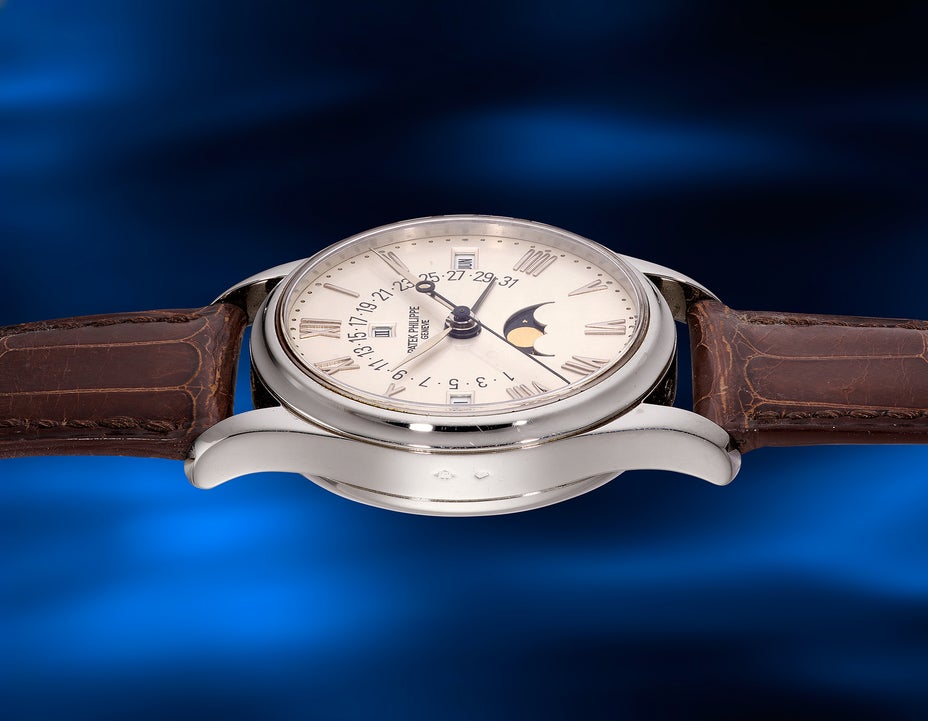
A very fine and attractive platinum perpetual calendar wristwatch with center seconds, moon phases, retrograde date, leap year indication, applied Roman numerals, additional solid caseback, setting pin, Certificate of Origin and presentation box
Full-Cataloguing
Platinum examples are exceptionally scarce, with research suggesting only about 150 pieces were produced across three series during its nine‑year production. The first series featured slim printed Roman numerals; the second, introduced in 1995, adopted applied baton indexes and the “Automatic” inscription; while the third (such as the present watch) bears applied Roman numerals and omits the “Automatic” signature. Notably, only a handful of platinum examples of the ref. 5050 with this exact dial configuration have been identified to date.
The present watch, offered in excellent overall condition, is accompanied by its full set of accessories and a Patek Philippe Extract from the Archives confirming its 1995 year of manufacture. With its rarity, refinement, and understated elegance, it stands as one of the most desirable and understated iterations of this historically significant reference.
Patek Philippe
Swiss | 1839Since its founding in 1839, this famous Geneva-based firm has been surprising its clientele with superbly crafted timepieces fitted with watchmaking's most prestigious complications. Traditional and conservative designs are found across Patek Philippe's watches made throughout their history — the utmost in understated elegance.
Well-known for the Graves Supercomplication — a highly complicated pocket watch that was the world’s most complicated watch for 50 years — this family-owned brand has earned a reputation of excellence around the world. Patek's complicated vintage watches hold the highest number of world records for results achieved at auction compared with any other brand. For collectors, key models include the reference 1518, the world's first serially produced perpetual calendar chronograph, and its successor, the reference 2499. Other famous models include perpetual calendars such as the ref. 1526, ref. 3448 and 3450, chronographs such as the reference 130, 530 and 1463, as well as reference 1436 and 1563 split seconds chronographs. Patek is also well-known for their classically styled, time-only "Calatrava" dress watches, and the "Nautilus," an iconic luxury sports watch first introduced in 1976 as the reference 3700 that is still in production today.