


27
Patek Philippe
"Tiffany & Co., Paul Starrett"
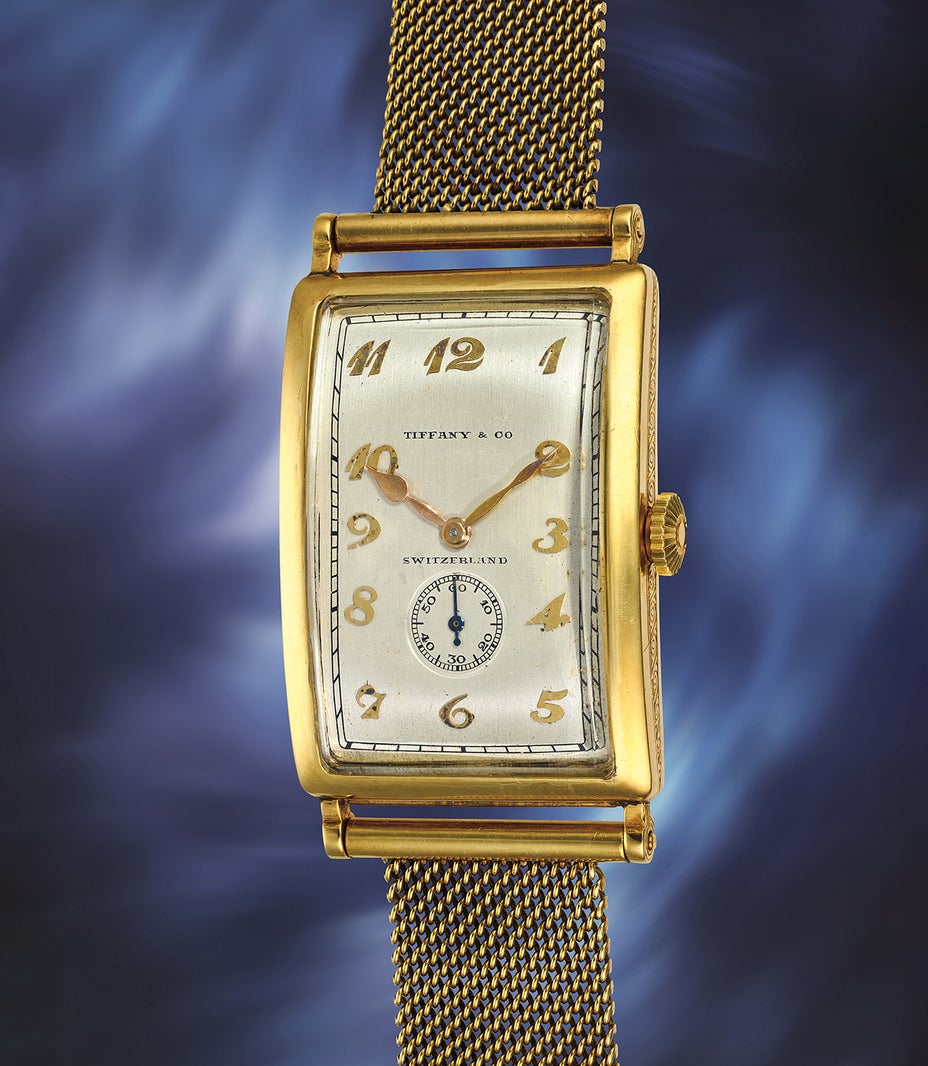
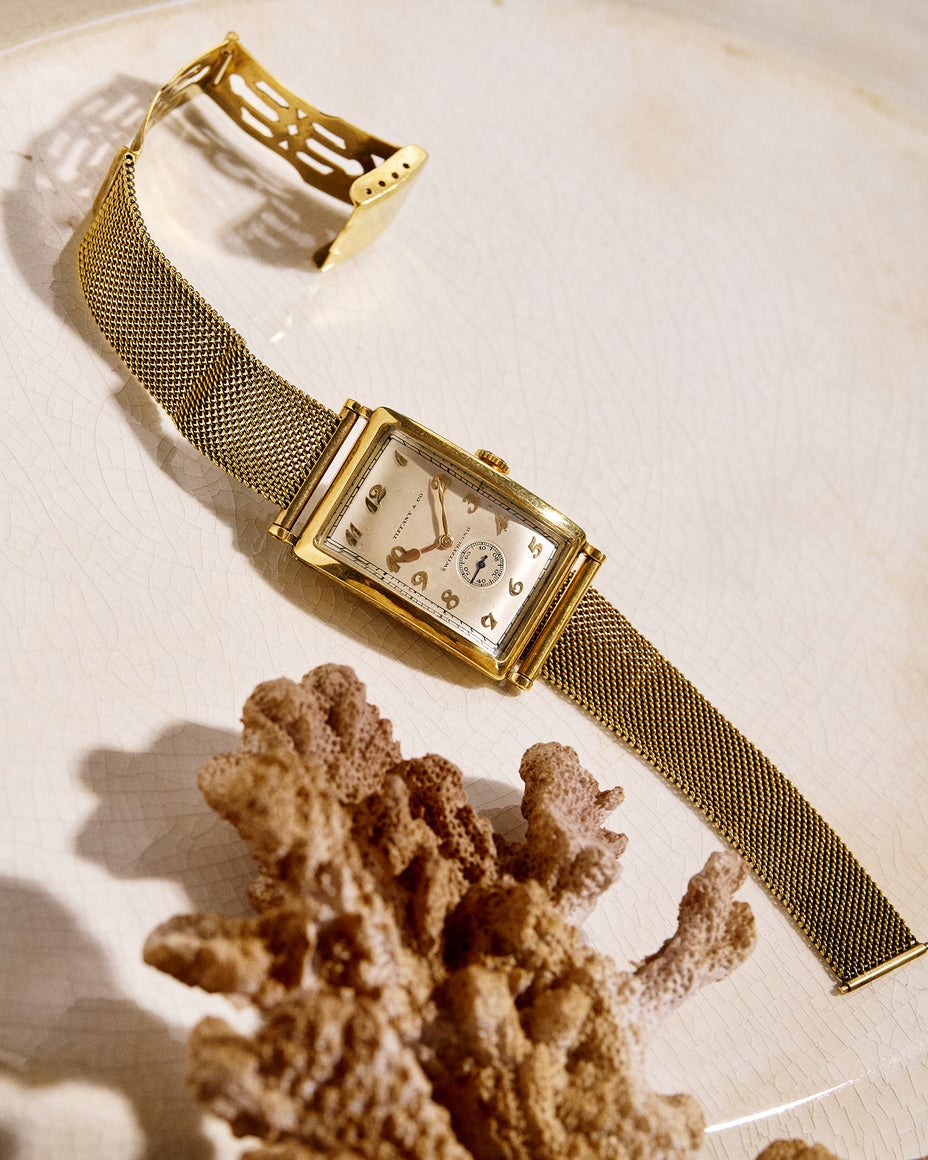
A historically important, extremely well-preserved, and oversized yellow gold rectangular wristwatch with engraved caseband and Breguet numerals, retailed by Tiffany & Co. and previously owned by Paul Starrett, builder of the Empire State Building
Full-Cataloguing
• Produced by Patek Philippe in 1929, sold in 1930, and retailed by Tiffany & Co.
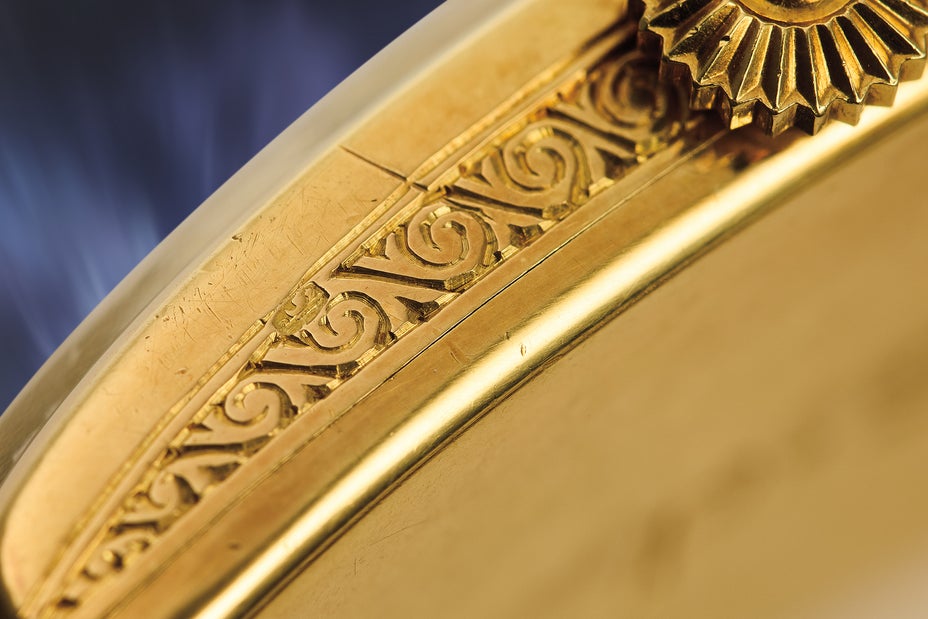
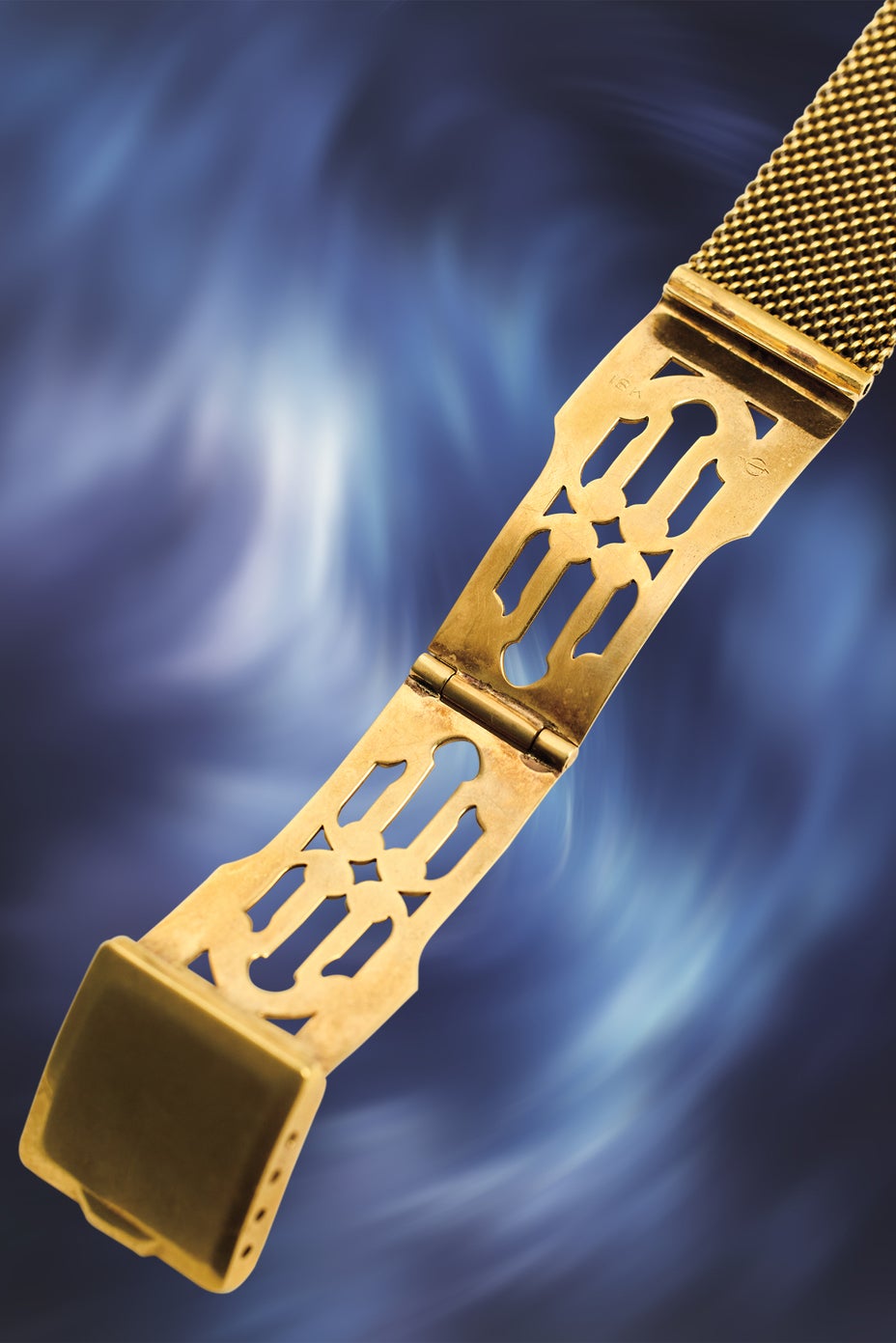
• Engraved caseband with sharp hallmarks and inventory numbers still present
• High grade caliber 10’’’ with wolf’s tooth winding gear
• Consigned by grandson of the original owner, builder of the Empire State Building, Flatiron Building, Penn Station, The Plaza Hotel, and The Lincoln Memorial
The partnership between Patek Philippe and Tiffany & Co. stretches all the way back to 1851, when the American jeweler began selling the Swiss manufacture’s watches, and continues to this day.
Particularly between 1900 and 1930, Tiffany & Co. helped Patek Philippe forge crucial ties with prominent American collectors. The Tiffany flagship boutique, which opened in 1905 on Fifth Avenue, introduced some notable enthusiasts to the Swiss brand, including Henry Graves Jr., an esteemed figure within New York’s high society. Titans of industry flocked to Tiffany & Co., and were introduced to Patek’s offerings as physical manifestations of wealth and power.
One of these titans was Paul Starrett, a master builder and trained architect who is best known for his association with the Empire State Building, among other notable mid-century structures. He, along with his identical twin brother William, comprised Starrett Brothers and Eken, the contractors responsible for physically building the Empire State Building, one of the most distinguishable and important edifices in New York, as well as an internationally recognized monument to human achievement. The Empire State Building was constructed in record time, with a record four and a half stories built per week. Paul Starrett was also among those responsible for the construction of the Flatiron Building, Penn Station, the Plaza Hotel, the Biltmore Hotel, and the Lincoln Memorial.
“I was to build the world’s tallest – not only the tallest one but one which expresses most completely and honestly the skyscraper idea, whose beginnings I had seen fifty years earlier…The Empire State Building is truly an epitome of all that has preceded…all the spirit, the imaginative and technical daring, and even some of the frenzy, that animated the decade of which it was the culmination.”
- Paul Starrett, in his autobiography Changing the Skyline
As the contractors in charge of construction, they oversaw the immense workforce that peaked at around 3,500 workers, many of which were Irish and Italian immigrants. The Starrett brothers’ skill at organization and mobilization was key to the swift and efficient completion of such a monumental task. In building the Empire State Building, the Starrett brothers were competing with the Chrysler Building and 40 Wall Street for the title of “world’s tallest building”. They would be successful, with the Empire State Building holding that title from 1931 until 1972.
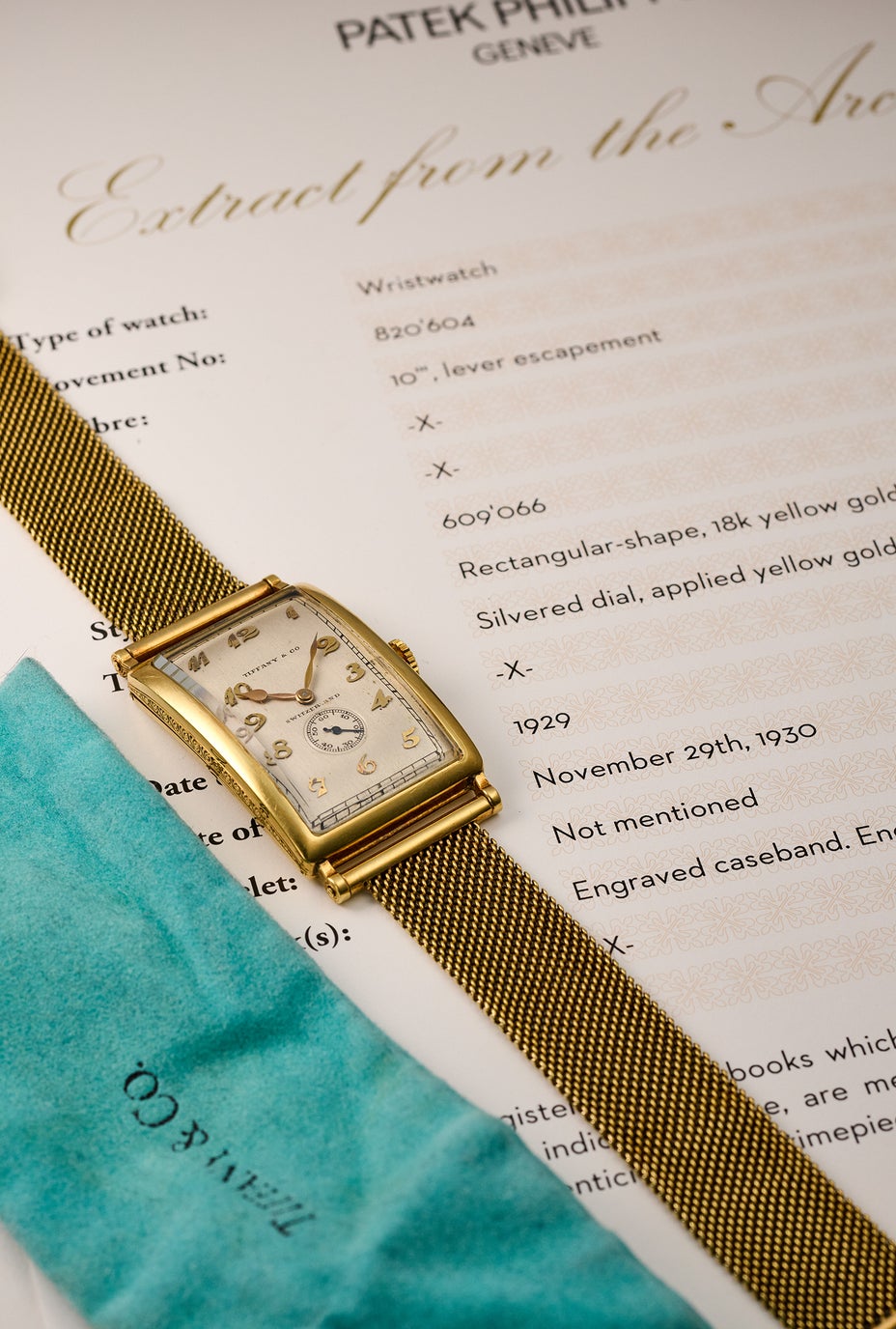
According to the Extract of the Archives, the watch was produced in 1929, and delivered in November of 1930. Comparing this delivery with that of the construction of the Empire State building, the watch was delivered only a week after the mooring mast (a 222 foot pole intended for docking dirigibles) was erected on November 21st, with most of the steelwork and façade having already been completed. Officially, the Empire State Building opened on May 1st, 1931, ahead of schedule and under the proposed budget, only eighteen months after construction commenced. No doubt Paul Starrett attended the opening ceremony with this Tiffany & Co. Patek Philippe wristwatch as his companion. We can assert that this wristwatch was perhaps a gift to himself or from another to commemorate the distinctive achievement of building the tallest building in the world.
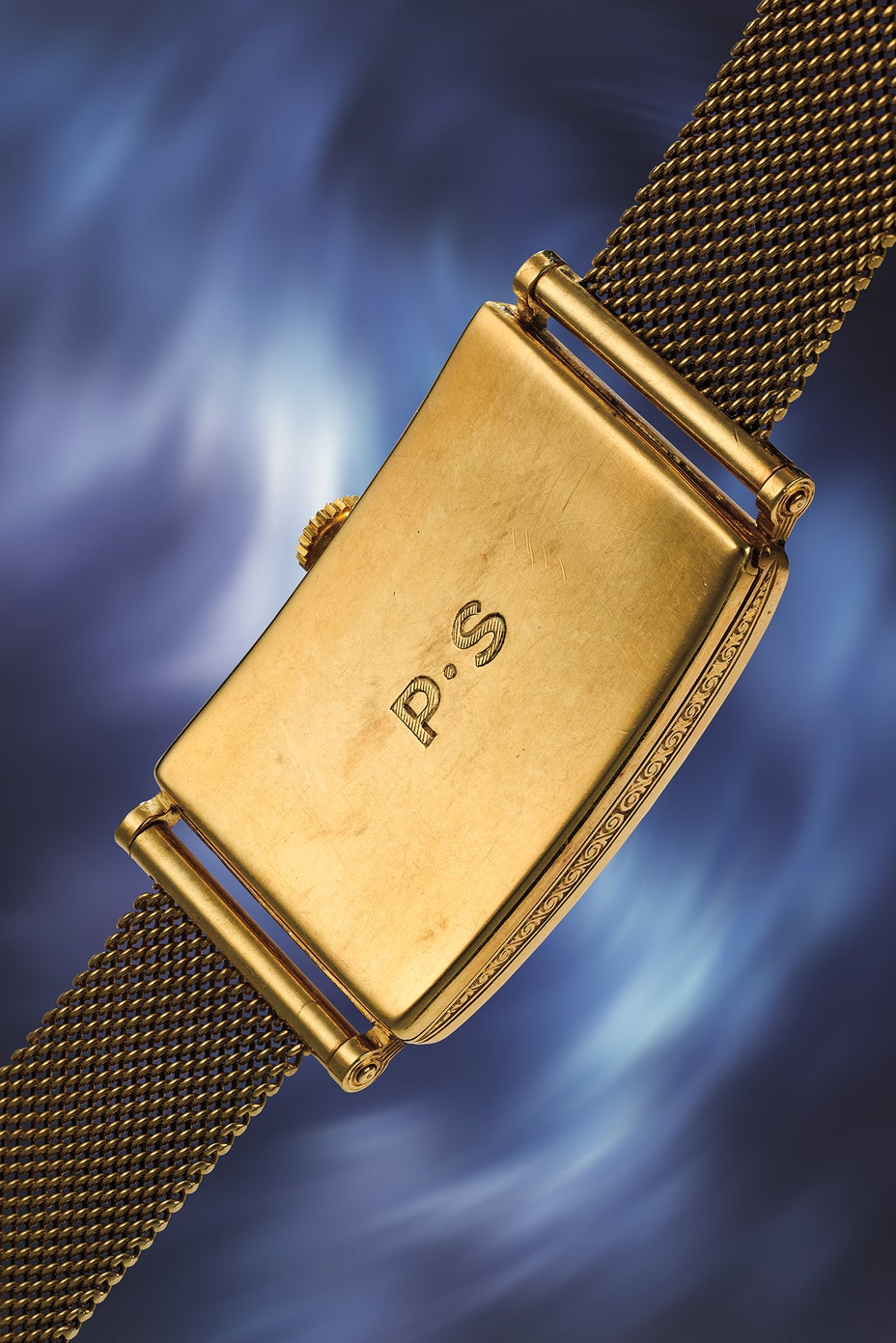
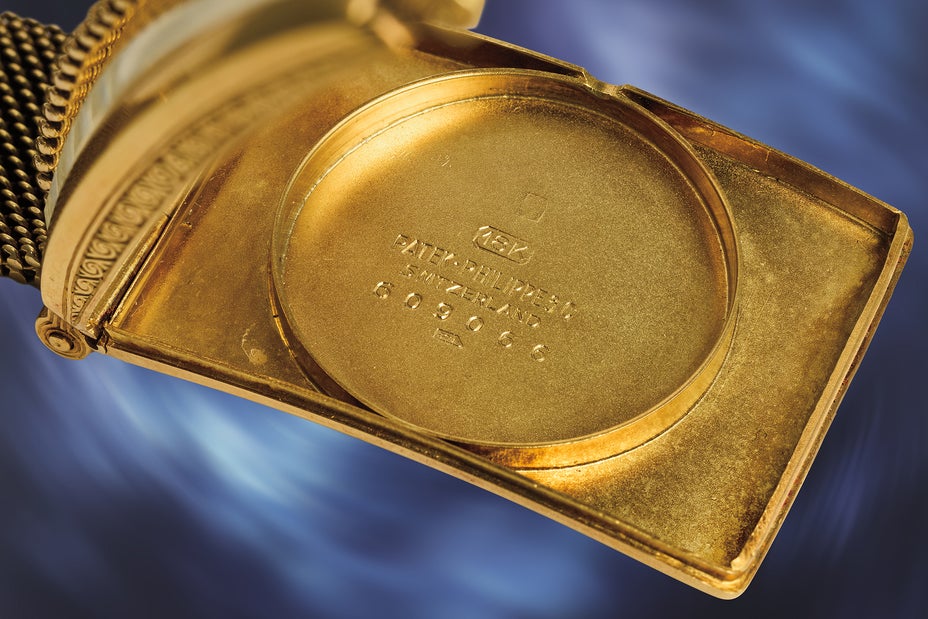
The watch itself, aside from provenance and historical importance, is exceptionally well-preserved and an ideal example of the Art-Deco era. With an oversized rectangular case similar to those made for Brazilian retailer Chronometro Gondolo in the previous decade, it is further similarly adorned with Breguet numerals and a high-grade movement, in this case a 10 ligne manually would caliber with wolf’s tooth winding gears. Setting it apart from the other rectangular watches of the era, the case is engraved with floral scrollwork to the case band, a trait mentioned in the Extract, that to the best of our knowledge we have not been able to find on any similar watch of the era. Similar to pocket watches of the era, only Tiffany & Co.’s signature is present on the dial, while the case, made by Wenger, and movement are signed Patek, Philippe & Co.. The lug still bears the Tiffany inventory number engraved, and a perfectly crisp hallmark can be seen within the engraving on the case band. Mr. Starrett’s initials, ‘PS’, can be seen boldly emblazoned on the caseback.
Coming directly from the grandson of Paul Starrett, this Tiffany-retailed oversized wristwatch from the Art Deco era is an incredible fresh-to-market find, marrying provenance, historical relevancy, watchmaking prowess, and remarkable physical condition.
Patek Philippe
Swiss | 1839Since its founding in 1839, this famous Geneva-based firm has been surprising its clientele with superbly crafted timepieces fitted with watchmaking's most prestigious complications. Traditional and conservative designs are found across Patek Philippe's watches made throughout their history — the utmost in understated elegance.
Well-known for the Graves Supercomplication — a highly complicated pocket watch that was the world’s most complicated watch for 50 years — this family-owned brand has earned a reputation of excellence around the world. Patek's complicated vintage watches hold the highest number of world records for results achieved at auction compared with any other brand. For collectors, key models include the reference 1518, the world's first serially produced perpetual calendar chronograph, and its successor, the reference 2499. Other famous models include perpetual calendars such as the ref. 1526, ref. 3448 and 3450, chronographs such as the reference 130, 530 and 1463, as well as reference 1436 and 1563 split seconds chronographs. Patek is also well-known for their classically styled, time-only "Calatrava" dress watches, and the "Nautilus," an iconic luxury sports watch first introduced in 1976 as the reference 3700 that is still in production today.