940
Patek Philippe
No. 97183
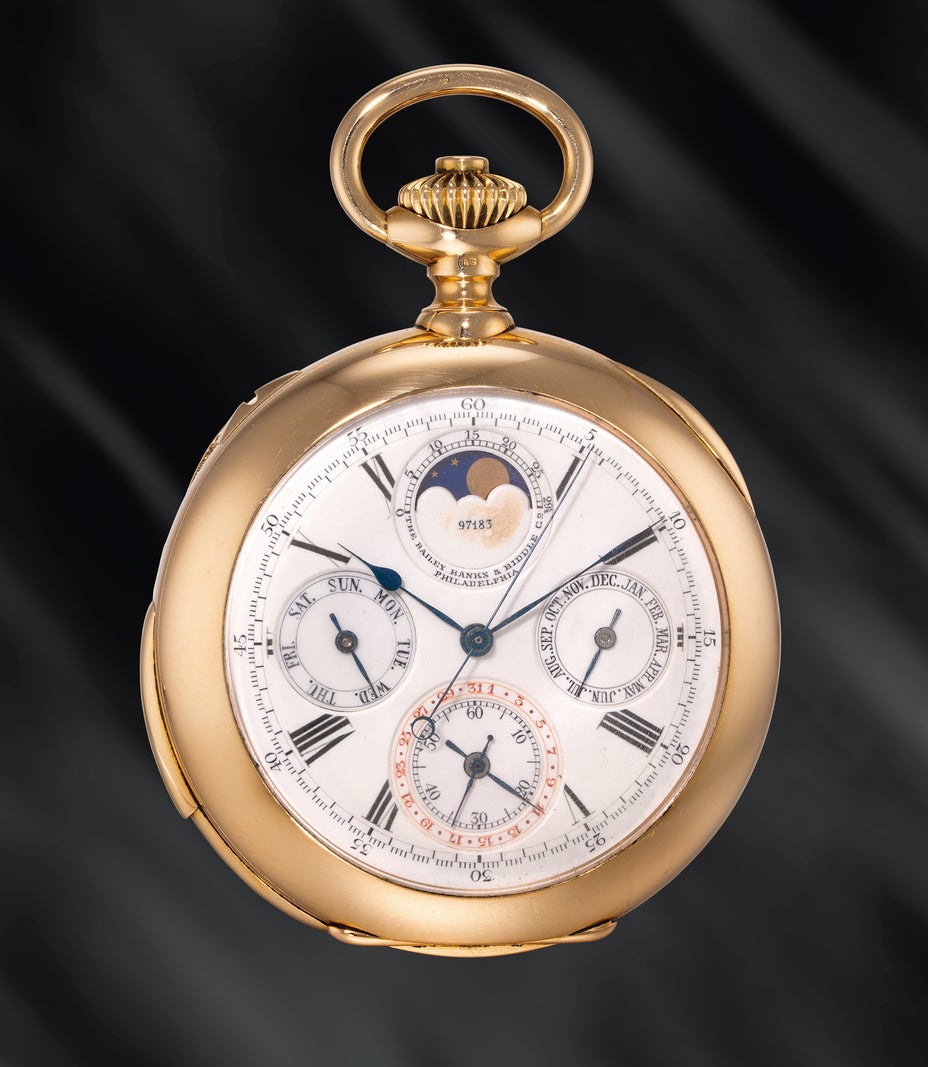
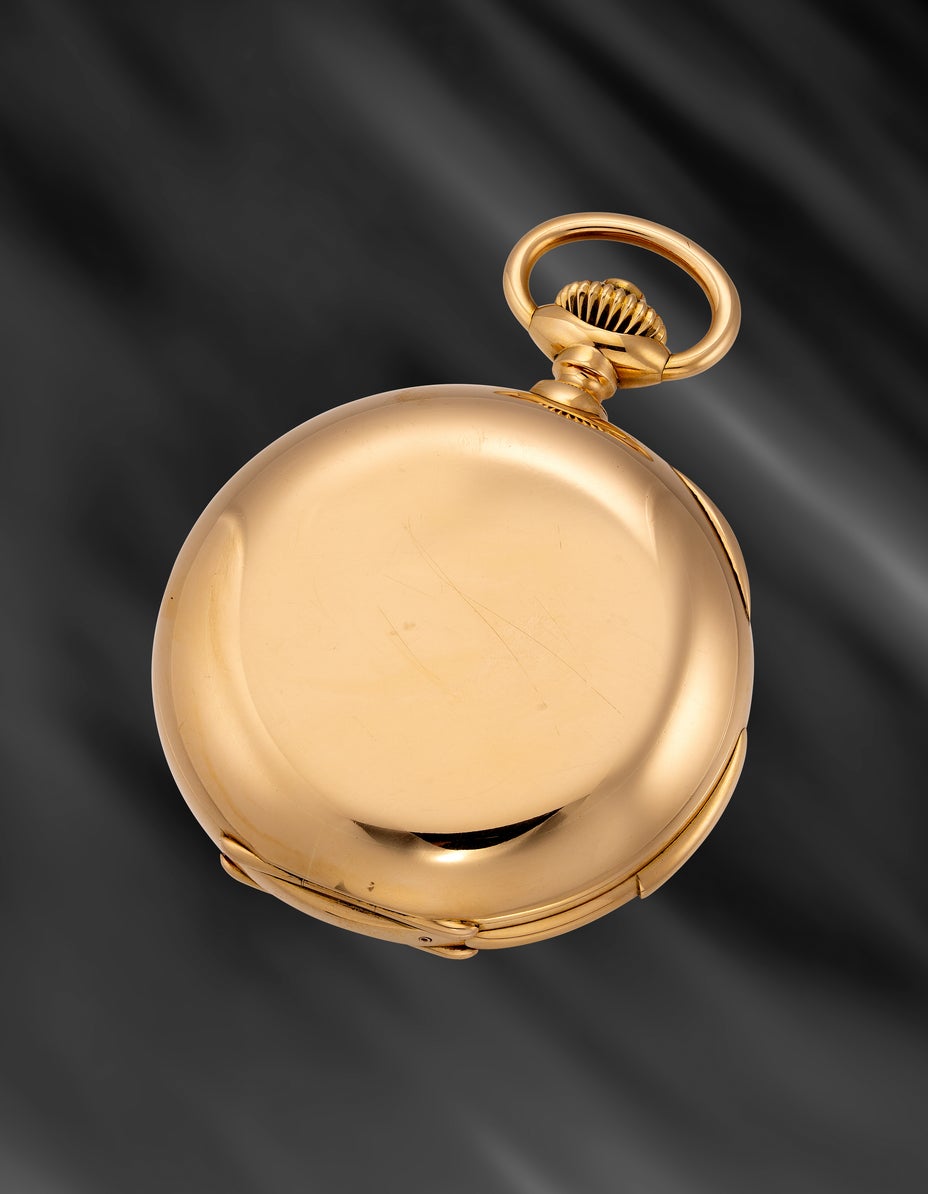
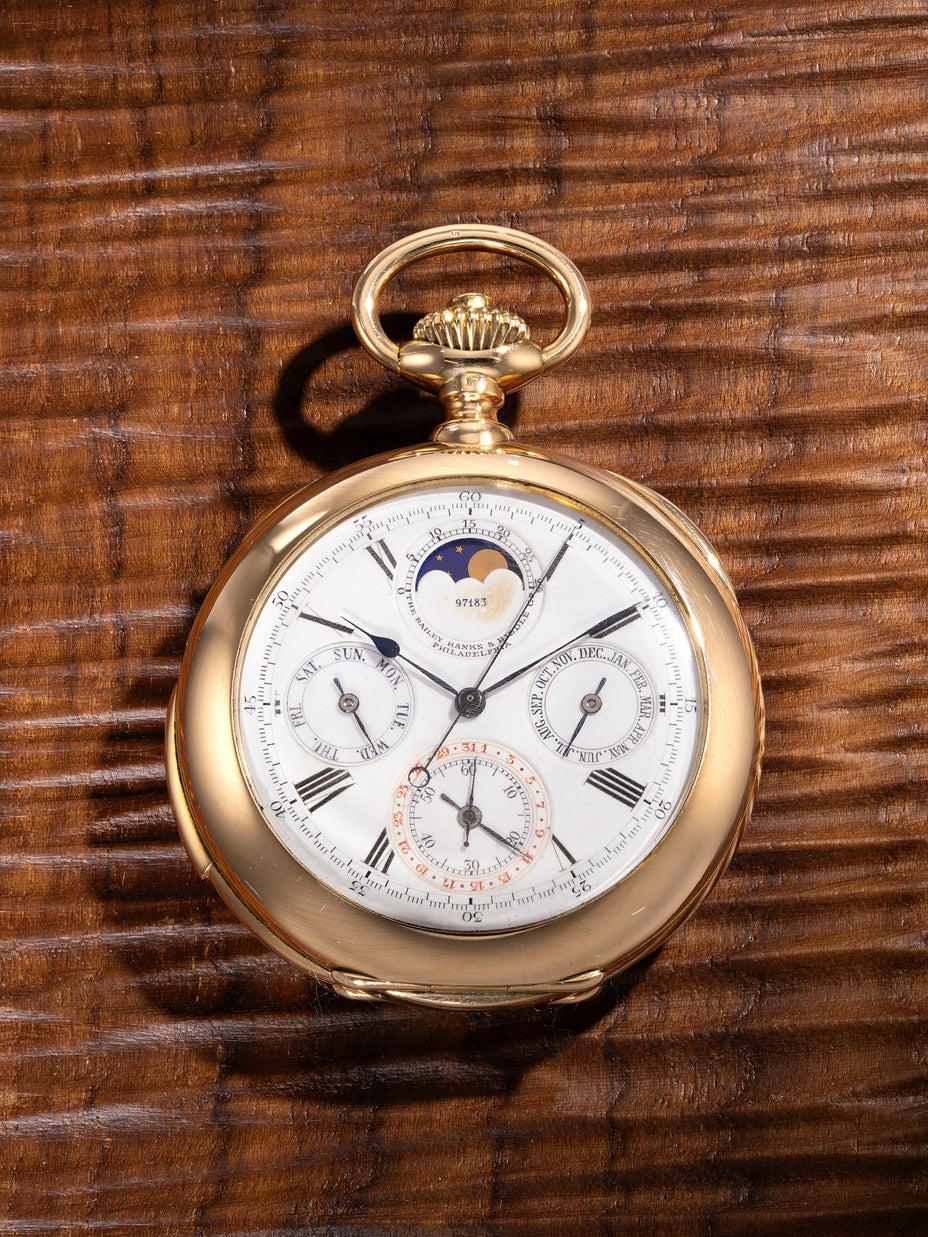
A very rare and attractive pink gold minute repeating perpetual calendar openface pocket watch with single button chronograph, moon phases and enamel dial, retailed by Bailey Banks & Biddle Co Philadelphia
Full-Cataloguing
- Cased in rare 18K pink gold
- Triple complication made for Bailey Banks & Biddle Co Philadelphia
- Last appeared in auction over forty-years ago
In the mid-19th century, Patek Philippe first entered the American market when its watches were first supplied to the prestigious New York jeweller Tiffany & Co. as early as 1847. Antoine Norbert de Patek travelled extensively across the United States in 1854–1855, establishing a strong partnership with the New York jeweller that laid the foundation for the brand’s success in the booming American luxury sector.
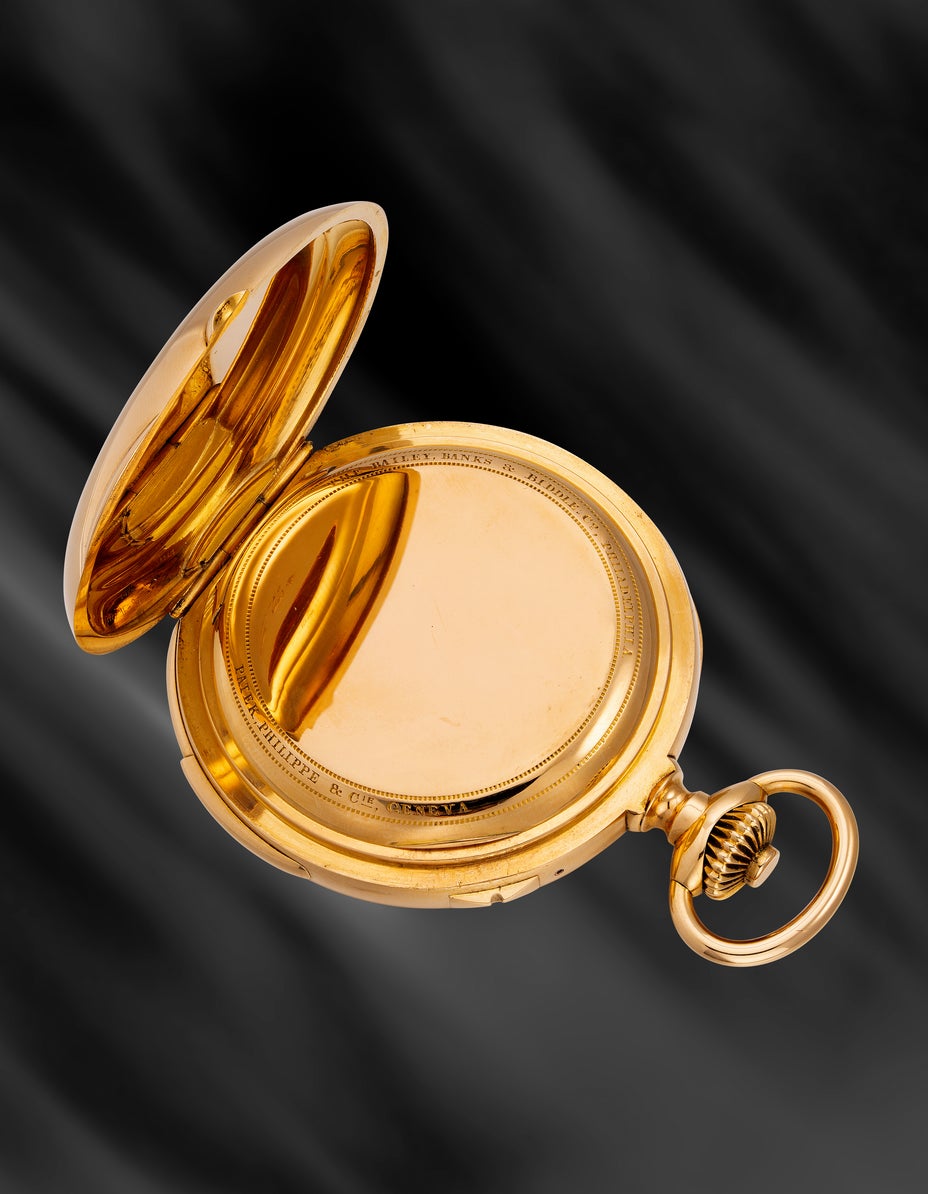
As demand grew, Patek Philippe produced numerous special orders for the American market, many of which featured the local retailer’s name prominently on both dial and movement, with Patek Philippe’s own signature deliberately omitted. This practice first started for Tiffany & Co. and was later extended to its Philadelphia’s retailer Bailey, Banks & Biddle Co. Founded in 1832 as Bailey & Kitchen by silversmiths Joseph T. Bailey and Andrew B. Kitchen, the firm became Bailey, Banks & Biddle in 1878 and quickly established itself as one of America’s foremost retailers of fine timepieces including exceptional Patek Philippe pocket watches, while also creating iconic U.S. medals and silverware. Made in the early years of the past century, the present pocket watch is an impressive representation of the skill and master craftsmanship associated with Patek Philippe’s mechanical innovation and workmanship. In fact, the Philadelphia retailer advertisement shows they proudly communicate that one of the watch made especially for Bailey, Banks & Biddle in 1889 by Patek Philippe received high marks for accuracy at the 1888 Geneva Observatory Timing Contest.
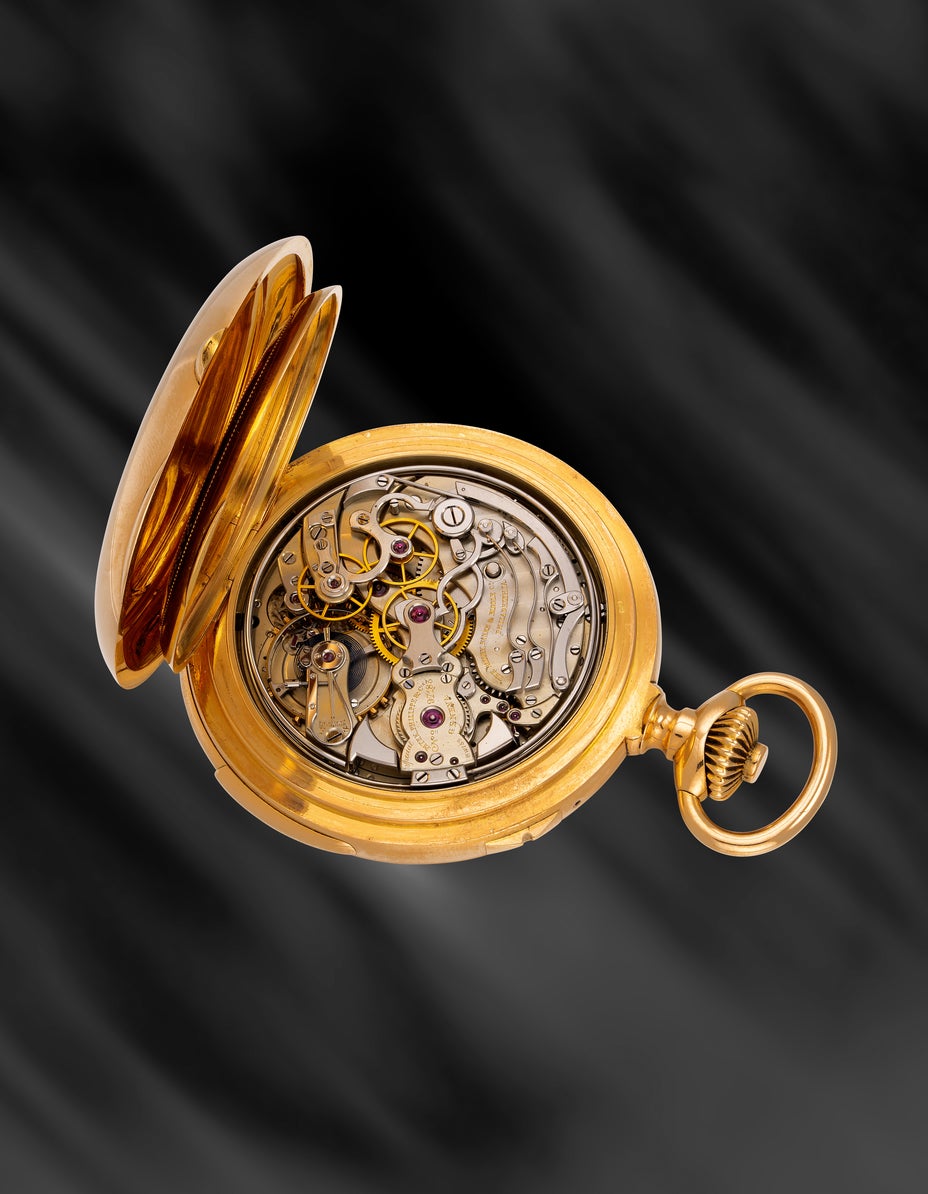
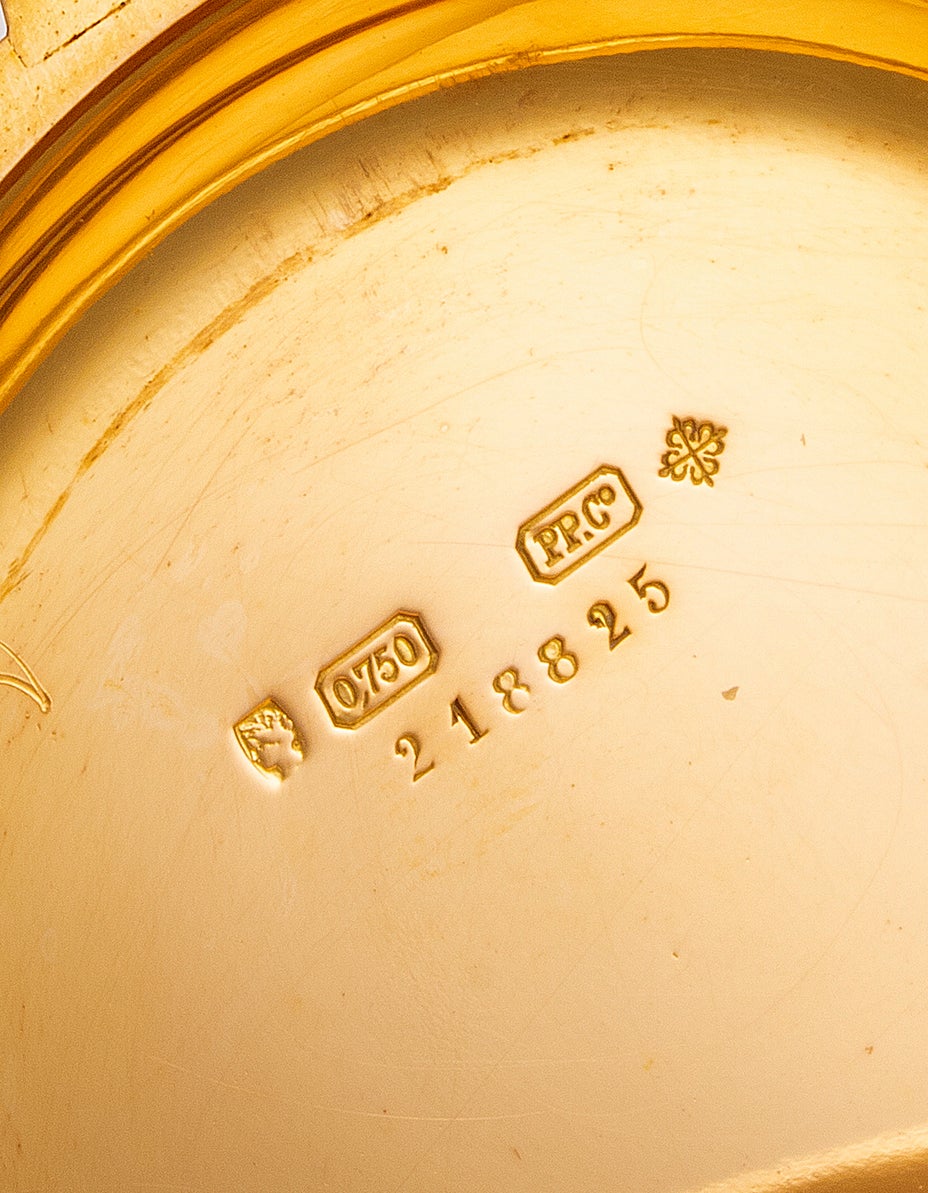
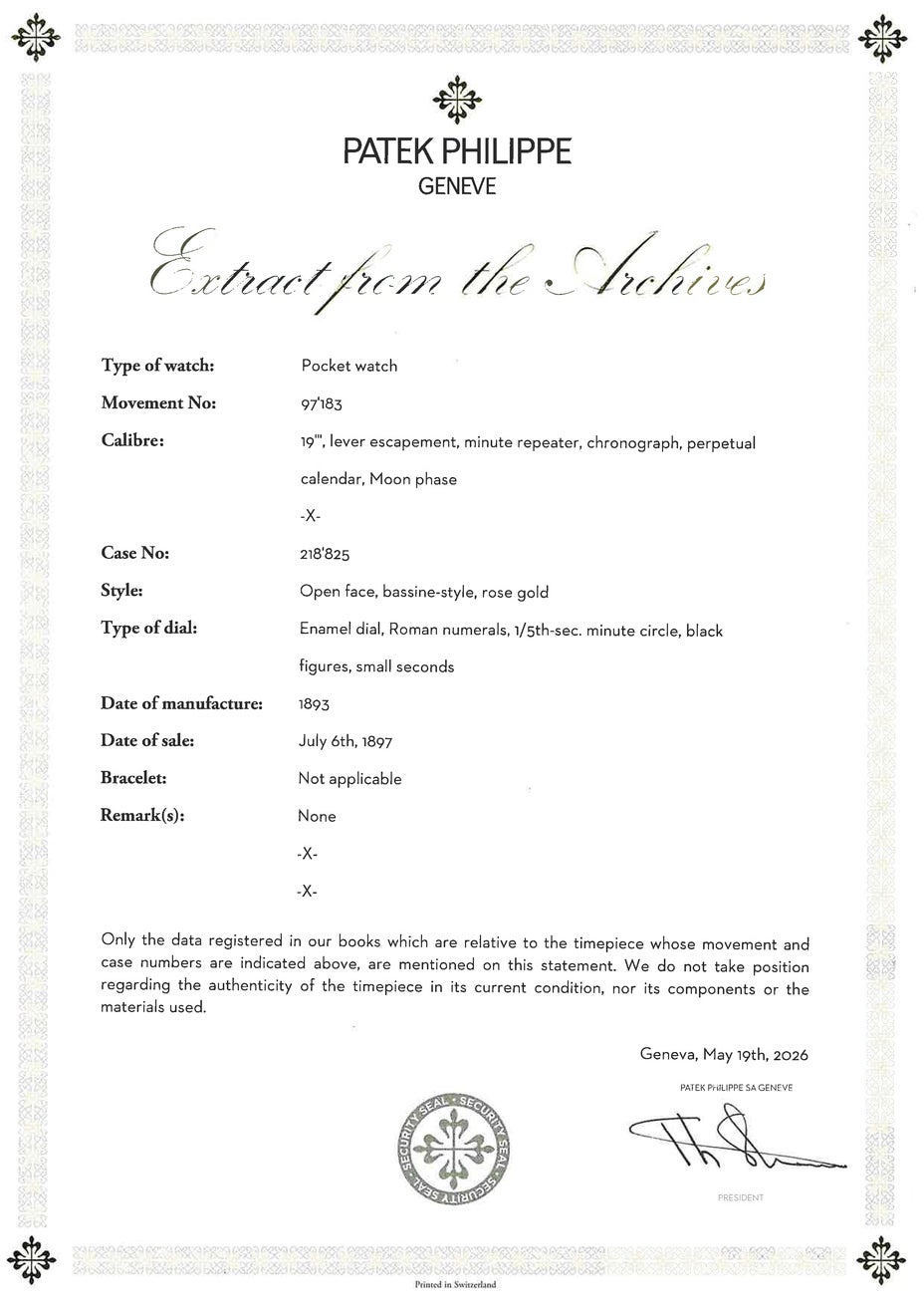
Dating to 1893 by its movement serial, this magnificent openface pocket watch represents the pinnacle of Patek Philippe’s early mechanical artistry. Cased in the rarer pink gold rather than the more common yellow gold, it is fitted with a highly sophisticated movement numbered 97’183 made by Victorin Piguet & Cie. The watch offers a rare triple complication: perpetual calendar, minute repeater, and single-button chronograph. A similar example made for Bailey, Banks & Biddle with split-seconds chronograph (movement no. 97’546) resides in the Patek Philippe Museum collection today.
Its elegant white enamel dial is symmetrically laid out with four subdials: moon phases and age at 12 o’clock, months at 3, date combined with running seconds at 6, and days of the week at 9. The minute repeater delivers crisp, melodic chimes of exceptional clarity, while the monopusher chronograph is activated via a single button coaxial with the crown, preserving the refined lines of the case.
Last appeared at auction more than forty years ago and has since been preserved in a distinguished private collection, making its re-emergence a significant event for serious connoisseurs of vintage Patek Philippe complications.
Patek Philippe
Swiss | 1839Since its founding in 1839, this famous Geneva-based firm has been surprising its clientele with superbly crafted timepieces fitted with watchmaking's most prestigious complications. Traditional and conservative designs are found across Patek Philippe's watches made throughout their history — the utmost in understated elegance.
Well-known for the Graves Supercomplication — a highly complicated pocket watch that was the world’s most complicated watch for 50 years — this family-owned brand has earned a reputation of excellence around the world. Patek's complicated vintage watches hold the highest number of world records for results achieved at auction compared with any other brand. For collectors, key models include the reference 1518, the world's first serially produced perpetual calendar chronograph, and its successor, the reference 2499. Other famous models include perpetual calendars such as the ref. 1526, ref. 3448 and 3450, chronographs such as the reference 130, 530 and 1463, as well as reference 1436 and 1563 split seconds chronographs. Patek is also well-known for their classically styled, time-only "Calatrava" dress watches, and the "Nautilus," an iconic luxury sports watch first introduced in 1976 as the reference 3700 that is still in production today.