
941Σ︎✱︎
Patek Philippe
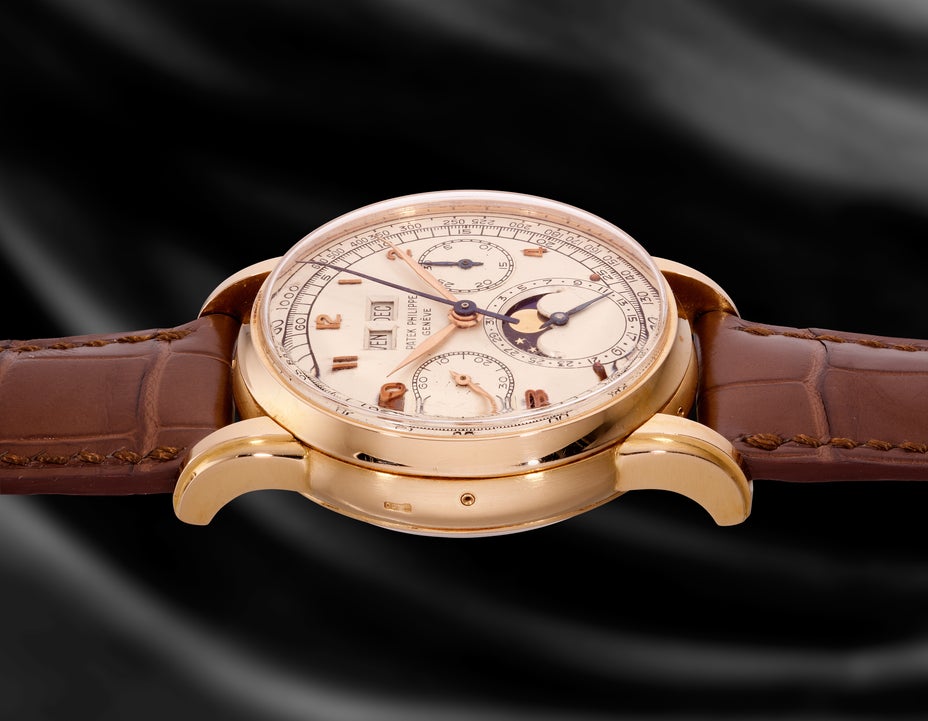
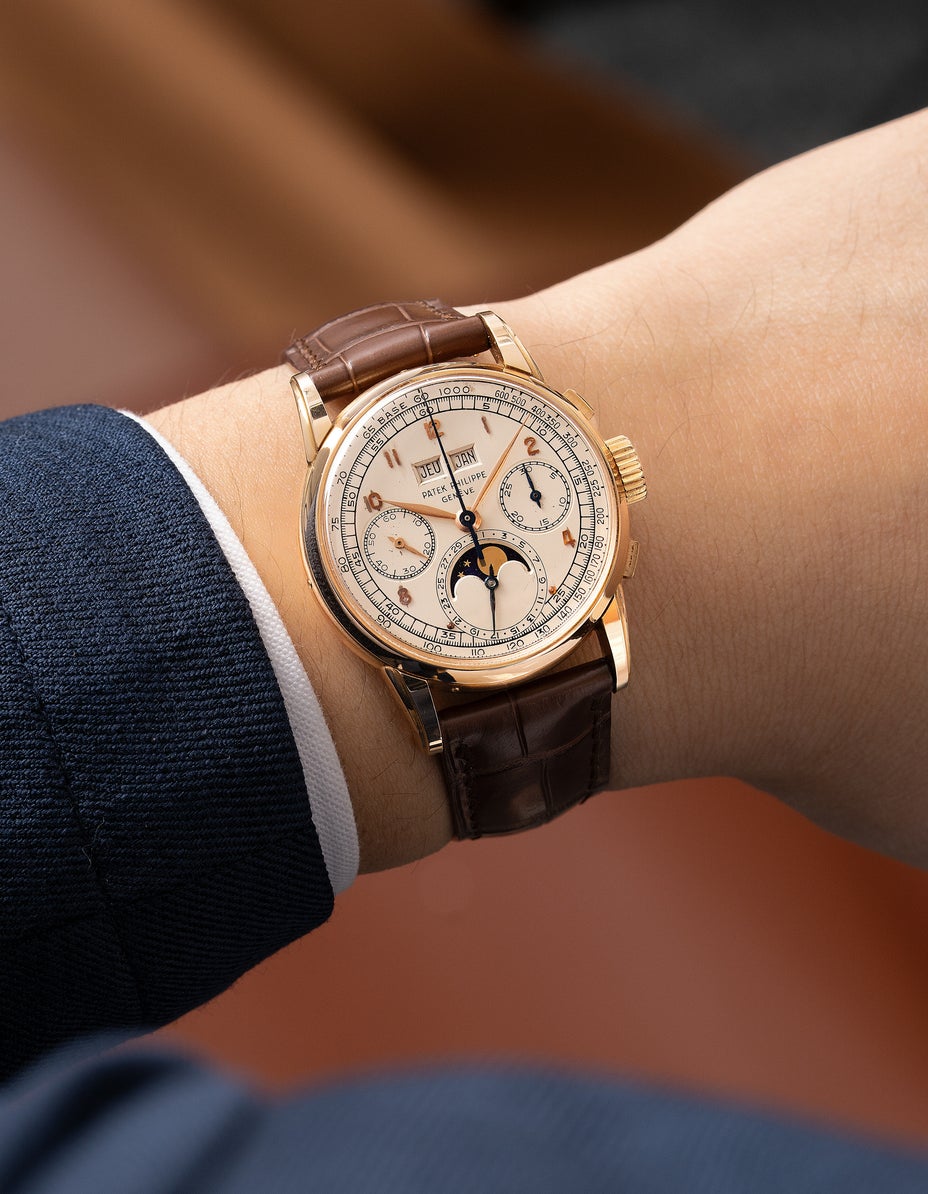
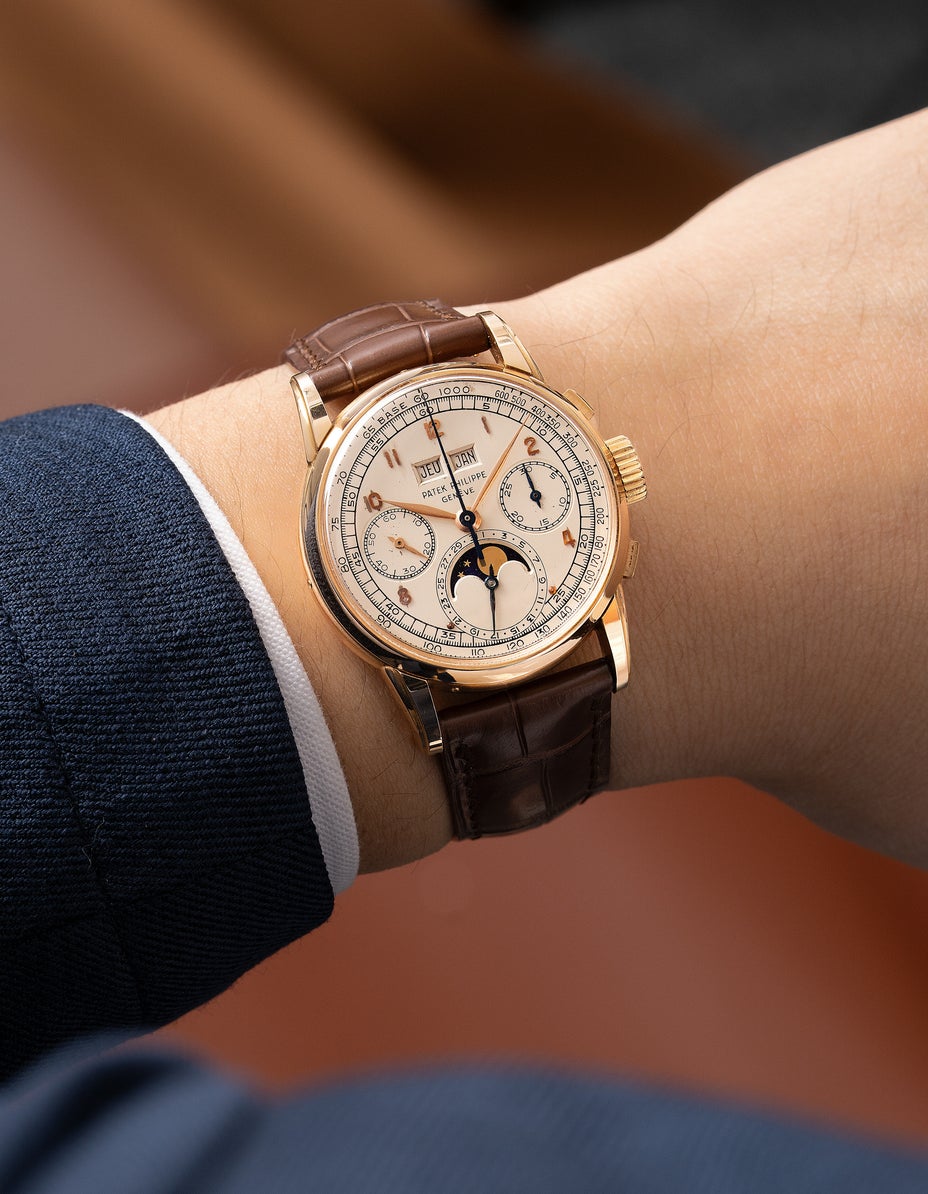
Ref. 2499 “The Pink First Series”
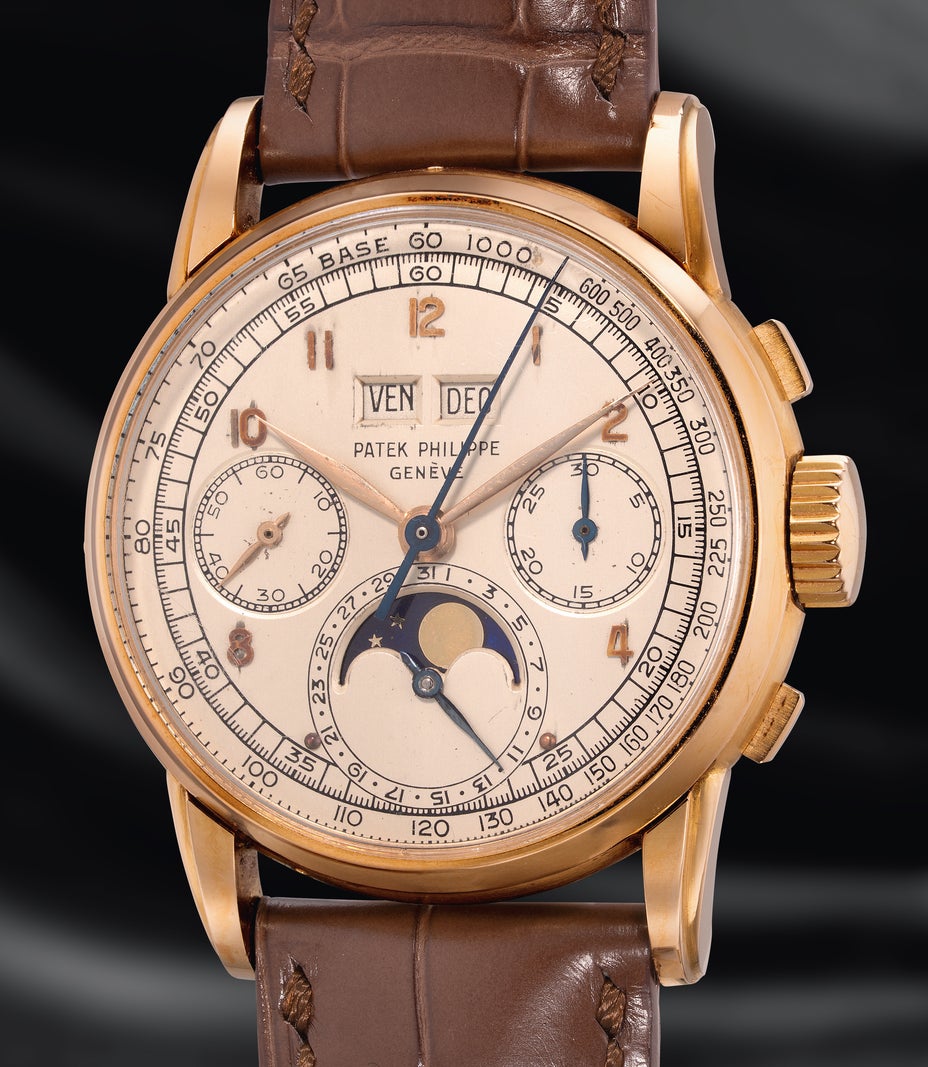
An historically important, equally rare and well-preserved pink gold perpetual calendar chronograph wristwatch with French calendar, moon phases and case made by Vichet, the only known pink gold first series example with British hallmarks
Full-Cataloguing
- Reference 2499 First series with Vichet case in pink gold
- Only 4 known in Vichet case
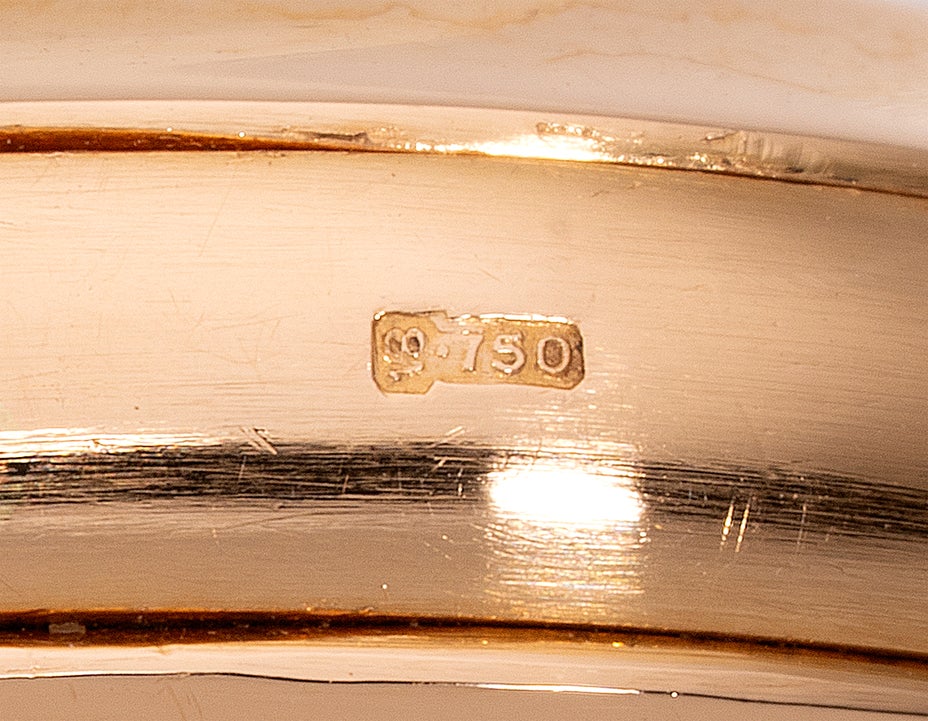
- The only one known with British hallmarks
- Case and dial are extremely well-preserved
- Considered one of the Holy Grails by collectors
Certain timepieces, by virtue of their provenance, scarcity and undeniable beauty, transcend mere ownership and enter the realm of legend: watches that every serious collector aspires to possess and that, once obtained, confer a quiet but unmistakable sense of satisfaction. These are the icons that define taste, set market benchmarks and populate the sanctums of the most selective cabinets; acquiring one signals membership in an elite fellowship of connoisseurs whose standards are exacting and uncompromising.
The present Patek Philippe reference 2499, First Series in pink gold occupies the very summit of perpetual calendar chronograph collecting. It stands among the rarest trophies in the world of connoisseurship—on a par, in terms of desirability and mythic status, with a 1954 Mercedes-Benz 300SL Gullwing, a Picasso canvas or a bottle of vintage Château Lafite. Exceptionally scarce, almost impossible to source and utterly defining of its category, this watch does more than represent value: it embodies the pinnacle of taste and historical importance.
Reference 2499
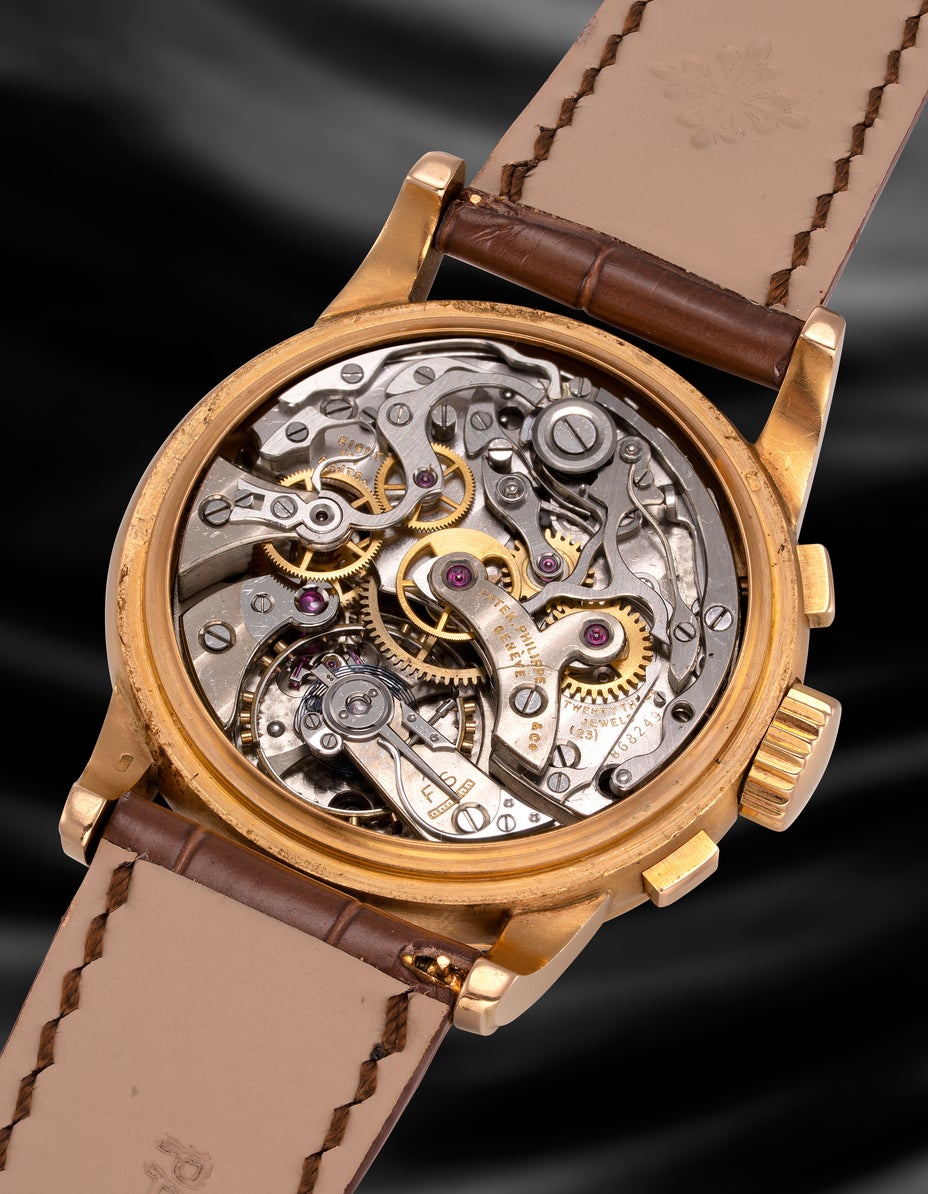
Taking over the important reign in 1951, Patek Philippe released the coveted ref. 2499, which was still the only wristwatch with such complication in any watch catalogue at the time. Utilizing the same movement cal. 13-130 (Valjoux VZ 23 base) as the ref. 1518, the ref. 2499 boasted a completely new and refreshed case design. While the ref. 1518 features a rather traditional Calatrava inspired case with thin and elegant elongated lugs reminiscent of the stylistic period of the 1940s, collectors believe that the ref. 2499 is the perfect interpretation of a timeless appeal.
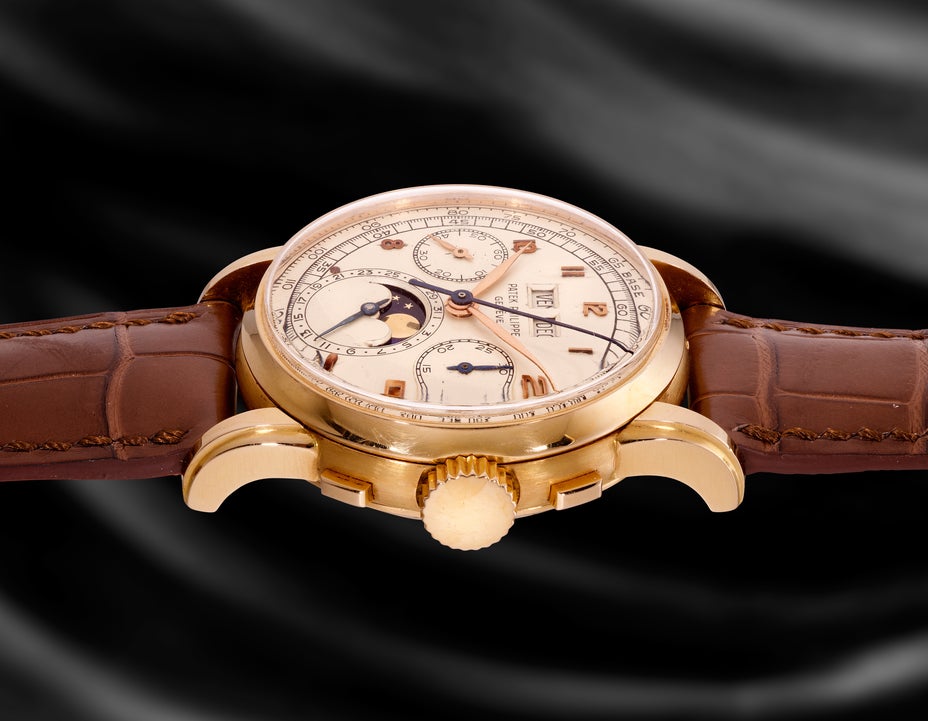
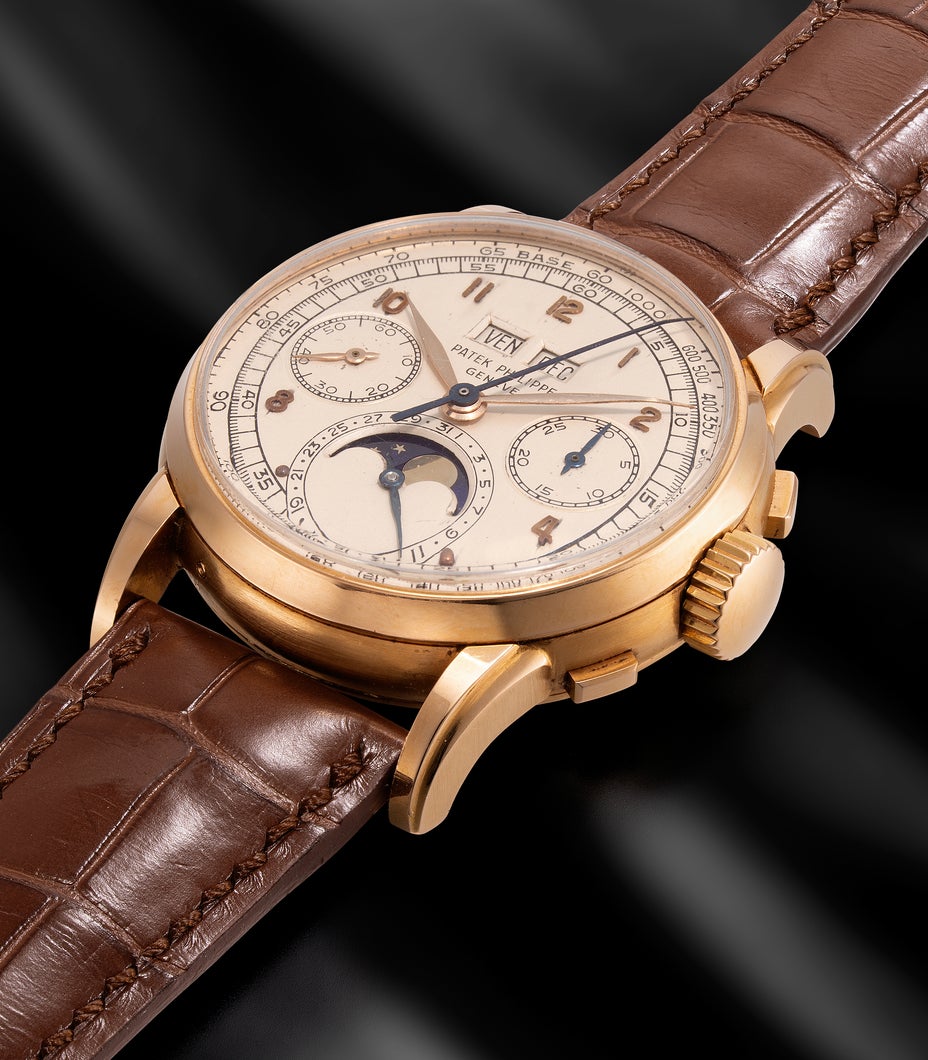
With excellent proportions and perfect symmetry, the ref. 2499 features an elegant bassine-style case with distinctive fluted lugs. Early examples of the reference featured a tachymeter scale, applied gold Arabic numerals and square chronographic pushers that are similar to the ref. 1518. Discontinued in 1985 with a production spanning 34 years, only 349 examples of the ref. 2499 left the manufacturer across all metals and series resulting in an average of 10 pieces made annually.
The Patek Philippe ref. 2499 across four series:
- First series (1951 – 1960): Square chronograph pushers, applied Arabic or baton numerals and tachometer scale. (Present example)
- Second series (1955 – 1964): Round chronograph buttons, either applied Baton or applied Arabic numerals, tachometer scale, “floating” date ring
- Third series (1960 – 1978): Round chronograph buttons, applied baton numerals, outer seconds divisions, "floating" date ring, no tachometer scale.
- Fourth series (1978 – 1985): Round chronograph buttons, applied baton numerals, “floating” date ring, outer seconds divisions (shorter than Third Series), no tachometer scale, sapphire crystal commanding a thicker bezel.
Bearing traits that are unique to the specific series transitioning over from the ref. 1518, the First Series can also be subdivided into two separate generations with cases made by two different casemakers, Emile Vichet (Key no. 9) and Edouard Wenger (Key no. 1).
First Series in pink gold
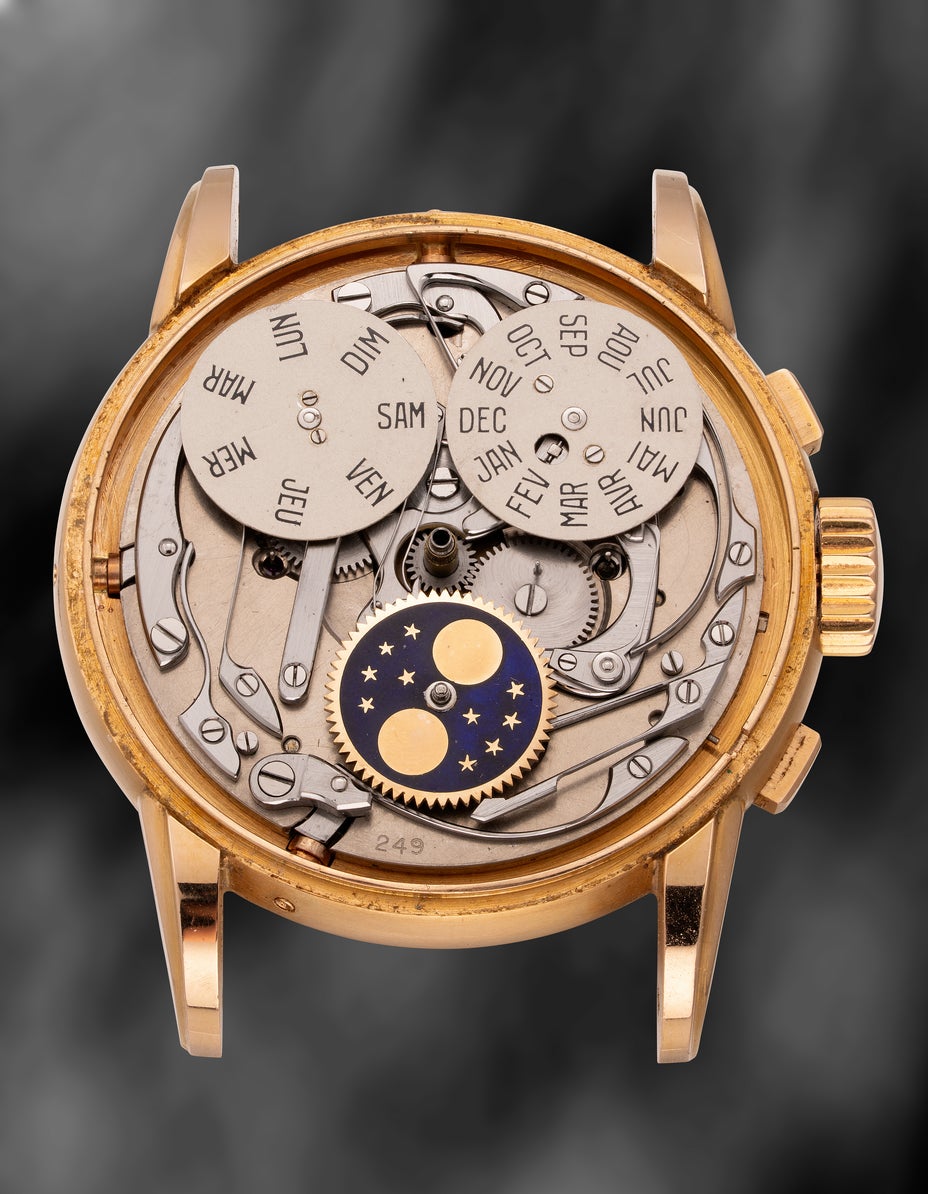
First series 2499 are known in both yellow and pink gold. However, only five are known in pink gold on the market, and it is an educated guess that the overall production is not much higher than that, thus making the pink 2499 first series one of the scarcest watches in history. The four known watches with Vichet case bear the following movement numbers and consequently, the present watch might be the second pink Vichet 2499 ever produced.
First Series Ref. 2499 in pink gold Vichet case known to the market:
Movement No. 868'248, Case No. 665'024, 1951 – last auctioned in 2002
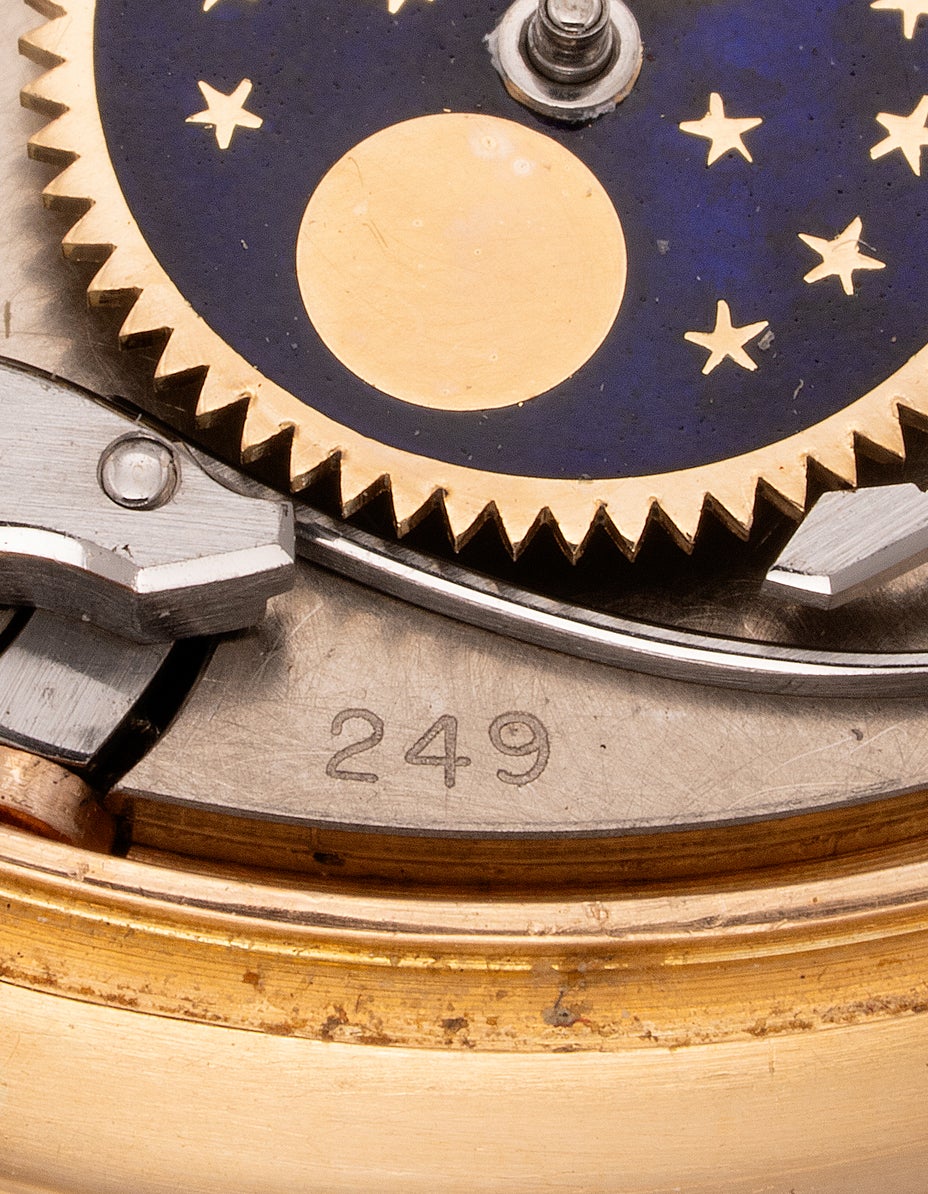
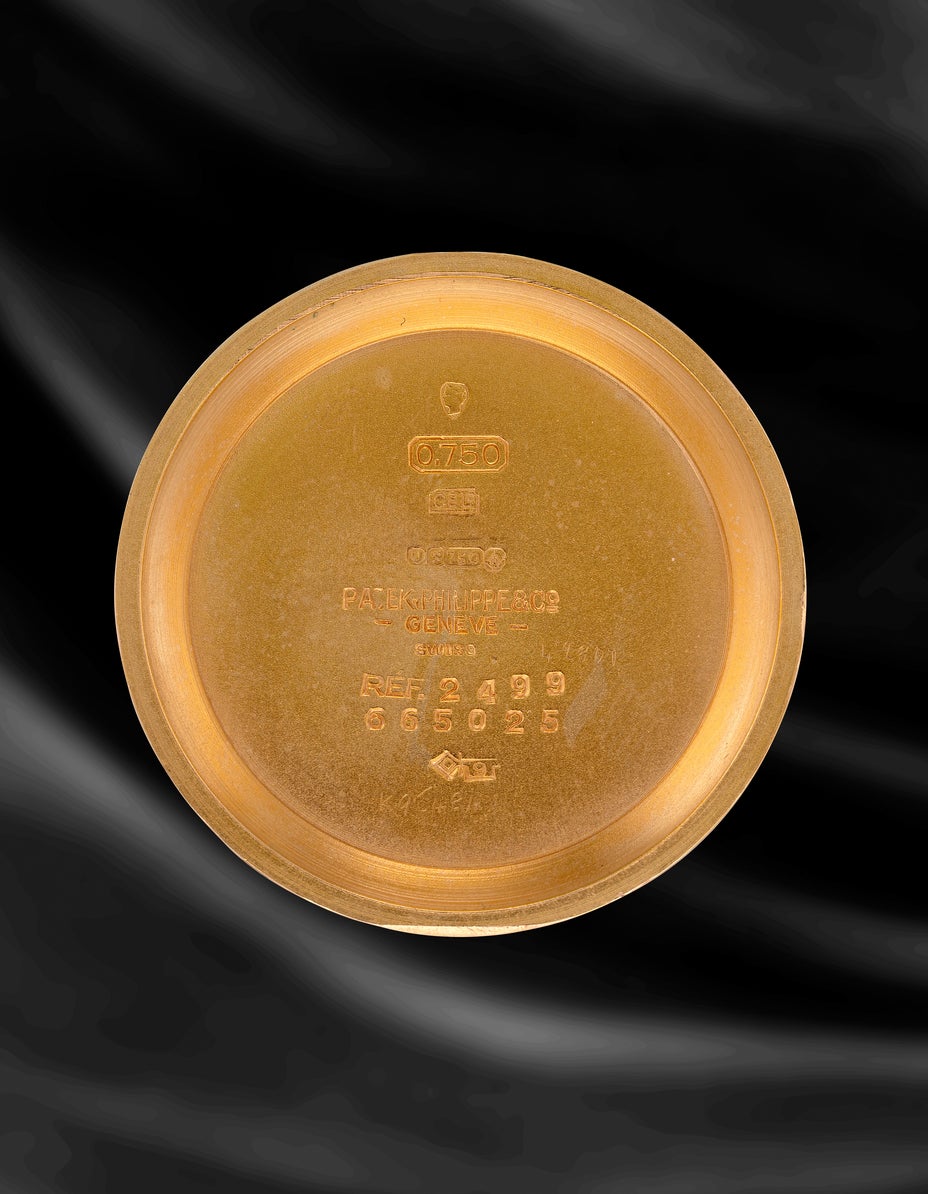
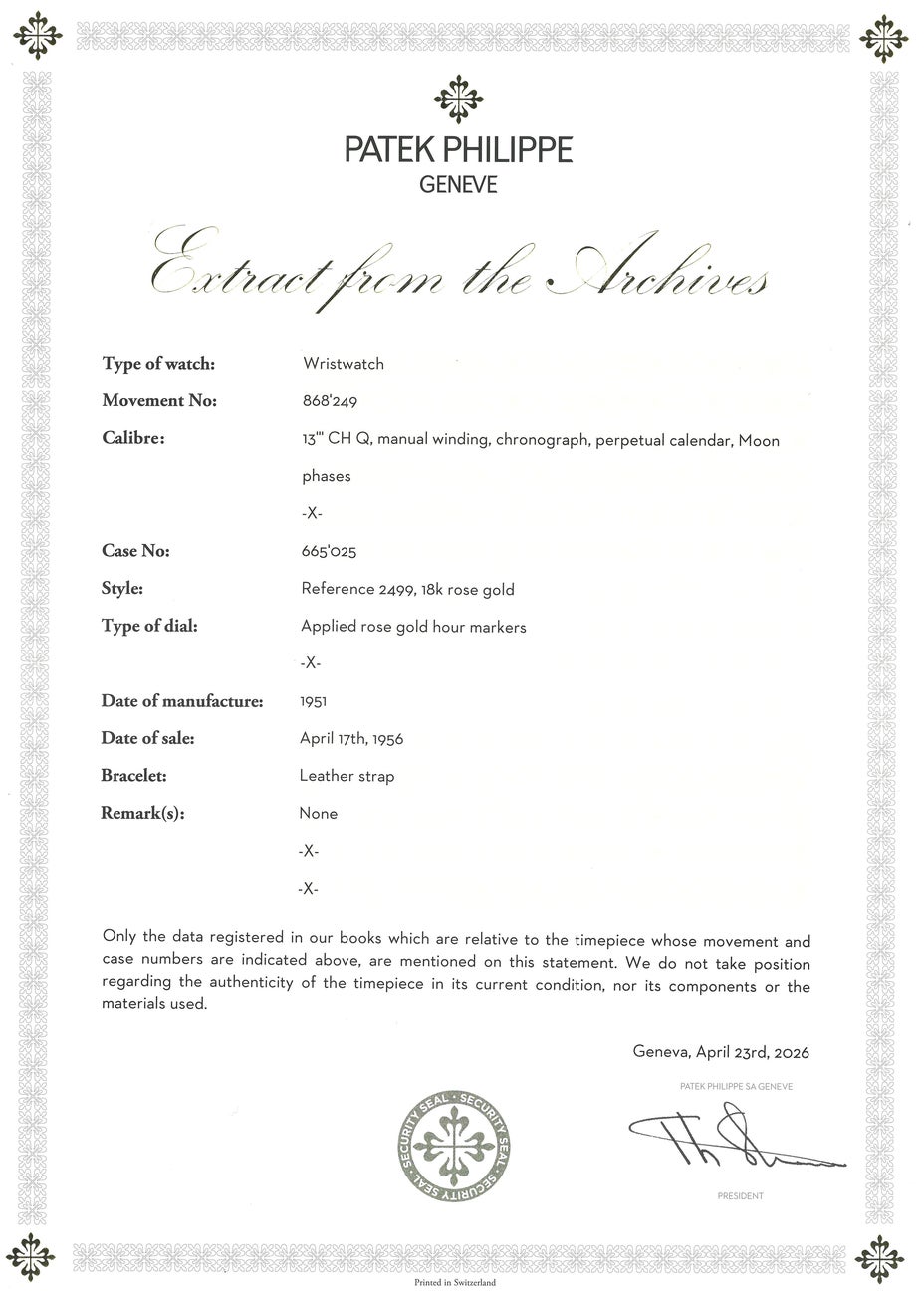
Movement No. 868'249, Case No. 665'025, 1951 – last auctioned in 2014 (Present example)
Movement No. 868'250, Case No. 665'026, 1951 – private collection
Movement No. 868'338, Case No. 665'027, 1951 – last auctioned in 2002
Case with British hallmarks
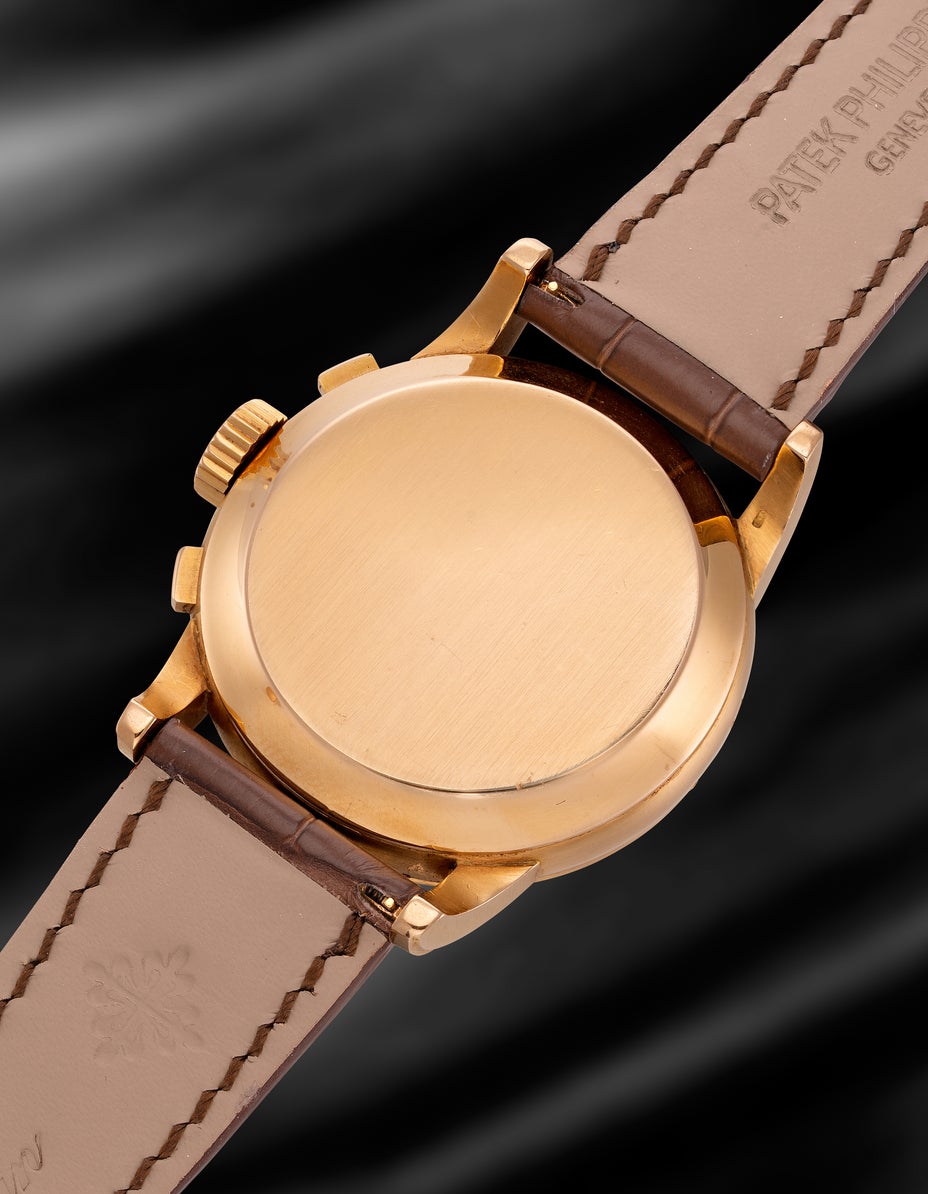
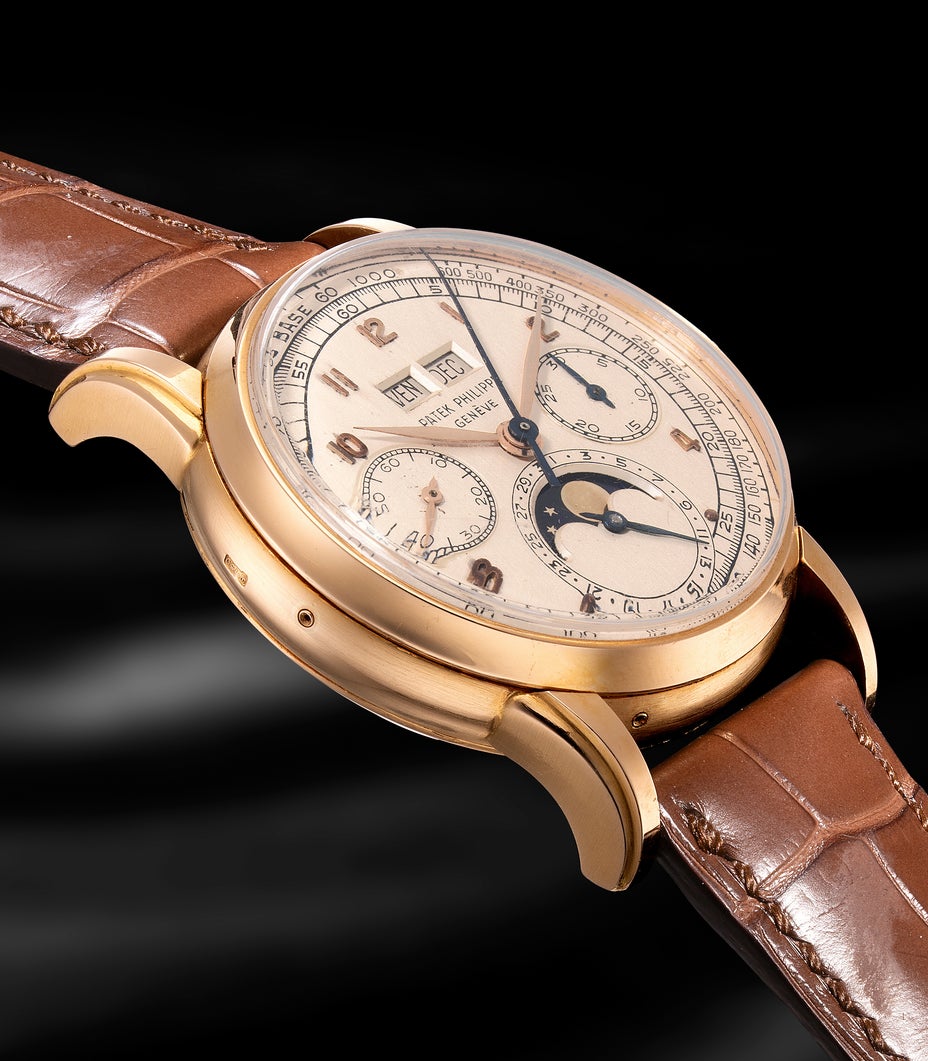
The first series of reference 2499 is not only the most immediately recognisable of the four series—distinguished by its square pushers rather than the round pushers of later series—but also the rarest. Two different casemakers were employed during its production, and first series cases therefore show subtle variations depending on the maker. The earliest examples, such as the present piece, were made by Vichet and are characterised by a slightly smaller 36.2 mm diameter, a flat caseback and more pronounced, downturned “claw‑shaped” lugs. After roughly two years Patek Philippe switched to Wenger, which supplied nearly all cases for the remainder of 2499 production until 1985. Wenger examples typically measure about 37.5 mm, feature less markedly downturned lugs and a bombé caseback.
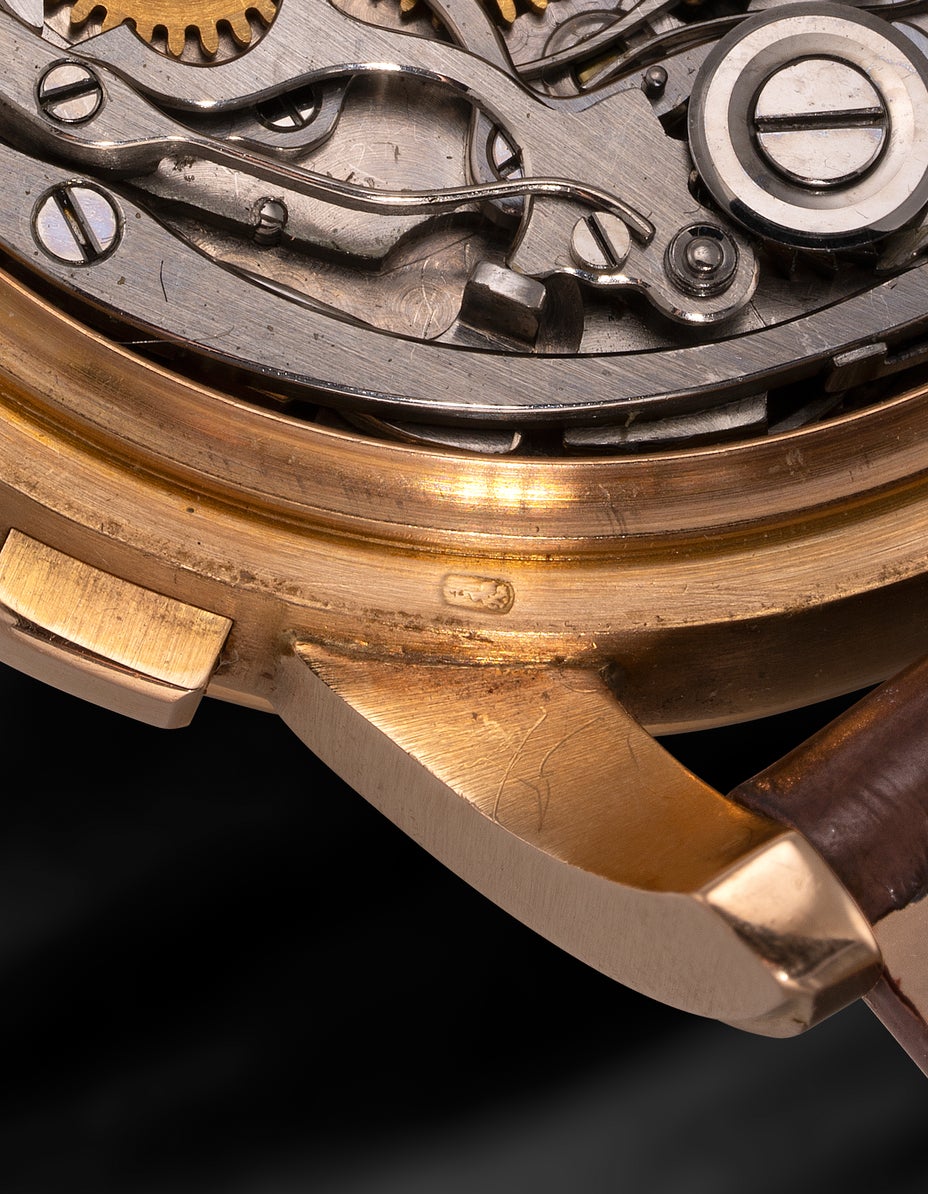
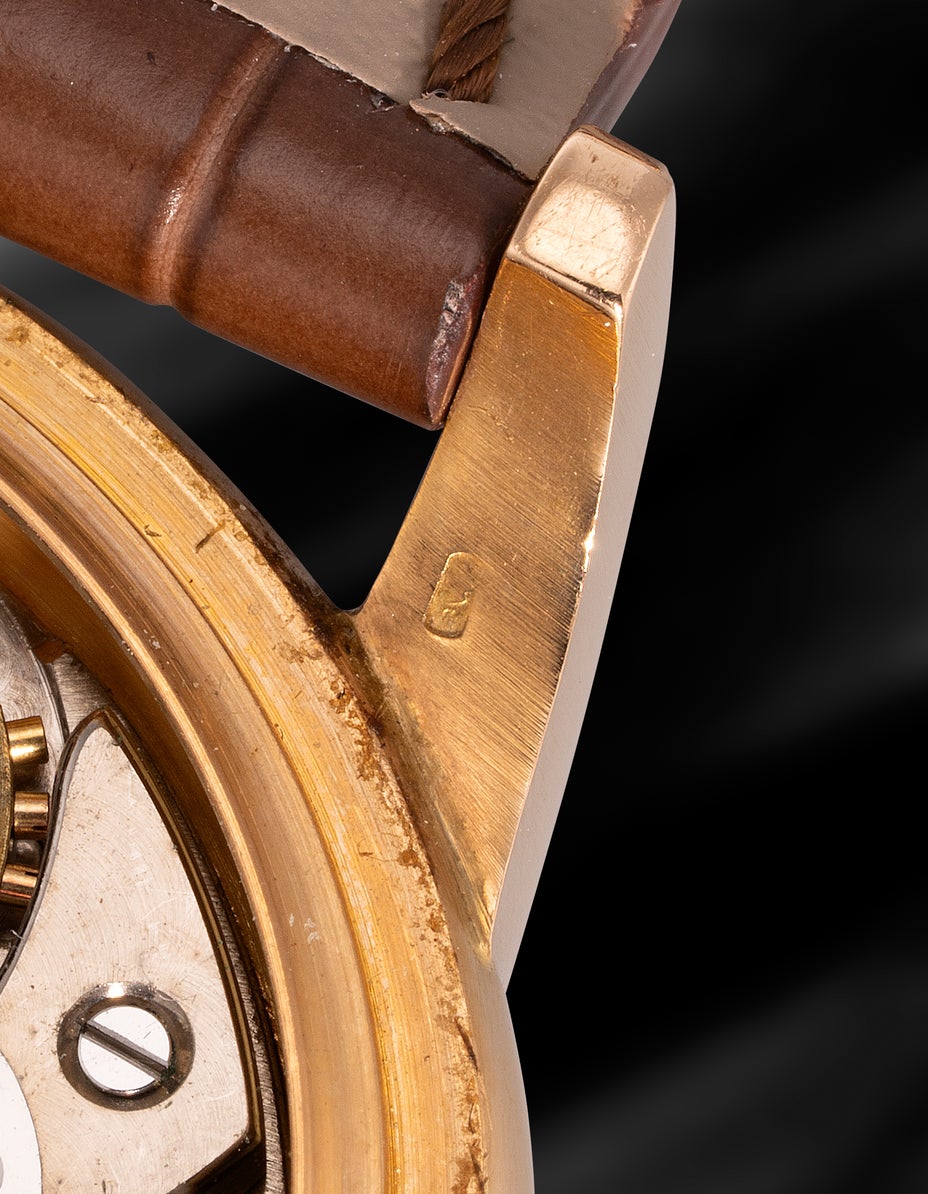
Beyond the rarity of the Vichet case itself, the present example is exceptional in another respect: it is the only known First series 2499 in pink gold to be stamped with British hallmarks. The caseband bears a British import mark, with an additional Swiss hallmark behind the lugs—an uncommon provenance that further distinguishes the watch.
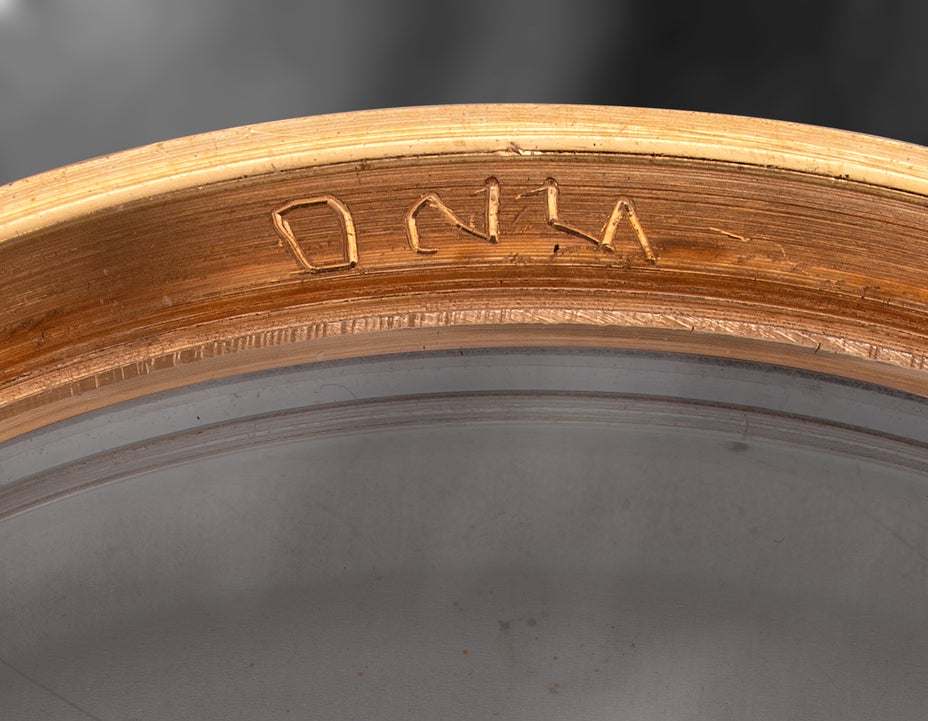
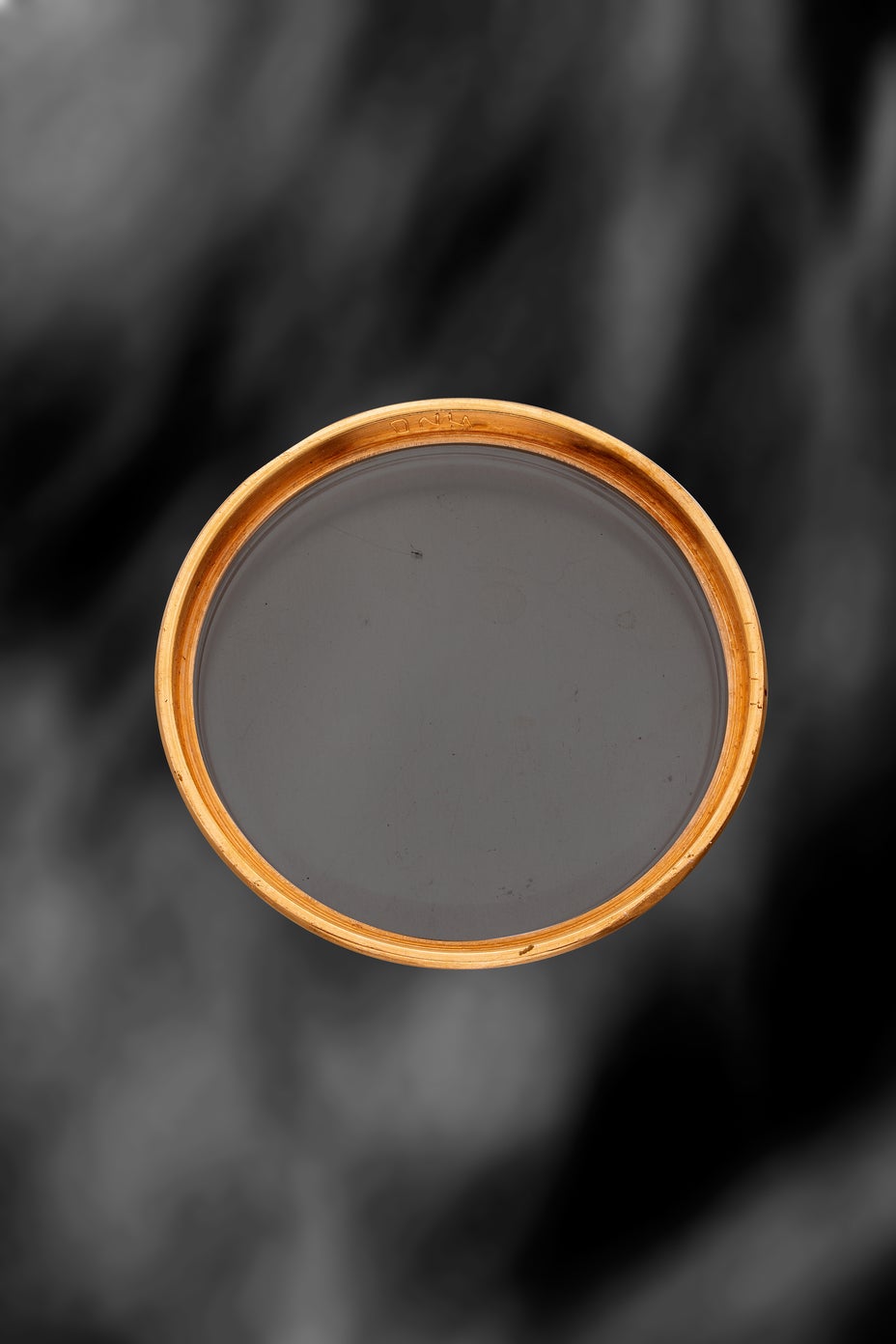
The British hallmarks inside the caseback tell us a very intriguing story as the Extract from the Archives stated that the watch was manufactured in 1951 and sold in 1956. The watch however, is imported to London in 1955 and stamped with the “U” date letter alongside the London import mark “Ω” used for 18K gold at the time.
To underscore its significance, another yellow gold First series 2499 with British hallmarks (movement number 868'346) sold in 2018 for CHF 3,915,000, setting a world record for the reference at the time.
Dial
With extensive research and findings of the ref. 2499 by dedicated scholars’ overs the years, it is to our knowledge that a total of two dial variations for the first series were produced.
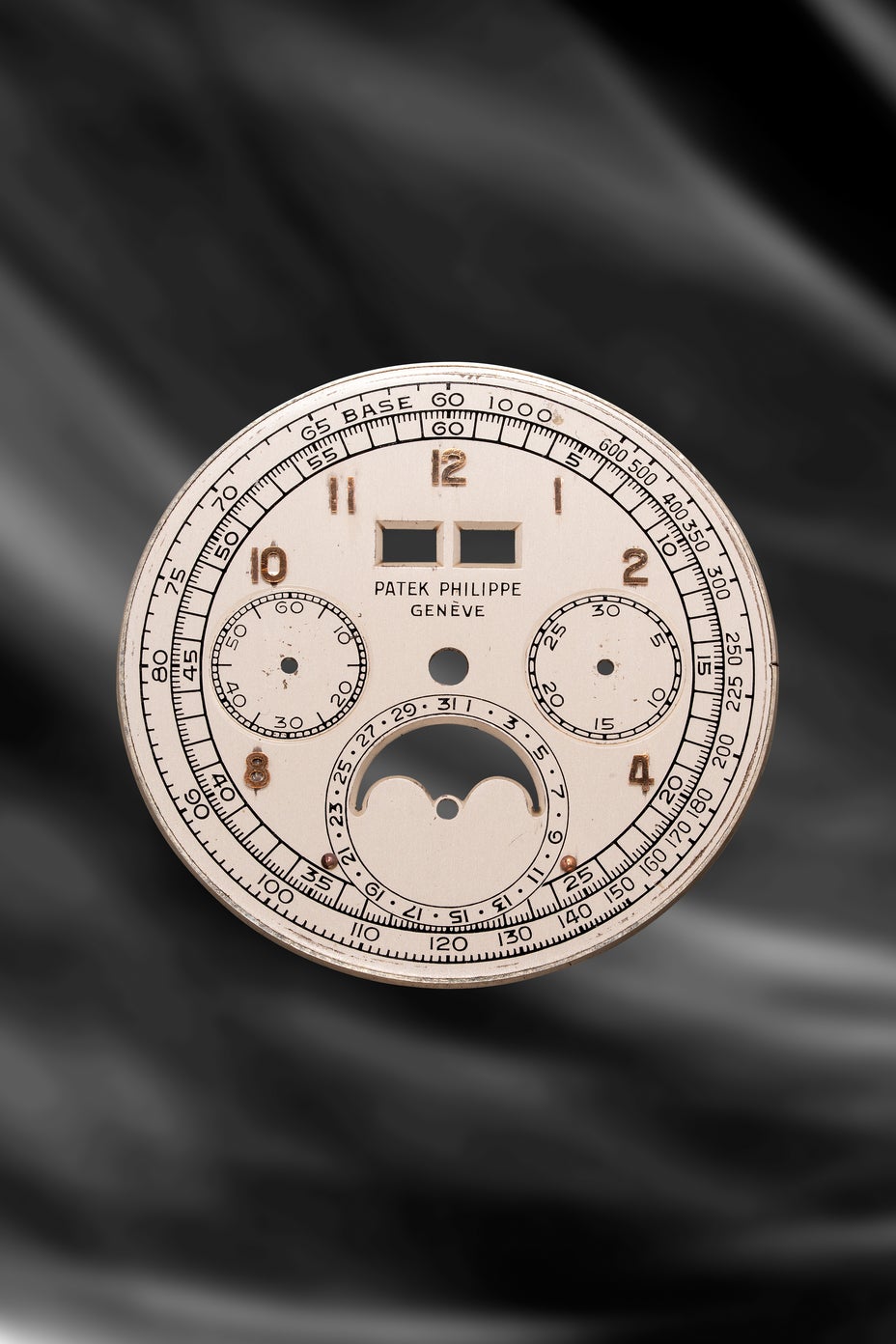
-Dial A: Similar in style to the dials used on reference 1518. Features applied gold Arabic numerals, a tachymeter scale (in kilometers or miles) and a “Chemin de Fer” (railway) date scale. (The present example)
-Dial B: Features applied gold Arabic numerals and a tachymeter scale (in kilometers or miles) but without the “Chemin de Fer”.
The present, spectacular dial manufactured by Fabrique de Cadrans Stern Frères uses the kilometer scale and it is breathtaking in both design and preservation for a watch of this age. The black hard enamel signature and scales are nice and well-defined. The back of the dial is further engraved with the full movement number. The date scale includes the early “Chemin de Fer”, closely resembling those found on early reference 1518 dials, though with a slightly narrower gap around the moon phases aperture. The natural ageing of the applied indexes has produced a darker, even patina that confirms the dial’s originality while remaining very well preserved.
Condition
The watch’s exceptional preservation extends to the case, which remains remarkably well maintained. The original proportions are intact, with only very light surface wear. All hallmarks are exceptionally crisp particularly on the caseband, an area prone to rounding from even the slightest polishing, and the caseback retains its original factory satin finish. The large winding crown, chronograph pushers and date correctors are all original and their excellent state of preservation suggests the watch saw very little wrist time. The bezel, engraved with the last three digits of the case number, likewise retains its original shape and volume, in keeping with the condition of the rest of the case.
This quality of preservation is especially evident in the “clawed” lugs. Elaborate lugs such as these are highly vulnerable to over‑polishing, too often examples of reference 2499 show lugs reduced to faint shadows of their former profiles, with grooves diminished and sharp edges rounded. By contrast, this superb specimen has evidently been carefully cared for: the lugs are thick and immaculate, with pronounced, crisply defined fluting—a clear indicator of minimal wear and careful stewardship over time.
Provenance
1951 – Date of manufacture
1955 – Imported to London
1956 – First sold
2004 – First time in auction
2008 – Second time in auction
2014 – Landmark 175th anniversary auction of Patek Philippe
2026 – Phillips Hong Kong
This timepiece previously appeared at auction in 2004 and 2008, and was offered again in the landmark sale marking Patek Philippe’s 175th anniversary in 2014, where it realised CHF 2,629,000—an outcome that affirmed its significance as both a watch and an objet d’art. The watch remains in the same well-preserved condition as it was last seen in the market.
This is the first time a First series pink gold reference 2499 has ever been offered at any watch auction in Asia and it marks the variation’s debut at Phillips in association with Bacs & Russo.
Watches of this calibre does not appear very often in public. When they do, they draw the community together to celebrate the origins of haute horlogerie and to admire one of Patek Philippe’s most impressive wristwatches. We are extremely honoured that the collector entrusted us with presenting this celebrated and highly coveted example to the auction room once more, offering collectors a once-in-a-blue-moon opportunity to acquire this holy grail First series pink gold reference 2499.
Patek Philippe
Swiss | 1839Since its founding in 1839, this famous Geneva-based firm has been surprising its clientele with superbly crafted timepieces fitted with watchmaking's most prestigious complications. Traditional and conservative designs are found across Patek Philippe's watches made throughout their history — the utmost in understated elegance.
Well-known for the Graves Supercomplication — a highly complicated pocket watch that was the world’s most complicated watch for 50 years — this family-owned brand has earned a reputation of excellence around the world. Patek's complicated vintage watches hold the highest number of world records for results achieved at auction compared with any other brand. For collectors, key models include the reference 1518, the world's first serially produced perpetual calendar chronograph, and its successor, the reference 2499. Other famous models include perpetual calendars such as the ref. 1526, ref. 3448 and 3450, chronographs such as the reference 130, 530 and 1463, as well as reference 1436 and 1563 split seconds chronographs. Patek is also well-known for their classically styled, time-only "Calatrava" dress watches, and the "Nautilus," an iconic luxury sports watch first introduced in 1976 as the reference 3700 that is still in production today.