PROPERTY FROM AN IMPORTANT WEST COAST COLLECTION
6
Robert Gober
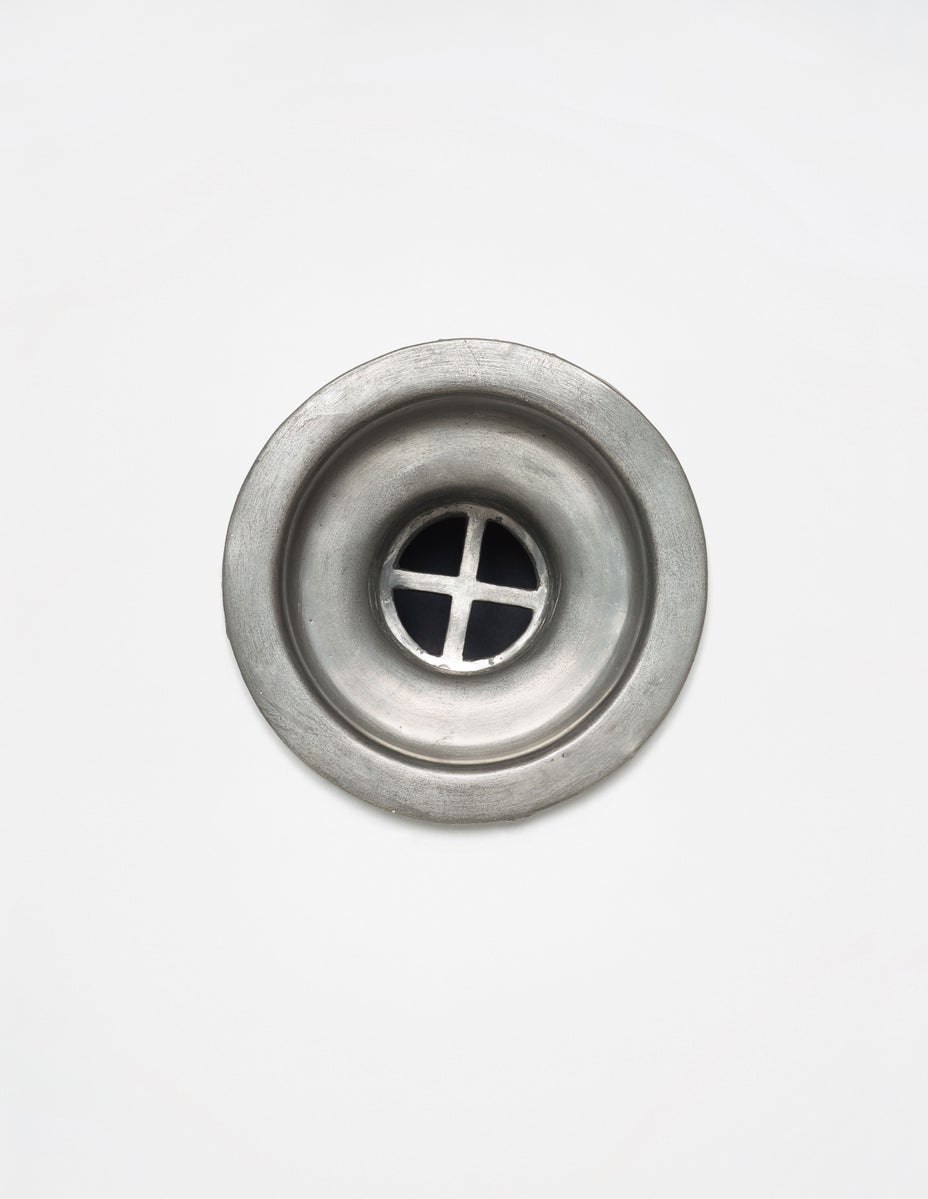
Drain
Estimate
£100,000–150,000‡︎
Sold For
£254,500
cast pewter
7.2 x 10.9 x 10.9 cm (2 7/8 x 4 1/4 x 4 1/4 in.)
Signed, titled and dated 'R.GOBER 1989 1 of 8 'Drain'' on the underside. This work is number 1 from an edition of 8 plus 2 artist's proofs.
Full-Cataloguing
Robert Gober’s Drain looks, at first glance, like a humble piece of bathroom plumbing. This simple domesticity of form belies a profound and sensitive investment of personal and historical meaning in the quotidian. It belongs to a remarkable body of work; crafting sinks, urinals and furniture, Gober is a meticulous sculptor of the sanitary and the functional.
Gober explains that ‘for the most part, the objects that I choose are almost all emblems of transition; they’re objects that you complete with your body, and they’re objects that, in one way or another, transform you.’ (Robert Gober in conversation with Craig Gholson, Bomb Magazine, Issue 29, Fall 1989). This corporeal metamorphosis is heavily present in Drain. The piece resembles a Duchampian readymade, Gober’s inscribed signature directly recalling the artist’s infamous tag on Fountain: yet, cast in pewter, it is a carefully handmade piece of reverential craftsmanship. Minimalism is made human, even sacramental. Ceremony and effluvia coalesce in this surprising baptismal font; Gober reflects on his sink series that ‘they’re vessels that fluids pass into and out of. In that way they are comparable to bodies.’ (Robert Gober in Julie Belcove, ‘Robert Gober retrospective, MoMA, New York,’ Financial Times, 8 August 2014).
These works were a direct response to the AIDS epidemic of the 1980s. ‘I was a gay man living in the epicentre of 20th-century America’s worst health epidemic, and the sinks were a byproduct of that. What do you do when you stand in front of a sink? You clean yourself. Yet they were about the inability to [do that].’(Robert Gober in Julie Belcove, ‘Robert Gober retrospective, MoMA, New York,’ Financial Times, 8 August 2014). Gober imbues this scene of pain and despair with the redemptive object-worship of his Catholic upbringing. Radiating a powerful memorial aura, Drain is slight in scale but monumental in impact.
Gober explains that ‘for the most part, the objects that I choose are almost all emblems of transition; they’re objects that you complete with your body, and they’re objects that, in one way or another, transform you.’ (Robert Gober in conversation with Craig Gholson, Bomb Magazine, Issue 29, Fall 1989). This corporeal metamorphosis is heavily present in Drain. The piece resembles a Duchampian readymade, Gober’s inscribed signature directly recalling the artist’s infamous tag on Fountain: yet, cast in pewter, it is a carefully handmade piece of reverential craftsmanship. Minimalism is made human, even sacramental. Ceremony and effluvia coalesce in this surprising baptismal font; Gober reflects on his sink series that ‘they’re vessels that fluids pass into and out of. In that way they are comparable to bodies.’ (Robert Gober in Julie Belcove, ‘Robert Gober retrospective, MoMA, New York,’ Financial Times, 8 August 2014).
These works were a direct response to the AIDS epidemic of the 1980s. ‘I was a gay man living in the epicentre of 20th-century America’s worst health epidemic, and the sinks were a byproduct of that. What do you do when you stand in front of a sink? You clean yourself. Yet they were about the inability to [do that].’(Robert Gober in Julie Belcove, ‘Robert Gober retrospective, MoMA, New York,’ Financial Times, 8 August 2014). Gober imbues this scene of pain and despair with the redemptive object-worship of his Catholic upbringing. Radiating a powerful memorial aura, Drain is slight in scale but monumental in impact.