103
Rolex
Ref. 18208, inside caseback stamped 18200
Day-Date
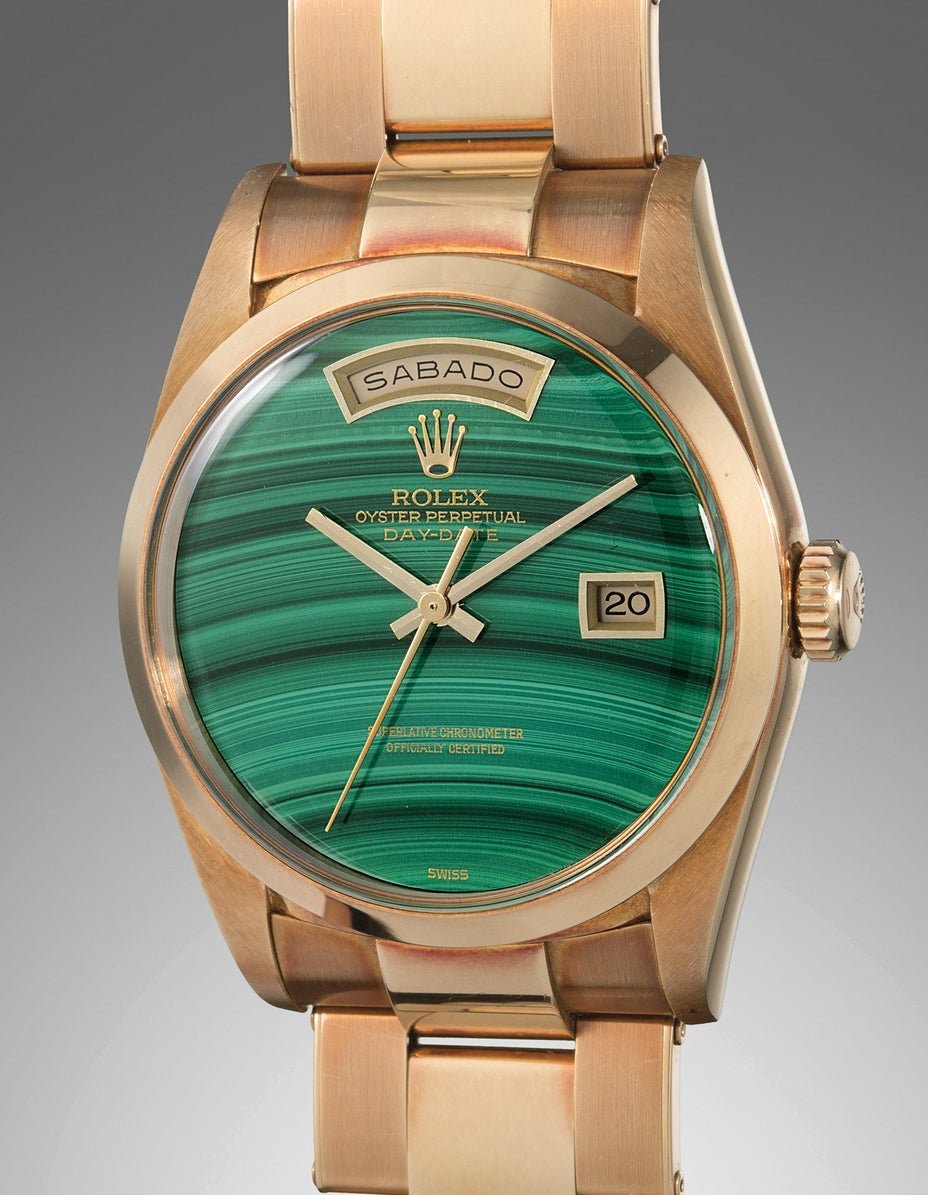
A very rare and highly attractive yellow gold calendar wristwatch with malachite hardstone dial and bracelet
Full-Cataloguing
Malachite was first known to be mined as early as the Neolithic era, around 3,800 years ago, in an area of limestone headland in Wales, Great Britain. Since antiquity, malachite has been utilized in decorative arts and adornments for its vivid green palette and spectacular banded and swirled patterns. Malachite was even ground and used as paint pigments, most notably by Italian Renaissance painter Pietro Perugino in his Natività located in the Church of Saint Francis in Montefalco, Peruggia. This specific malachite dial displays beautiful uniform bands, made by slicing and polishing a larger banded mass of malachite. Rolex must have been highly selective in choosing the specific slice of malachite, further affirming their mastery of applying of such delicate natural materials as watch dials. Typically, the most harmonious and attractive banded specimens of malachite are found in Central African deposits.
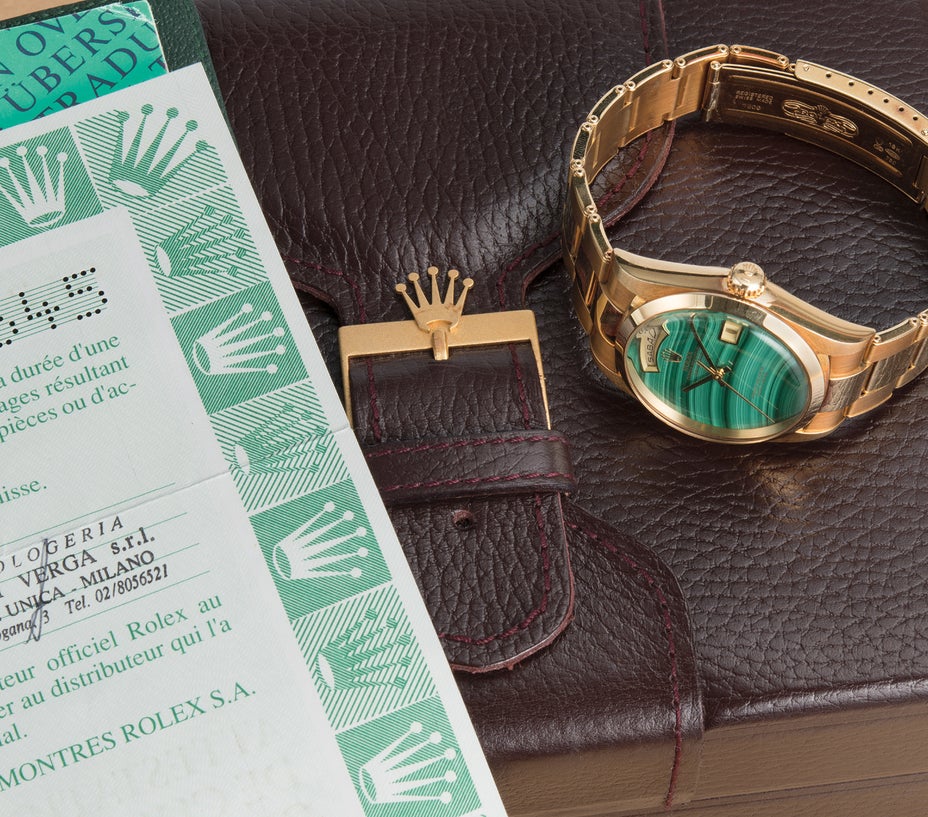
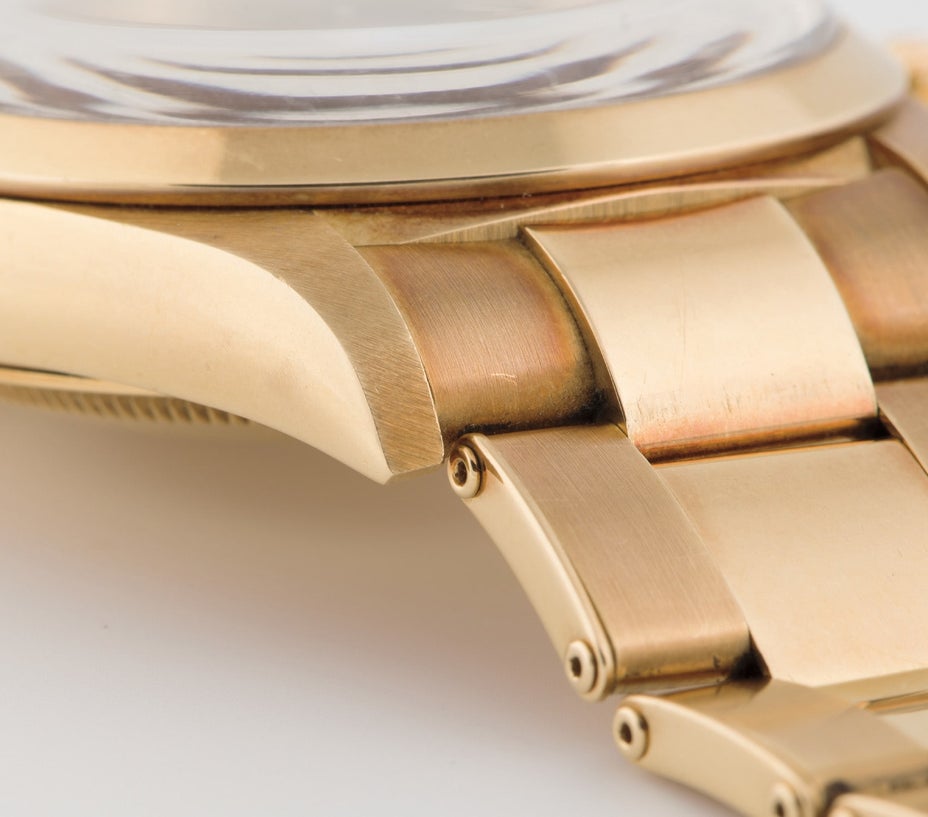
Small accents such as the Spanish date wheel and gold printing against the superb hardstone dial unite all the other attractive elements of this timepiece: the overall incredible condition, uniformity and vibrancy of the dial, and presence of all the original accessories. Hardly worn and preserved in stunning condition, it is certain to please the demanding connoisseur.
Rolex
Swiss | 1905Founded in 1905 England by Hans Wilsdorf and Alfred Davis as Wilsdorf & Davis, it soon became known as the Rolex Watch Company in 1915, moving its headquarters to Geneva in 1919. Like no other company, the success of the wristwatch can be attributed to many of Rolex's innovations that made them one of the most respected and well-known of all luxury brands. These innovations include their famous "Oyster" case — the world's first water resistant and dustproof watch case, invented in 1926 — and their "Perpetual" — the first reliable self-winding movement for wristwatches launched in 1933. They would form the foundation for Rolex's Datejust and Day-Date, respectively introduced in 1945 and 1956, but also importantly for their sports watches, such as the Explorer, Submariner and GMT-Master launched in the mid-1950s.
One of its most famous models is the Cosmograph Daytona. Launched in 1963, these chronographs are without any doubt amongst the most iconic and coveted of all collectible wristwatches. Other key collectible models include their most complicated vintage watches, including references 8171 and 6062 with triple calendar and moon phase, "Jean Claude Killy" triple date chronograph models and the Submariner, including early "big-crown" models and military-issued variants.