76
Rolex
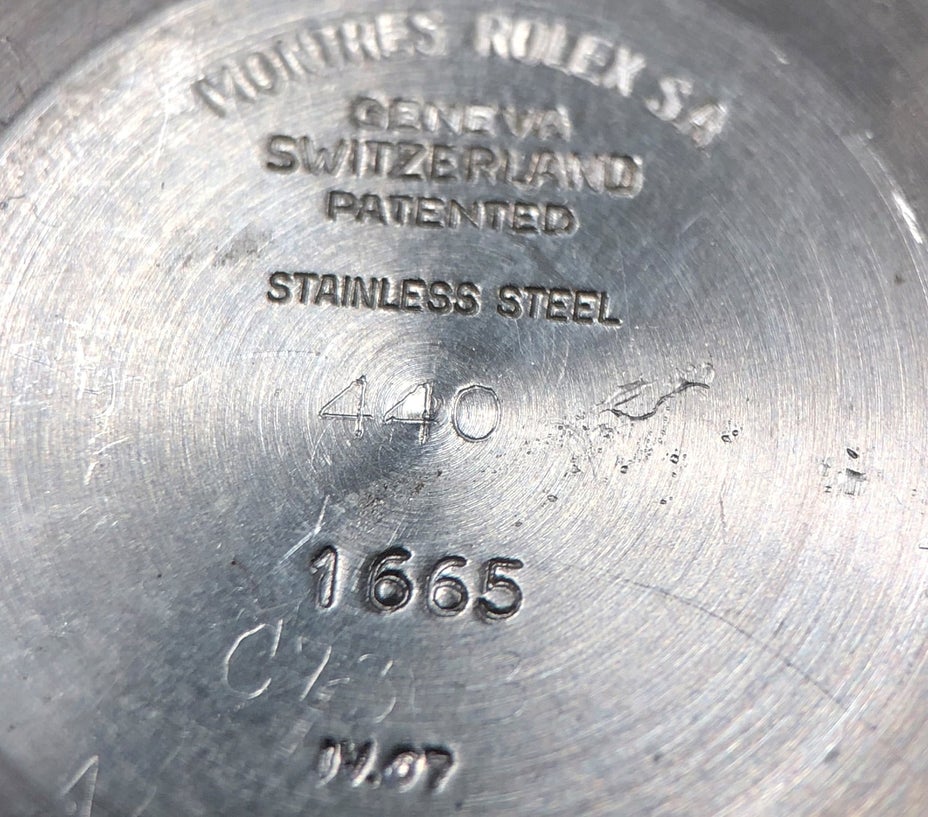
Ref. 1665; inside caseback stamped 1665 IV.67 440
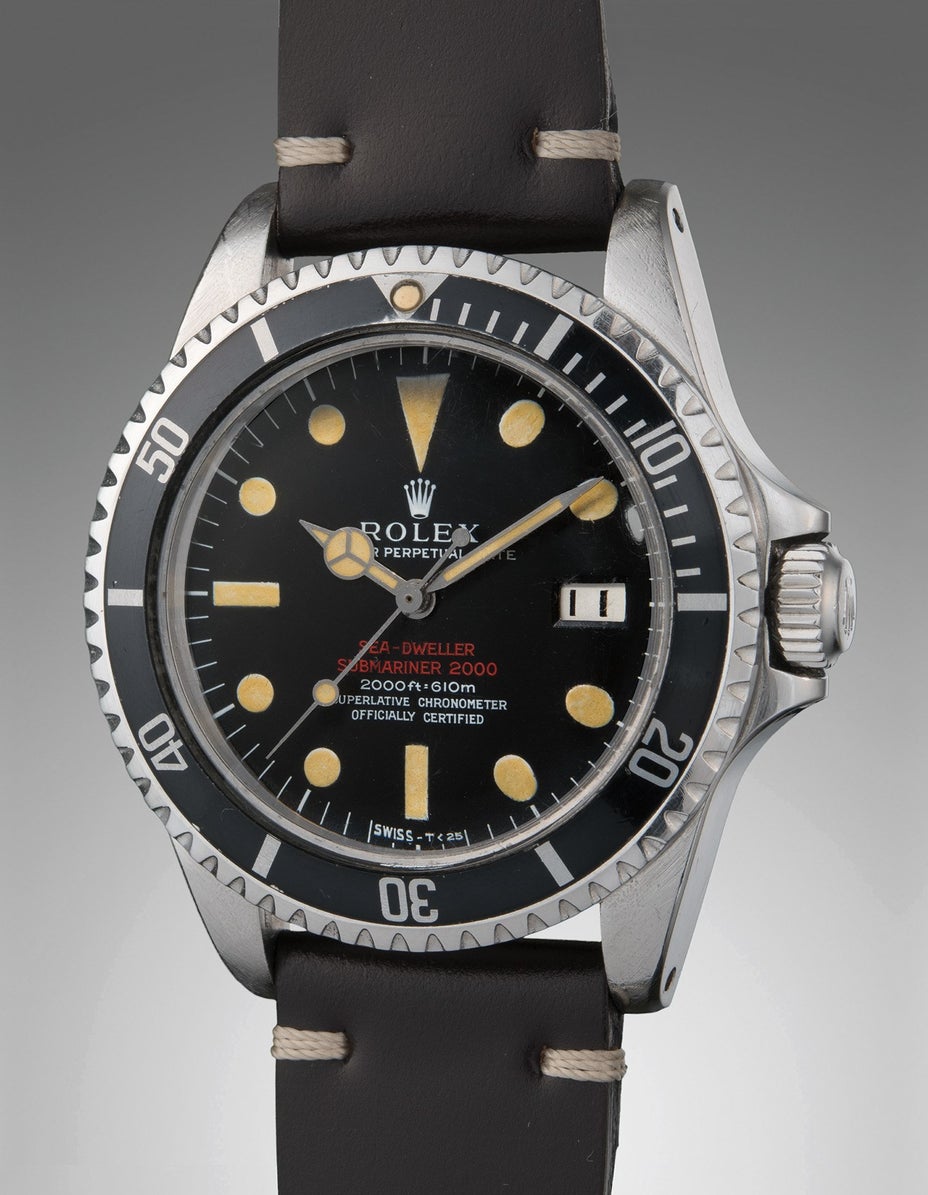
Sea-Dweller, "Double Red"
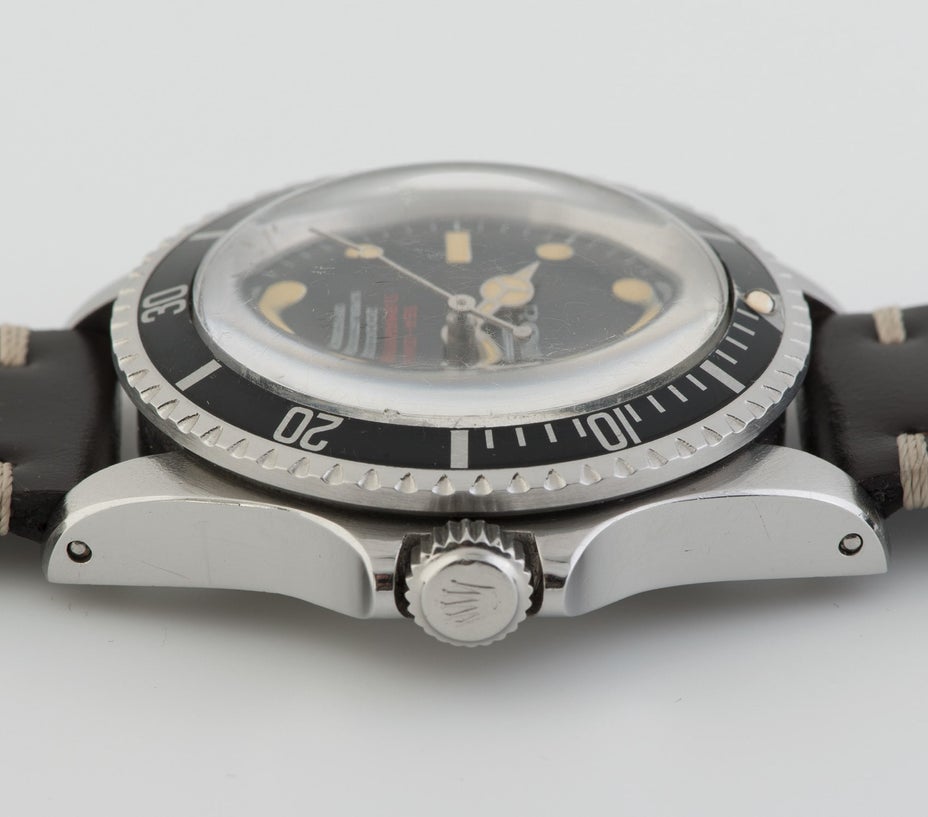
An early and very rare stainless steel automatic wristwatch with date, gas escape valve, “double red” Mk I dial, and patent pending caseback
Full-Cataloguing
The helium escape valve was an ingenious invention because when working in helium-rich atmospheres, tiny helium molecules would seep through the crystal and rubber gaskets into the watch and create pressure once the diver had surfaced. This would usually result in the crystal popping off. The development of the valve was meant to prevent this issue by letting the gas escape the watch case and easing the pressure. Today, it is well established that Rolex worked with a number of divers and organizations around the world to aide in the Sea-Dweller's development. For example, the scientists of the American underwater habitat, Tektite, wore such watches in 1969 and 1970, and the same is true for the scientists working at the Sealab III experiment. The name Sea-Dweller itself is a direct nod to the fact that the model had been developed to meet the demands of scientists living - or “dwelling” - under the sea. Following the positive results obtained with these companies, Rolex went on to publicly commercialize the model.
The earliest iterations engraved with “Patent Pending Rolex Oyster Gas Escape Valve” on their casebacks (such as the present example) are highly sought after. These early models were in effect prototypes, and their caseback interiors feature the last three digits of the watch’s serial number - stamped 440 on the present example, as well as IV.67 indicating production in the fourth quarter of 1967. The Mark 1 dial is a second defining feature of these prototype models; the double red printed Sea-Dweller on the first line, and Submariner 2000 on the second – all words in an equal font size. The vividness of the red color found on the present example is especially noteworthy since these designations consisted of the red print placed on top of white, that over time, would often fade to a light pink tone. Almost as exceptional as the history and rarity of this piece is its well-preserved condition, with thick chamfers on the lugs and a sharp case.
Rolex
Swiss | 1905Founded in 1905 England by Hans Wilsdorf and Alfred Davis as Wilsdorf & Davis, it soon became known as the Rolex Watch Company in 1915, moving its headquarters to Geneva in 1919. Like no other company, the success of the wristwatch can be attributed to many of Rolex's innovations that made them one of the most respected and well-known of all luxury brands. These innovations include their famous "Oyster" case — the world's first water resistant and dustproof watch case, invented in 1926 — and their "Perpetual" — the first reliable self-winding movement for wristwatches launched in 1933. They would form the foundation for Rolex's Datejust and Day-Date, respectively introduced in 1945 and 1956, but also importantly for their sports watches, such as the Explorer, Submariner and GMT-Master launched in the mid-1950s.
One of its most famous models is the Cosmograph Daytona. Launched in 1963, these chronographs are without any doubt amongst the most iconic and coveted of all collectible wristwatches. Other key collectible models include their most complicated vintage watches, including references 8171 and 6062 with triple calendar and moon phase, "Jean Claude Killy" triple date chronograph models and the Submariner, including early "big-crown" models and military-issued variants.