920
Rolex
Ref. 16520
Cosmograph Daytona
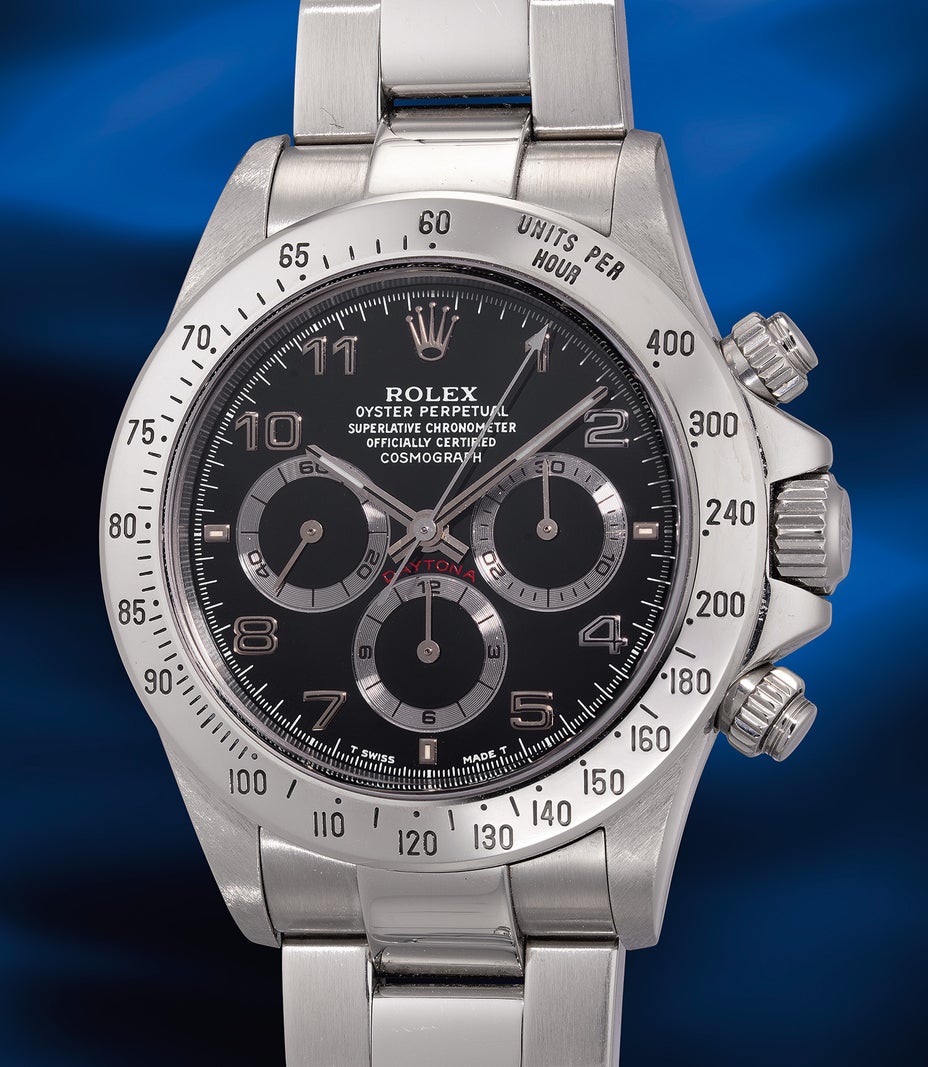
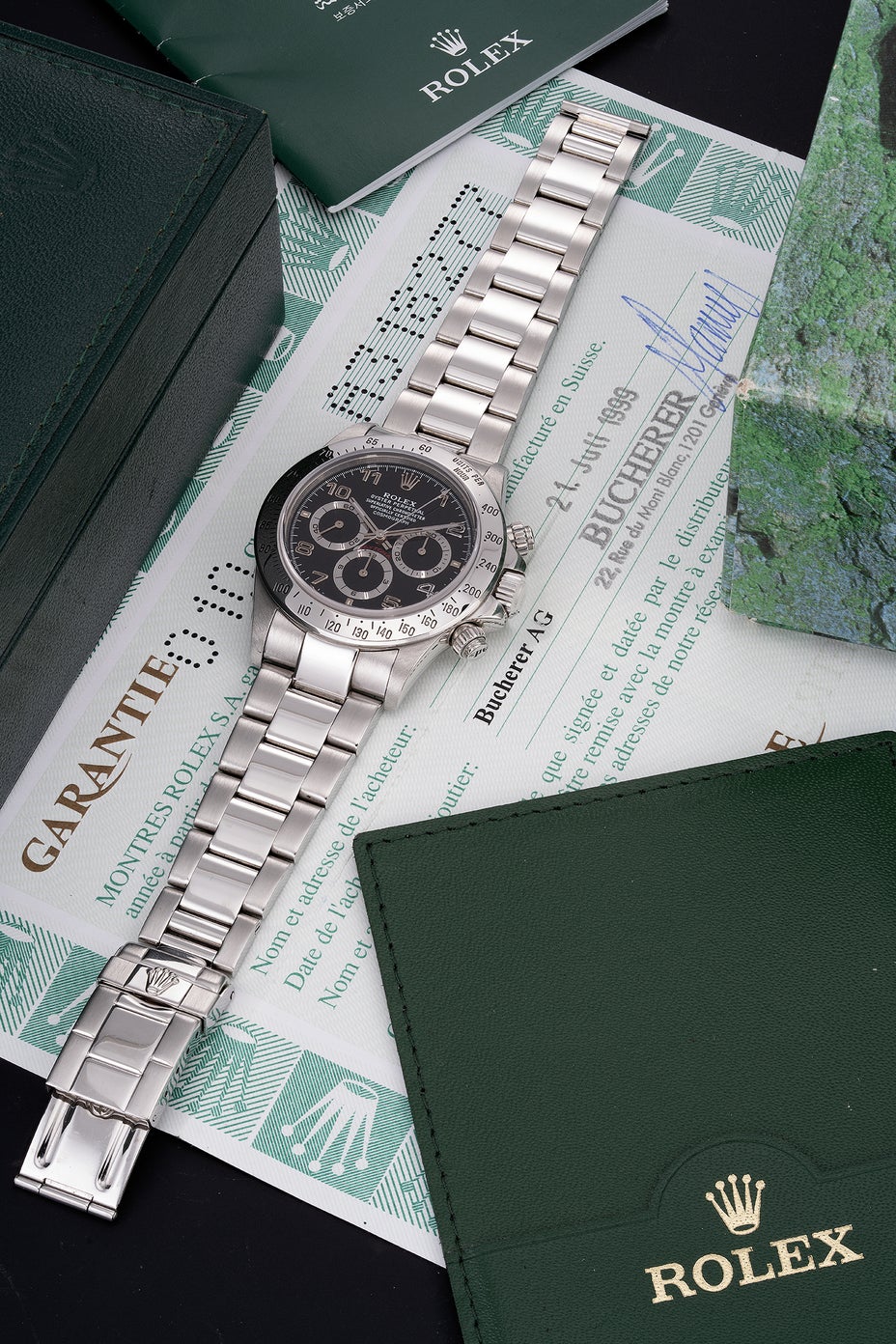
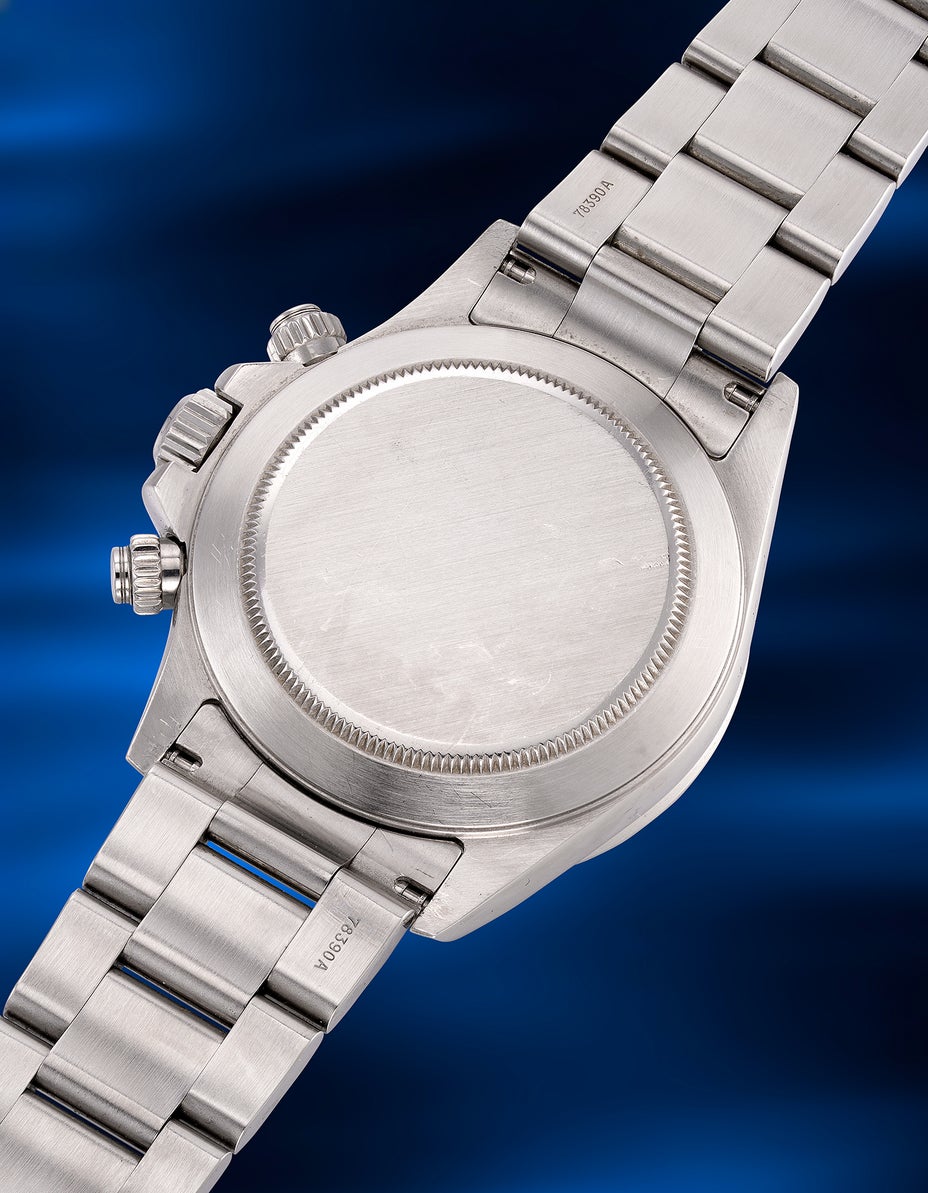
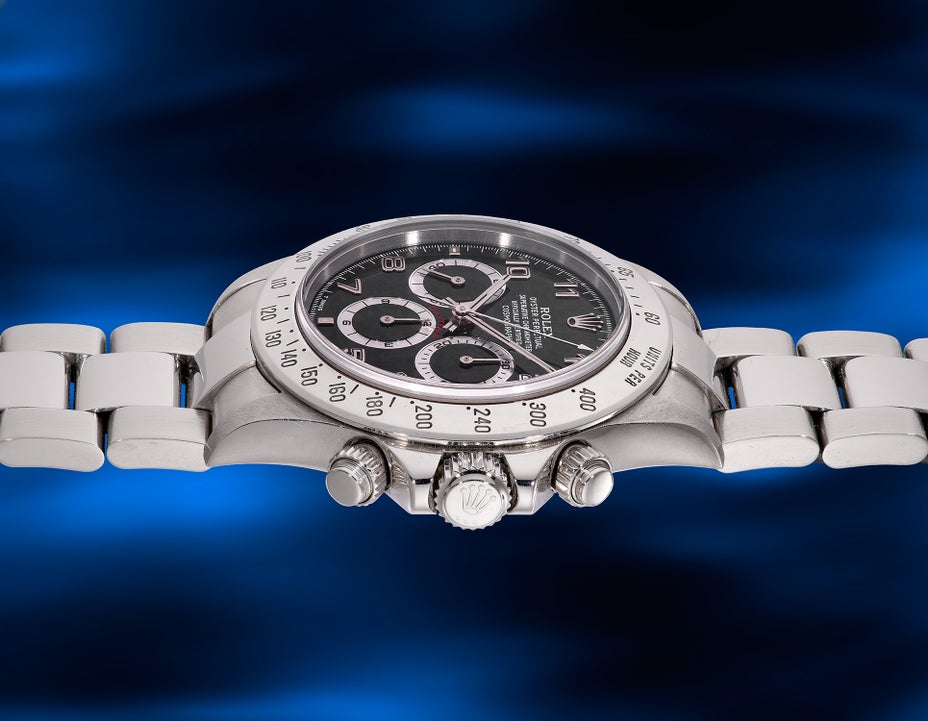
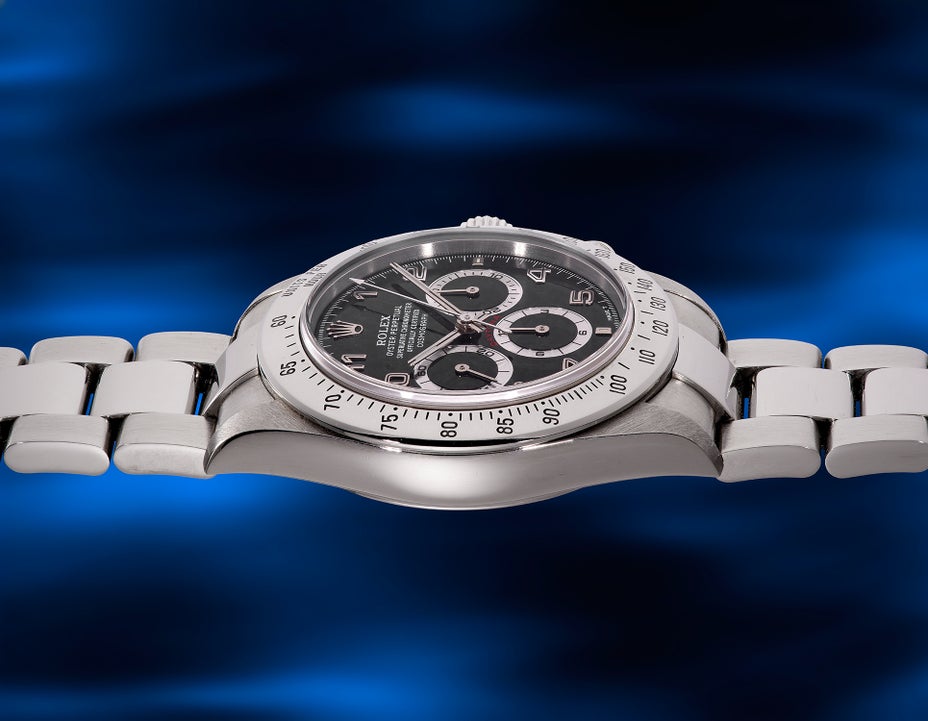
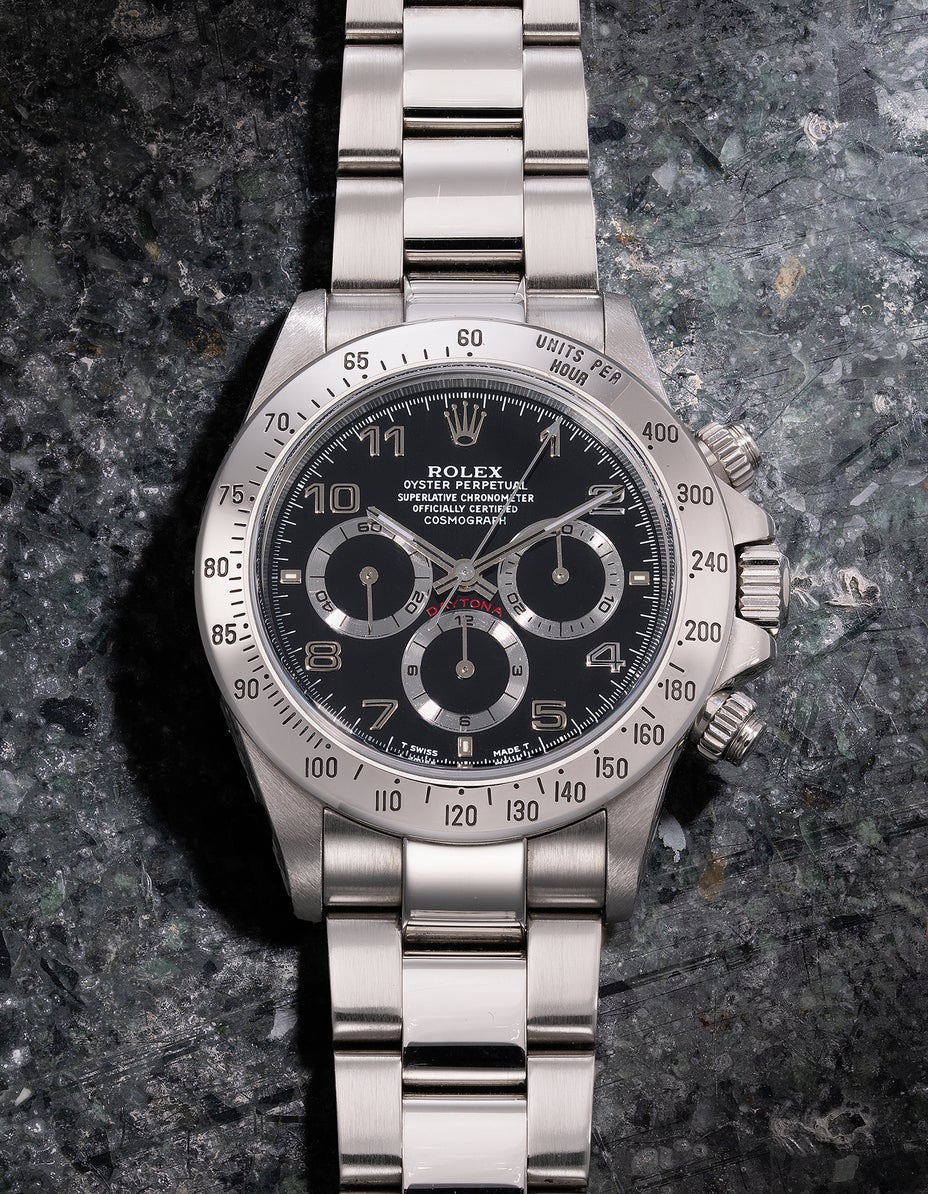
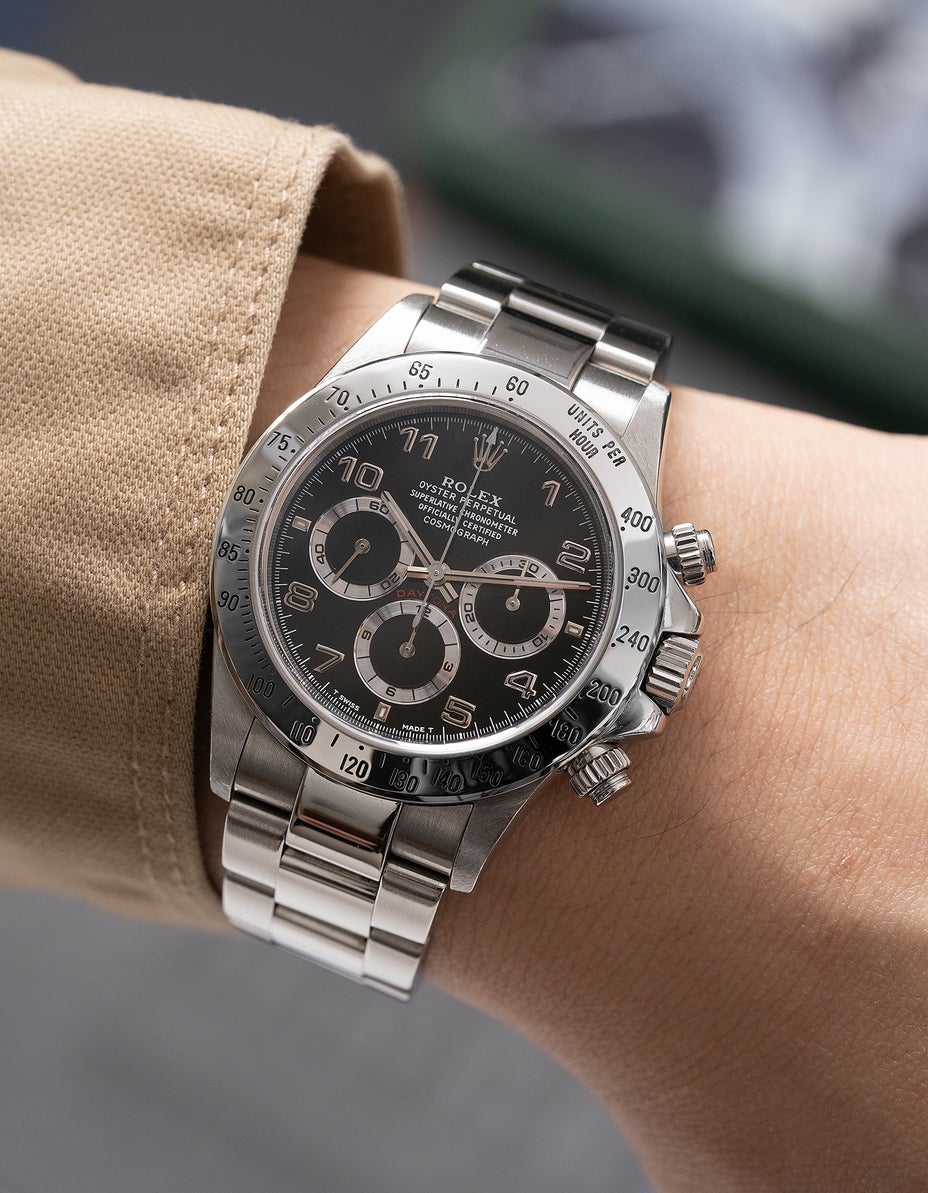
The only one known and well-preserved stainless steel chronograph wristwatch with black “prototype” and Arabic numerals dial, guarantee and presentation box
Full-Cataloguing
Today, Rolex is a vertically integrated company that manufactures almost all components of its watches. However, before and in the 1990s, like many other Swiss watchmakers, Rolex relied on various suppliers to produce individual components, which were then assembled by Rolex. These suppliers were often family-run, medium to small-sized companies specializing in specific watch parts such as bracelets, cases, movements, and dials.
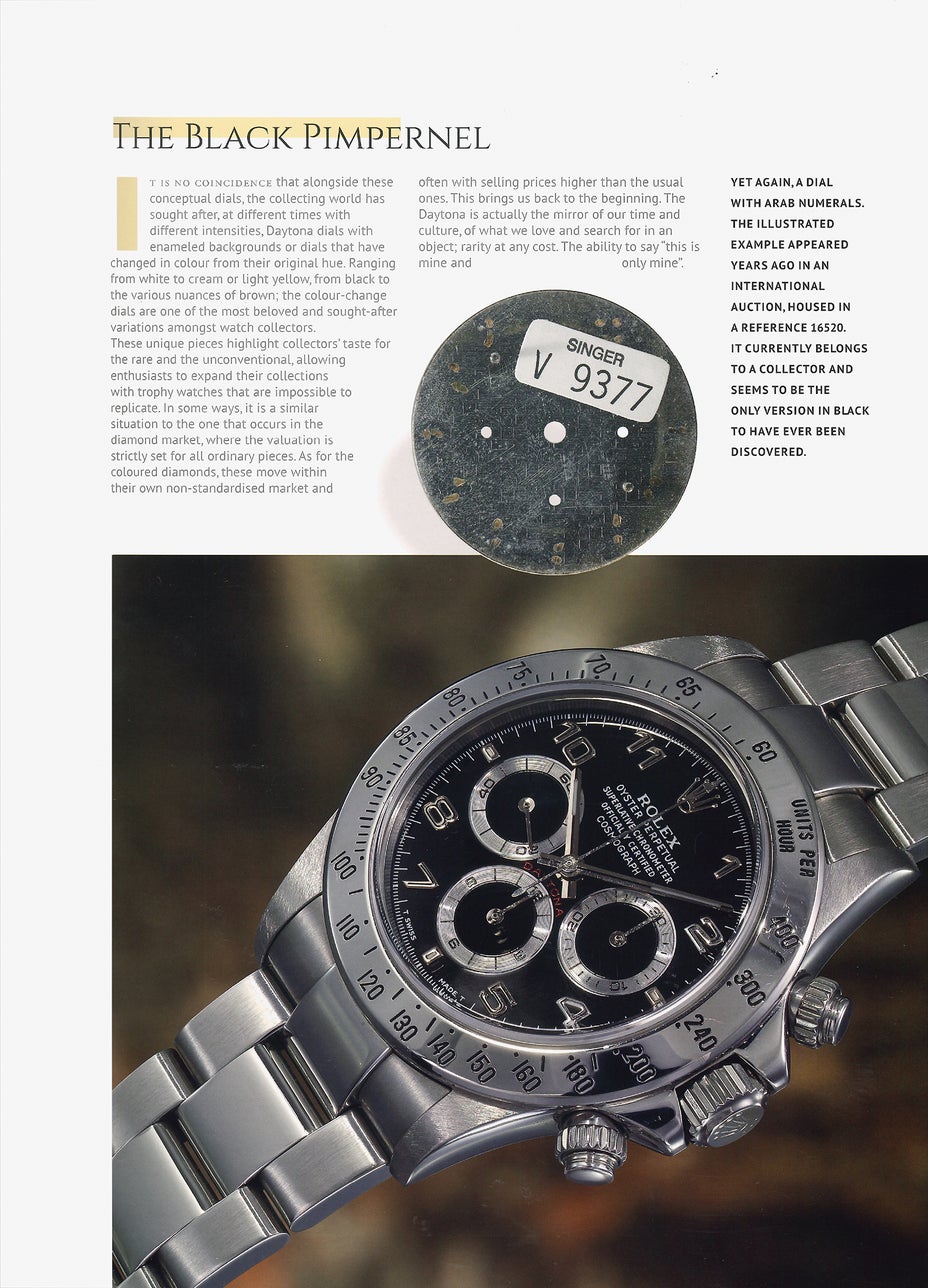
During the design of a new watch, Rolex provided guidelines to these suppliers, who produced prototypes or test components that could be selected or discarded. Singer, responsible for manufacturing Rolex’s dials, submitted several graphic designs for approval before the final version of a watch’s dial went into production. This was the case with the Daytona ref. 16520, where Singer proposed different dial prototypes while testing for the future 116520 generation. Since the Singer dials for the 16520 were factory tests intended as prototypes for Rolex, very few examples were made, and they were never offered for public sale. These prototype-test dials are exceedingly rare, with only a few surviving to this day, making them extremely difficult to find on the market.
This Rolex Daytona 16520 A series is the only known example in this exact configuration, featuring a Singer test-prototype black dial with enamel-filled Arabic numerals and black sub-dials, while other known examples are fitted with white or salmon dials. This test dial by Singer, manufactured as a prototype for Rolex, exemplifies the brand’s constant pursuit of innovation and close collaboration with its suppliers. It is an exceptional, very rare, and fascinating watch for the Rolex collector.
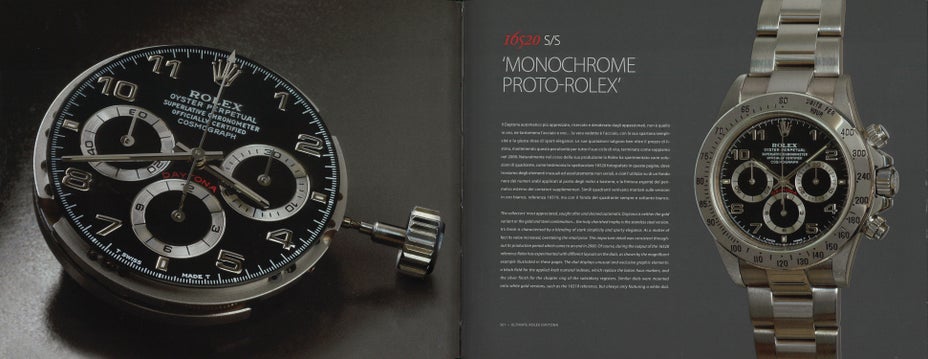
The importance of this lot cannot be overstated, as it was prominently featured in the Ultimate Rolex Daytona book and Daytona Perpetual book by Pucci Papaleo. Complete with its guarantee and presentation box, this exceptionally rare and well-preserved “prototype” Daytona ref. 16520 will enchant collectors seeking something extraordinary and wishing to honor Rolex as a pioneer in innovative dial designs, both now and in the years to come.
Rolex
Swiss | 1905Founded in 1905 England by Hans Wilsdorf and Alfred Davis as Wilsdorf & Davis, it soon became known as the Rolex Watch Company in 1915, moving its headquarters to Geneva in 1919. Like no other company, the success of the wristwatch can be attributed to many of Rolex's innovations that made them one of the most respected and well-known of all luxury brands. These innovations include their famous "Oyster" case — the world's first water resistant and dustproof watch case, invented in 1926 — and their "Perpetual" — the first reliable self-winding movement for wristwatches launched in 1933. They would form the foundation for Rolex's Datejust and Day-Date, respectively introduced in 1945 and 1956, but also importantly for their sports watches, such as the Explorer, Submariner and GMT-Master launched in the mid-1950s.
One of its most famous models is the Cosmograph Daytona. Launched in 1963, these chronographs are without any doubt amongst the most iconic and coveted of all collectible wristwatches. Other key collectible models include their most complicated vintage watches, including references 8171 and 6062 with triple calendar and moon phase, "Jean Claude Killy" triple date chronograph models and the Submariner, including early "big-crown" models and military-issued variants.