828
Rolex
Ref. 16520
Cosmograph Daytona
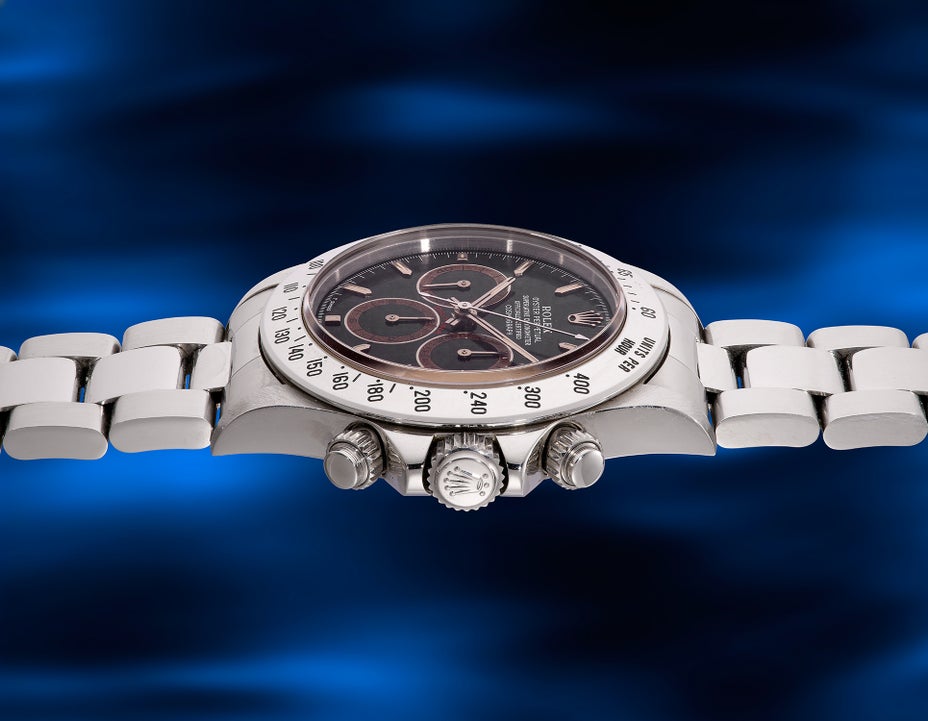
A very rare, well-preserved and attractive stainless steel chronograph wristwatch with “tropical” registers, bracelet, guarantee and presentation box
Full-Cataloguing
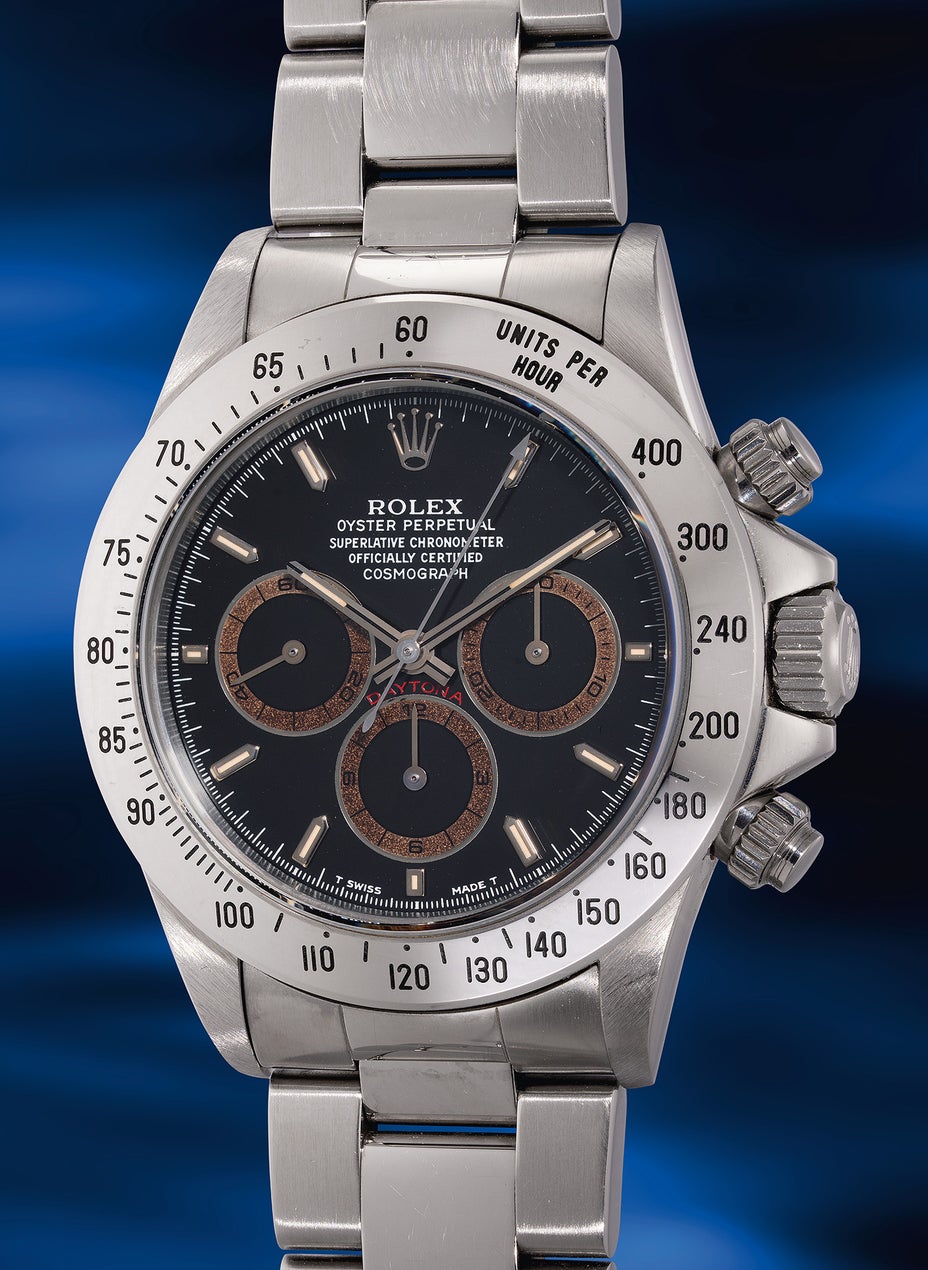
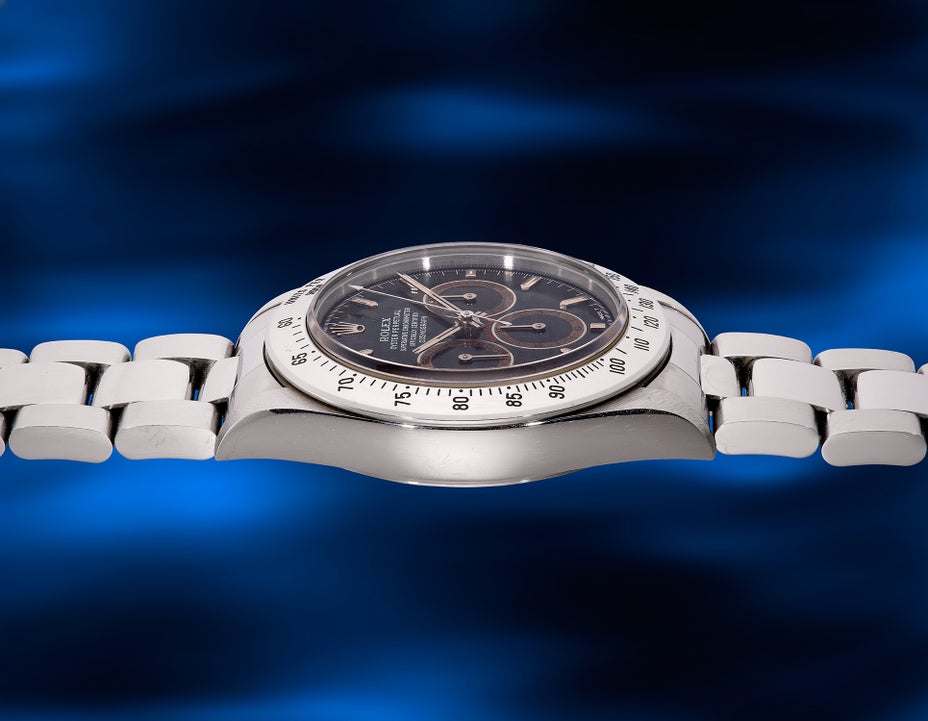
Over the years, the 16520 reference has gained a dedicated following due to its iconic status, with certain examples from various series standing out as extremely rare and highly sought after by collectors. One key factor contributing to the unique “tropical” effect seen in some dials is the varnish used by Rolex at the time—Zapon. This varnish, when applied unevenly over the silvered registers, led to distinct variations.
Notably, watches bearing S, N, T, and W serial numbers with “tropical” brown registers have captured collectors' attention. While most exhibit lighter shades of brown, a few rare pieces have surfaced featuring registers in a much darker “chocolate-like” hue due to natural ageing.
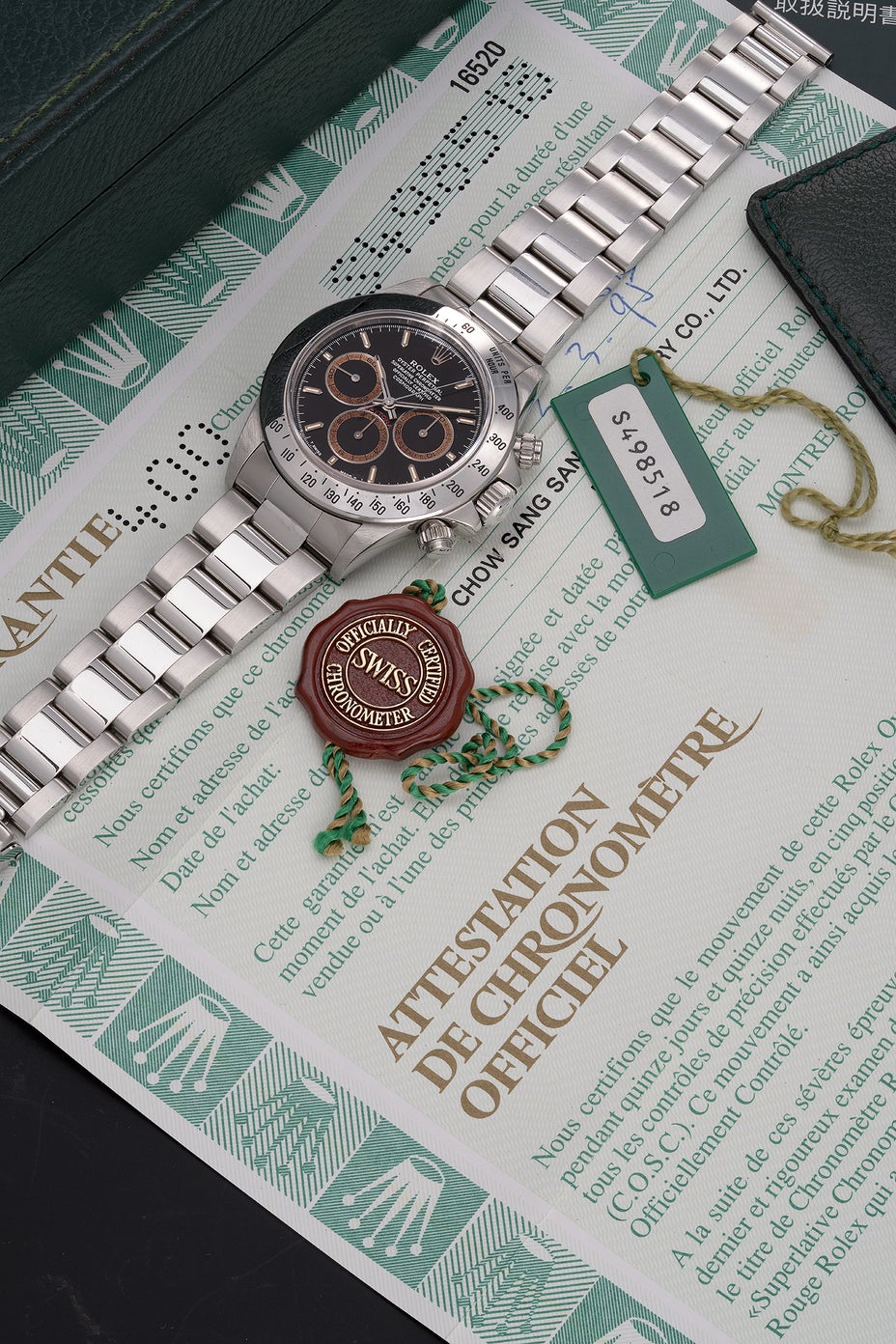
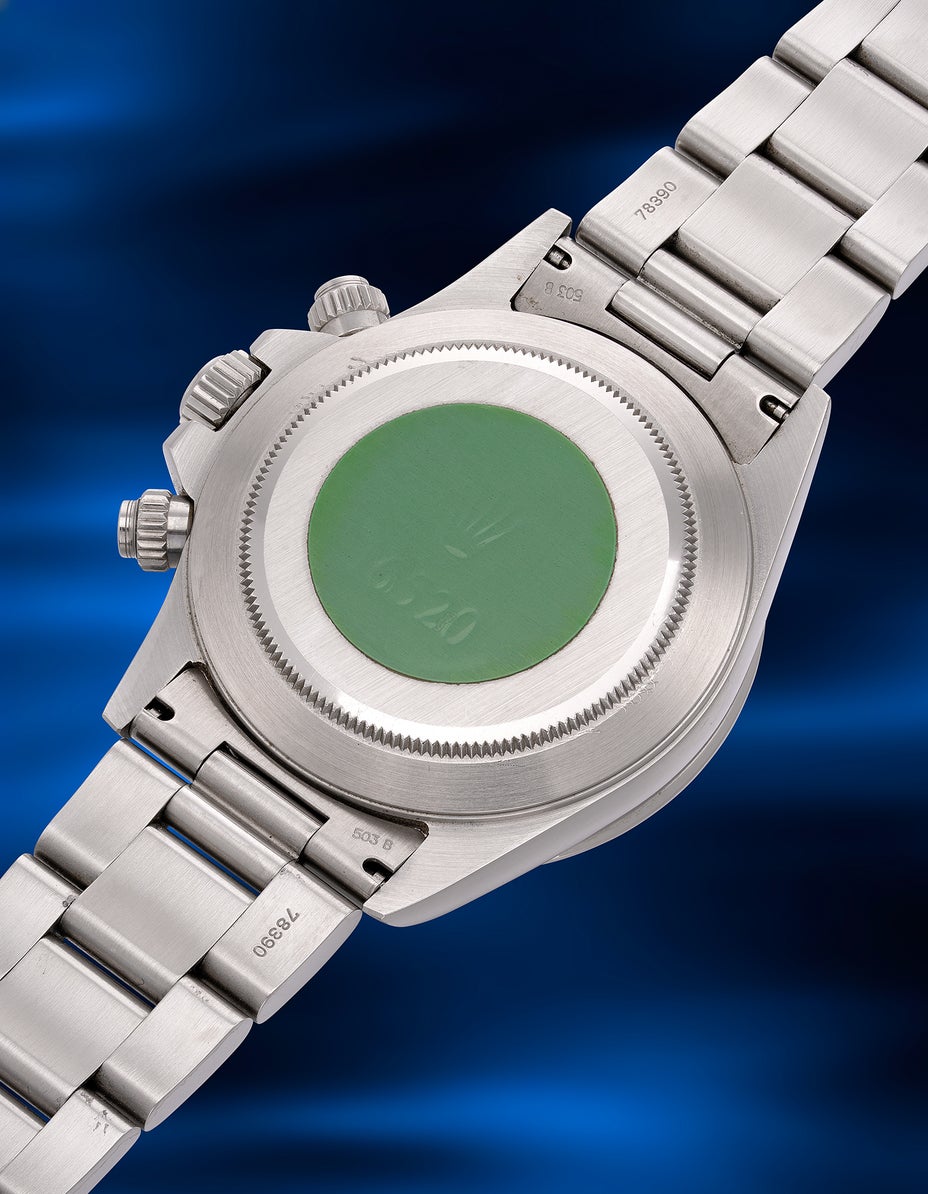
The present example is one of those rare finds, showcasing dark, intense chocolate-like tropical registers. Bearing an “S” serial, this piece from circa 1993 is offered in excellent overall condition with the original green sticker still adhered to the caseback. It further comes complete with its full set of accessories, including a guarantee stamped by a local Hong Kong retailer.
Rolex
Swiss | 1905Founded in 1905 England by Hans Wilsdorf and Alfred Davis as Wilsdorf & Davis, it soon became known as the Rolex Watch Company in 1915, moving its headquarters to Geneva in 1919. Like no other company, the success of the wristwatch can be attributed to many of Rolex's innovations that made them one of the most respected and well-known of all luxury brands. These innovations include their famous "Oyster" case — the world's first water resistant and dustproof watch case, invented in 1926 — and their "Perpetual" — the first reliable self-winding movement for wristwatches launched in 1933. They would form the foundation for Rolex's Datejust and Day-Date, respectively introduced in 1945 and 1956, but also importantly for their sports watches, such as the Explorer, Submariner and GMT-Master launched in the mid-1950s.
One of its most famous models is the Cosmograph Daytona. Launched in 1963, these chronographs are without any doubt amongst the most iconic and coveted of all collectible wristwatches. Other key collectible models include their most complicated vintage watches, including references 8171 and 6062 with triple calendar and moon phase, "Jean Claude Killy" triple date chronograph models and the Submariner, including early "big-crown" models and military-issued variants.