33
Rolex
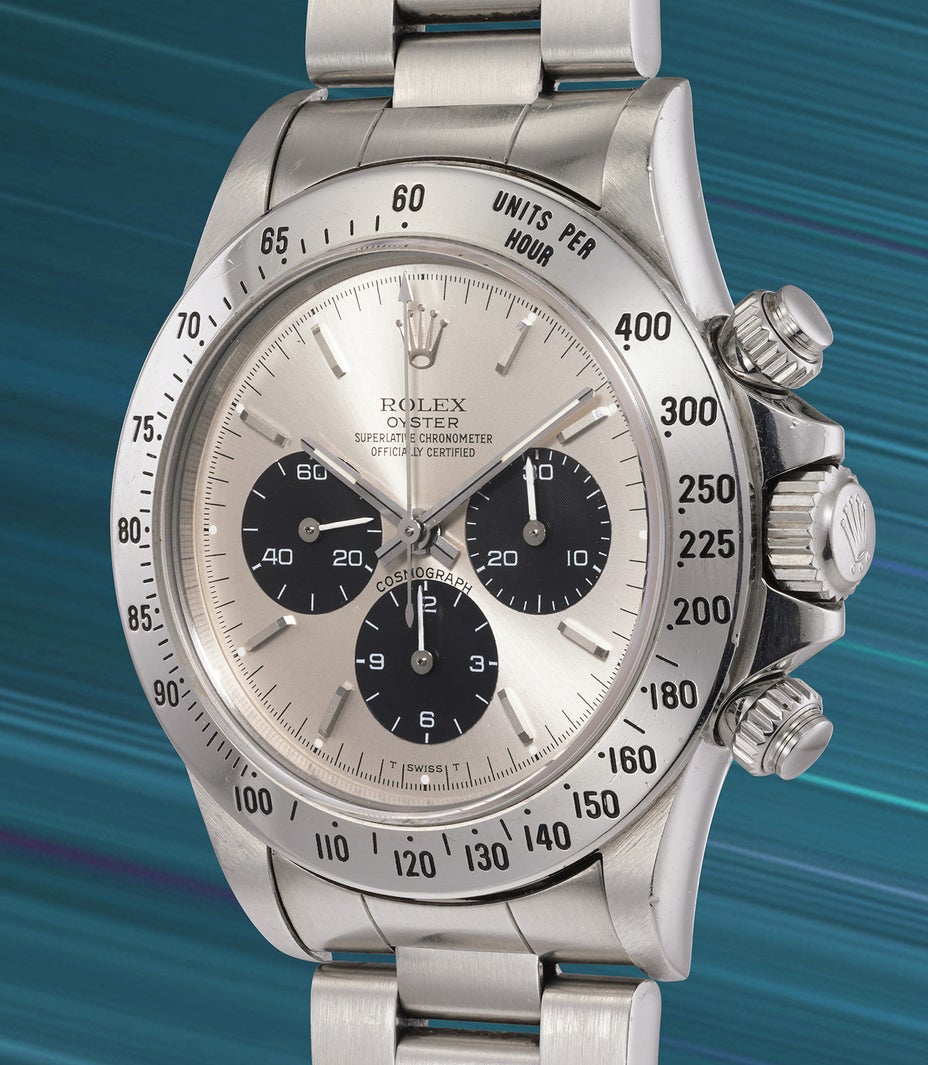
Ref. 16520 (inside caseback stamped 16500)
Cosmograph "Prototype Dial"
A superb and historically important stainless steel chronograph wristwatch with “prototype dial” and bracelet
Full-Cataloguing
As with all new models the brand went through trial and error before finalising the design.
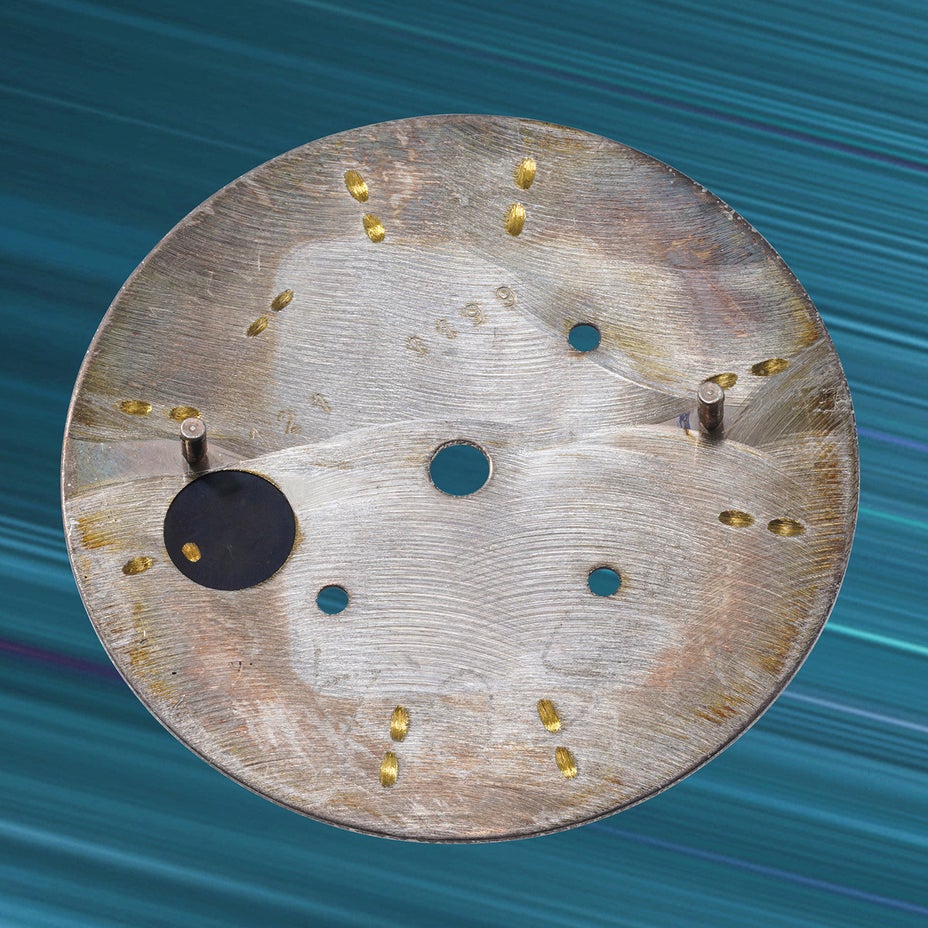
The present reference 16520 bears one of these very early prototype dials made by Beyeler, featuring baton indexes and subdials very similar to the refs 6263/6265 it was to replace. Furthermore, the Rolex and Oyster print is quite similar to that of the previous manual wind references. The “Superlative Chronometer Officially Certified” text is what would be found in the new model. Two notable absents on the dial are the word “Perpetual” following “Oyster” and surprisingly the present dial does not feature “Daytona” above the 6 o’clock subdial as found in the manual wind models or the final 16520 production models but rather the word “Cosmograph”.
Finally it is interesting to see the watch with a bezel with 225 graduation, that would be found in the early L series for a short period of time.
The Rolex Daytona is today a true global sensation and captures the hearts of generations of watch enthusiasts. A timeless design that embodies functionality, design innovation and history, sculpted with rigorous attention to detail and precision, the reference 16520, unveiled in 1988, is the company’s first Daytona to house an automatic movement, and marks a very important chapter in Rolex’s history. As such the present example with prototype dial allows us to get a rare and exciting glimpse into the design process that went into creating one of the most iconic models of our time.
Rolex
Swiss | 1905Founded in 1905 England by Hans Wilsdorf and Alfred Davis as Wilsdorf & Davis, it soon became known as the Rolex Watch Company in 1915, moving its headquarters to Geneva in 1919. Like no other company, the success of the wristwatch can be attributed to many of Rolex's innovations that made them one of the most respected and well-known of all luxury brands. These innovations include their famous "Oyster" case — the world's first water resistant and dustproof watch case, invented in 1926 — and their "Perpetual" — the first reliable self-winding movement for wristwatches launched in 1933. They would form the foundation for Rolex's Datejust and Day-Date, respectively introduced in 1945 and 1956, but also importantly for their sports watches, such as the Explorer, Submariner and GMT-Master launched in the mid-1950s.
One of its most famous models is the Cosmograph Daytona. Launched in 1963, these chronographs are without any doubt amongst the most iconic and coveted of all collectible wristwatches. Other key collectible models include their most complicated vintage watches, including references 8171 and 6062 with triple calendar and moon phase, "Jean Claude Killy" triple date chronograph models and the Submariner, including early "big-crown" models and military-issued variants.