1086
Swiss
One-minute tourbillon retailed by S. Smith & Son
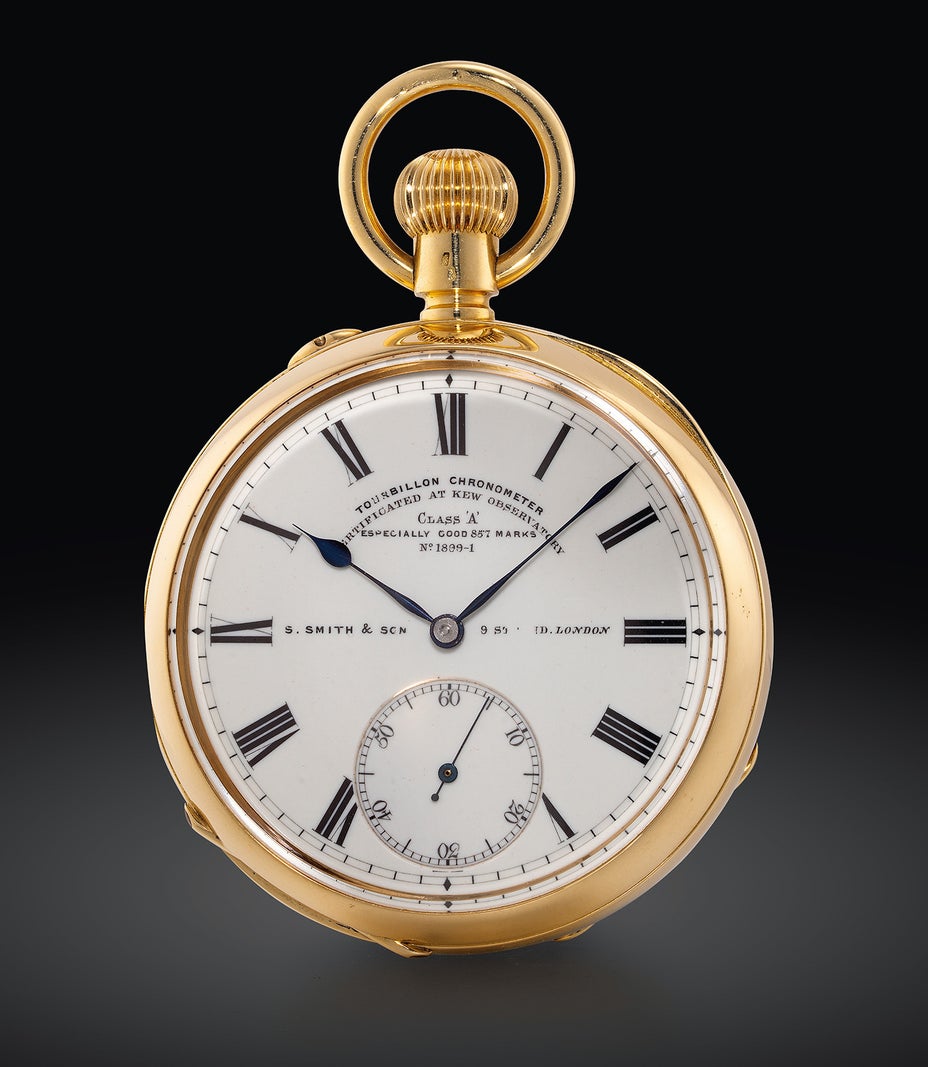
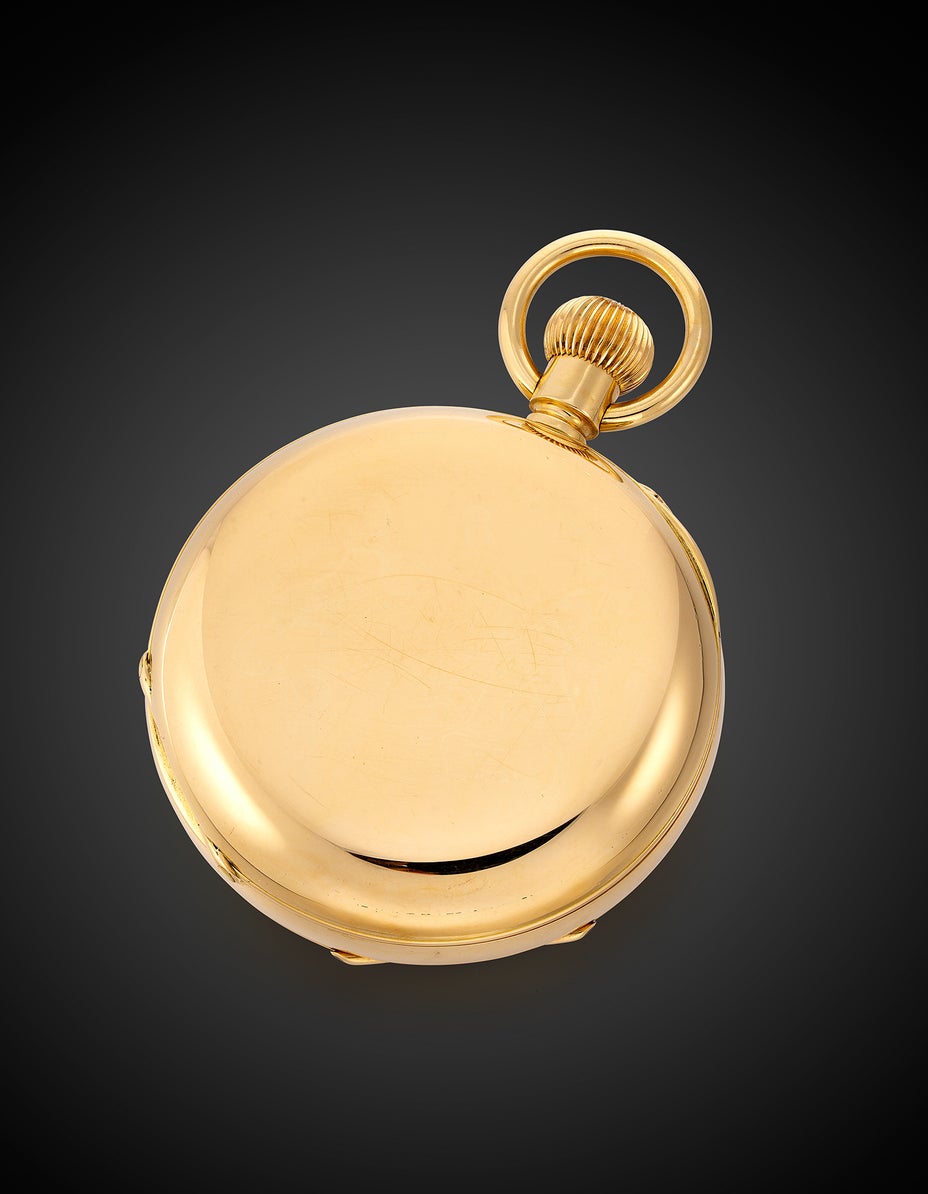
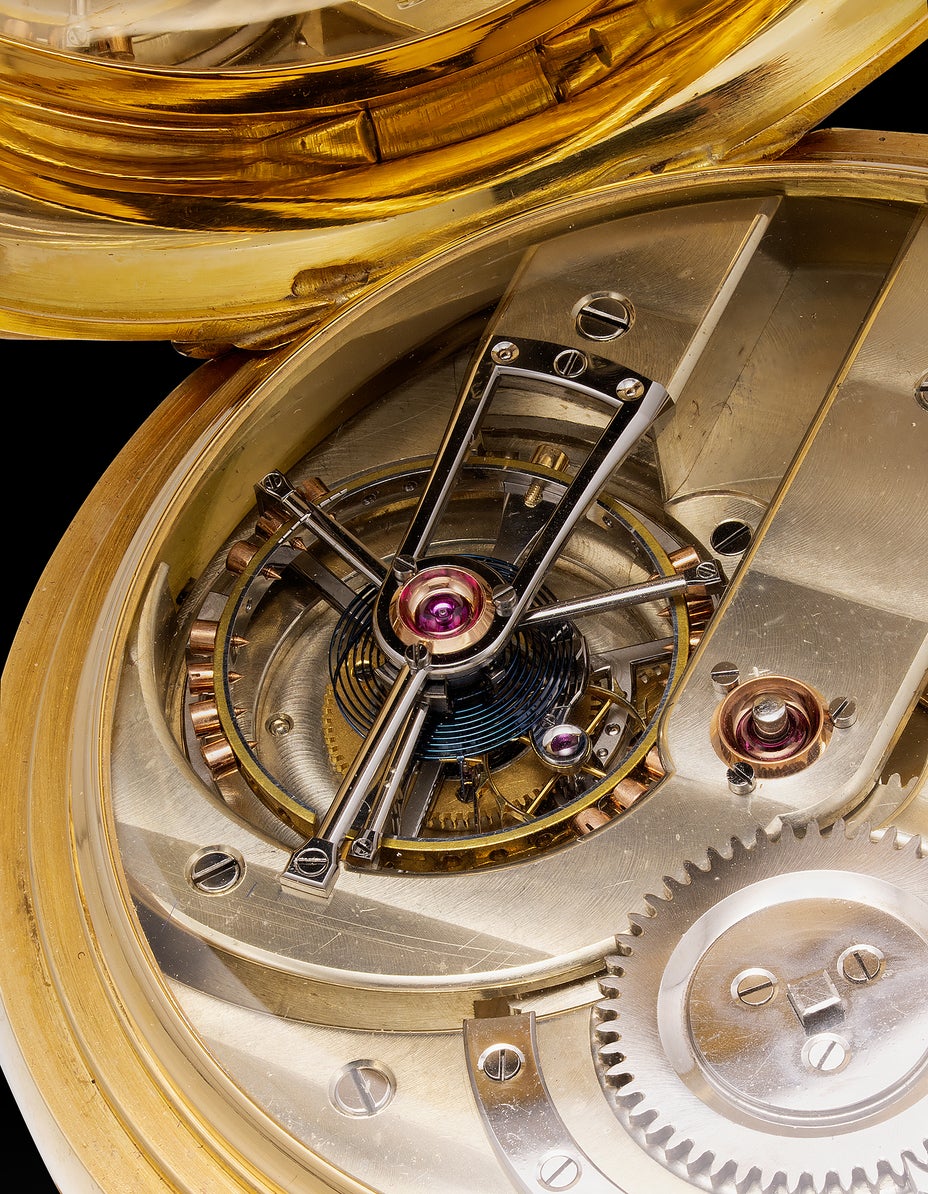
A very fine and rare and yellow gold openface one-minute tourbillon by Albert Pellaton-Favre keyless pocket watch with detent escapement and presentation box, retailed by S. Smith & Son
Estimate
HK$320,000–640,000
€35,400–70,800
$41,000–82,100
Sold For
HK$635,000
Manufacturer
Swiss
Year
Circa 1899
Movement No
1899-1
Case No
103025, No. 1899-1
Model Name
One-minute tourbillon retailed by S. Smith & Son
Material
18K yellow gold
Calibre
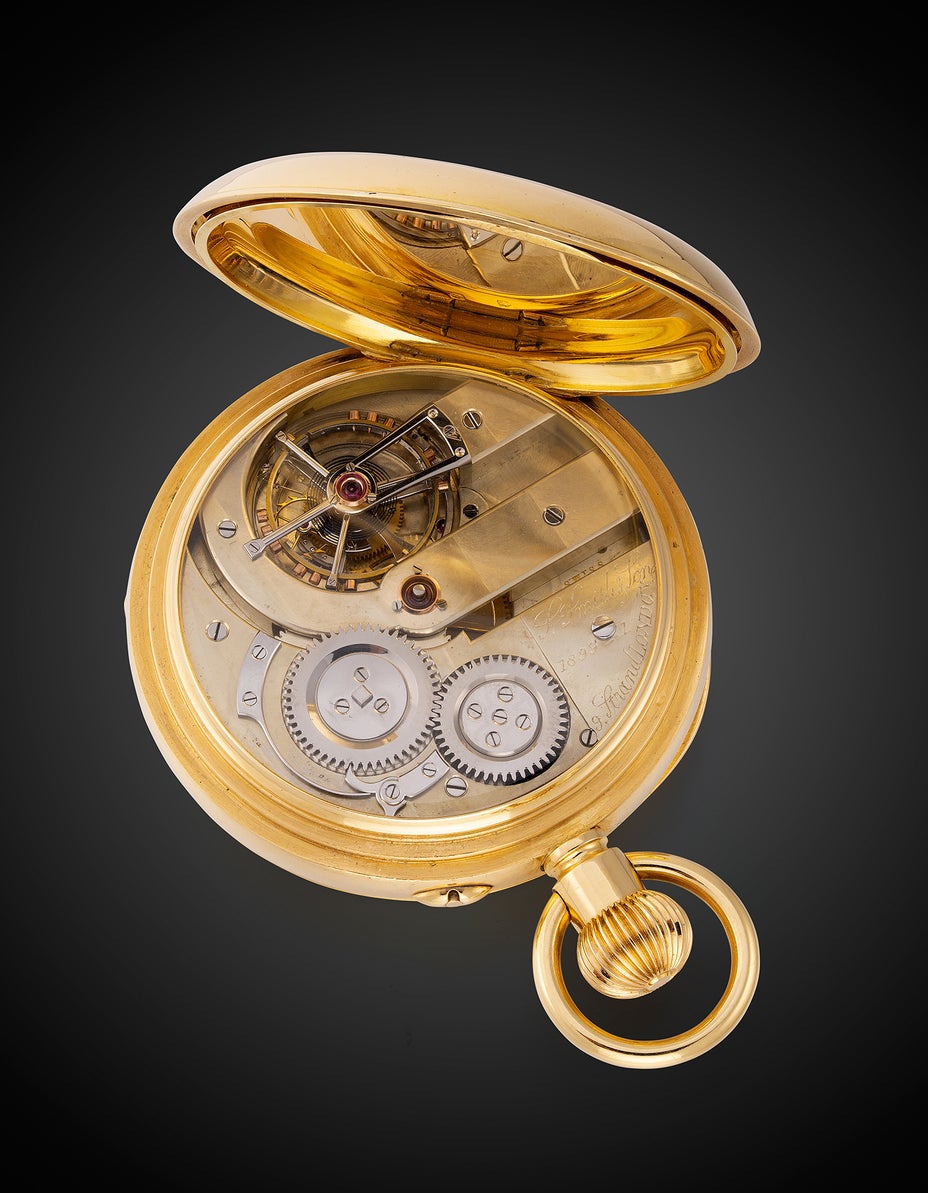
Manual, spring detent escapement, Albert Pellaton-Favre-type one-minute tourbillon
Dimensions
55mm diameter
Signed
Case, cuvette, dial and movement signed
Accessories
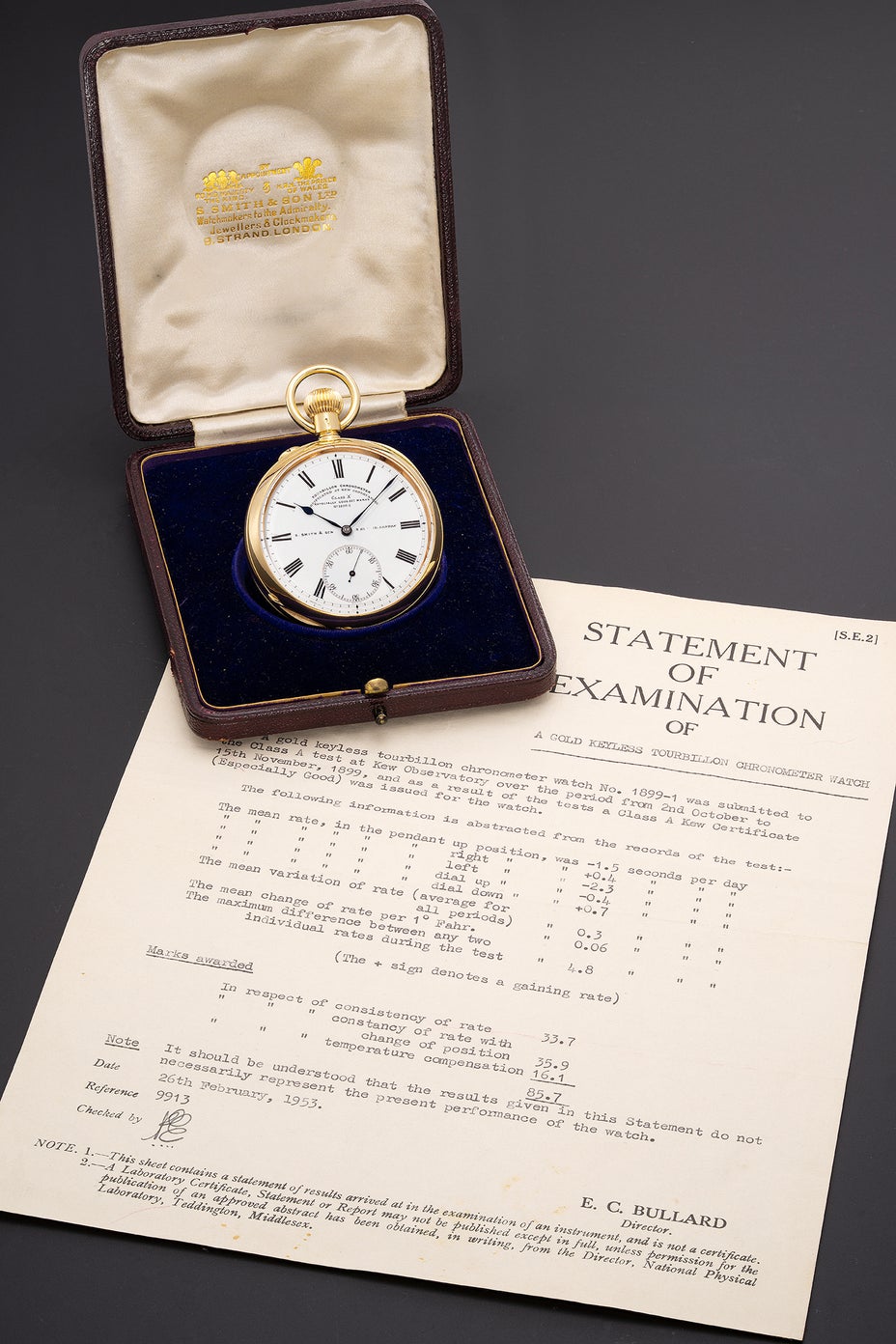
Accompanied by S. Smith & Son fitted leather presentation box and a copy of the Statement of Examination by the National Physical Laboratory of Teddington.
Full-Cataloguing
Beginning in the 17th century, British master watchmakers were at the forefront, making major contributions in mechanical design leading to better timekeeping accuracy, a tradition that continues in the 21st century. Prominently illustrated in “Watches” by Cecil Clutton & George Daniels, and “Das Tourbillon” by Reinhard Meis, the present one-minute tourbillon pocket watch is not only the first tourbillon watch signed by Smith & Son, but also the only one with a detent escapement – the rest are fitted with lever movements.
The lovely white enamel dial with Roman numerals elegantly showcases the time. Made by Frederick Willis, his dials were of the highest quality used by the very best British makers in their most important watches.
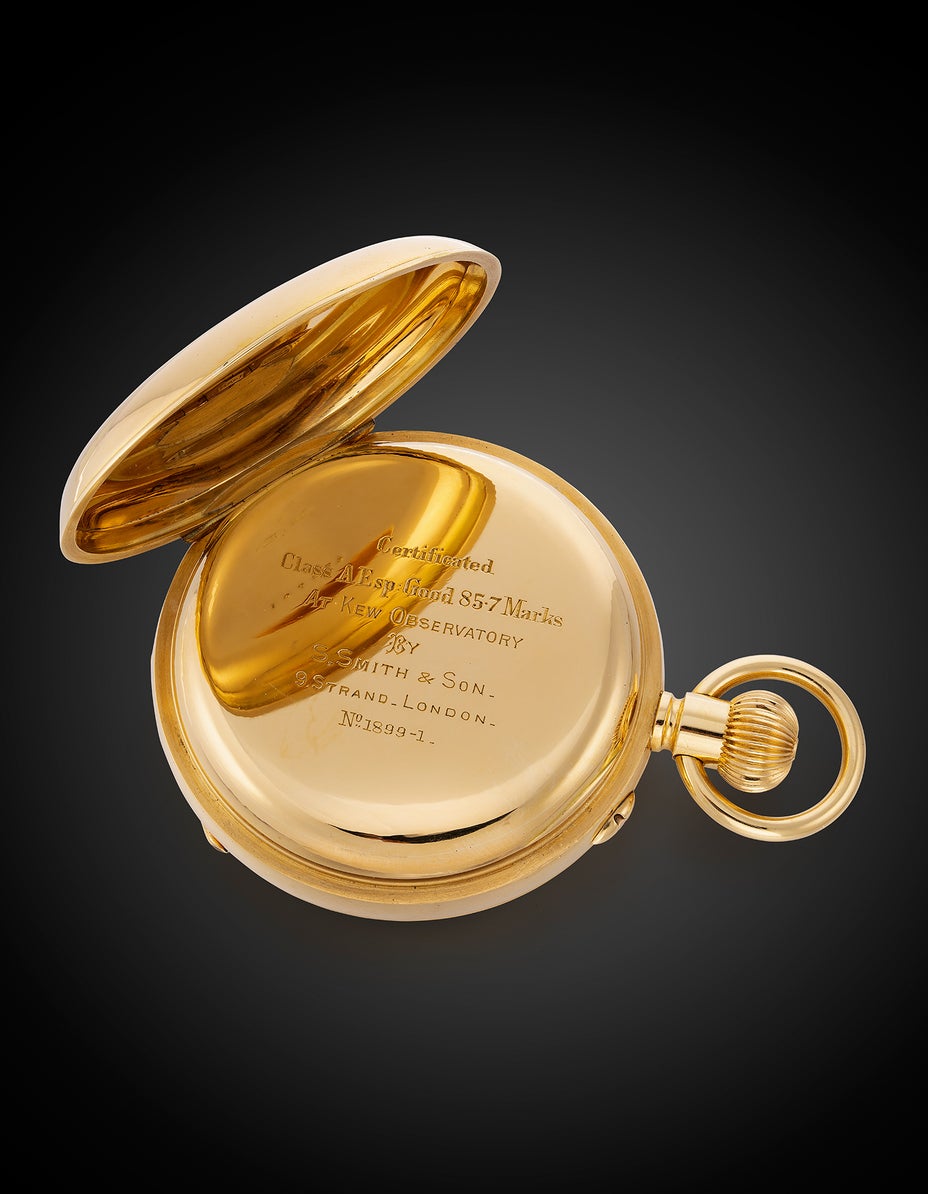
The movement itself was conceived and crafted by Albert Pellaton-Favre (1834–1914), widely regarded as the foremost tourbillon maker of his generation. Watches using his tourbillon won many awards, notably at Kew, and from the observatories in Geneva and Neuchâtel. He collaborated with Henchoz Frères, Golay Fils, Armand Schwob & Frère, Paul Ditisheim, Girard-Perregaux, and Patek Philippe, among others. This pocket watch from circa 1899 fitted with a Pellaton one-minute tourbillon was submitted on two occasions to the National Physical Laboratory at Teddington. Its first trial, held in 1894, earned 88.8 points. Five years later, in 1899, it was tested once more and achieved 85.7 marks. The second submission is confirmed by a Statement of Examination dated February 1953.
Baume & Co. London acted as agents for many English and Swiss watch companies. They commissioned this tourbillon, and five others tested at Kew between 1891-1902, from Pellaton, and subsequently submitted it for testing under their own name and serial number. The watch was later sold to S. Smith & Sons, who signed the barrel bridge and cuvette, and commissioned Willis to make the enamel dial prior to retailing it.
The present one-minute tourbillon is exceptionally well-preserved and further accompanied by its fitted leather S. Smith & Sons presentation box. Without a doubt, during the late 19th and early 20th centuries, the finest watches in the world were being produced by British makers, and are now cherished by collectors for their rarity, complexity, and beauty.
The lovely white enamel dial with Roman numerals elegantly showcases the time. Made by Frederick Willis, his dials were of the highest quality used by the very best British makers in their most important watches.
The movement itself was conceived and crafted by Albert Pellaton-Favre (1834–1914), widely regarded as the foremost tourbillon maker of his generation. Watches using his tourbillon won many awards, notably at Kew, and from the observatories in Geneva and Neuchâtel. He collaborated with Henchoz Frères, Golay Fils, Armand Schwob & Frère, Paul Ditisheim, Girard-Perregaux, and Patek Philippe, among others. This pocket watch from circa 1899 fitted with a Pellaton one-minute tourbillon was submitted on two occasions to the National Physical Laboratory at Teddington. Its first trial, held in 1894, earned 88.8 points. Five years later, in 1899, it was tested once more and achieved 85.7 marks. The second submission is confirmed by a Statement of Examination dated February 1953.
Baume & Co. London acted as agents for many English and Swiss watch companies. They commissioned this tourbillon, and five others tested at Kew between 1891-1902, from Pellaton, and subsequently submitted it for testing under their own name and serial number. The watch was later sold to S. Smith & Sons, who signed the barrel bridge and cuvette, and commissioned Willis to make the enamel dial prior to retailing it.
The present one-minute tourbillon is exceptionally well-preserved and further accompanied by its fitted leather S. Smith & Sons presentation box. Without a doubt, during the late 19th and early 20th centuries, the finest watches in the world were being produced by British makers, and are now cherished by collectors for their rarity, complexity, and beauty.