
ULTIMATE
36
Tokyo Rumando
Orphée
Estimate
£8,000–12,000‡︎
Sold For
£15,000
2012-2013
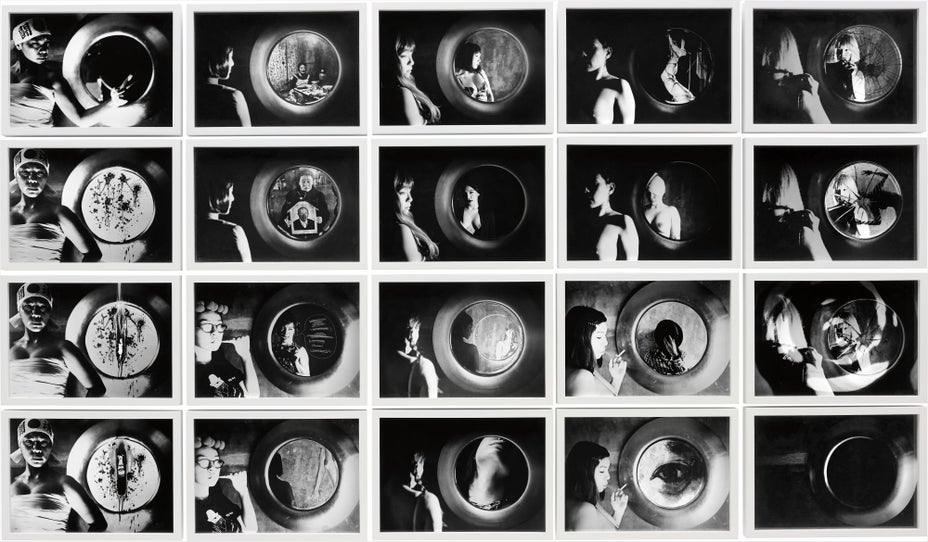
Polyptych comprised of 20 gelatin silver prints, each flush-mounted.
Each image/sheet: 23.2 x 33 cm (9 1/8 x 12 7/8 in.)
Each frame: 25.3 x 35 cm (9 7/8 x 13 3/4 in.)
Overall: 101.2 x 175 cm (39 7/8 x 68 7/8 in.)
Each frame: 25.3 x 35 cm (9 7/8 x 13 3/4 in.)
Overall: 101.2 x 175 cm (39 7/8 x 68 7/8 in.)
Signed, dated in ink, printed title, date and number 6/6 on a Certificate of Authenticity accompanying the work.
This work is number 6 from the sold-out edition of 6.
This work is number 6 from the sold-out edition of 6.
Full-Cataloguing
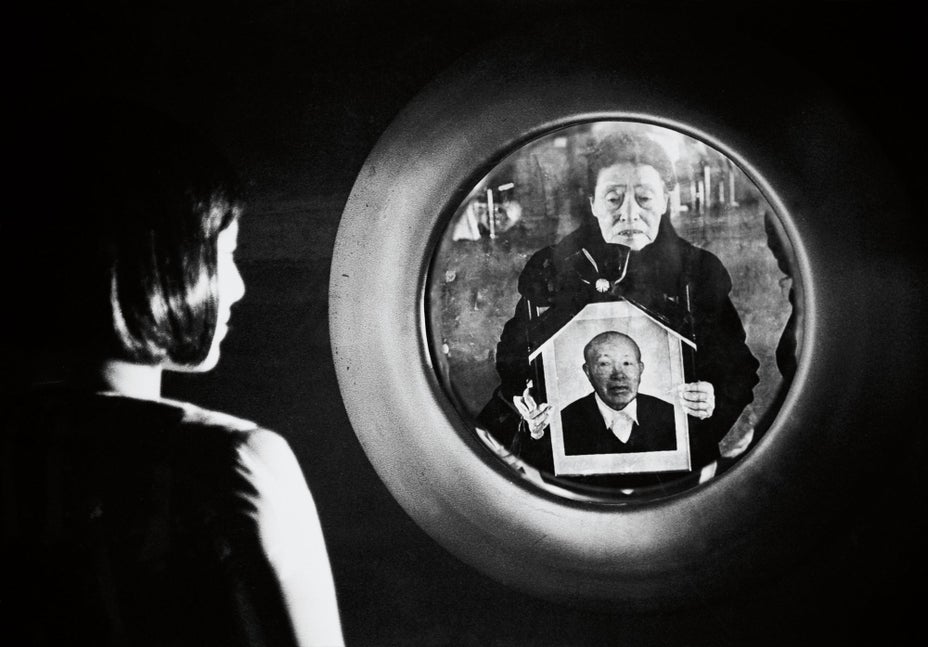
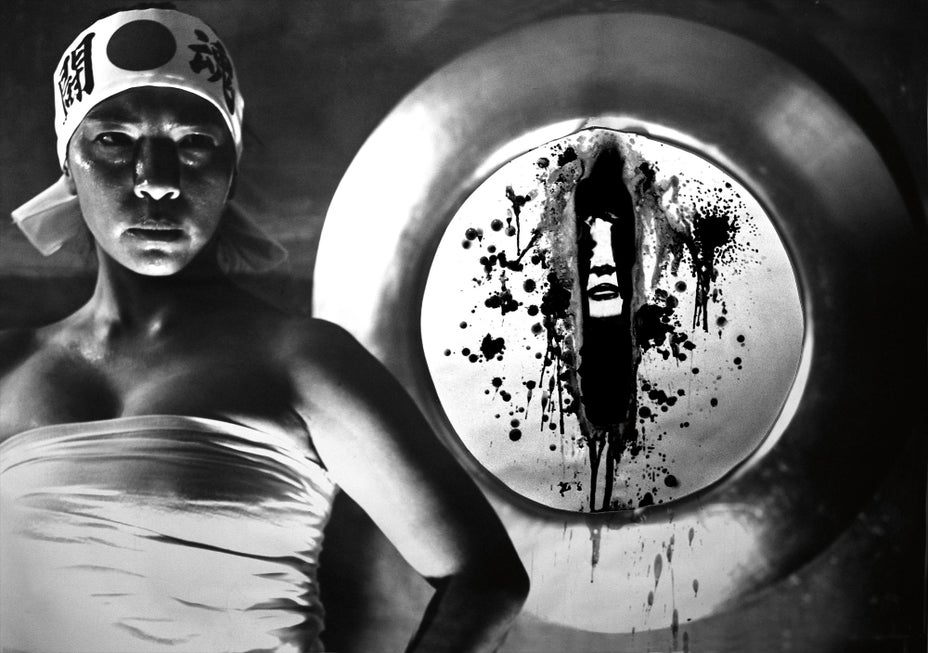
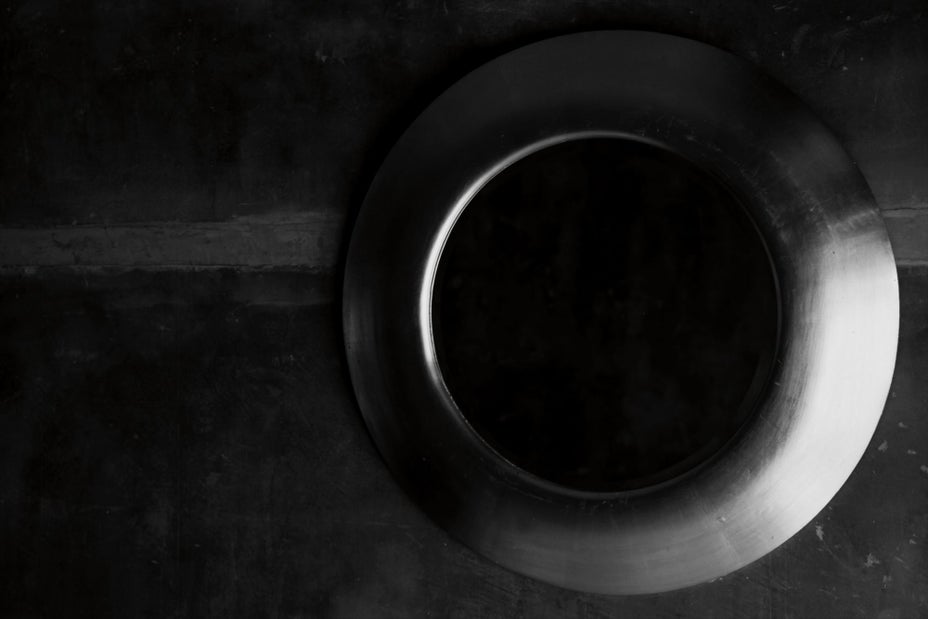
For her series Orphée, Tokyo Rumando created multi-faceted self-portraits in which a round mirror, resembling a porthole, functions as a window into her subconscious. Reflected in the mirror are her memories and she is seen in front of the mirror as well as inside it – she is her past, present and future all at once. ‘When I was thinking about how I could look back into the past, I was shaping my inner self again, projecting it on a picture and once again reintroducing it inside,’ she explains, ‘rather than finding, I’d say I was receiving something.’ In a sequence of four photographs shown on the very left, the artist presents herself in the guise of Yukio Mishima, Japan’s most celebrated post-war writer, whose death by seppuku (the ritual suicide of a samurai warrior) is alluded to in the sliced-open mirror and splattered blood.
Tokyo Rumando created the entire series in her home, using multiple techniques and a wide range of material from wigs and appropriated images to fire and blood. Each image layer – herself in front of the mirror and the reflections in the mirror – was shot separately then pieced together to create a photomontage, which was re-photographed on film to produce the final work. The title was taken from Jean Cocteau’s 1950 film Orphée, which she encountered only after the completion of her series, and whose use of a mirrored portal paralleled her own. This curated selection of 20 self-portraits from Orphée was created for Tate Modern’s 2016 exhibition Performing for the Camera.
Tokyo Rumando created the entire series in her home, using multiple techniques and a wide range of material from wigs and appropriated images to fire and blood. Each image layer – herself in front of the mirror and the reflections in the mirror – was shot separately then pieced together to create a photomontage, which was re-photographed on film to produce the final work. The title was taken from Jean Cocteau’s 1950 film Orphée, which she encountered only after the completion of her series, and whose use of a mirrored portal paralleled her own. This curated selection of 20 self-portraits from Orphée was created for Tate Modern’s 2016 exhibition Performing for the Camera.